Javier Uriarte - Böcker
Visar alla böcker från författaren Javier Uriarte. Handla med fri frakt och snabb leverans.
6 produkter
6 produkter
723 kr
Skickas inom 10-15 vardagar
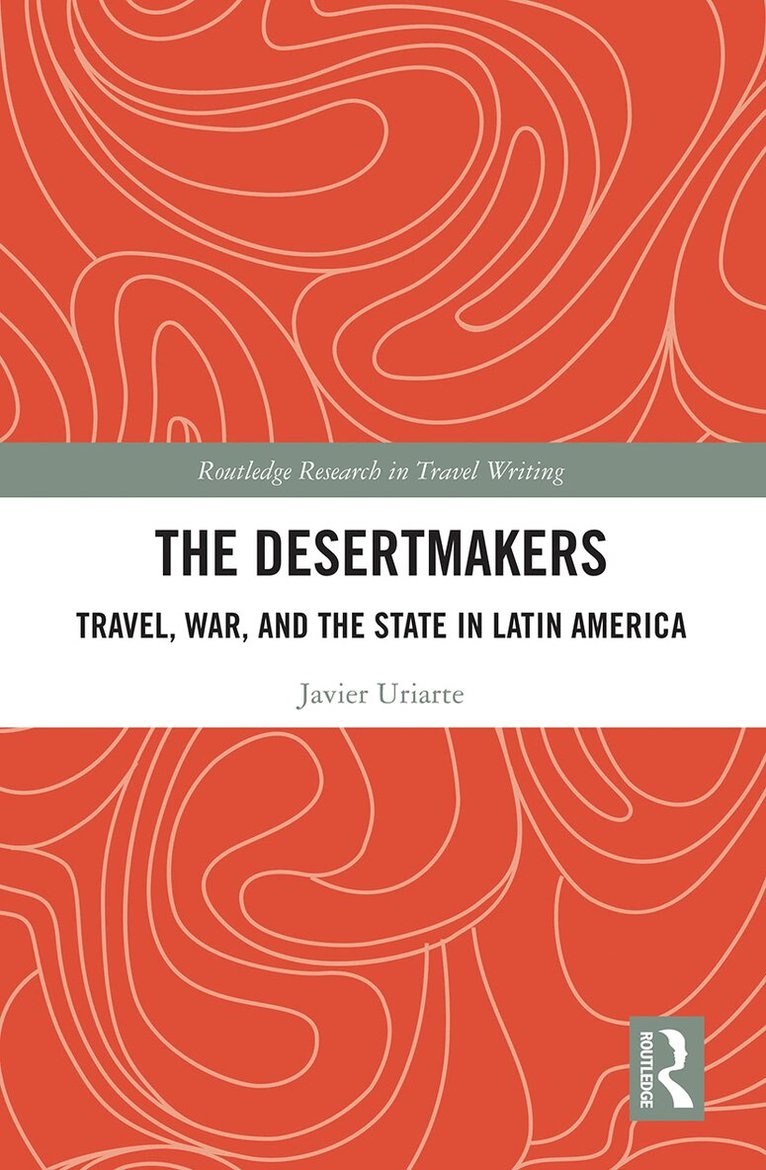
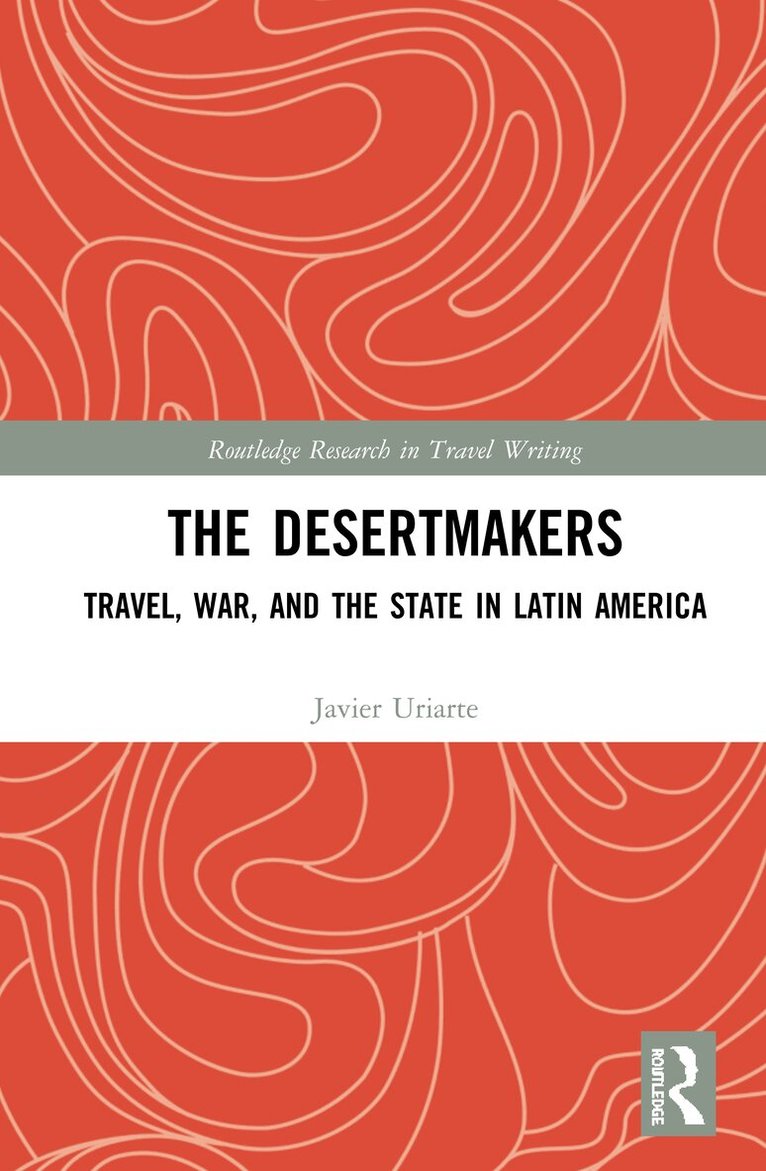
This book studies how the rhetoric of travel introduces different conceptualizations of space and time in scenarios of war during the last decades of the 19th century, in Argentina, Brazil, Paraguay, and Uruguay. By examining accounts of war and travel in the context of the consolidation of state apparatuses in these countries, Uriarte underlines the essential role that war (in connection to empire and capital) has played in the Latin American process of modernization and state formation. In this book, the analysis of British and Latin American travel narratives proves particularly productive in reading the ways in which national spaces are reconfigured, reimagined, and reappropriated by the state apparatus. War turns out to be a central instrument not just for making possible this logic of appropriation, but also for bringing temporal notions such as modernization and progress to spaces that were described — albeit problematically — as being outside of history. The book argues that wars waged against "deserts" (as Patagonia, the sertão, Paraguay, and the Uruguayan countryside were described and imagined) were in fact means of generating empty spaces, real voids that were the condition for new foundations. The study of travel writing is an essential tool for understanding the transformations of space brought by war, and for analyzing in detail the forms and connotations of movement in connection to violence. Uriarte pays particular attention to the effects that witnessing war had on the traveler’s identity and on the relation that is established with the oikos or point of departure of their own voyage. Written at the intersection of literary analysis, critical geography, political science, and history, this book will be of interest to those studying Latin American literature, Travel Writing, and neocolonialism and Empire writing.
1 473 kr
Skickas inom 7-10 vardagar
Latin American Literature in Transition 1870-1930 examines how the circulation of goods, people, and ideas permeated every aspect of the continent's cultural production at the end of the nineteenth century. It analyzes the ways in which rapidly transforming technological and labour conditions contributed to forging new intellectual networks, exploring innovative forms of knowledge, and reimagining the material and immaterial worlds. This volume shows the new directions in turn-of-the-century scholarship that developed over the last two decades by investigating how the experience of capitalism produced an array of works that deal with primitive accumulation, transnational crossings, and an emerging technological and material reality in diverse geographies and a variety of cultural forms. Essays provide a novel understanding of the period as they discuss the ways in which particular commodities, intellectual networks, popular uprisings, materialities, and non-metropolitan locations redefined cultural production at a time when the place of Latin America in global affairs was significantly transformed.
2 030 kr
Skickas inom 10-15 vardagar
This book studies how the rhetoric of travel introduces different conceptualizations of space and time in scenarios of war during the last decades of the 19th century, in Argentina, Brazil, Paraguay, and Uruguay. By examining accounts of war and travel in the context of the consolidation of state apparatuses in these countries, Uriarte underlines the essential role that war (in connection to empire and capital) has played in the Latin American process of modernization and state formation. In this book, the analysis of British and Latin American travel narratives proves particularly productive in reading the ways in which national spaces are reconfigured, reimagined, and reappropriated by the state apparatus. War turns out to be a central instrument not just for making possible this logic of appropriation, but also for bringing temporal notions such as modernization and progress to spaces that were described — albeit problematically — as being outside of history. The book argues that wars waged against "deserts" (as Patagonia, the sertão, Paraguay, and the Uruguayan countryside were described and imagined) were in fact means of generating empty spaces, real voids that were the condition for new foundations. The study of travel writing is an essential tool for understanding the transformations of space brought by war, and for analyzing in detail the forms and connotations of movement in connection to violence. Uriarte pays particular attention to the effects that witnessing war had on the traveler’s identity and on the relation that is established with the oikos or point of departure of their own voyage. Written at the intersection of literary analysis, critical geography, political science, and history, this book will be of interest to those studying Latin American literature, Travel Writing, and neocolonialism and Empire writing.
Del 6 - American Tropics: Towards a Literary Geography
Intimate Frontiers
A Literary Geography of the Amazon
Inbunden, Engelska, 2019
618 kr
Skickas
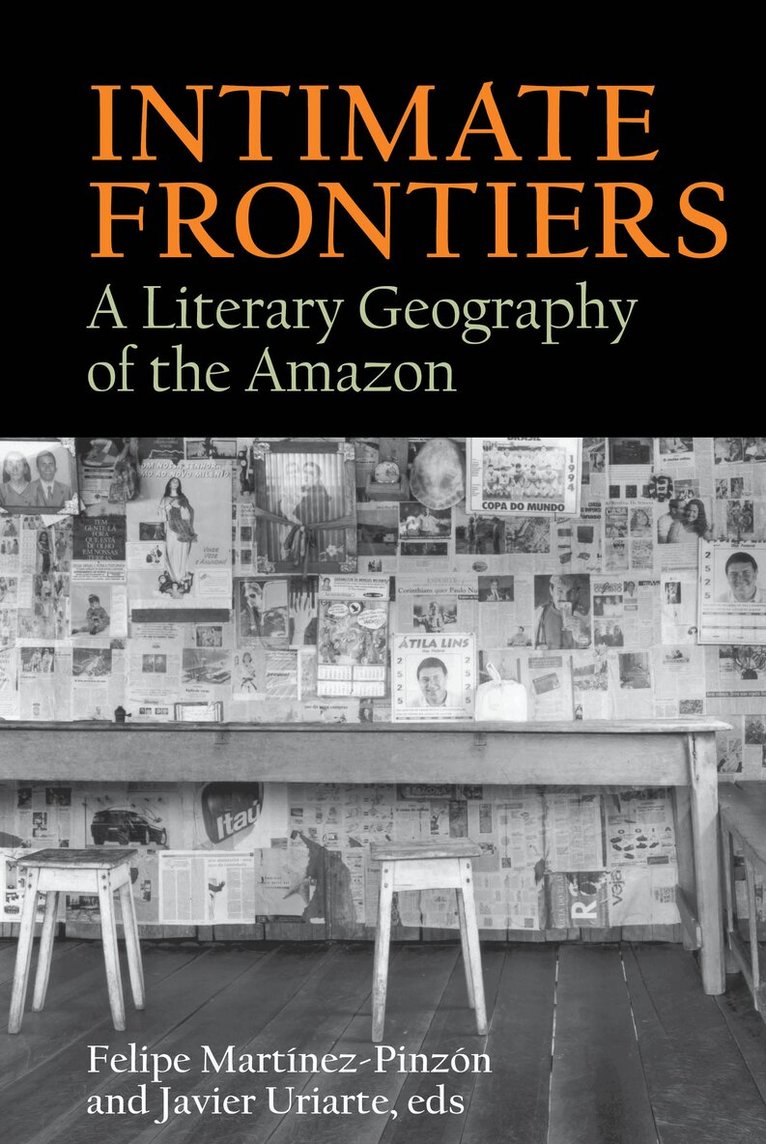
Intimate Frontiers: A Literary Geography of the Amazon analyzes the ways in which the Amazon has been represented in twentieth century cultural production. With contributions by scholars working in Latin America, the US and Europe, Intimate Frontiers reads against the grain commonly held notions about the region -its gigantism, its richness, its exceptionality, among other- choosing to approach these rather from quotidian, everyday experiences of a more intimate nature. The multinational, pluriethnic corpus of texts critically examined here, explores a wide range of cultural artifacts including travelogues, diaries, and novels about the rubber boom genocide, as well as indigenous oral histories, documentary films, and photography about the region. The different voices gathered in this book show that the richness of the Amazon lays not in its natural resources or opportunities for economic exploit, but in the richness of its histories/stories in the form of songs, oral histories, images, material culture, and texts.
Del 6 - American Tropics: Towards a Literary Geography
Intimate Frontiers
A Literary Geography of the Amazon
Häftad, Engelska, 2022
544 kr
Skickas inom 7-10 vardagar
Intimate Frontiers: A Literary Geography of the Amazon analyzes the ways in which the Amazon has been represented in twentieth century cultural production. With contributions by scholars working in Latin America, the US and Europe, Intimate Frontiers reads against the grain commonly held notions about the region —its gigantism, its richness, its exceptionality, among other— choosing to approach these rather from quotidian, everyday experiences of a more intimate nature. The multinational, pluriethnic corpus of texts critically examined here, explores a wide range of cultural artifacts including travelogues, diaries, and novels about the rubber boom genocide, as well as indigenous oral histories, documentary films, and photography about the region. The different voices gathered in this book show that the richness of the Amazon lays not in its natural resources or opportunities for economic exploit, but in the richness of its histories/stories in the form of songs, oral histories, images, material culture, and texts.
658 kr
Skickas inom 7-10 vardagar
Pensar en clave de guerra la modernidad latinoamericana arroja un desafío hace los relatos armados por la crítica literaria y cultural de las últimas décadas en torno a la contrucción de los Estados-naciones. En esta, las formas culturales habrían figurado o bien como herramientas de articulación hegemónica o bien de contestación y resistencia. Los múltiples enfrentamientos armados posteriores a la lucha por la independencia pasaban así a pensarse como modulaciones de ‘violencia social’ internas a esos procesos, con el resultado paradójico de su naturalización en tanto síntomas de colonialidad o de modernidad carente.¿Qué significa, en cambio, pensar como actos de guerra los hechos de violencia en América Latina en los siglos diecinueve y veinte? Más allá de la urgencia por rectificar errores históricos, ese gesto crítico confronta una dificultad doble que los ensayos reunidos en este volumen asumen con sutileza y audacia: por un lado, implica releer la trama cultural y forjar categorías críticas por fuera de las topologías históricas construidas sobre la supuesta ausencia o escasa importancia de la guerra, indagando en lo que ésta ‘le hace al lenguaje’ atravesándolo y convirtiéndolo en un arma y una tecnología. Pero también la dificultad de pensar al margen de historias y epistemologías de la guerra moderna calcadas fundamentalmente sobre la experiencia europea, en detrimento de sus (desde ahí) más difusas y oscuras manifestaciones poscoloniales. Pensar las culturas modernas latinoamericanas en clave de guerra—entre el humo y la niebla—significa cuestionar doblemente la excepcionalidad de esa guerra y asumirla, en fin, como nuestro hecho fundante.~Approaching Latin American modernity from the perspective of war, presents a challenge for the narratives built by literary and cultural critics in recent decades around the construction of nation-states. Through this perspective, cultural forms appear either as tools for the articulation of power or to challenge and resist it. The multiple armed conflicts that followed the fight for independence thus began to be thought of as modulations of 'social violence' internal to these processes, with the paradoxical result of their acceptance as symptoms of colonialism or lack of modernity. What does it represent instead to think of acts of violence in Latin America in the 19th and 20th centuries as acts of war? Beyond the urgency to rectify historical errors, this critical approach faces a double difficulty which the essays gathered in this volume explore with subtlety and boldness: on the one hand, it implies rereading the cultural fabric and forging critical categories outside of the historical construct built about the supposed absence or scant importance of war, investigating what it 'does to language' by traversing it and turning it into a weapon and technology. But also the difficulty of thinking outside of the histories and epistemologies of modern warfare based fundamentally on the European experience, to the detriment (from that perspective) of its more diffuse and obscure postcolonial manifestations. Thinking of modern Latin American cultures in terms of war—among the smoke and the fog—means doubly questioning the exceptionality of that war and viewing it, in short, as our foundation.