Fernando López-Alves - Böcker
Visar alla böcker från författaren Fernando López-Alves. Handla med fri frakt och snabb leverans.
6 produkter
6 produkter
401 kr
Skickas inom 7-10 vardagar
If social science's "cultural turn" has taught us anything, it is that knowledge is constrained by the time and place in which it is produced. In response, scholars have begun to reassess social theory from the standpoints of groups and places outside of the European context upon which most grand theory is based. Here a distinguished group of scholars reevaluates widely accepted theories of state, property, race, and economics against Latin American experiences with a two-fold purpose. They seek to deepen our understanding of Latin America and the problems it faces. And, by testing social science paradigms against a broader variety of cases, they pursue a better and truly generalizable map of the social world. Bringing universal theory into dialogue with specific history, the contributors consider what forms Latin American variations of classical themes might take and which theories are most useful in describing Latin America.For example, the Argentinian experience reveals the limitations of neoclassical descriptions of economic development, but Charles Tilly's emphasis on the importance of war and collective action to statemaking holds up well when thoughtfully adapted to Latin American situations. Marxist structural analysis is problematic in a region where political divisions do not fully expresses class cleavages, but aspects of Karl Polanyi's socioeconomic theory cross borders with relative ease. This fresh theoretical discussion expands the scope of Latin American studies and social theory, bringing the two into an unprecedented conversation that will benefit both. Contributors are, in addition to the editors, Jeremy Adelman, Jorge I. Dominguez, Paul Gootenberg, Alan Knight, Robert M. Levine, Claudio Lomnitz, John Markoff, Veronica Montecinos, Steven C. Topik, and J. Samuel Valenzuela.
1 278 kr
Skickas inom 7-10 vardagar
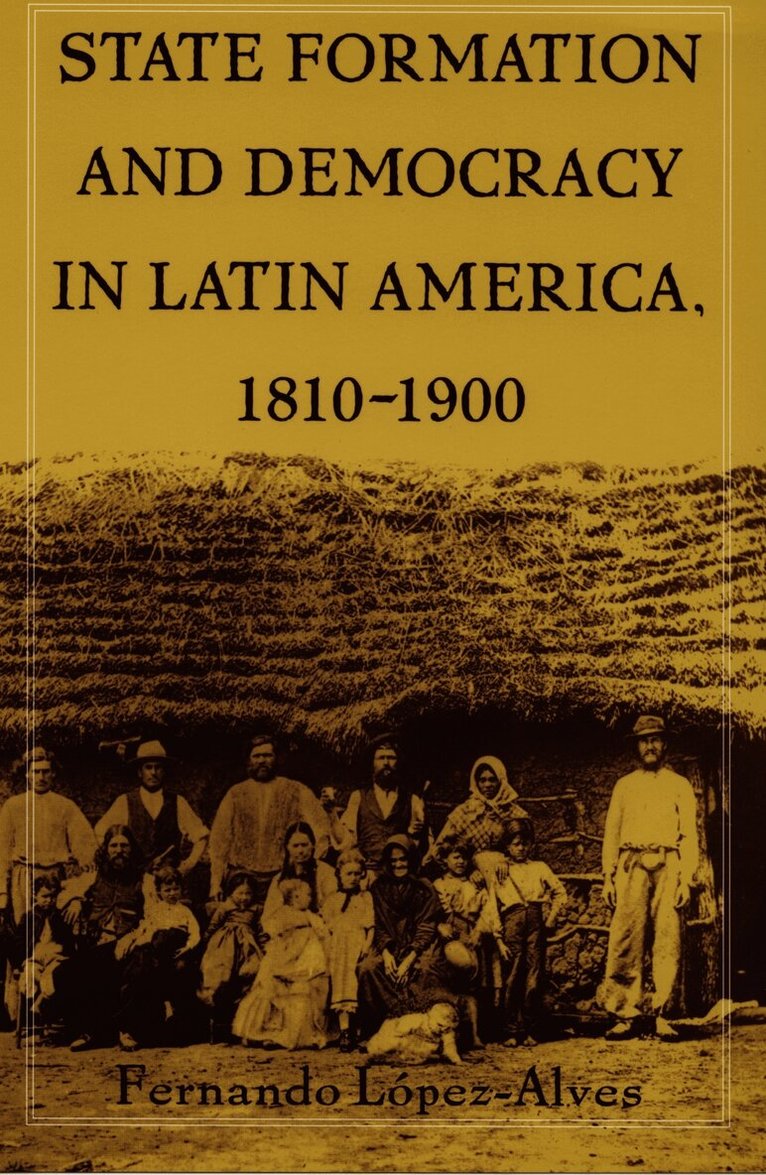
Despite a shared colonial past, South American nations experienced different patterns of conflict in the nineteenth century. These differences led to the creation of a variety of states and regimes, from authoritarian military oligarchies to popular democracies. Using a rigorous logic of comparison, Fernando LÓpez-Alves explores the roots of state building in five countries and explains why the political systems of these early postindependent societies were prone to militarism, corporatism, or liberal democracy.Breaking with the traditional economic analysis of South American development, LÓpez-Alves argues that civil-military relations lay at the core of state building. By comparing three countries in particular-Uruguay, Colombia, and Argentina-during an intense phase of state and regime formation, he shows how war and the collective action of the rural poor contributed to the construction of central armies, the rise of new social classes, and the emergence of civilian organizations. He also examines characteristics unique to each country’s war-formed culture and discusses how coalitions were built during this period. Examples from Paraguay and Venezuela and references to state formation in Europe, the United States, Asia, and the Middle East add to the complexity and richness of the study’s comparative analysis.Drawing on a vast bibliography of both primary and secondary sources, LÓpez-Alves goes beyond providing insights into the particular development of Latin American countries and introduces a comprehensive theory of state formation applicable to other regions. This book will interest Latin Americanists, historians, political scientists, and sociologists studying state formation.
372 kr
Skickas inom 7-10 vardagar
Despite a shared colonial past, South American nations experienced different patterns of conflict in the nineteenth century. These differences led to the creation of a variety of states and regimes, from authoritarian military oligarchies to popular democracies. Using a rigorous logic of comparison, Fernando LÓpez-Alves explores the roots of state building in five countries and explains why the political systems of these early postindependent societies were prone to militarism, corporatism, or liberal democracy.Breaking with the traditional economic analysis of South American development, LÓpez-Alves argues that civil-military relations lay at the core of state building. By comparing three countries in particular-Uruguay, Colombia, and Argentina-during an intense phase of state and regime formation, he shows how war and the collective action of the rural poor contributed to the construction of central armies, the rise of new social classes, and the emergence of civilian organizations. He also examines characteristics unique to each country’s war-formed culture and discusses how coalitions were built during this period. Examples from Paraguay and Venezuela and references to state formation in Europe, the United States, Asia, and the Middle East add to the complexity and richness of the study’s comparative analysis.Drawing on a vast bibliography of both primary and secondary sources, LÓpez-Alves goes beyond providing insights into the particular development of Latin American countries and introduces a comprehensive theory of state formation applicable to other regions. This book will interest Latin Americanists, historians, political scientists, and sociologists studying state formation.
222 kr
Tillfälligt slut
2 713 kr
Skickas inom 10-15 vardagar
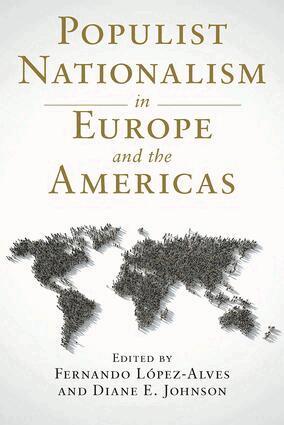
Populist nationalism fuses beliefs that citizens are being exploited by a privileged elite with claims that the national culture and interests are under threat from enemies within or without. Ideologically fluid, populist nationalists decry “out-of-touch” institutions such as political parties and the mainstream press while extolling the virtues of the “people.” They claim that only populists can truly represent the nation and solve its problems, and often call for unorthodox solutions that appeal to the common people.The recent spread of populist nationalism throughout the world has triggered a growing interest in the subject, led mainly by journalists. The Brexit vote and the election of Donald Trump in the US have provoked a flurry of media coverage in Europe and the Americas, along with parliamentary debates. Some social scientists have sought to explain the resurgence of nationalism and the spread of populism in recent decades, but important questions remain and most of the scholarship has not adequately addressed the fusion of nationalism and populism. It fails to examine the combination of populism and nationalism comparatively, especially the contrast between the more progressive and leftist versions such as those in Latin America, and the more traditional conservative varieties that are gaining strength in Germany, the United Kingdom, and the United States.This interdisciplinary collection by experts on Europe and the Americas fills this void. The volume examines various experiences with populist nationalism, and offers theoretical tools to assess its future. Some chapters are in-depth country case studies and others take a broader perspective, but all open the door for meaningful comparison.
562 kr
Skickas inom 10-15 vardagar
Populist nationalism fuses beliefs that citizens are being exploited by a privileged elite with claims that the national culture and interests are under threat from enemies within or without. Ideologically fluid, populist nationalists decry “out-of-touch” institutions such as political parties and the mainstream press while extolling the virtues of the “people.” They claim that only populists can truly represent the nation and solve its problems, and often call for unorthodox solutions that appeal to the common people.The recent spread of populist nationalism throughout the world has triggered a growing interest in the subject, led mainly by journalists. The Brexit vote and the election of Donald Trump in the US have provoked a flurry of media coverage in Europe and the Americas, along with parliamentary debates. Some social scientists have sought to explain the resurgence of nationalism and the spread of populism in recent decades, but important questions remain and most of the scholarship has not adequately addressed the fusion of nationalism and populism. It fails to examine the combination of populism and nationalism comparatively, especially the contrast between the more progressive and leftist versions such as those in Latin America, and the more traditional conservative varieties that are gaining strength in Germany, the United Kingdom, and the United States.This interdisciplinary collection by experts on Europe and the Americas fills this void. The volume examines various experiences with populist nationalism, and offers theoretical tools to assess its future. Some chapters are in-depth country case studies and others take a broader perspective, but all open the door for meaningful comparison.