Finlayson - Böcker
Visar alla böcker från författaren Finlayson. Handla med fri frakt och snabb leverans.
2 produkter
2 produkter
143 kr
Skickas
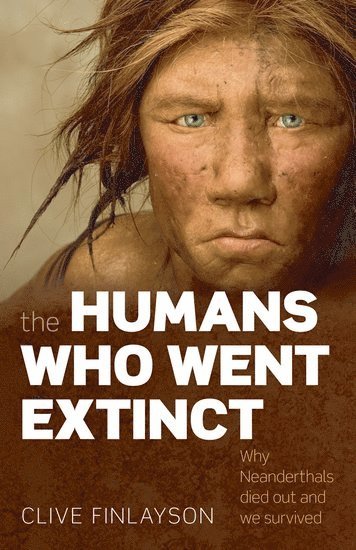
Just 28,000 years ago, the blink of an eye in geological time, the last of Neanderthals died out in their last outpost, in caves near Gibraltar. Thanks to cartoons and folk accounts we have a distorted view of these other humans - for that is what they were. We think of them as crude and clumsy and not very bright, easily driven to extinction by the lithe, smart modern humans that came out of Africa some 100,000 years ago.But was it really as simple as that? Clive Finlayson reminds us that the Neanderthals were another kind of human, and their culture was not so very different from that of our own ancestors. In this book, he presents a wider view of the events that led to the migration of the moderns into Europe, what might have happened during the contact of the two populations, and what finally drove the Neanderthals to extinction. It is a view that considers climate, ecology, and migrations of populations, as well as culture and interaction.His conclusion is that the destiny of the Neanderthals and the Moderns was sealed by ecological factors and contingencies. It was a matter of luck that we survived and spread while the Neanderthals dwindled and perished. Had the climate not changed in our favour some 50 million years ago, things would have been very different.There is much current research interest in Neanderthals, much of it driven by attempts to map some of their DNA. But it's not just a question of studying the DNA. The rise and fall of populations is profoundly moulded by the larger scale forces of climate and ecology. And it is only by taking this wider view that we can fully understand the course of events that led to our survival and their demise. The fact that Neanderthals survived until virtually yesterday makes our relationship with them and their tragedy even more poignant. They almost made it, after all.
4 431 kr
Skickas inom 7-10 vardagar
Only in Australasia can the effect of technological societies onriver systems be truly analysed and this unique, accessible bookcovers key issues in river management from a geomorphologicalperspective. Australia and New Zealand were colonised only 200 years ago bycentral bureaucratic administrations. For the whole period ofEuropean settlement most river management activities have beencarried out by government agencies and the record of theiractivities is relatively complete. These countries thereforeprovide good case studies for the impact of technological societieson river systems, having transformed their rivers in a short timefrom their 'natural' into a heavily managed condition. Geomorphology provides the scientific basis for much of ourunderstanding of river behaviour and geomorphologists are nowactively involved in the management process. This book provides acollection of case studies, the first to be produced to date, whichdescribe the management of rivers covering issues of environmentalflow, stream condition, mining and extractive activities, riverchannel change, river stabilisation, river regulation and urbanstreams. The book will prove invaluable to geomorphologists, riverengineers, stream ecologists, river managers, and environmentalimpact assessors involved in river management and restoration.