Fiona Wright - Böcker
Visar alla böcker från författaren Fiona Wright. Handla med fri frakt och snabb leverans.
3 produkter
3 produkter
384 kr
Skickas inom 3-6 vardagar
809 kr
Skickas inom 10-15 vardagar
In The Israeli Radical Left, Fiona Wright traces the dramatic as well as the mundane paths taken by radical Jewish Israeli leftwing activists, whose critique of the Israeli state has left them uneasily navigating an increasingly polarized public atmosphere. This activism is manifested in direct action solidarity movements, the critical stances of some Israeli human rights and humanitarian NGOs, and less well-known initiatives that promote social justice within Jewish Israel as a means of undermining the overwhelming support for militarism and nationalism that characterizes Israeli domestic politics. In chronicling these attempts at solidarity with those most injured by Israeli policy, Wright reveals dissent to be a fraught negotiation of activists' own citizenship in which they feel simultaneously repulsed and responsible.Based on eighteen months of fieldwork, The Israeli Radical Left provides a nuanced account of various kinds of Jewish Israeli antioccupation and antiracist activism as both spaces of subversion and articulations of complicity. Wright does not level complicity as an accusation, but rather recasts the concept as an analysis of the impurity of ethical and political relations and the often uncomfortable ways in which this makes itself felt during moments of attempted solidarity. She imparts how activists persistently underline their own feelings of complicity and the impossibility of reconciling their principles with the realities of their everyday lives, despite the fact that the activism in which they engage specifically aims to challenge Jewish Israeli citizens' participation in state violence. The first full ethnographic account of the Israeli radical left, Wright's book explores the ethics and politics of Jewish Israeli activists who challenge the violence perpetrated by their state and in their name.
416 kr
Skickas inom 7-10 vardagar
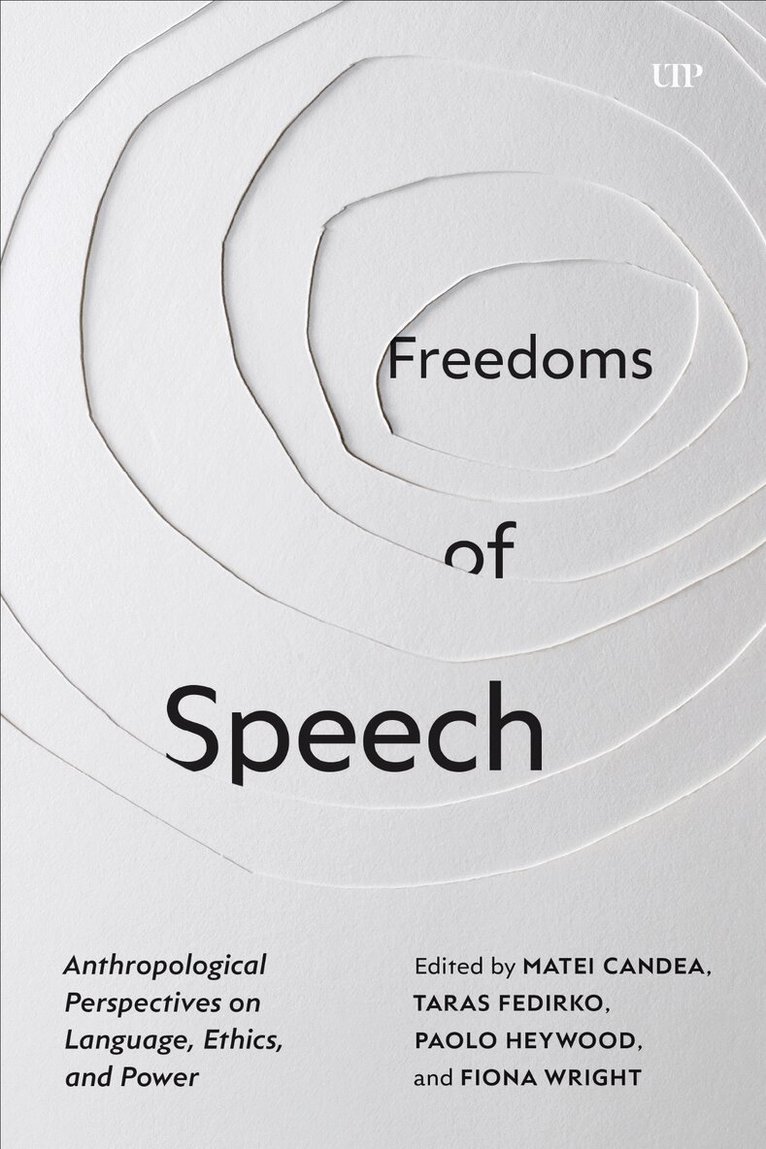
Bringing together leading anthropologists, this collection sheds light on the vast topic of freedoms of speech from a comparatively human perspective. Freedoms of Speech provides a sustained, empirical exploration of the variety of ways freedom of speech is lived, valued, and contested in practice; envisioned as an ideal; and mediated by various linguistic, ethical, and material forms.From Ireland to India, from Palestine to West Papua, from contemporary Java to early twentieth-century Britain, and from colonial Vietnam to the contemporary United States, the book broadly interrogates the classic vision of a singular "Western liberal tradition" of freedom of speech, exploring its internal complexities and highlighting alternative perspectives on the relationship between speech, freedom, and constraint in other times and places. Chapters analyse subjects commonly linked to freedom-of-speech debates, shedding new light on familiar topics that include campus speech codes, defamation, and press freedom, while also exploring unexpected ones such as therapy, gift-giving, and martyrdom. These analyses not only provide unexpected perspectives and unique insights but also address a myriad of questions, contributing to a rich, interdisciplinary, and human understanding of the nature of freedom of speech.