F.M. Kamm – författare
Visar alla böcker från författaren F.M. Kamm. Handla med fri frakt och snabb leverans.
16 produkter
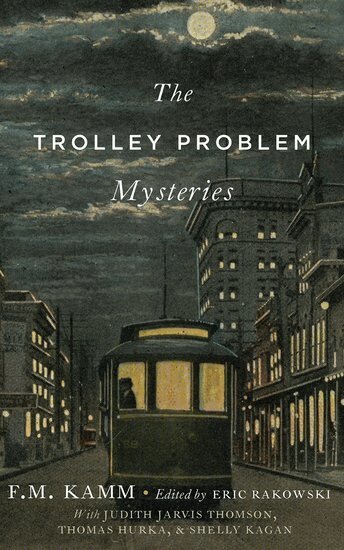
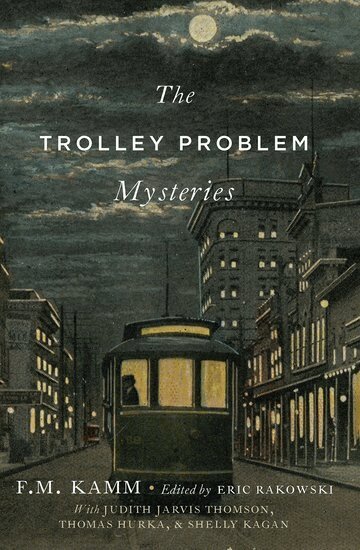
The Trolley Problem Mysteries
Inbunden, 2016
656 kr
Lägg i varukorg
Suppose you can stop a trolley from killing five people, but only by turning it onto a side track where it will kill one. May you turn the trolley? What if the only way to rescue the five is to topple a bystander in front of the trolley so that his body stops it but he dies? May you use a device to …
Trolley Problem Mysteries
E-bok, 2015
257 kr
Lägg i varukorg
A rigorous treatment of a thought experiment that has become notorious within and outside of philosophy - The Trolley Problem - by one of the most influential moral philosophers alive todaySuppose you can stop a trolley from killing five people, but only by turning it onto a side track where it …
Trolley Problem Mysteries
E-bok, 2015
257 kr
Lägg i varukorg
A rigorous treatment of a thought experiment that has become notorious within and outside of philosophy - The Trolley Problem - by one of the most influential moral philosophers alive todaySuppose you can stop a trolley from killing five people, but only by turning it onto a side track where it …
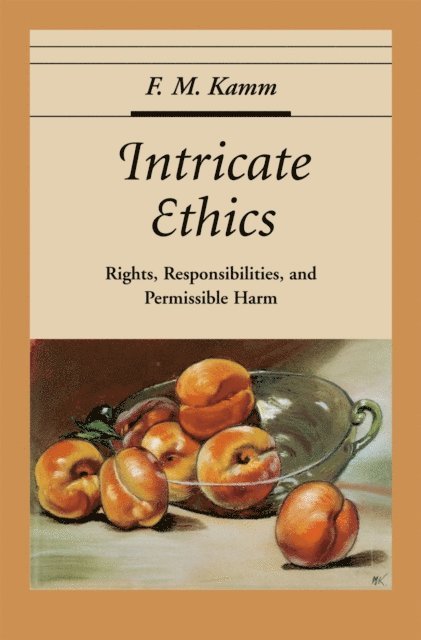
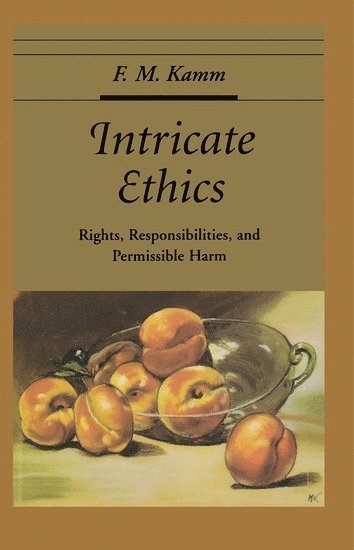
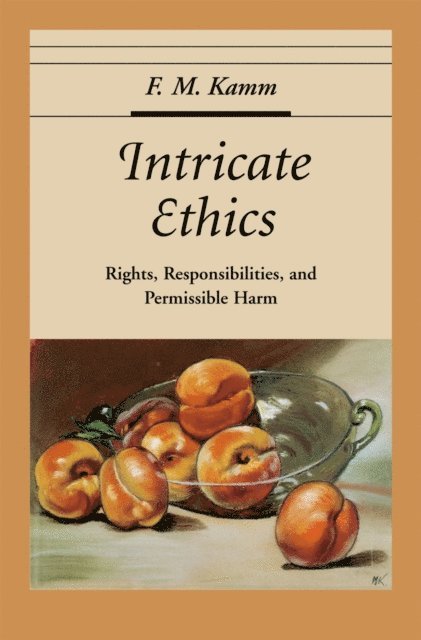
Intricate Ethics
Rights, Responsibilities, and Permissable Harm
Av F.M. Kamm
E-bok, 2006
457 kr
Lägg i varukorg
"Reading F.M. Kamm''s latest book is like watching a brilliant astronomer map an uncharted galaxy--the meticulousness and the display of mental stamina must inspire awe. There is a kind of beauty in the performance alone. Intricate Ethics is a major event in normative ethical theory by a living …
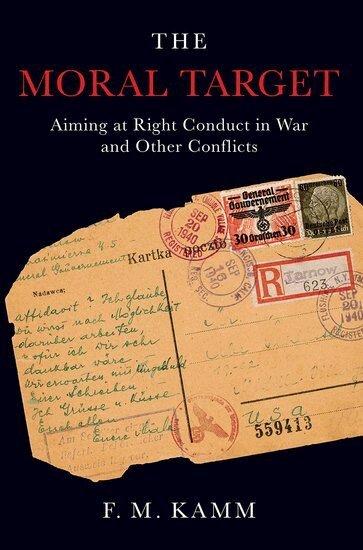
The Moral Target
Aiming at Right Conduct in War and Other Conflicts
Av F.M. Kamm
Häftad, 2016
565 kr
Lägg i varukorg
The Moral Target: Aiming at Right Conduct in War and Other Conflicts comprises essays that discuss aspects of war and other conflicts in the light of both nonconsequentialist ethical theory and the views of such theorists as Barbara Herman, Jeff McMahan, Avishai Margalit, and Michael Walzer. The …
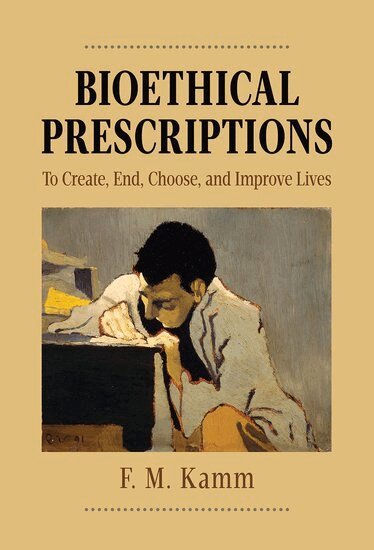
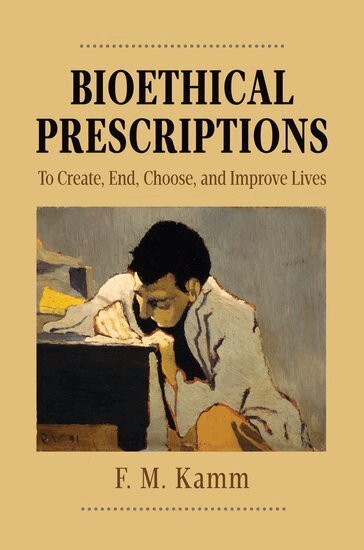
Bioethical Prescriptions
To Create, End, Choose, and Improve Lives
Av F.M. Kamm
Häftad, 2016
675 kr
Lägg i varukorg
Bioethical Prescriptions collects F.M. Kamm's articles on bioethics, which have appeared over the last twenty-five years and which have made her among the most influential philosophers in this area. Kamm is known for her intricate, sophisticated, and painstaking philosophical analyses of moral …
The Trolley Problem Mysteries
Häftad, 2019
362 kr
Lägg i varukorg
Suppose you can stop a trolley from killing five people, but only by turning it onto a side track where it will kill one. May you turn the trolley? What if the only way to rescue the five is to topple a bystander in front of the trolley so that his body stops it but he dies? May you use a device to …
Intricate Ethics
Rights, Responsibilities, and Permissible Harm
Av F.M. Kamm
Häftad, 2008
545 kr
Lägg i varukorg
F.M. Kamm is one of the leading ethical theorists working in philosophy today. She has become well known for her brand of exacting analysis, largely in defense of a non-consequentialist perspective - the view that some actions are right or wrong by virtue of something other than their consequences. …
Rights and Their Limits
In Theory, Cases, and Pandemics
Av F.M. Kamm
Inbunden, 2022
577 kr
Lägg i varukorg
In this volume, F.M. Kamm explores how theories as well as hypothetical and practical cases help us understand rights and their limits. The book begins by considering moral status and its relation to having rights (including whether non-human animals have rights and what rights future persons …
Rights and Their Limits
In Theory, Cases, and Pandemics
Av F.M. Kamm
E-bok, 2022
1119 kr
Lägg i varukorg
In this volume, F.M. Kamm explores how theories as well as hypothetical and practical cases help us understand rights and their limits. The book begins by considering moral status and its relation to having rights (including whether non-human animals have rights and what rights future persons …
Rights and Their Limits
In Theory, Cases, and Pandemics
Av F.M. Kamm
E-bok, 2022
1119 kr
Lägg i varukorg
In this volume, F.M. Kamm explores how theories as well as hypothetical and practical cases help us understand rights and their limits. The book begins by considering moral status and its relation to having rights (including whether non-human animals have rights and what rights future persons …
Almost Over
Aging, Dying, Dead
Av F.M. Kamm
Häftad, 2023
321 kr
Lägg i varukorg
In Almost Over, F. M. Kamm presents a wide-ranging philosophical discussion of the moral, legal, and medical issues related to aging, dying, and death. She begins by considering different views about whether and why death is bad for the person who dies and what these views imply about the death of …
Intricate Ethics
Rights, Responsibilities, and Permissable Harm
Av F.M. Kamm
E-bok, 2008
457 kr
Lägg i varukorg
"Reading F.M. Kamm''s latest book is like watching a brilliant astronomer map an uncharted galaxy--the meticulousness and the display of mental stamina must inspire awe. There is a kind of beauty in the performance alone. Intricate Ethics is a major event in normative ethical theory by a living …
Moral Target
Aiming at Right Conduct in War and Other Conflicts
Av F.M. Kamm
E-bok, 2012
349 kr
Lägg i varukorg
The Moral Target: Aiming at Right Conduct in War and Other Conflicts comprises essays that discuss aspects of war and other conflicts in the light of both nonconsequentialist ethical theory and the views of such theorists as Barbara Herman, Jeff McMahan, Avishai Margalit, and Michael Walzer. The …
Bioethical Prescriptions
To Create, End, Choose, and Improve Lives
Av F.M. Kamm
Inbunden, 2014
950 kr
Lägg i varukorg
Bioethical Prescriptions collects F.M. Kamm's articles on bioethics, which have appeared over the last twenty-five years and which have made her among the most influential philosophers in this area. Kamm is known for her intricate, sophisticated, and painstaking philosophical analyses of moral …
Bioethical Prescriptions
To Create, End, Choose, and Improve Lives
Av F.M. Kamm
E-bok, 2013
404 kr
Lägg i varukorg
Bioethical Prescriptions collects F.M. Kamm''s articles on bioethics, which have appeared over the last twenty-five years and which have made her among the most influential philosophers in this area. Kamm is known for her intricate, sophisticated, and painstaking philosophical analyses of moral …