Fran Brearton – författare
Visar alla böcker från författaren Fran Brearton. Handla med fri frakt och snabb leverans.
6 produkter
6 produkter
2 722 kr
Skickas inom 5-8 vardagar
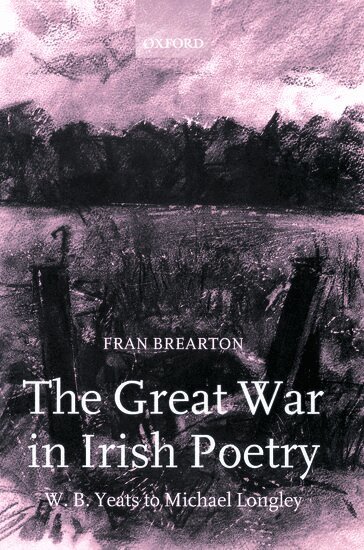
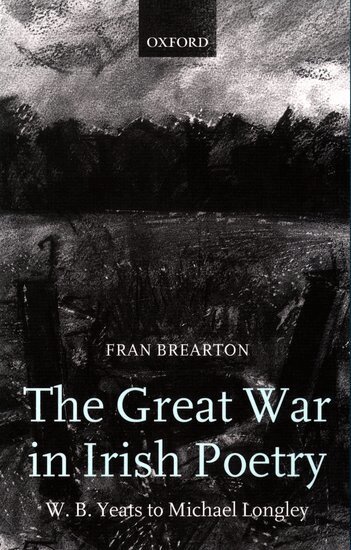
The Great War in Irish Poetry explores the impact of the First World War on the work of W.B. Yeats, Robert Graves, and Louis MacNeice in the period 1914-45, and on three contemporary Northern Irish poets, Derek Mahon, Seamus Heaney, and Michael Longley. Its concern is to place their work, and memory of the Great War, in the context of Irish culture and politics in the twentieth century. The historical background to Irish involvement in the Great War is explained, as are the ways in which some of the events of 1912-1920 -- the Home Rule crisis, the loss of the Titanic, the Battle of the Somme, the Easter Rising -- still reverberate in the politics of remembrance in Northern Ireland.While the Great War is perceived as central to English culture, and its literature holds a privileged position in the English literary canon, the centrality of the Great War to Irish writing has seldom been acknowledged. This book is concerned with the extent to which recognition of the importance of the Great War in Irish writing has become a casualty of competing versions of the literary canon. It shows that, despite complications in Irish domestic politics which led to the repression of 'official memory' of the Great War in Ireland, Irish poets, particularly those writing in the 'troubled' Northern Ireland of the last thirty years, have been drawn throughout the century to the events and images of 1914-18.
959 kr
Skickas inom 5-8 vardagar
The Great War in Irish Poetry explores the impact of the First World War on the work of W. B. Yeats, Robert Graves, and Louis MacNeice in the period 1914-45, and on three contemporary Northern Irish poets, Derek Mahon, Seamus Heaney, and Michael Longley. Its concern is to place their work, and memory of the Great War, in the context of Irish politics and culture in the twentieth century. The historical background to Irish involvement in the Great War is explained, as are the ways in which issues raised in 1912-20 still reverberate in the politics of remembrance in Northern Ireland, particularly through such events as the Home Rule cause, the loss of the Titanic, the Battle of the Somme, the Easter Rising. While the Great War is perceived as central to English culture, and its literature holds a privileged position in the English literary canon, the centrality of the Great War to Irish writing has seldom been recognised. This book shows first, that despite complications in Irish domestic politics which led to the repression of memory of the Great War, Irish poets have been drawn throughout the century to the events and images of 1914-18. This engagement is particularly true of those writing in the 'troubled' Northern Ireland of the last thirty years. The second main concern is the extent to which recognition of the importance of the Great War in Irish writing has itself become a casualty of competing versions of the literary canon.
2 235 kr
Skickas inom 7-10 vardagar
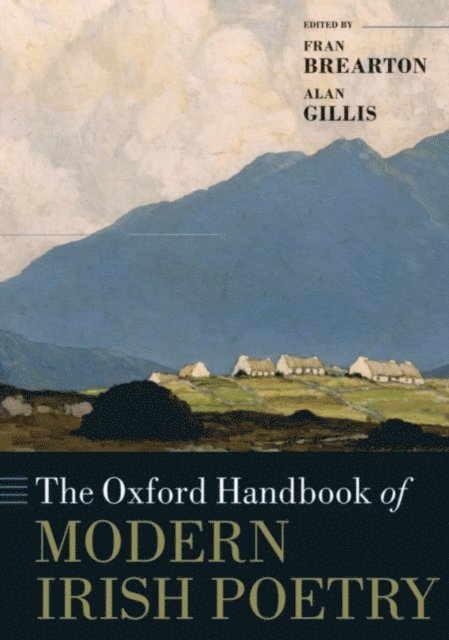
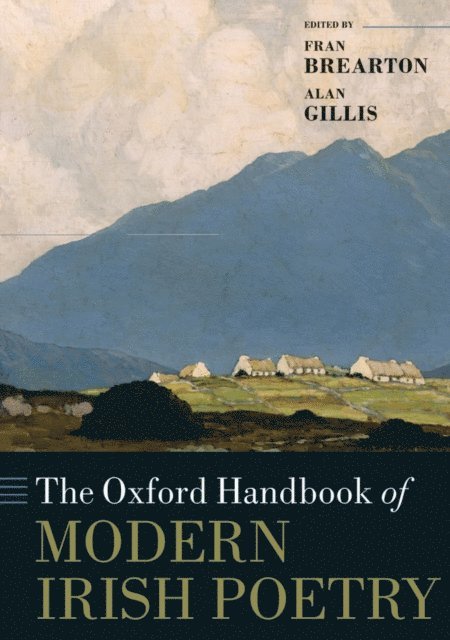
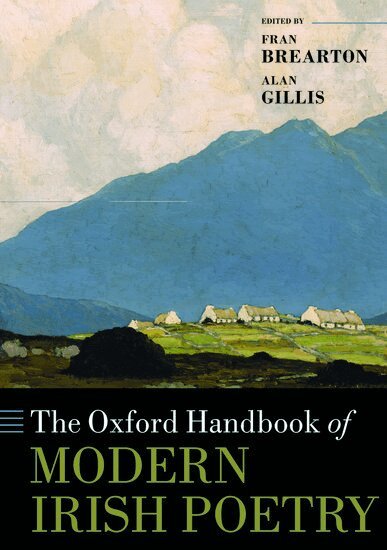
Forty chapters, written by leading scholars across the world, describe the latest thinking on modern Irish poetry. The Handbook begins with a consideration of Yeats's early work, and the legacy of the 19th century. The broadly chronological areas which follow, covering the period from the 1910s through to the 21st century, allow scope for coverage of key poetic voices in Ireland in their historical and political context. From the experimentalism of Beckett, MacGreevy, and others of the modernist generation, to the refashioning of Yeats's Ireland on the part of poets such as MacNeice, Kavanagh, and Clarke mid-century, through to the controversially titled post-1969 'Northern Renaissance' of poetry, this volume will provide extensive coverage of the key movements of the modern period.The Handbook covers the work of, among others, Paul Durcan, Thomas Kinsella, Brendan Kennelly, Seamus Heaney, Paul Muldoon, Michael Longley, Medbh McGuckian, and Ciaran Carson. The thematic sections interspersed throughout - chapters on women's poetry, religion, translation, painting, music, stylistics - allow for comparative studies of poets north and south across the century. Central to the guiding spirit of this project is the Handbook's consideration of poetic forms, and a number of essays explore the generic diversity of poetry in Ireland, its various manipulations, reinventions and sometimes repudiations of traditional forms. The last essays in the book examine the work of a 'new' generation of poets from Ireland, concentrating on work published in the last two decades by Justin Quinn, Leontia Flynn, Sinead Morrissey, David Wheatley, Vona Groarke, and others.
856 kr
Skickas inom 7-10 vardagar
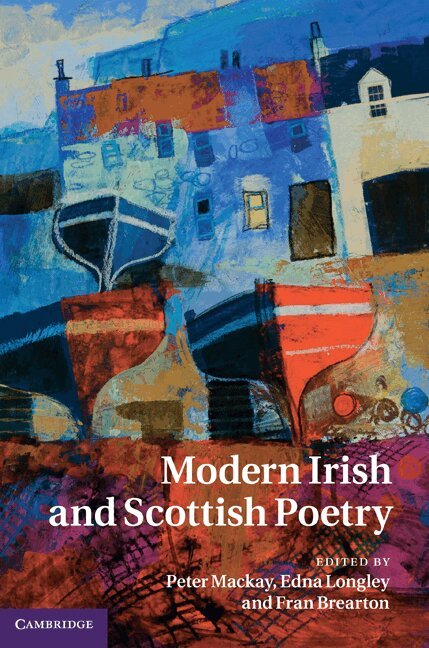
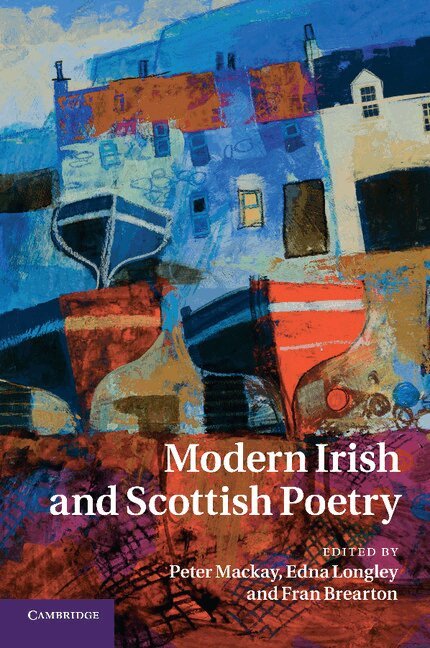
The comparative study of the literatures of Ireland and Scotland has emerged as a distinct and buoyant field in recent years. This collection of new essays offers the first sustained comparison of modern Irish and Scottish poetry, featuring close readings of texts within broad historical and political contextualisation. Playing on influences, crossovers, connections, disconnections and differences, the 'affinities' and 'opposites' traced in this book cross both Irish and Scottish poetry in many directions. Contributors include major scholars of the new 'archipelagic' approach, as well as leading Irish and Scottish poets providing important insights into current creative practice. Poets discussed include W. B. Yeats, Hugh MacDiarmid, Sorley MacLean, Louis MacNeice, Edwin Morgan, Douglas Dunn, Seamus Heaney, Ian Hamilton Finlay, Michael Longley, Medbh McGuckian, Nuala ni Dhomhnaill, Don Paterson and Kathleen Jamie. This book is a major contribution to our understanding of poetry from these islands in the twentieth and twenty-first centuries.
584 kr
Skickas inom 7-10 vardagar
The comparative study of the literatures of Ireland and Scotland has emerged as a distinct and buoyant field in recent years. This collection of new essays offers the first sustained comparison of modern Irish and Scottish poetry, featuring close readings of texts within broad historical and political contextualisation. Playing on influences, crossovers, connections, disconnections and differences, the 'affinities' and 'opposites' traced in this book cross both Irish and Scottish poetry in many directions. Contributors include major scholars of the new 'archipelagic' approach, as well as leading Irish and Scottish poets providing important insights into current creative practice. Poets discussed include W. B. Yeats, Hugh MacDiarmid, Sorley MacLean, Louis MacNeice, Edwin Morgan, Douglas Dunn, Seamus Heaney, Ian Hamilton Finlay, Michael Longley, Medbh McGuckian, Nuala ni Dhomhnaill, Don Paterson and Kathleen Jamie. This book is a major contribution to our understanding of poetry from these islands in the twentieth and twenty-first centuries.
169 kr
Tillfälligt slut
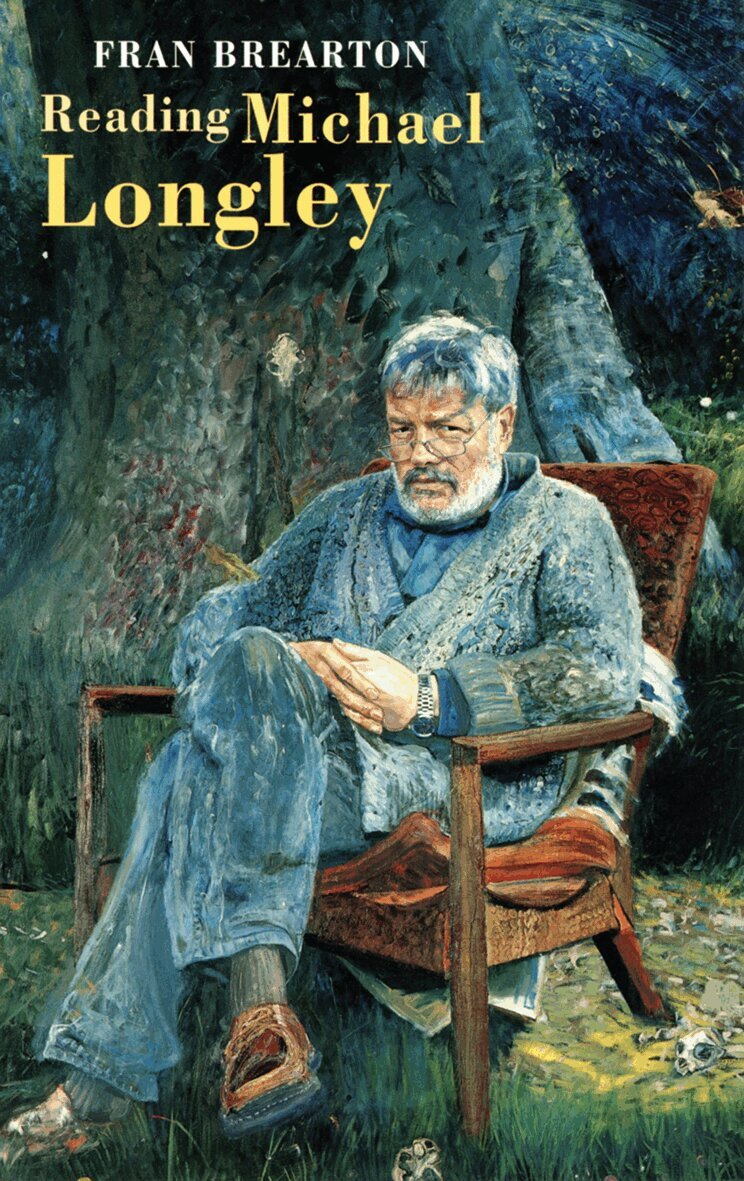
Michael Longley has been called 'one of the finest lyric poets of our century' (John Burnside). This ground-breaking study is the first full-length assessment of his work, and looks in turn at all the major collections he has published over the past 40 years, and at the extraordinary growth of his reputation and influence. Fran Brearton's reading of Longley's work relates the development of his poetry to the recent literary and political history of Northern Ireland, and to the Irish poetic tradition from Yeats to the present day. In placing Longley's poetry in a network of cultural influences, and evaluating its critical reception, her study also engages with key debates in the criticism of modern poetry in English. She offers a broadly chronological reading of Longley's work from the 1960s to the present day, tracing thematic continuities across his collections. Longley's long silence between "The Echo Gate" (1979) and "Gorse Fires" (1991), she argues, helped him to re-shape and strengthen his poetry, so that his later work is in some ways a re-reading of his earlier poetry, but taken in new and unexpected directions. In this highly readable book, Fran Brearton draws on letters, manuscripts, published and personal interviews with Michael Longley, as well as on his memoir, "Tuppenny Stung", and his recent researches into his father's military career. She shows how his poetry is shaped by the dislocations and tensions of his English parentage and Irish upbringing, making him one of the most imaginatively various and formally inventive poets writing today.