
FranAois Maon – författare
Visar alla böcker från författaren FranAois Maon. Handla med fri frakt och snabb leverans.
4 produkter
4 produkter
E-bok
Engelska, 2016641 kr
Läs direkt efter köp
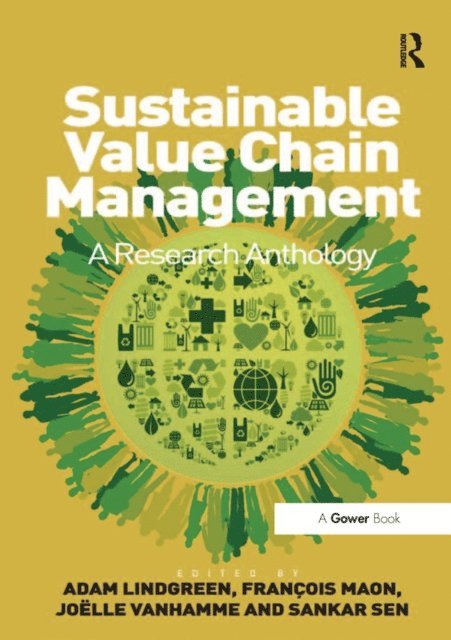
The way organizations manage their value chain has changed dramatically over the past decade. Today, organizations take account of economic issues, but they also adopt a broader perspective of their purpose including social and environmental issues. Yet despite its global spread, sustainable value chain management remains an uncertain and poorly defined ambition, with few absolutes. The social and environmental issues that organizations should address easily can be interpreted as including virtually everything. Current literature on the topic seeks to understand the effects and management of initiatives dealing with diversity, human rights, safety, philanthropy, community, and environment. However, the penetration of social and environmental considerations into value chain management is described as ’desire lacking reality’ thereby making the idea a patchy success. The objective of this research anthology is to investigate different angles of sustainable value chain management. The book’s 27 chapters fill holes and explore new fields; the chapters are organised in five sections: Sustainable value chains - context, drivers, and barriers; Sustainable value chains - managing activities; Sustainable value chains - managing networks and collaboration; Sustainable value chains - integrative perspectives; and Sustainable value chains - specific sectorial and industry perspectives.
E-bok
PDF, Engelska, 2016641 kr
Läs direkt efter köp
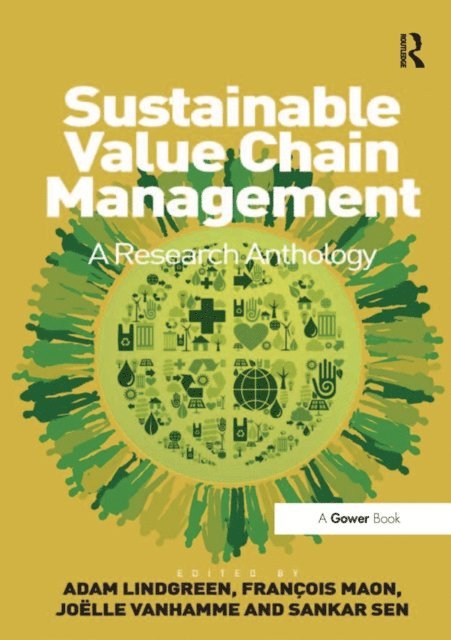
The way organizations manage their value chain has changed dramatically over the past decade. Today, organizations take account of economic issues, but they also adopt a broader perspective of their purpose including social and environmental issues. Yet despite its global spread, sustainable value chain management remains an uncertain and poorly defined ambition, with few absolutes. The social and environmental issues that organizations should address easily can be interpreted as including virtually everything. Current literature on the topic seeks to understand the effects and management of initiatives dealing with diversity, human rights, safety, philanthropy, community, and environment. However, the penetration of social and environmental considerations into value chain management is described as ’desire lacking reality’ thereby making the idea a patchy success. The objective of this research anthology is to investigate different angles of sustainable value chain management. The book’s 27 chapters fill holes and explore new fields; the chapters are organised in five sections: Sustainable value chains - context, drivers, and barriers; Sustainable value chains - managing activities; Sustainable value chains - managing networks and collaboration; Sustainable value chains - integrative perspectives; and Sustainable value chains - specific sectorial and industry perspectives.
E-bok
Engelska, 2016641 kr
Läs direkt efter köp
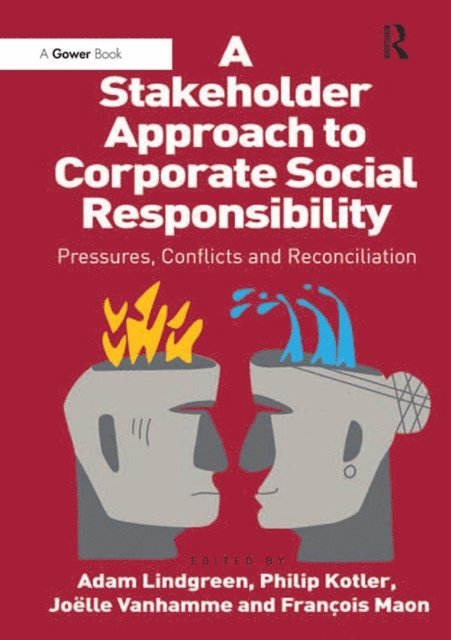
Corporate social responsibility has grown into a global phenomenon that encompasses businesses, consumers, governments, and civil society, and many organizations have adopted its discourse. Yet corporate social responsibility remains an uncertain and poorly defined ambition, with few absolutes. First, the issues that organizations must address can easily be interpreted to include virtually everyone and everything. Second, with their unique, often particular characteristics, different stakeholder groups tend to focus only on specific issues that they believe are the most appropriate and relevant in organizations'' corporate social responsibility programs. Thus, beliefs about what constitutes a socially responsible and sustainable organization depend on the perspective of the stakeholder. Third, in any organization, the beliefs of organizational members about their organization''s social responsibilities vary according to their function and department, as well as their own managerial fields of knowledge. A Stakeholder Approach to Corporate Social Responsibility provides a comprehensive collection of cutting-edge theories and research that can lead to a more multifaceted understanding of corporate social responsibility in its various forms, the pressures and conflicts that result from these different understandings, and some potential solutions for reconciling them.
E-bok
PDF, Engelska, 2016641 kr
Läs direkt efter köp
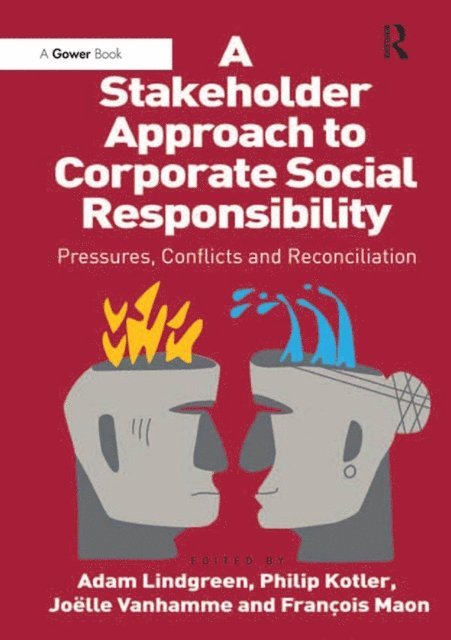
Corporate social responsibility has grown into a global phenomenon that encompasses businesses, consumers, governments, and civil society, and many organizations have adopted its discourse. Yet corporate social responsibility remains an uncertain and poorly defined ambition, with few absolutes. First, the issues that organizations must address can easily be interpreted to include virtually everyone and everything. Second, with their unique, often particular characteristics, different stakeholder groups tend to focus only on specific issues that they believe are the most appropriate and relevant in organizations'' corporate social responsibility programs. Thus, beliefs about what constitutes a socially responsible and sustainable organization depend on the perspective of the stakeholder. Third, in any organization, the beliefs of organizational members about their organization''s social responsibilities vary according to their function and department, as well as their own managerial fields of knowledge. A Stakeholder Approach to Corporate Social Responsibility provides a comprehensive collection of cutting-edge theories and research that can lead to a more multifaceted understanding of corporate social responsibility in its various forms, the pressures and conflicts that result from these different understandings, and some potential solutions for reconciling them.