Frances Abrahamer Rothstein – författare
Visar alla böcker från författaren Frances Abrahamer Rothstein. Handla med fri frakt och snabb leverans.
3 produkter
3 produkter
214 kr
Skickas inom 10-15 vardagar
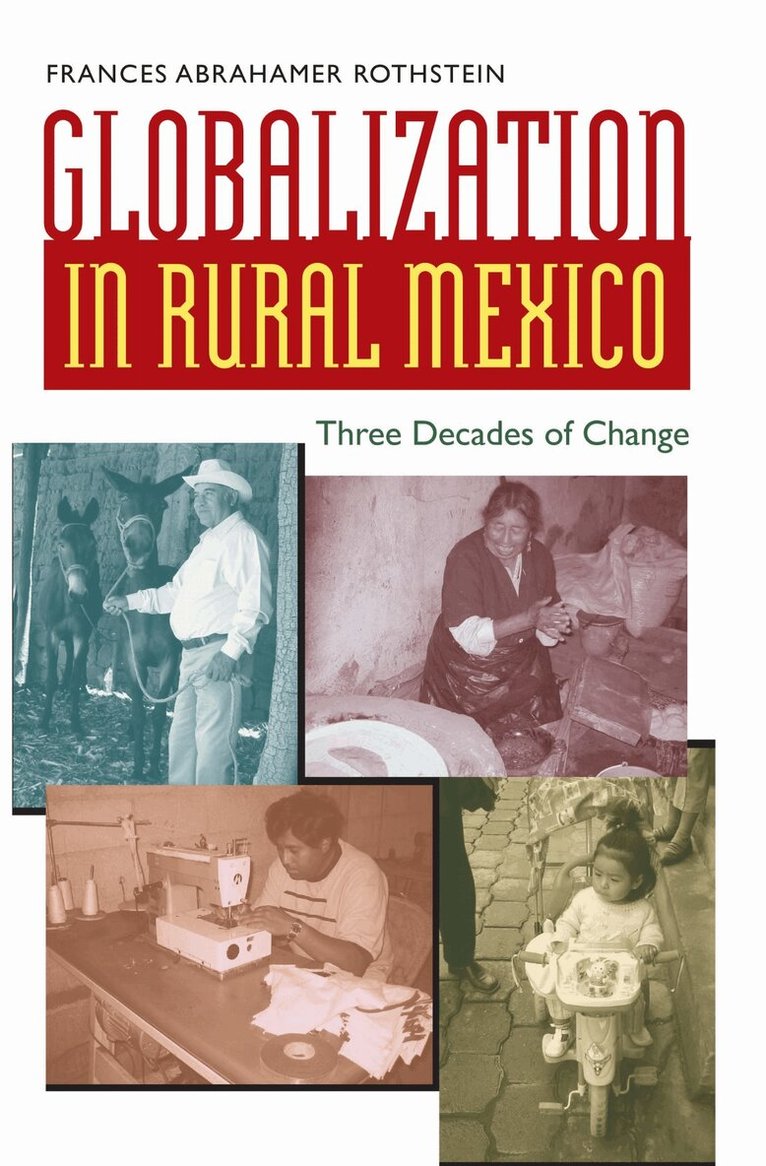
Winner, Society of the Anthropology of Work Book Prize, 2010When the ever-intensifying global marketplace "modernizes" rural communities, who stands to gain? Can local residents most impacted by changes to their social fabric ever recover or even identify what has been lost? Frances Abrahamer Rothstein uses thirty years of sustained anthropological fieldwork in the rural Mexican community of San Cosme Mazatecochco to showcase globalization's complexities and contradictions. Rothstein's lucid work chronicles the changes in production, consumption, and social relations during three distinct periods: the Mexican "miracle," when economic development fueled mobility for a large segment of the population, including San Cosme's worker-peasants; the lost decade of the 1980s, when much of what had been gained was lost; and the recent period of trade liberalization and globalization, considered by many in Mexico and beyond as a panacea and a disaster at the same time. After Mexico's textile industry decline in the late 1980s, some families of former textile workers in San Cosme opened home workshops-talleres-and a small-scale, textile-based economy took root. These families, who managed to prosper through their own trade and industry, demonstrate that those who rely on consumer demand for their livelihood need not always follow the dictate of the marketplace, but rather can position themselves assertively to influence alternative economic possibilities held close to their culture. Employing rich ethnography and broad analysis, Rothstein focuses on how everyday life has been transformed by these processes, but shows also how important continuities with the past persist. She strikes a delicate balance between firmly grounded scientific study and a deep compassion for the subjects of her work, while challenging contemporary views of globalization and consumption.
Anthropology and the Global Factory
Studies of the New Industrialization in the Late Twentieth Century
Inbunden, Engelska, 1991
1 039 kr
Skickas inom 10-15 vardagar
The world is fast becoming a global factory in which workers, entrepreneurs, and multinational corporations find themselves producing for the world capitalist market. This collection of original essays explores in concrete anthropological detail the ways that people throughout the world have been drawn into this new international labor web. Broad in scope and far-reaching in their analyses, the chapters in this book offer numerous examples of this new world order. The case studies focus on industrialization in small-scale workshops and informal work-at-home situations as well as multinational corporations. Undertaken in every continent, in core as well as peripheral regions, the studies cover the perspectives of the workers, the entrepreneurs, and the corporations.In this systematic view of the capitalization of the world economy, the contributors demonstrate how new economic linkages are being formed between world markets and small-scale entrepreneurs and home-based local producers and how late-developing regions attempt to gain economic sovereignty through the marketing of local product specialties. At the same time, the contributors' investigations provide concrete evidence of local efforts to create culturally distinct and socially equitable lives--showing how the spread of the world capitalist economy changes the everyday lives of people. They point to ways in which people use their local traditions of kinship, culture, and community to resist and shape economic change to more satisfying local ends.
Anthropology and the Global Factory
Studies of the New Industrialization in the Late Twentieth Century
Häftad, Engelska, 1991
489 kr
Skickas inom 10-15 vardagar
The world is fast becoming a global factory in which workers, entrepreneurs, and multinational corporations find themselves producing for the world capitalist market. This collection of original essays explores in concrete anthropological detail the ways that people throughout the world have been drawn into this new international labor web. Broad in scope and far-reaching in their analyses, the chapters in this book offer numerous examples of this new world order. The case studies focus on industrialization in small-scale workshops and informal work-at-home situations as well as multinational corporations. Undertaken in every continent, in core as well as peripheral regions, the studies cover the perspectives of the workers, the entrepreneurs, and the corporations.In this systematic view of the capitalization of the world economy, the contributors demonstrate how new economic linkages are being formed between world markets and small-scale entrepreneurs and home-based local producers and how late-developing regions attempt to gain economic sovereignty through the marketing of local product specialties. At the same time, the contributors' investigations provide concrete evidence of local efforts to create culturally distinct and socially equitable lives--showing how the spread of the world capitalist economy changes the everyday lives of people. They point to ways in which people use their local traditions of kinship, culture, and community to resist and shape economic change to more satisfying local ends.