Francesca R. Sborgi Lawson - Böcker
Visar alla böcker från författaren Francesca R. Sborgi Lawson. Handla med fri frakt och snabb leverans.
3 produkter
3 produkter
704 kr
Skickas inom 10-15 vardagar
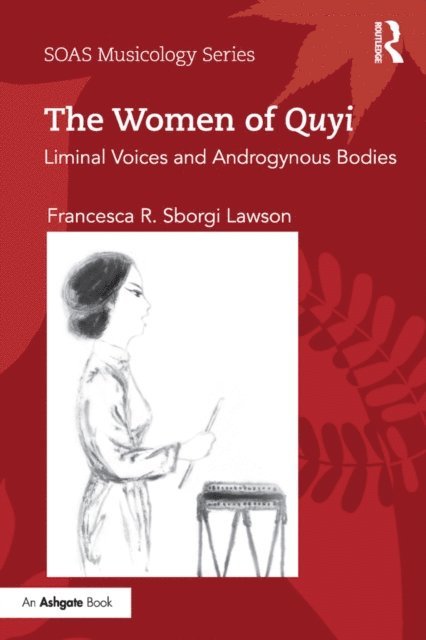
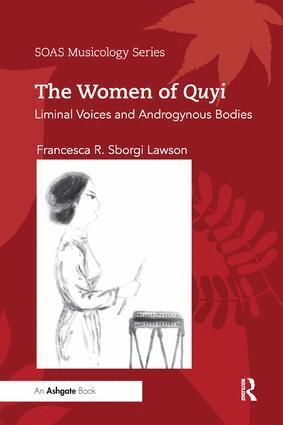
Why has the female voice—as the resonant incarnation of the female body—inspired both fascination and ambivalence? Why were women restricted from performing on the Chinese public stage? How have female roles and voices been appropriated by men throughout much of the history of Chinese theatre? Why were the women of quyi—a community of Chinese female singers in Republican Tianjin—able to become successful, respected artists when other female singers and actors in competing performance traditions struggled for acceptance? Drawing substantially on original ethnographic fieldwork conducted in the 1980s and 1990s, Francesca R. Sborgi Lawson offers answers to these questions and demonstrates how the women of quyi successfully negotiated their sexuality and vocality in performance. Owing to their role as third-person narrators, the women of quyi bridged the gender gap, creating an androgynous persona that de-emphasized their feminine appearance and, at the same time, allowed them to showcase their female voices on public stages—places that had been previously unwelcoming to female artists. This is a story about female storytellers who sang their way to respectability and social change in the early decades of the twentieth century by minimizing their bodies in order to allow their voices to be heard.
2 305 kr
Skickas inom 10-15 vardagar
Why has the female voice—as the resonant incarnation of the female body—inspired both fascination and ambivalence? Why were women restricted from performing on the Chinese public stage? How have female roles and voices been appropriated by men throughout much of the history of Chinese theatre? Why were the women of quyi—a community of Chinese female singers in Republican Tianjin—able to become successful, respected artists when other female singers and actors in competing performance traditions struggled for acceptance? Drawing substantially on original ethnographic fieldwork conducted in the 1980s and 1990s, Francesca R. Sborgi Lawson offers answers to these questions and demonstrates how the women of quyi successfully negotiated their sexuality and vocality in performance. Owing to their role as third-person narrators, the women of quyi bridged the gender gap, creating an androgynous persona that de-emphasized their feminine appearance and, at the same time, allowed them to showcase their female voices on public stages—places that had been previously unwelcoming to female artists. This is a story about female storytellers who sang their way to respectability and social change in the early decades of the twentieth century by minimizing their bodies in order to allow their voices to be heard.
2 166 kr
Skickas inom 10-15 vardagar
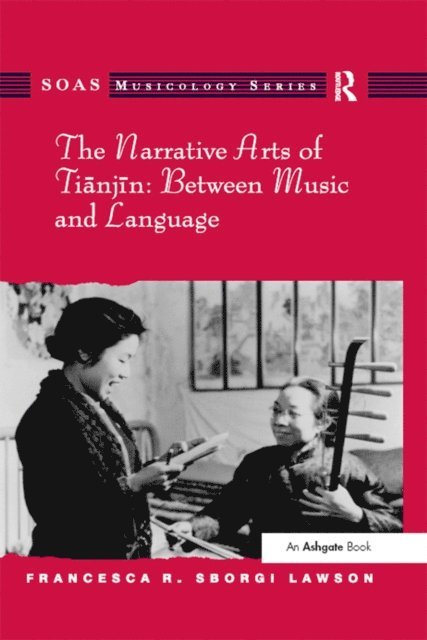
In studying one of the world's oldest and most enduring musical cultures, academics have consistently missed one of the richest forms of Chinese cultural expression: performed narratives. Francesca R. Sborgi Lawson explores the relationships between language and music in the performance of four narrative genres in the city of Tianjin, China, based upon original field research conducted in the People's Republic of China in the mid 1980s and in 1991. The author emphasizes the unique nature of oral performances in China: these genres are both musical and literary and yet are considered to be neither music nor literature. Lawson employs extensive examples of the complex interaction of music and language in each genre, all the while relating those analyses to broader cultural issues and to patterns of social relationships. The narrative arts known as shuochang (speaking-singing) are depicted as genres that constitute a unique communicative discourse”the communication of stories in song. The genres subsumed under the native conception of shuochang include Tianjin Popular Tunes, Beijing Drumsong, Clappertales and Comic Routines. The maximum utilization of shuo (speaking) and chang (singing) in all their varying manifestations constitutes the vitality of the traditional narrative arts in the city of Tianjin”the center for these arts in North China. The variety of narrative forms provides entertainment for audiences representing all social strata of Chinese society. The author argues that Chinese narrative traditions represent a foundation from which certain Chinese literary and operatic traditions have borrowed, such as how the novels from the Ming-Qing period draw on the performed narrative arts both in style and in content. Hence, an understanding of performed narratives is not only useful to scholars in Chinese literature and music, but also to scholars interested in broadening their understanding of China generally.