Francie R. Chassen-López - Böcker
Visar alla böcker från författaren Francie R. Chassen-López. Handla med fri frakt och snabb leverans.
2 produkter
2 produkter
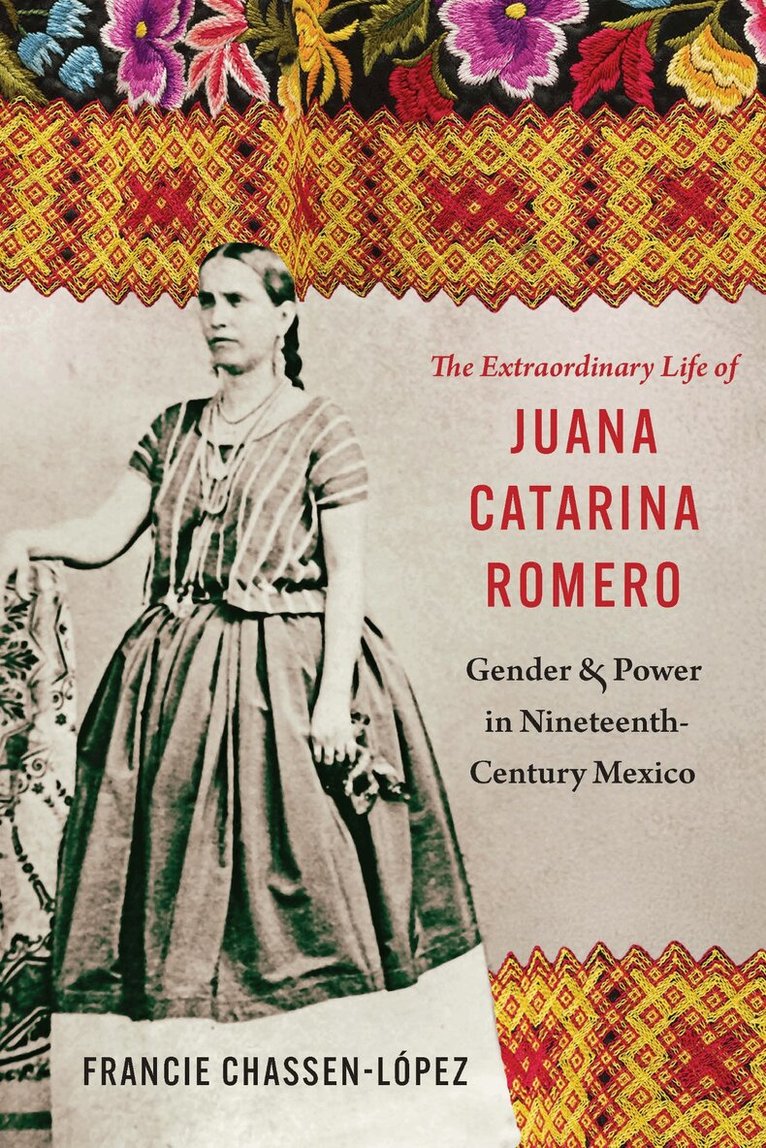
Extraordinary Life of Juana Catarina Romero
Gender and Power in Nineteenth-Century Mexico
Inbunden, Engelska, 2026
1 144 kr
Kommande
The construction of the nation-state, the development of capitalism, and the modernization of society have historically been defined as masculine endeavors, with women on the sidelines. This biography of Juana Catarina Romero (1837–1915) shatters many of the stereotypes of nineteenth-century women and provides a new perspective of women's national agency during a time in which women could neither vote nor hold political office. Romero's breathtaking climb from illiterate cigarette peddler and Liberal spy to wealthy entrepreneur, philanthropist, and, finally, cacica (political boss) of the city of Tehuantepec, despite the opposition of male elites, reveals the growing fluidity of class, race, and ethnicity.Francie Chassen-López's fascinating biography of Romero offers rich insight into the complexities of modernization as it developed on the periphery of Mexico. Romero sought a Tehuantepec-style modernity, a modus vivendi between modernization, Catholicism, and isthmian Zapotec culture. Like her friend President Porfirio Díaz, Romero formed part of a group of ambitious Mexicans of modest origins, forged in civil war, who would build the Mexican nation-state.
Extraordinary Life of Juana Catarina Romero
Gender and Power in Nineteenth-Century Mexico
Häftad, Engelska, 2026
422 kr
Kommande
The construction of the nation-state, the development of capitalism, and the modernization of society have historically been defined as masculine endeavors, with women on the sidelines. This biography of Juana Catarina Romero (1837–1915) shatters many of the stereotypes of nineteenth-century women and provides a new perspective of women's national agency during a time in which women could neither vote nor hold political office. Romero's breathtaking climb from illiterate cigarette peddler and Liberal spy to wealthy entrepreneur, philanthropist, and, finally, cacica (political boss) of the city of Tehuantepec, despite the opposition of male elites, reveals the growing fluidity of class, race, and ethnicity.Francie Chassen-López's fascinating biography of Romero offers rich insight into the complexities of modernization as it developed on the periphery of Mexico. Romero sought a Tehuantepec-style modernity, a modus vivendi between modernization, Catholicism, and isthmian Zapotec culture. Like her friend President Porfirio Díaz, Romero formed part of a group of ambitious Mexicans of modest origins, forged in civil war, who would build the Mexican nation-state.