Francis A. Martin - Böcker
Visar alla böcker från författaren Francis A. Martin. Handla med fri frakt och snabb leverans.
5 produkter
5 produkter
374 kr
Skickas inom 5-8 vardagar
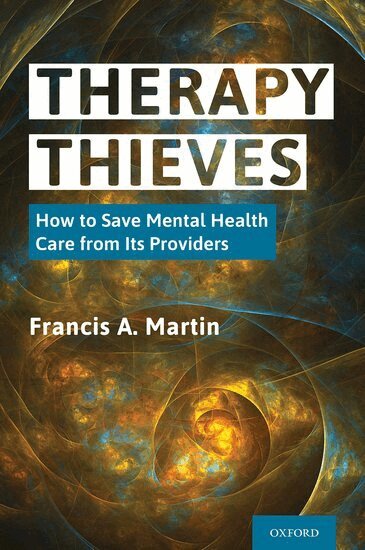
Acting on what started as a hunch, Dr. Francis Martin has cataloged well over 20,000 distinct approaches to counseling and psychotherapy that are advertised on the webpages of licensed, practicing mental health providers. No doubt some portion of them are harmful, but the sheer volume of advertised practices and techniques, often with names deceptively similar to actual evidence-based practices, should be cause for concern among all stakeholders in the helping professions - from educators and researchers to policy makers and insurance companies and, especially, consumers. Based on this significant original study, and drawing from other research and supports, Therapy Thieves describes a near-universal crisis in the field and recommends ways to rescue mental health care from itself. The crisis is caused by declining competence among counselors and psychotherapists who have failed to regulate themselves and who, therefore, deliver inadequate - if not harmful - services. In presenting a simple, yet powerful indictment of the field, Dr. Martin advocates for major reforms in several areas of mental health care, including how prospective licensees are trained, supervised and licensed, a major reworking of professional ethics, and the need to establish regulations for mental health care providers. In short, the book calls for major, specific, and urgently needed reforms.

Challenges of Integrating Religion and Spirituality into Psychotherapy
Integrity, Competence, and Cultural Pluralism in Clinical Practice
Inbunden, Engelska, 2024
2 045 kr
Skickas inom 10-15 vardagar
This book examines personal and professional understandings of religion in psychotherapy and advocates for integrity, competency, and cultural pluralism in clinical practice.A major feature of this book is that it confirms the massive proliferation of religion-oriented approaches to counseling and therapy in recent years. It attributes this rise to opportunism and exaggerated individualism among therapists and to the frequent failures of professional associations, clinical preparation programs, and other influences. In response to these influences, it identifies the need for guiding principles for integrating religion into therapy, discusses the religious issues that clients bring to therapy, and advocates for major changes in clinical practice, with emphasis on integrity and competence. Building on a large volume of research and using evidence-based conclusions, it clarifies how these two major features of contemporary life can be integrated with integrity and competence. The author maintains that religion should be a feature of the practice of counseling and therapy, so long as it addresses the clinically relevant needs of clients. However, it also explores how the religion of counselors and therapists often expresses the needs of counselors and therapists, instead of addressing the needs of their clients.In the context of these questions and discussion of contentious challenges, this book provides guidelines for relating religion with clinical practice and recommends needed actions by clinical preparation programs, professional associations, individual therapists, state legislatures, licensing boards, social service agencies, and corporations. All of this stands on the conspicuous need for professional accountability in the delivery of mental health care.
Challenges of Integrating Religion and Spirituality into Psychotherapy
Integrity, Competence, and Cultural Pluralism in Clinical Practice
Häftad, Engelska, 2026
660 kr
Kommande
This book examines personal and professional understandings of religion in psychotherapy and advocates for integrity, competency, and cultural pluralism in clinical practice.A major feature of this book is that it confirms the massive proliferation of religion-oriented approaches to counseling and therapy in recent years. It attributes this rise to opportunism and exaggerated individualism among therapists and to the frequent failures of professional associations, clinical preparation programs, and other influences. In response to these influences, it identifies the need for guiding principles for integrating religion into therapy, discusses the religious issues that clients bring to therapy, and advocates for major changes in clinical practice, with emphasis on integrity and competence. Building on a large volume of research and using evidence-based conclusions, it clarifies how these two major features of contemporary life can be integrated with integrity and competence. The author maintains that religion should be a feature of the practice of counseling and therapy, so long as it addresses the clinically relevant needs of clients. However, it also explores how the religion of counselors and therapists often expresses the needs of counselors and therapists, instead of addressing the needs of their clients.In the context of these questions and discussion of contentious challenges, this book provides guidelines for relating religion with clinical practice and recommends needed actions by clinical preparation programs, professional associations, individual therapists, state legislatures, licensing boards, social service agencies, and corporations. All of this stands on the conspicuous need for professional accountability in the delivery of mental health care.
236 kr
Skickas inom 5-8 vardagar
412 kr
Skickas inom 5-8 vardagar