Francis R. Kowsky - Böcker
Visar alla böcker från författaren Francis R. Kowsky. Handla med fri frakt och snabb leverans.
5 produkter
5 produkter
1 736 kr
Skickas inom 5-8 vardagar
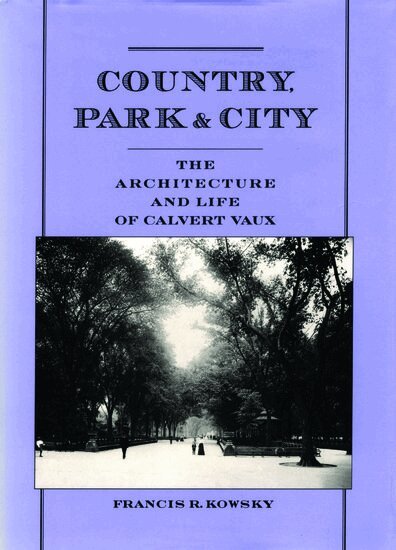
After beginning his architectural career in England, Calvert Vaux came to America in 1850 at the invitation of architect Andrew Jackson Downing. In 1852, he moved to New York City and asked Frederick Law Olmsted, the landscape architect, to join him in preparing a design for Central Park. During the next thirty-eight years in New York, Vaux defended and refined his vision of Central Park and pursued a distinguished architectural practice. After the Civil War, he and Olmsted led the nascent American park movement with their designs for parks in many American cities. And as a pioneering advocate for apartment houses in American cities, Vaux designed buildings that mirrored the advance of urbanization in America, including early model-housing for the poor. His works also include many Gothic and Palladian style dwellings, the original portions of the Metropolitan Museum of Art and the American Museum of Natural History, and a stunning proposal for a vast iron and glass building to house the Centennial Exhibition in Philadelphia. Most notable, perhaps, are the many bridges and other structures that he designed for Central Park. This book is the first in-depth study of Vaux's life and work.
959 kr
Skickas inom 5-8 vardagar
After beginning his career as an architect in London, Calvert Vaux (1824-1895) came to the Hudson River valley in 1850 at the invitation of Andrew Jackson Downing, the reform-minded writer on houses and gardens. As Downing's partner, and after Downing's death in 1852, Vaux designed country and suburban dwellings that were remarkable for their well-conceived plans and their sensitive rapport with nature.By 1857, the year he published his book Villas and Cottages, Vaux had moved to New York City. There he asked Frederick Law Olmsted to join him in preparing a design for Central Park. He spent the next 38 years defending and refining their vision of Central Park as a work of art. After the Civil War, he and Olmsted led the nascent American park movement with their designs for parks and parkways in Brooklyn, Buffalo, and many other American cities.Apart from undertakings with Olmsted, Vaux cultivated a distinguished architectural practice. Among his clients were the artist Frederic Church, whose dream house, Olana, he helped create; and the reform politician Samuel Tilden, whose residence on New York's Gramercy Park remains one of the country's outstanding Victorian buildings. A pioneering advocate for apartment houses in American cities, Vaux designed buildings that mirrored the advance of urbanization in America, including early model housing for the poor. He planned the original portions of the Metropolitan Museum of Art and the American Museum of Natural History and conceived a stunning proposal for a vast iron and glass building to house the Centennial Exhibition in Philadelphia. Especially notable are the many bridges and other charming structures that he designed for Central Park. Vaux considered the Park's Terrace, decorated by J. W. Mould, as his greatest achievement.An active participant in the cultural and intellectual life of New York, Vaux was an idealist who regarded himself as an artist and a professional. And while much has been written on Olmsted, comparatively little has been published about Vaux. The first in-depth account of Vaux's career, Country, Park, and City should be of great interest to historians of art, architecture, and urbanism, as well as preservationists and other readers interested in New York City's past and America's first parks.
Hell on Color, Sweet on Song
Jacob Wrey Mould and the Artful Beauty of Central Park
Inbunden, Engelska, 2023
432 kr
Skickas inom 3-6 vardagar
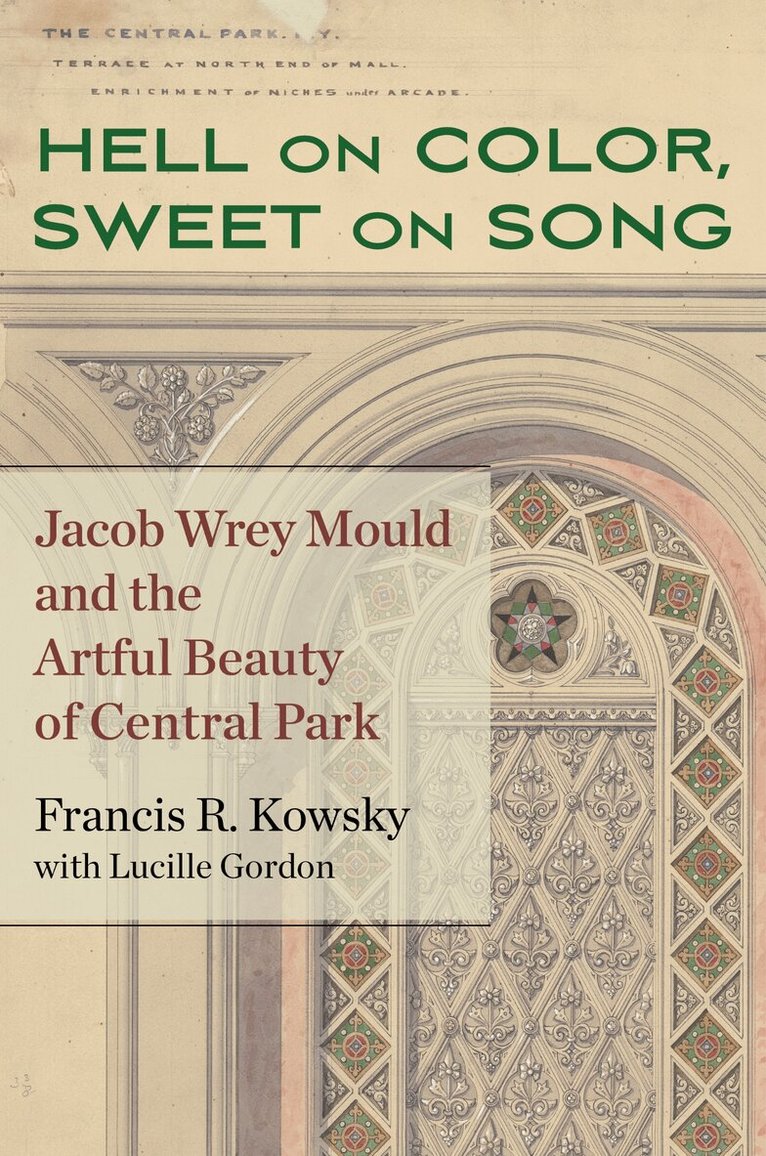
WINNER, VICTORIAN SOCIETY IN AMERICA BOOK AWARDWINNER, 2024 PUBLICATION PRIZE, FRIENDS OF THE UPPER EAST SIDE HISTORIC DISTRICTSReveals new and previously unknown biographical material about an important figure in nineteenth-century American architecture and music.Jacob Wrey Mould is not a name that readily comes to mind when we think of New York City architecture. Yet he was one-third of the party responsible for the early development of the city's Central Park. To this day, his sculptural reliefs, tile work, and structures in the Park enthrall visitors. Mould introduced High Victorian architecture to NYC, his fingerprint most pronounced in his striking and colorful ornamental designs and beautiful embellishments found in the carved decorations and mosaics at the Bethesda Terrace. Resurfacing the forgotten contributions of Mould, Hell on Color, Sweet on Song presents a study of this nineteenth-century American architect and musical genius.Jacob Wrey Mould, whose personal history included a tie to Africa, was born in London in 1825 and trained there as an architect before moving to New York in 1852. The following year, he received the commission to design All Souls Unitarian Church. Nicknamed "the Church of the Holy Zebra," it was the first building in America to display the mix of colorful materials and medieval Italian inspiration that was characteristic of High Victorian Gothic architecture. In addition to being an architect and designer, Mould was an accomplished musician and prolific translator of opera librettos. Yet anxiety over money and resentment over lack of appreciation of his talents soured Mould's spirit. Unsystematic, impractical, and immune from maturity, he displayed a singular indifference to the realities of architecture as a commercial enterprise. Despite his personal shortcomings, he influenced the design of some of NYC's revered landmarks, including Sheepfold, the Metropolitan Museum of Art, the American Museum of Natural History, the City Hall Park fountain, and the Morningside Park promenade. From 1875 to 1879, he worked for Henry Meiggs, the "Yankee Pizarro," in Lima, Peru.Resting on the foundation of Central Park docent Lucille Gordon's heroic efforts to raise from obscurity one of the geniuses of American architecture and a significant contributor to the world of music in his time, Hell on Color, Sweet on Song sheds new light on a forgotten genius of American architecture and music.Funding for this book was provided by: Furthermore: a program of the J. M. Kaplan Fund
275 kr
Skickas inom 5-8 vardagar
432 kr
Kommande