Franco A. Gianturco – författare
Visar alla böcker från författaren Franco A. Gianturco. Handla med fri frakt och snabb leverans.
10 produkter
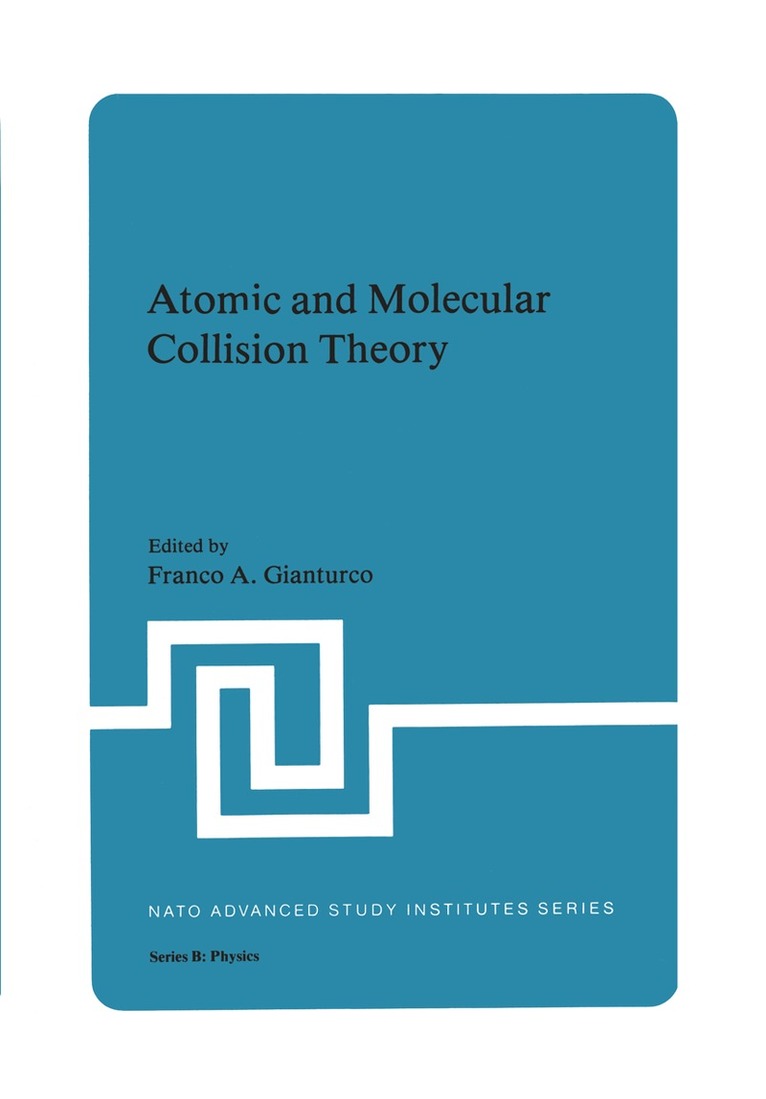
Atomic and Molecular Collision Theory
Inbunden, 1982
1093 kr
Lägg i varukorg
Until recently, the field of atomic and molecular collisions was left to a handful of practitioners who essentially explored it as a branch of atomic physics and gathered their experimental re sults mainly from spectroscopy measurements in bulk. But in the past ten years or so, all of this has …
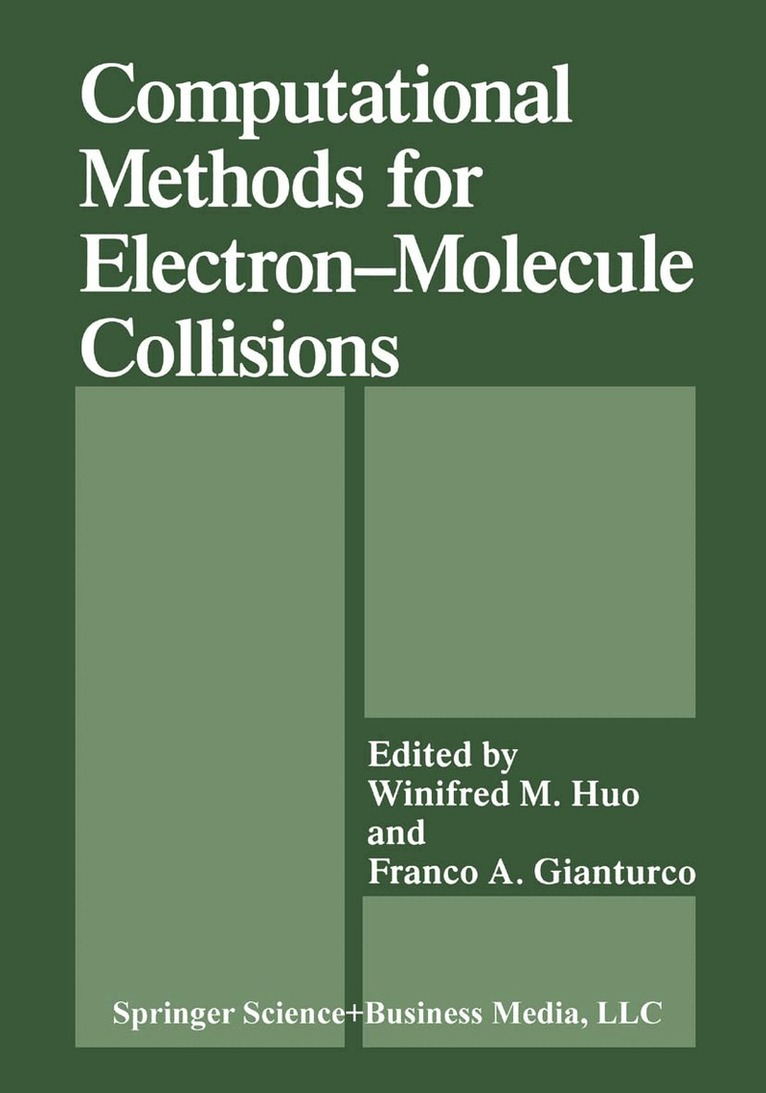
Computational Methods for Electron—Molecule Collisions
Av Huo, Winifred M. Huo m. fl.
Inbunden, 1995
1636 kr
Lägg i varukorg
The collision of electrons with molecules and molecular ions is a fundamental pro cess in atomic and molecular physics and in chemistry. At high incident electron en ergies, electron-molecule collisions are used to deduce molecular geometries, oscillator strengths for optically allowed …
New Directions in Antimatter Chemistry and Physics
Av Franco A. Gianturco, Clifford M. Surko
E-bok, 2007
2925 kr
Lägg i varukorg
This volume is the outgrowth of a workshop held in October, 2000 at the Institute for Theoretical Atomic and Molecular Physics at the Harvard- Smithsonian Center for Astrophysics in Cambridge, MA. The aim of this book (similar in theme to the workshop) is to present an overview of new directions in …
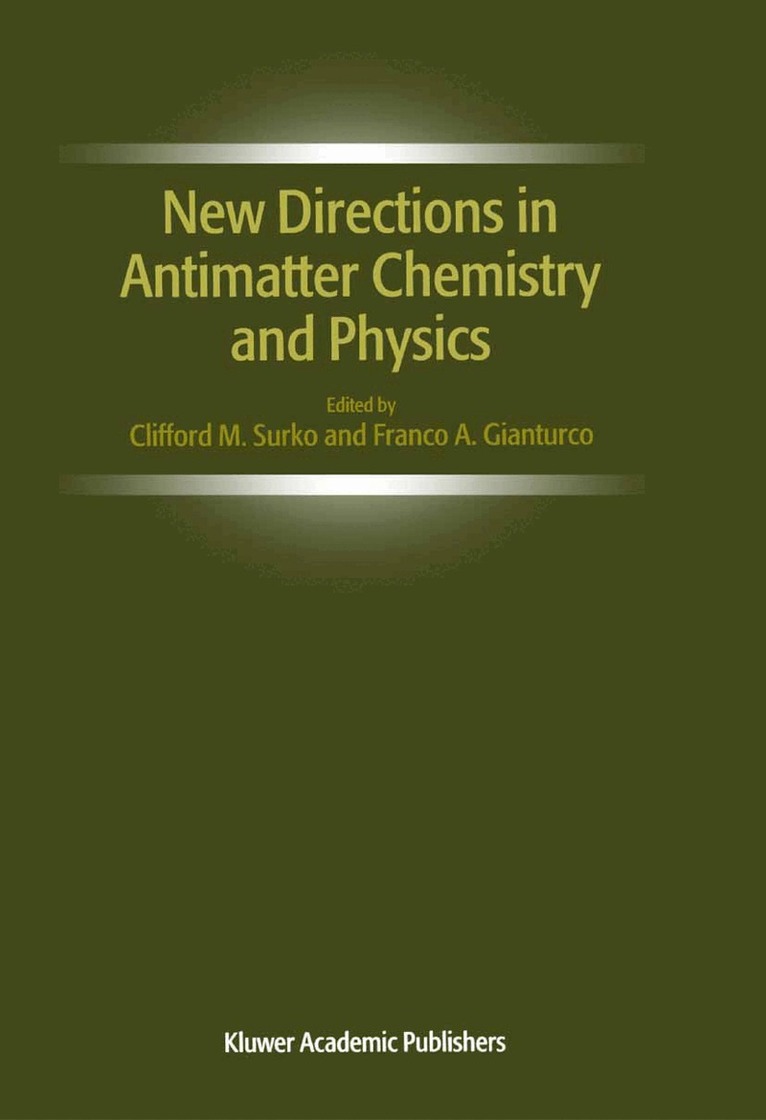
New Directions in Antimatter Chemistry and Physics
Av Clifford M. Surko, Franco A. Gianturco
Inbunden, 2001
2179 kr
Lägg i varukorg
This volume is the outgrowth of a workshop held in October, 2000 at the Institute for Theoretical Atomic and Molecular Physics at the Harvard- Smithsonian Center for Astrophysics in Cambridge, MA. The aim of this book (similar in theme to the workshop) is to present an overview of new directions in …
Atomic and Molecular Collision Theory
E-bok, 2012
1459 kr
Lägg i varukorg
Until recently, the field of atomic and molecular collisions was left to a handful of practitioners who essentially explored it as a branch of atomic physics and gathered their experimental re sults mainly from spectroscopy measurements in bulk. But in the past ten years or so, all of this has …
Atomic and Molecular Collision Theory
Häftad, 2011
1093 kr
Lägg i varukorg
Until recently, the field of atomic and molecular collisions was left to a handful of practitioners who essentially explored it as a branch of atomic physics and gathered their experimental re sults mainly from spectroscopy measurements in bulk. But in the past ten years or so, all of this has …
Collision Theory for Atoms and Molecules
E-bok, 2012
734 kr
Lägg i varukorg
The NATO-Advanced Study Institute on "Collision Theory for Atoms and Molecules" was made possible by the main sponsorship and the generous financial support of the NATO Scientific Affairs Division in Brussels. Belgium. Special thanks are therefore due to the late Dr. Mario Di Lullo and to Dr. Craig …
Collision Theory for Atoms and Molecules
Häftad, 2012
550 kr
Lägg i varukorg
The NATO-Advanced Study Institute on "Collision Theory for Atoms and Molecules" was made possible by the main sponsorship and the generous financial support of the NATO Scientific Affairs Division in Brussels. Belgium. Special thanks are therefore due to the late Dr. Mario Di Lullo and to Dr. Craig …
Computational Methods for Electron-Molecule Collisions
Av W.M. Huo, Franco A. Gianturco
E-bok, 2013
2111 kr
Lägg i varukorg
The collision of electrons with molecules and molecular ions is a fundamental pro cess in atomic and molecular physics and in chemistry. At high incident electron en ergies, electron-molecule collisions are used to deduce molecular geometries, oscillator strengths for optically allowed …
Computational Methods for Electron—Molecule Collisions
Av Franco A. Gianturco, W.M. Huo
Häftad, 2013
1636 kr
Lägg i varukorg
The collision of electrons with molecules and molecular ions is a fundamental pro cess in atomic and molecular physics and in chemistry. At high incident electron en ergies, electron-molecule collisions are used to deduce molecular geometries, oscillator strengths for optically allowed …