Franco Barchiesi - Böcker
Visar alla böcker från författaren Franco Barchiesi. Handla med fri frakt och snabb leverans.
4 produkter
4 produkter
399 kr
Skickas inom 10-15 vardagar
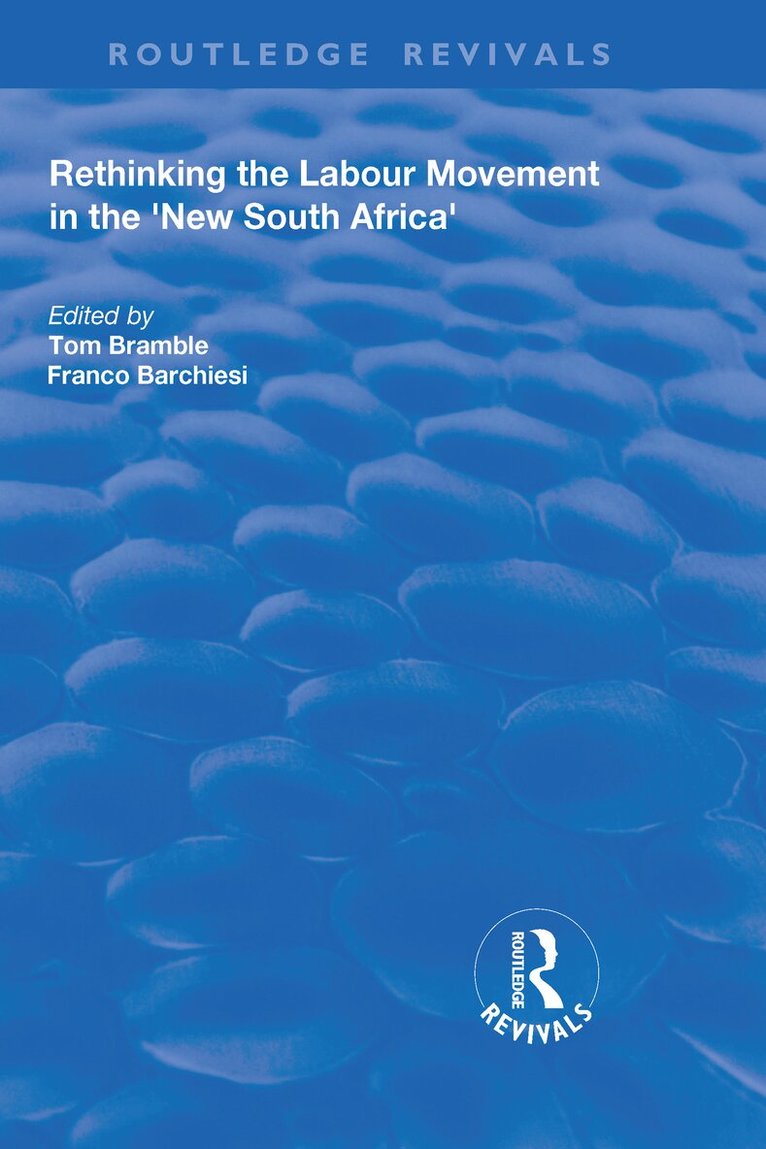
Title first published in 2003. In recognition of the power of organised labour, the ANC Government elected in 1994 granted South Africa's unions unprecedented legal and constitutional rights. Despite these gains, the country's unions have faced a fresh set of challenges, many of them emanating from their political allies in Government. From Parliament to the factory floor, South Africa's unions are now confronted with threats as dangerous as those they confronted when organising illegally in the heyday of apartheid. The purpose of this book is to examine how South African unions have responded and how well prepared they are to meet the challenges that confront them in the new millennium.
1 197 kr
Skickas inom 10-15 vardagar
Title first published in 2003. In recognition of the power of organised labour, the ANC Government elected in 1994 granted South Africa's unions unprecedented legal and constitutional rights. Despite these gains, the country's unions have faced a fresh set of challenges, many of them emanating from their political allies in Government. From Parliament to the factory floor, South Africa's unions are now confronted with threats as dangerous as those they confronted when organising illegally in the heyday of apartheid. The purpose of this book is to examine how South African unions have responded and how well prepared they are to meet the challenges that confront them in the new millennium.
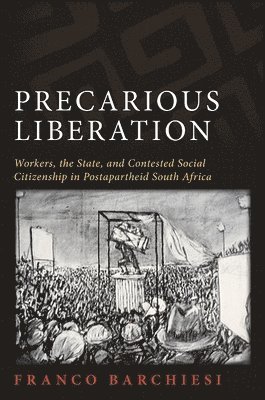
Precarious Liberation
Workers, the State, and Contested Social Citizenship in Postapartheid South Africa
Häftad, Engelska, 2011
515 kr
Tillfälligt slut
Examines the relationship of precarious employment to state policies on citizenship and social inclusion in the context of postapartheid South Africa.Winner of the 2012 CLR James Award presented by the Working Class Studies Association Millions of black South African workers struggled against apartheid to redeem employment and production from a history of abuse, insecurity, and racial despotism. Almost two decades later, however, the prospects of a dignified life of wage-earning work remain unattainable for most South Africans. Through extensive archival and ethnographic research, Franco Barchiesi documents and interrogates this important dilemma in the country's democratic transition: economic participation has gained centrality in the government's definition of virtuous citizenship, and yet for most workers, employment remains an elusive and insecure experience. In a context of market liberalization and persistent social and racial inequalities, as jobs in South Africa become increasingly flexible, fragmented, and unprotected, they depart from the promise of work with dignity and citizenship rights that once inspired opposition to apartheid. Barchiesi traces how the employment crisis and the responses of workers to it challenge the state's normative imagination of work, and raise decisive questions for the social foundations and prospects of South Africa's democratic experiment.
Precarious Liberation
Workers, the State, and Contested Social Citizenship in Postapartheid South Africa
Inbunden, Engelska, 2011
1 057 kr
Tillfälligt slut
Examines the relationship of precarious employment to state policies on citizenship and social inclusion in the context of postapartheid South Africa.Winner of the 2012 CLR James Award presented by the Working Class Studies Association Millions of black South African workers struggled against apartheid to redeem employment and production from a history of abuse, insecurity, and racial despotism. Almost two decades later, however, the prospects of a dignified life of wage-earning work remain unattainable for most South Africans. Through extensive archival and ethnographic research, Franco Barchiesi documents and interrogates this important dilemma in the country's democratic transition: economic participation has gained centrality in the government's definition of virtuous citizenship, and yet for most workers, employment remains an elusive and insecure experience. In a context of market liberalization and persistent social and racial inequalities, as jobs in South Africa become increasingly flexible, fragmented, and unprotected, they depart from the promise of work with dignity and citizenship rights that once inspired opposition to apartheid. Barchiesi traces how the employment crisis and the responses of workers to it challenge the state's normative imagination of work, and raise decisive questions for the social foundations and prospects of South Africa's democratic experiment.