Francoise Combes - Böcker
Visar alla böcker från författaren Francoise Combes. Handla med fri frakt och snabb leverans.
11 produkter
11 produkter
2 100 kr
Skickas inom 10-15 vardagar
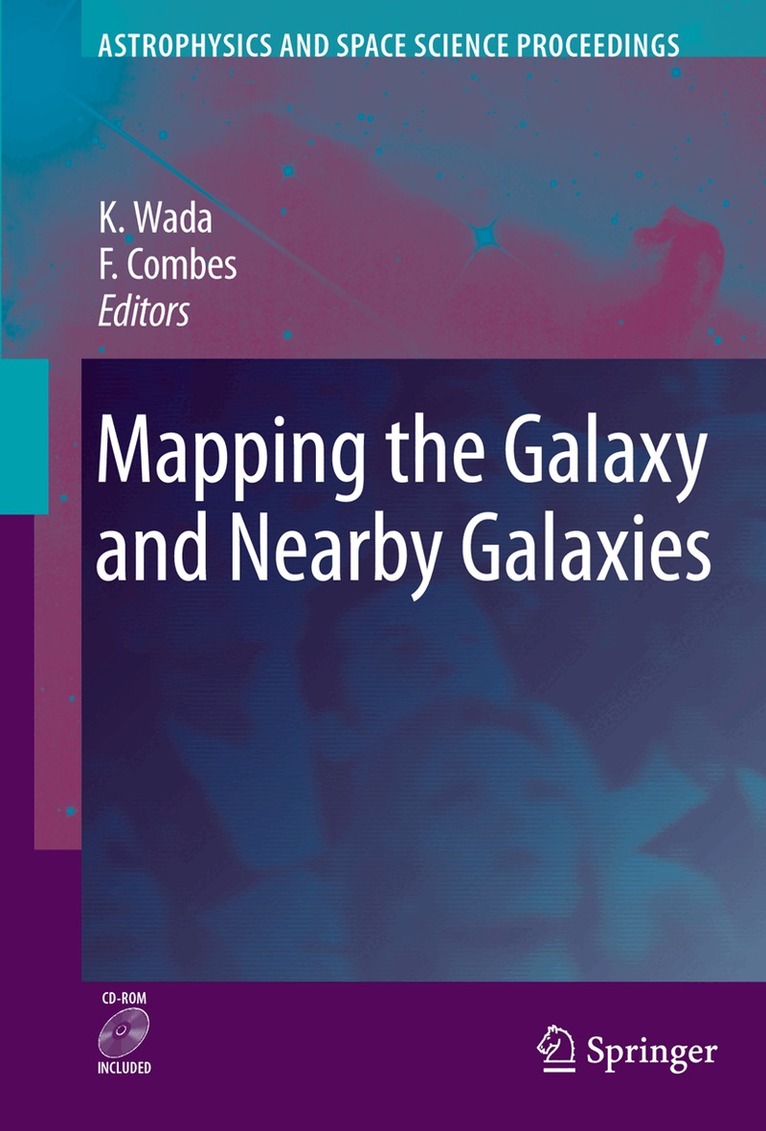
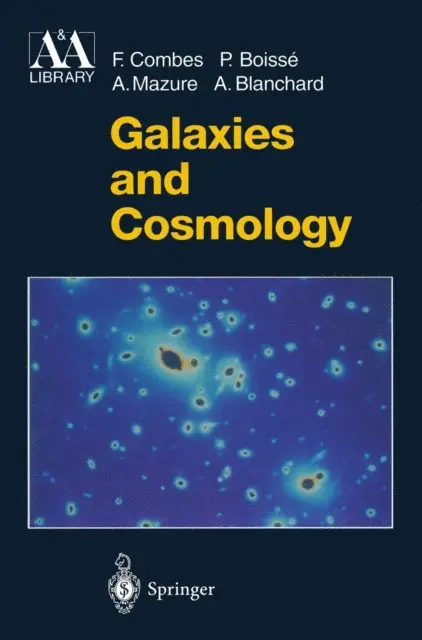
In our quest to elucidate the origin of the universe and the formation of galaxies, particularly that of the Milky Way in which we live, astounding progress has been made in recent years through observational and theoretical studies. Not only have gigantic surveys covering a large fraction of the sky brought statistics enlightening evolutionary paths of galaxies, but powerful instruments, such as radio interferometers and ground- and space-based op- cal/infrared telescopes, have been able to map individual objects with high sensitivity and spatial resolution. Yet we do not fully understand the physics behind the observational results, and a number of unsolved problems need to be discussed, such as: What is the origin of disks and spheroids and which form ?rst? What determines the global star formation rate in galaxies? How in?uential are the environment and interactions for nearby galaxies? What causes starburst and AGN activity in galaxies? In order to discuss and make progress on these important questions, aided by recent observational and theoretical work, we organized a symposium en- tled “Mapping the Galaxy and Nearby Galaxies”, on 26 June - 30 June, 2006, at Ishigaki island. Ishigaki is a tropical resort island located about 1000 km south-west from the main island of Japan and surrounded by a coral reef and beautiful white sand beaches. Ishigaki is also the site of one of the 20 m radio telescopes in the VLBI Exploration of Radio Astrometry (VERA) network, which is operated by National Astronomical Observatory of Japan.
1 873 kr
Skickas inom 5-8 vardagar
402 kr
Skickas inom 5-8 vardagar
2 100 kr
Skickas inom 10-15 vardagar
In our quest to elucidate the origin of the universe and the formation of galaxies, particularly that of the Milky Way in which we live, astounding progress has been made in recent years through observational and theoretical studies. Not only have gigantic surveys covering a large fraction of the sky brought statistics enlightening evolutionary paths of galaxies, but powerful instruments, such as radio interferometers and ground- and space-based op- cal/infrared telescopes, have been able to map individual objects with high sensitivity and spatial resolution. Yet we do not fully understand the physics behind the observational results, and a number of unsolved problems need to be discussed, such as: What is the origin of disks and spheroids and which form ?rst? What determines the global star formation rate in galaxies? How in?uential are the environment and interactions for nearby galaxies? What causes starburst and AGN activity in galaxies? In order to discuss and make progress on these important questions, aided by recent observational and theoretical work, we organized a symposium en- tled “Mapping the Galaxy and Nearby Galaxies”, on 26 June - 30 June, 2006, at Ishigaki island. Ishigaki is a tropical resort island located about 1000 km south-west from the main island of Japan and surrounded by a coral reef and beautiful white sand beaches. Ishigaki is also the site of one of the 20 m radio telescopes in the VLBI Exploration of Radio Astrometry (VERA) network, which is operated by National Astronomical Observatory of Japan.
1 721 kr
Skickas inom 7-10 vardagar
Galaxies are vast ensembles of stars, gas and dust, embedded in dark matter halos. They are the basic building blocks of the Universe, gathered in groups, clusters and super-clusters. They exist in many forms, either as spheroids or disks. Classifications, such as the Hubble sequence (based on mass concentration and gas fraction) and the colormagnitude diagram (which separates a blue cloud from a red sequence) help to understand their formation and evolution. Galaxies spend a large part of their lives in the blue cloud, forming stars as spiral or dwarf galaxies. Then, via a mechanism that is still unclear, they stop forming stars and quietly end in the red sequence, as spheroids. This transformation may be due to galaxy interactions, or because of the feedback of active nuclei, through the energy released by their central super-massive black holes. These mechanisms could explain the history of cosmic star formation, the rate of which was far greater in the first half of the Universe�s life. Galaxies delves into all of these surrounding subjects in six chapters written by dedicated, specialist astronomers and researchers in the field, from their numerical simulations to their evolutions.
1 597 kr
Skickas inom 7-10 vardagar
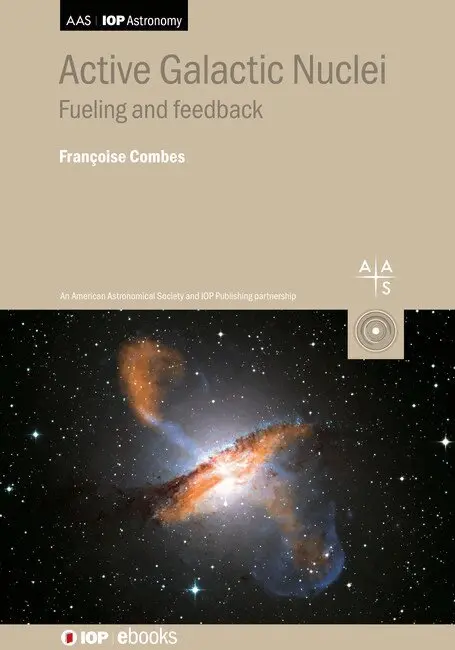
All galaxies host a super-massive black hole in their center. These black holes grow their mass in symbiosis with their host galaxy and moderate their star formation. When matter is driven towards the nucleus, an accretion disk is formed to transfer angular momentum and considerable energy is released when the material falls into the black hole: this is the phenomenon of active galactic nuclei (AGN). A nucleus can shine one thousand times more brightly than the entire galaxy with its 200 billion stars. The nuclear activity can take many forms, from very powerful quasars to more ordinary Seyfert galaxies, passing by radio-galaxies, which eject a collimated plasma at ten times the radius of the galaxy.This book examines all of these manifestations and presents a unified view. When two galaxies merge, a binary black hole is formed and the two black holes will spiral inwards and merge, emitting long gravitational waves, which could be detected by the future LISA satellite.
2 447 kr
Skickas inom 5-8 vardagar
2 447 kr
Skickas inom 5-8 vardagar
760 kr
Skickas inom 5-8 vardagar
Cold Universe
Saas-Fee Advanced Course 32, 2002. Swiss Society for Astrophysics and Astronomy
Inbunden, Engelska, 2003
1 064 kr
Skickas inom 10-15 vardagar
This book contains the expanded lecture notes of the 32nd Saas-Fee Advanced Course. This well respected school offers courses appropriate for students as well as professional astronomers. The three contributions, by A. Blain, F. Combes and B. Draine, present the central themes in modern research on the cold universe. The cold state plays a crucial role in the evolution of the universe. The authors cover topics such as cold objects at large distances, the origin of galaxies, the role of molecules in galaxies, and the physics of dust in cold clouds. In addition, much space is given to the observation techniques in the regime near background radiation temperature.
Cold Universe
Saas-Fee Advanced Course 32, 2002. Swiss Society for Astrophysics and Astronomy
Häftad, Engelska, 2010
1 064 kr
Skickas inom 10-15 vardagar
Modern astronomy has stretched its domains of exploration tremendously. Not only objects at very large distances and very old states of the Universe can be examined, but also all kinds of radiations and phenomena are now accessible. Astronomers constantly move from considerations about very - luted to very dense systems. Hot and energetic systems, being the easiest to observe, have attracted a lot of attention. However the cold and low energetic states have been so- what neglected, either because being harder to observe they appear unexc- ing, or because being less well known they tend to be ignored. However the Universe background radiation has now been determined as the most perfect known case of a black-body spectrum, a substantial fraction of matter spends some time close to the temperature of this universal thermal bath, before - ingtransformedintostarsorplanets. Someobjects,suchasrapidlyexpanding gas shells in planetary nebulae, may even succeed in reaching a temperature well below the background radiation temperature through the mere action of adiabatic expansion. In view of the highly dynamical and turbulent state of the interstellar medium, hot and cold temperature ?uctuations must be expected, while the clear observational bias is to observe the hot rather than the cold ?uctuations. Fortunately with the accessibility of far-infrared and sub-millimetric instruments such as SCUBA, WMAP, Planck or ALMA, we can expect in the coming years continuous advances in our understanding of these harder to observe cold stages of matter.