Frank A. Barile – författare
Visar alla böcker från författaren Frank A. Barile. Handla med fri frakt och snabb leverans.
6 produkter
6 produkter
966 kr
Skickas inom 10-15 vardagar
As with the previous editions, Introduction to Toxicology, Fourth Edition, continues to chart the evolution of the field of toxicology, from the use of natural toxins by ancient tribes through the developments established by Paracelsus, and progresses through to the current topics in the public interest. For centuries, the study of toxicology has fascinated students. The book begins with basic toxicological principles, including an historical summary, dose-response relationships (NEW chapter), exposure-response relationships (NEW chapter), disposition, and metabolism of xenobiotic toxic substances. Other important new chapters include target organ toxicity, toxicity of carcinogenic agents and new and updated concepts in toxicity testing, and antidotes and treatment of poisonings. In all, nine new or expanded chapters from the third edition are advanced.Current concerns about the effects of therapeutic drugs, carcinogens, industrial toxins, pesticides, and herbicides on human health, animal welfare, and the stability and maintenance of the ecosystem continue to highlight toxicology as an important and growing scientific discipline.Key features:Comprehensive coverage of the field of toxicology which illustrates its importance to and impact on societyUses pertinent examples, tables, and diagrams to aid understanding with learning objectives, summaries, questions, and answers for each chapterClearly and concisely written and presented concepts for easy comprehension by toxicology, biomedical, and health science studentsExamines the complex interactions associated with toxicological eventsCovers the effect of toxins on biological and physiological systemsThis book successfully condenses the diffuse literature in the field into an accessible and readable text, made easier with the insertion of many tables and figures. It introduces fundamental concepts and builds upon these using topical and relevant historical examples. Its improved format includes learning objectives and summaries of each chapter, as well as questions and answers suitable for self-assessment.This latest edition is an invaluable resource for undergraduate and graduate toxicology students, as well as an introductory text for other health care students and professionals. The book also functions as a comprehensive introductory reference text for environmental scientists, medical biologists and chemists, chemical engineers, and regulatory agencies, with interests in toxicologically related areas.
2 405 kr
Skickas inom 10-15 vardagar
As with the previous editions, Introduction to Toxicology, Fourth Edition, continues to chart the evolution of the field of toxicology, from the use of natural toxins by ancient tribes through the developments established by Paracelsus, and progresses through to the current topics in the public interest. For centuries, the study of toxicology has fascinated students. The book begins with basic toxicological principles, including an historical summary, dose-response relationships (NEW chapter), exposure-response relationships (NEW chapter), disposition, and metabolism of xenobiotic toxic substances. Other important new chapters include target organ toxicity, toxicity of carcinogenic agents and new and updated concepts in toxicity testing, and antidotes and treatment of poisonings. In all, nine new or expanded chapters from the third edition are advanced.Current concerns about the effects of therapeutic drugs, carcinogens, industrial toxins, pesticides, and herbicides on human health, animal welfare, and the stability and maintenance of the ecosystem continue to highlight toxicology as an important and growing scientific discipline.Key features:Comprehensive coverage of the field of toxicology which illustrates its importance to and impact on societyUses pertinent examples, tables, and diagrams to aid understanding with learning objectives, summaries, questions, and answers for each chapterClearly and concisely written and presented concepts for easy comprehension by toxicology, biomedical, and health science studentsExamines the complex interactions associated with toxicological eventsCovers the effect of toxins on biological and physiological systemsThis book successfully condenses the diffuse literature in the field into an accessible and readable text, made easier with the insertion of many tables and figures. It introduces fundamental concepts and builds upon these using topical and relevant historical examples. Its improved format includes learning objectives and summaries of each chapter, as well as questions and answers suitable for self-assessment.This latest edition is an invaluable resource for undergraduate and graduate toxicology students, as well as an introductory text for other health care students and professionals. The book also functions as a comprehensive introductory reference text for environmental scientists, medical biologists and chemists, chemical engineers, and regulatory agencies, with interests in toxicologically related areas.
2 829 kr
Skickas inom 10-15 vardagar
Nationally, toxicology programs have evolved from a traditional exploration of the chemistry and applied toxicity of chemicals and drugs to a more comprehensive study of toxicology and toxicology testing as independent entities. Consequently, the second edition of Principles of Toxicology Testing starts with basic toxicological principles, including absorption, distribution, metabolism, and elimination of toxins, including chemicals and drugs. The book then continues with animal (in vivo) and in vitro toxicology testing methods associated with toxicological analysis and preclinical drug development. As in the first edition, the book begins with an introduction into the fundamentals of toxicology (Section I) to prepare readers for the subsequent topics and continues through with a discussion of toxicokinetics and human risk assessment. This introductory material is useful in understanding the applications of toxicology testing. Section II describes the fundamental principles of toxicology testing in animals in greater detail. This section describes acute toxicity studies as well as subchronic and chronic studies performed on animals. Special emphasis is placed on study design and determination of classical indicators for acute and chronic testing, such as the LD50. The book examines other short- and long-term animal toxicity testing methodologies, including dermal, ocular, and reproductive toxicity testing. In addition, mutagenicity and carcinogenicity studies are also discussed in separate chapters. Section III introduces and discusses in vitro alternatives to animal toxicology tests. This section emphasizes cell culture methodology and cellular methods for acute systemic toxicity, target organ toxicity, and local toxicity. The contributors present the advantages and disadvantages of alternative methods. They also describe the use of high-throughput screening and its applications, the concepts of standardizatio
3 165 kr
Tillfälligt slut
2 617 kr
Skickas inom 10-15 vardagar
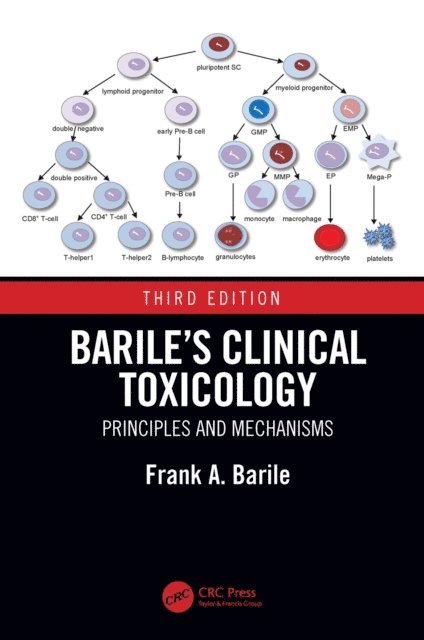
As with the two previous editions, Barile’s Clinical Toxicology: Principles and Mechanisms, Third edition, examines the complex interactions associated with clinical toxicological events as a result of therapeutic drug administration or chemical exposure. With special emphasis placed on signs and symptoms of diseases and pathology caused by toxins and clinical drugs, the new edition, examines the complex interactions associated with clinical toxicological events as a result of therapeutic drug administration or chemical exposure. The new edition presents the latest, up-to-date protocols for managing various toxic ingestions, and the antidotes and treatments associated with their pathology. In addition, the effect of toxins on a limited number of body systems and drug-induced adverse drug reactions are also covered. KEY FEATURES• Discusses source of the drug or chemical, pharmacological and toxicological mechanisms of action, detection, identification, and treatment• Examines the complex interactions associated with clinical toxicological events• Emphasizes the signs and symptoms of diseases and pathology caused by toxins and clinical drugs• Covers effect of toxins on body systems and drug-induced adverse reactions• Offers a unique perspective for toxicology, pharmacology, pharmacy and health professions studentsThe target audience for this book is undergraduate and graduate toxicology students, clinical pharmacy (Pharm.D.) students, emergency medical personnel, regulatory agencies, and other related health science professionals. It satisfies an essential need for a concise yet detailed authoritative, fundamental text addressing the current principles of clinical toxicology.
2 053 kr
Skickas inom 10-15 vardagar
Nationally, toxicology programs have evolved from a traditional exploration of the chemistry and applied toxicity of chemicals and drugs to a more comprehensive study of toxicology and toxicology testing as independent entities. Consequently, the second edition of Principles of Toxicology Testing starts with basic toxicological principles, including absorption, distribution, metabolism, and elimination of toxins, including chemicals and drugs. The book then continues with animal (in vivo) and in vitro toxicology testing methods associated with toxicological analysis and preclinical drug development. As in the first edition, the book begins with an introduction into the fundamentals of toxicology (Section I) to prepare readers for the subsequent topics and continues through with a discussion of toxicokinetics and human risk assessment. This introductory material is useful in understanding the applications of toxicology testing.Section II describes the fundamental principles of toxicology testing in animals in greater detail. This section describes acute toxicity studies as well as subchronic and chronic studies performed on animals. Special emphasis is placed on study design and determination of classical indicators for acute and chronic testing, such as the LD50. The book examines other short- and long-term animal toxicity testing methodologies, including dermal, ocular, and reproductive toxicity testing. In addition, mutagenicity and carcinogenicity studies are also discussed in separate chapters.Section III introduces and discusses in vitro alternatives to animal toxicology tests. This section emphasizes cell culture methodology and cellular methods for acute systemic toxicity, target organ toxicity, and local toxicity. The contributors present the advantages and disadvantages of alternative methods. They also describe the use of high-throughput screening and its applications, the concepts of standardization and validation of in vitro techniques (especially large, organized validation efforts currently supported by US and EU regulatory agencies), and the theories supporting the development of in vitro methodologies. This second edition is a must-read for undergraduate and graduate toxicology students. Industrial and academic research centers will also find the text useful for establishing a toxicology testing laboratory.