Frank Ninkovich - Böcker
Visar alla böcker från författaren Frank Ninkovich. Handla med fri frakt och snabb leverans.
5 produkter
5 produkter
535 kr
Skickas inom 3-6 vardagar
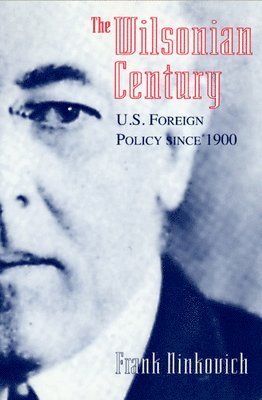
For most of the 20th century, American foreign policy was guided by a set of assumptions that were formulated during World War I by President Woodrow Wilson. In this re-examination, Frank Ninkovich argues that the Wilsonian outlook, far from being a crusading, idealistic doctrine, was reactive, practical, and grounded in fear. Wilson and his successors believed it absolutely essential to guard against world war or global domination, with the underlying aim of safeguarding and nurturing political harmony and commercial co-operation among the great powers. As the world entered a period of unprecedented turbulence, Wilsonianism became a "crisis internationalism" dedicated to preserving the benign vision of "normal internationalism" with which the United States entered the 20th century. In the process of describing Wilson's legacy, Ninkovich reinterprets most of the 20th century's main foreign policy developments. He views the 1920s, for example, not as an isolationist period but as a reversion to Taft's Dollar Diplomacy.The Cold War, with its faraway military interventions, illustrates Wilsonian America's preoccupation with achieving a cohesive world opinion and its abandonment of traditional, regional conceptions of national interest. The book seeks to offer an alternative to traditional interest-based interpretations of US foreign policy. In revising the usual view of Wilson's contribution, Ninkovich shows the extraordinary degree to which Wilsonian ideas guided American policy through a century of conflict and tension.
1 008 kr
Tillfälligt slut
This text provides an overview of 20th-century United States foreign policy, from the Roosevelt and Taft administrations through the presidencies of Kennedy and Johnson. Beginning with Woodrow Wilson, American leaders gradually abandoned the idea of international relations as a game of geopolitical interplays, basing their diplomacy instead on a symbolic opposition between "world public opinion" and the forces of destruction and chaos. The author links this policy shift to the rise of a distinctly modernist view of history. To emphasize the central role of symbolism and ideological assumptions in 20th-century American statesmanship, Ninkovich focuses on the domino theory - a theory that departed from classic principles of political realism by sanctioning intervention in world regions with few financial or geographic claims on the national interest. He traces the development of this global strategy from its first appearance early in the century through to the Vietnam war. Throughout the text, the text draws on primary sources to recover the worldview of the policy makers. It assesses the coherence of their views rather than judge their actions against "objective" realities.
404 kr
Skickas inom 7-10 vardagar
This text provides an overview of 20th-century United States foreign policy, from the Roosevelt and Taft administrations through the presidencies of Kennedy and Johnson. Beginning with Woodrow Wilson, American leaders gradually abandoned the idea of international relations as a game of geopolitical interplays, basing their diplomacy instead on a symbolic opposition between "world public opinion" and the forces of destruction and chaos. The author links this policy shift to the rise of a distinctly modernist view of history. To emphasize the central role of symbolism and ideological assumptions in 20th-century American statesmanship, Ninkovich focuses on the domino theory - a theory that departed from classic principles of political realism by sanctioning intervention in world regions with few financial or geographic claims on the national interest. He traces the development of this global strategy from its first appearance early in the century through to the Vietnam war. Throughout the text, the text draws on primary sources to recover the worldview of the policy makers. It assesses the coherence of their views rather than judge their actions against "objective" realities.
681 kr
Skickas inom 10-15 vardagar
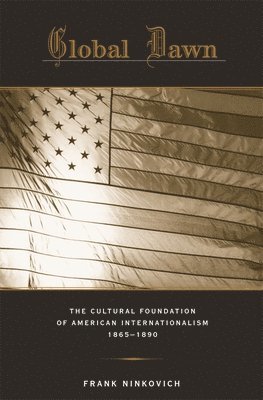
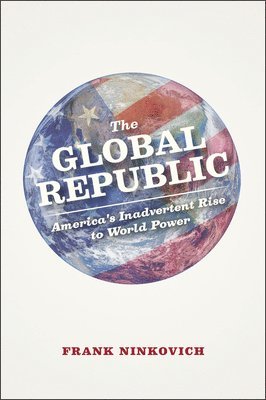
Why did the United States become a global power? Frank Ninkovich shows that a cultural predisposition for thinking in global terms blossomed in the late nineteenth century, making possible the rise to world power as American liberals of the time took a wide-ranging interest in the world. At the center of their attention was the historical process they called “civilization,” whose most prominent features—a global economy, political democracy, and a global culture—anticipated what would later come to be known as globalization.The continued spread of civilization, they believed, provided the answer to worrisome contemporary problems such as the faltering progress of democracy, a burgeoning arms race in Europe, and a dangerous imperialist competition. In addition to transforming international politics, a global civilization quickened by commercial and cultural exchanges would advance human equality and introduce the modern industrial way of life to traditional societies. Consistent with their universalist outlook, liberal internationalists also took issue with scientific racism by refusing to acknowledge racial hierarchy as a permanent feature of relations with nonwhite peoples.Of little practical significance during a period when isolationism reigned supreme in U.S. foreign policy, this rich body of thought would become the cultural foundation of twentieth-century American internationalism.
588 kr
Skickas inom 7-10 vardagar
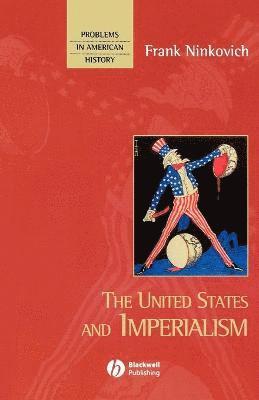
The United States and Imperialism uses concepts of civilization, identity, the civilizing mission, and cooperation to explain the role of imperialism throughout American history. Ninkovich's original analysis of America as an empire shows how imperialism, anti-imperialism, and geopolitics have all played a role in how the United States made decisions when seeking new territories.