Frank Riess - Böcker
Visar alla böcker från författaren Frank Riess. Handla med fri frakt och snabb leverans.
5 produkter
5 produkter
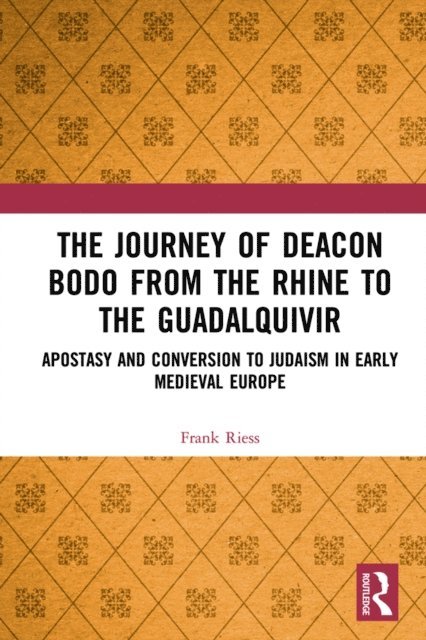
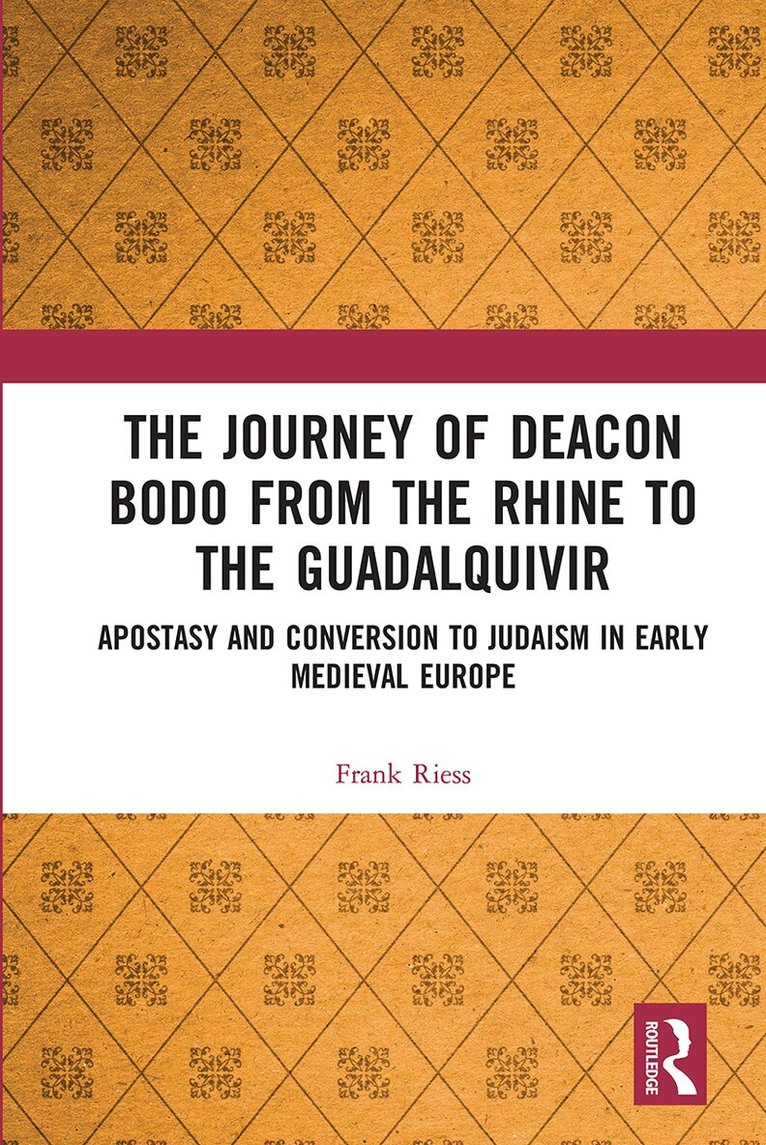
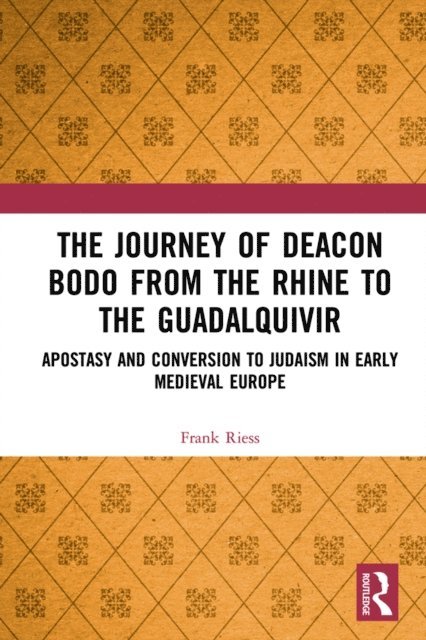
Journey of Deacon Bodo from the Rhine to the Guadalquivir
Apostasy and Conversion to Judaism in Early Medieval Europe
Häftad, Engelska, 2020
629 kr
Skickas inom 10-15 vardagar
The story of Bodo begins in the ninth century around the time of the death of Charlemagne in 814. It centres on a young Aleman aristocrat and his conversion to Judaism in 838, followed by his flight to the Muslim world of Al-Andalus. His apostasy constitutes an arresting footnote in the history of the Carolingian period, his change of faith viewed as a shocking episode attributed by some to an overly lax policy towards Judaism and its powerful merchants. Another factor could be ascribed to the study of Judaism and its links with Christianity, which was a feature of the time.Bodo moved from a monastery on the Rhine, where he went as a small boy, to the imperial court, where he was now a gifted young scholar groomed for a top position. His unexpected abandonment of Christianity challenged his background and learning, and this was seen as a rebuke of the court network to which he belonged. Bodo left behind a growing conflict over succession between the emperor, Louis the Pious, and his sons that culminated in a civil war following the emperor’s death. As a result, the Frankish Empire was partitioned into three separate kingdoms in 843.Meanwhile in Spain, two years after fleeing the Frankish world, Bodo debated the merits of Judaism and Christianity in Córdoba with Albarus Paulus, a beleaguered Christian in the Muslim world, not only airing criticisms of Christianity, but also some failings of the Carolingian imperial court. In 847 he is mentioned in the court annals as stirring up opposition in Islamic Spain against Christians, asserting that they should be forced to convert or be executed. This reported incident may be linked to a significant number of self-imposed deaths by Christians who, feeling increasingly persecuted, sought to provoke Islam by denouncing the Prophet and bringing about their execution.The experience of Bodo’s apostasy was far from unique: other men and women who renounced Christianity for Judaism are also examined in conversion narratives recorded in the following two centuries. These episodes offer an illuminating study of religious changes taking place in Europe and the East where Christianity, Islam and Judaism competed in the ninth century and beyond. Bodo’s experience can be viewed as part of a wider phenomenon depicting men and women who travelled as pilgrims, refugees or converts seeking to find a home and escape persecution because of their beliefs.
648 kr
Skickas inom 10-15 vardagar
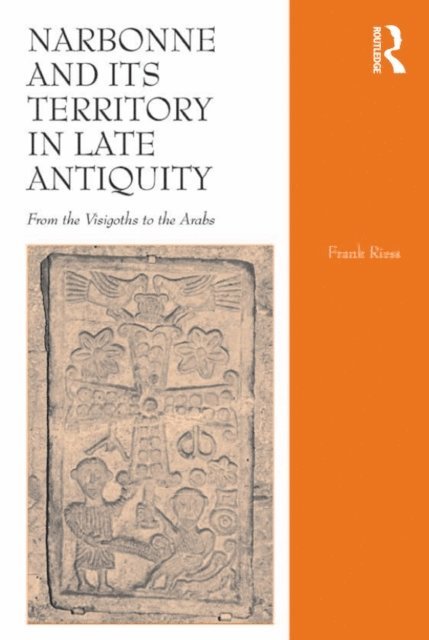
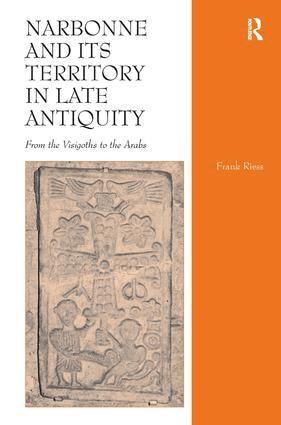
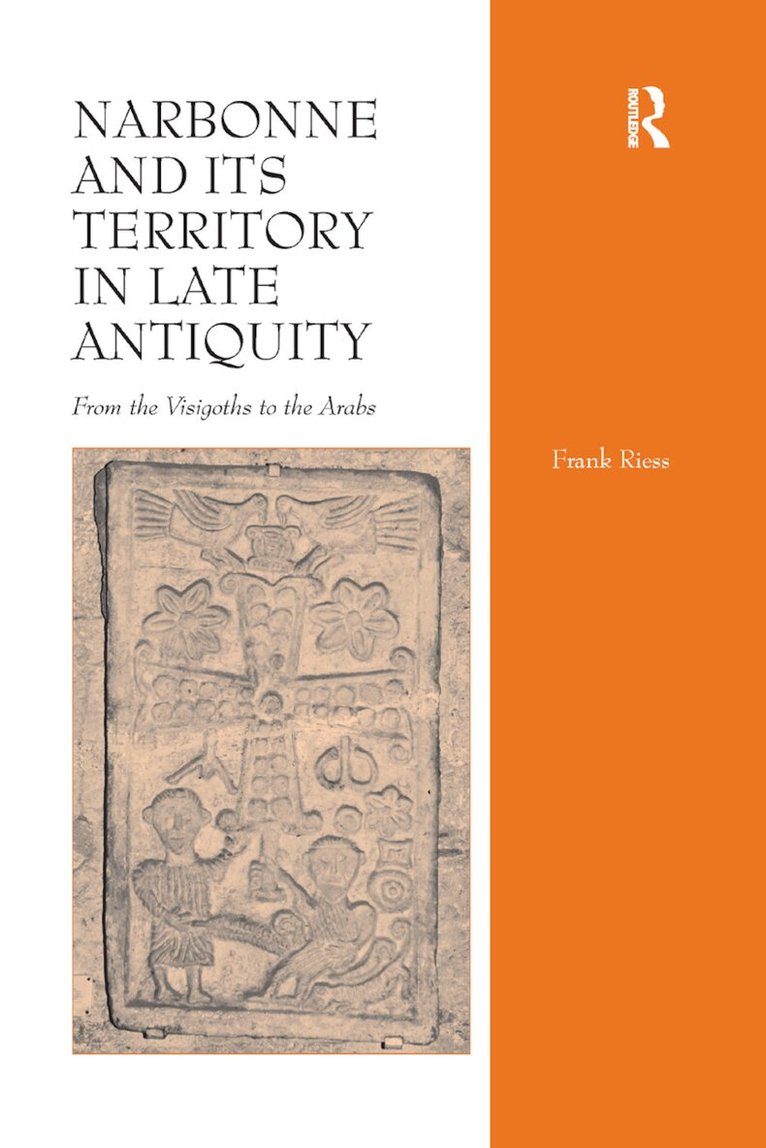
This work centres on the post-Roman period of Narbonne and its territory, up to its capture by the Arabs in 720, encompassing not only recent archaeological findings but also perspectives of French, Spanish and Catalan historiography that have fashioned distinct national narratives. Seeking to remove Narbonne from any subsequent birth of France, Catalonia and Spain, the book presents a geopolitical region that took shape from the late fifth century, evolving towards the end of the eighth century into an autonomous province of the nascent Carolingian Empire. Capturing this change throughout a 300-year period somewhat lacking in written sources, the book takes us beyond an exclusive depiction of the classical city to an examination of settlement in various forms. Discourses of literary criticism also lie behind aspects of this study, mapped around textual commentaries which highlight a more imaginative biography of a city. Narbonne's role as a point of departure and travel across the Mediterranean is examined through a reading of the correspondence of Paulinus of Nola and the writings of Sulpicius Severus, enabling the reader to gain a fuller picture of the city and its port. The topography of Narbonne in the fifth century is surveyed together with Bishop Rusticus’s church-building programme. Later chapters emphasise the difficulties in presenting a detached image of Narbonne, as sources become mainly Visigothic, defining the city and its region as part of a centralised kingdom. Particular attention is given to the election of Liuva I as king in Narbonne in 568, and to the later division into upper and lower sub-kingdoms shared by Liuva and his brother Leovigild, a duality that persisted throughout the sixth and seventh centuries. The study therefore casts new light on Narbonne and its place within the Visigothic Kingdom of Toledo, suggesting that it was the capital of a territory with roots in the post-Roman settlement of barbarian successor states.
Journey of Deacon Bodo from the Rhine to the Guadalquivir
Apostasy and Conversion to Judaism in Early Medieval Europe
Inbunden, Engelska, 2019
2 104 kr
Skickas inom 10-15 vardagar
The story of Bodo begins in the ninth century around the time of the death of Charlemagne in 814. It centres on a young Aleman aristocrat and his conversion to Judaism in 838, followed by his flight to the Muslim world of Al-Andalus. His apostasy constitutes an arresting footnote in the history of the Carolingian period, his change of faith viewed as a shocking episode attributed by some to an overly lax policy towards Judaism and its powerful merchants. Another factor could be ascribed to the study of Judaism and its links with Christianity, which was a feature of the time.Bodo moved from a monastery on the Rhine, where he went as a small boy, to the imperial court, where he was now a gifted young scholar groomed for a top position. His unexpected abandonment of Christianity challenged his background and learning, and this was seen as a rebuke of the court network to which he belonged. Bodo left behind a growing conflict over succession between the emperor, Louis the Pious, and his sons that culminated in a civil war following the emperor’s death. As a result, the Frankish Empire was partitioned into three separate kingdoms in 843.Meanwhile in Spain, two years after fleeing the Frankish world, Bodo debated the merits of Judaism and Christianity in Córdoba with Albarus Paulus, a beleaguered Christian in the Muslim world, not only airing criticisms of Christianity, but also some failings of the Carolingian imperial court. In 847 he is mentioned in the court annals as stirring up opposition in Islamic Spain against Christians, asserting that they should be forced to convert or be executed. This reported incident may be linked to a significant number of self-imposed deaths by Christians who, feeling increasingly persecuted, sought to provoke Islam by denouncing the Prophet and bringing about their execution.The experience of Bodo’s apostasy was far from unique: other men and women who renounced Christianity for Judaism are also examined in conversion narratives recorded in the following two centuries. These episodes offer an illuminating study of religious changes taking place in Europe and the East where Christianity, Islam and Judaism competed in the ninth century and beyond. Bodo’s experience can be viewed as part of a wider phenomenon depicting men and women who travelled as pilgrims, refugees or converts seeking to find a home and escape persecution because of their beliefs.
2 177 kr
Skickas inom 3-6 vardagar
This work centres on the post-Roman period of Narbonne and its territory, up to its capture by the Arabs in 720, encompassing not only recent archaeological findings but also perspectives of French, Spanish and Catalan historiography that have fashioned distinct national narratives. Seeking to remove Narbonne from any subsequent birth of France, Catalonia and Spain, the book presents a geopolitical region that took shape from the late fifth century, evolving towards the end of the eighth century into an autonomous province of the nascent Carolingian Empire. Capturing this change throughout a 300-year period somewhat lacking in written sources, the book takes us beyond an exclusive depiction of the classical city to an examination of settlement in various forms. Discourses of literary criticism also lie behind aspects of this study, mapped around textual commentaries which highlight a more imaginative biography of a city. Narbonne's role as a point of departure and travel across the Mediterranean is examined through a reading of the correspondence of Paulinus of Nola and the writings of Sulpicius Severus, enabling the reader to gain a fuller picture of the city and its port. The topography of Narbonne in the fifth century is surveyed together with Bishop Rusticus’s church-building programme. Later chapters emphasise the difficulties in presenting a detached image of Narbonne, as sources become mainly Visigothic, defining the city and its region as part of a centralised kingdom. Particular attention is given to the election of Liuva I as king in Narbonne in 568, and to the later division into upper and lower sub-kingdoms shared by Liuva and his brother Leovigild, a duality that persisted throughout the sixth and seventh centuries. The study therefore casts new light on Narbonne and its place within the Visigothic Kingdom of Toledo, suggesting that it was the capital of a territory with roots in the post-Roman settlement of barbarian successor states.
Del 2 - Time of Knights 400 CE to 1453 CE
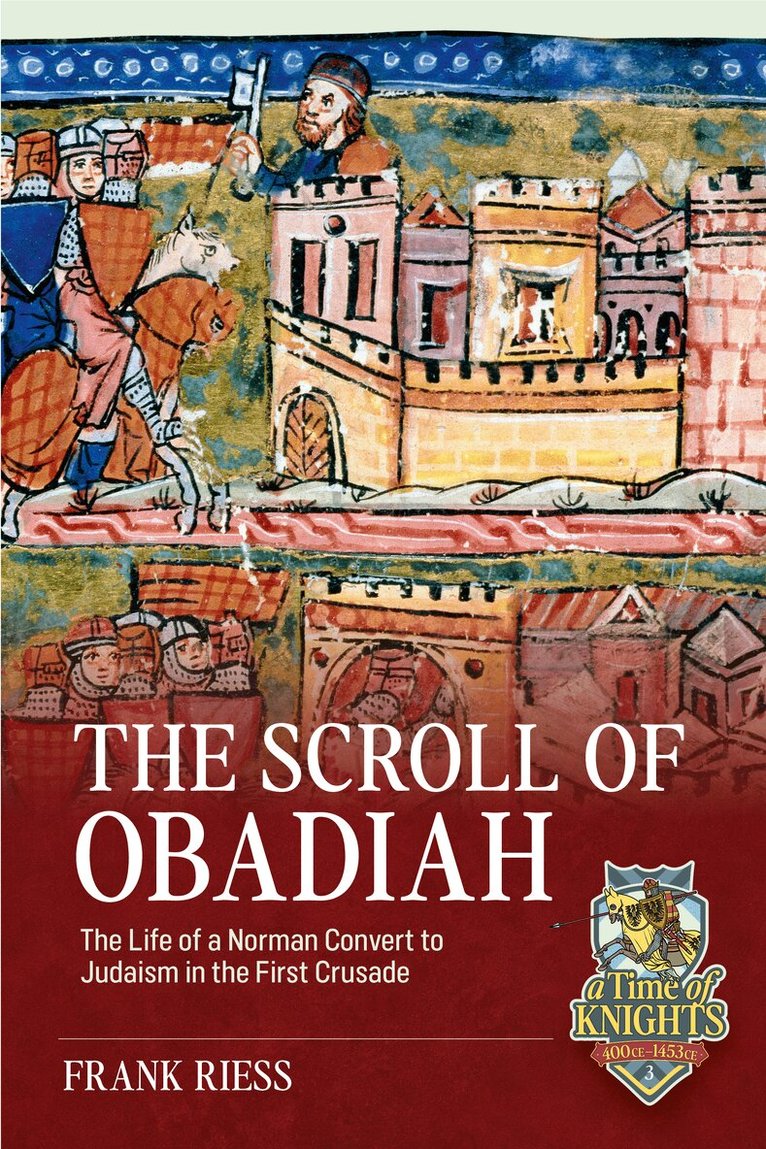
Scroll of Obadiah
The Life of a Norman Convert to Judaism in the First Crusade
Inbunden, Engelska, 2025
266 kr
Skickas