
Frank Roels – författare
Visar alla böcker från författaren Frank Roels. Handla med fri frakt och snabb leverans.
3 produkter
3 produkter
Inbunden, Engelska, 2003
1 653 kr
Skickas inom 10-15 vardagar
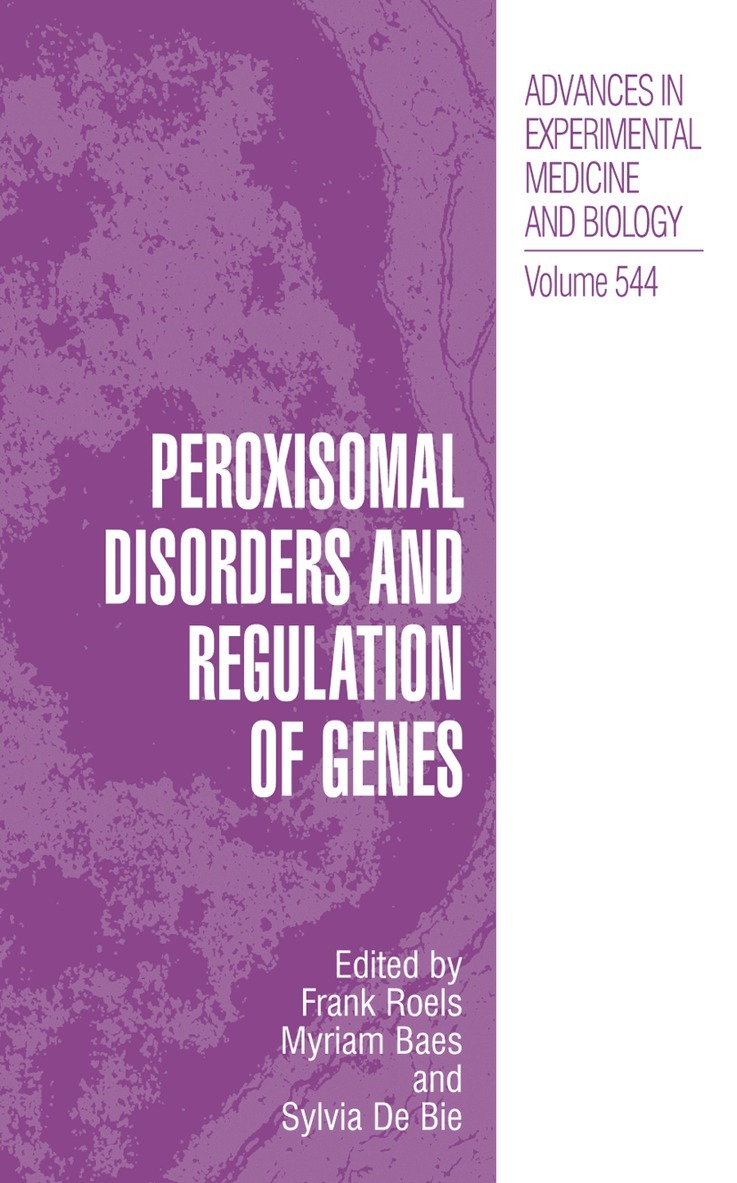
This text is based on the proceedings of the International Symposium on Peroxisomal Disorders and Regulation of Genes, held, September 25-28, 2002, in Ghent, Belgium. In most peroxisomal disorders the nervous system is severely affected which explains the clinical and community burden they represent. This book focuses not only on the mutations causing these inherited illnesses, but also on mechanisms that regulate, suppress or enhance expression of genes and their products (enzymes). Indeed since the success and completion of the Human Genome Project all genes (coding DNA sequences) are known. However, of many, their function, and the role of the gene product has not been determined. An example is X-linked adrenoleukodystrophy, the most frequent peroxisomal disorder. Children are born healthy, but in more than 1 out of 3, demyelination of the brain starts unpredictably and they die in a vegetative state. The gene mutated in most families has been known for 10 years; but the true role of the encoded protein, ALDp, is still speculative; and within the same family, very severe and asymptomatic clinical histories co-exist, unexplained by the mutation.Therefore this book is oriented to various processes of regulation of gene function, "signalling cascades" by metabolites, hormones, nutrients, transcription factors, interaction of other gene products ("modifier gene") or redundancy (replacement) by the product of a different gene. Novel developments in gene control that are discussed in detail are RNA interference, DNA methylation and histone modifications and chromatin remodelling. In healthy humans and animals, peroxisome expression normally changes during development and differs between cell types, and is altered by drugs, when cultured, and in disease - without mutations of the genome. When in mice a specific gene is experimentally deleted in order to mimic a human disease, unexpected phenotypes appear differing from the condition in patients. In all these cases, mechanisms of regulation, compensation and redundancy can be assumed. This is similar to the directed differentiation of stem cells for repair of various tissues that have received a lot of attention lately. Pharmacological or in vitro intervention in these processes is actively pursued and has potential for therapy without changing the DNA sequence.The book reports on the large international clinical trial with "Lorenzo's oil", a mixture of glycerol trierucate and glycerol trioleate that suppresses synthesis of very long chain fatty acids. Experiments with other drugs have been initiated. In summary this book shows: basic knowledge on gene regulation in general is vast and expanding quickly, but less so in humans, in particular in the brain; each gene seems to have its own private control mechanisms and there are indications of redundancy by other genes; and that there is still much to be learnt about control of peroxisomal genes and proposes several novel orientations to be investigated.
Häftad, Engelska, 1997
556 kr
Skickas inom 10-15 vardagar
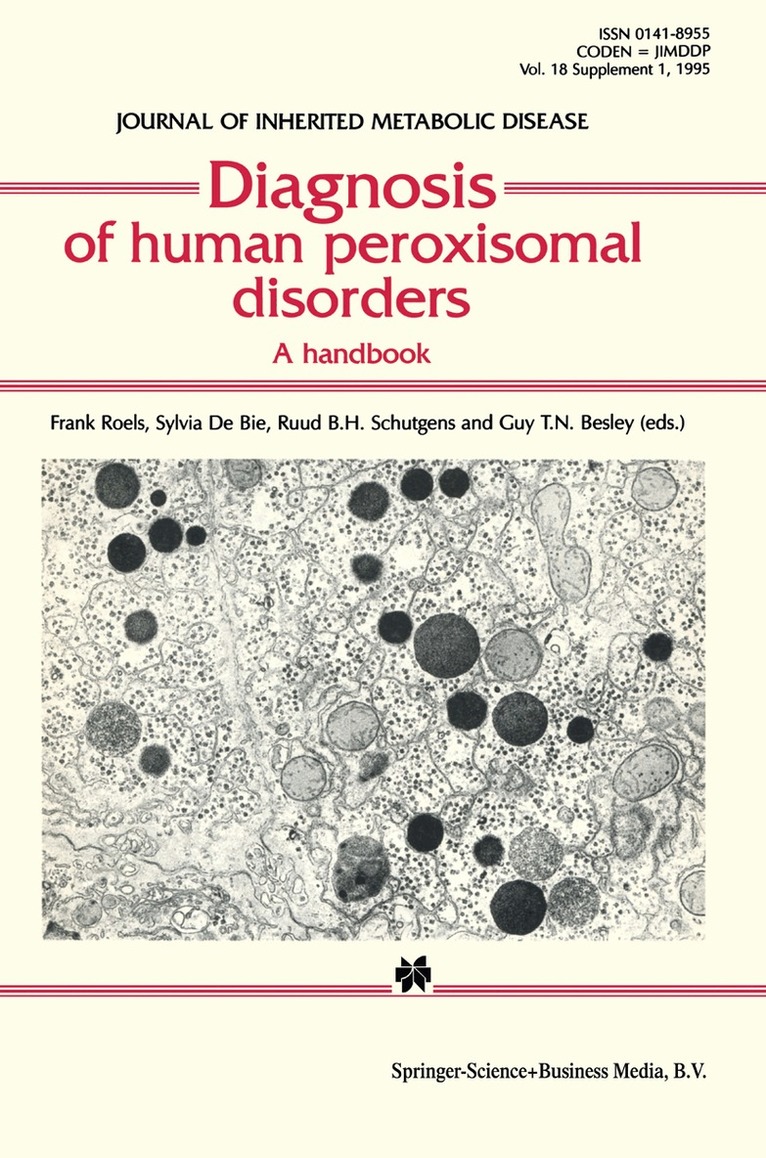
Peroxisomal disorders constitute a major research front in clinical genetics, paediatrics and cell biology. Since 1983, the metabolic defect in some 20 different peroxisomal disorders has been described. The best known conditions include Zellweger syndrome, rhizomelic chondrodysplasia punctata and X-linked adrenoleukodystrophy. Progress in our understanding of these conditions, and their diagnosis, results from the application of a variety of laboratory investigations. These include microscopic studies, analysis of metabolites (very long-chain fatty acids, bile acids, and plasmalogens), enzyme studies (peroxisomal b-oxidation pathway and dihydroxyacetone phosphate acyltransferase), immunodetection of peroxisomal (membrane) proteins and molecular analysis of mutant DNA. In order to encourage a greater awareness in this field and the diagnostic protocols required, an international course was organized in Gent, Belgium, in May 1994, on the clinical and biochemical diagnosis of peroxisomal disorders.A number of international experts in the field who provided intensive hands-on experience over three to five days, have now collected their course work and reviews together in this handbook. The volume is introduced by Sidney Goldfischer, who in 1973 was the first to recognize the absence of peroxisomes in Zellweger syndrome, but whose observations were not fully appreciated for a further decade. This handbook provides an account of laboratory methods for the diagnosis of peroxisomal disorders. The methods are clearly presented and well illustrated, and should allow laboratories to introduce these methods into their repertoire.
Häftad, Engelska, 2012
1 653 kr
Skickas inom 10-15 vardagar
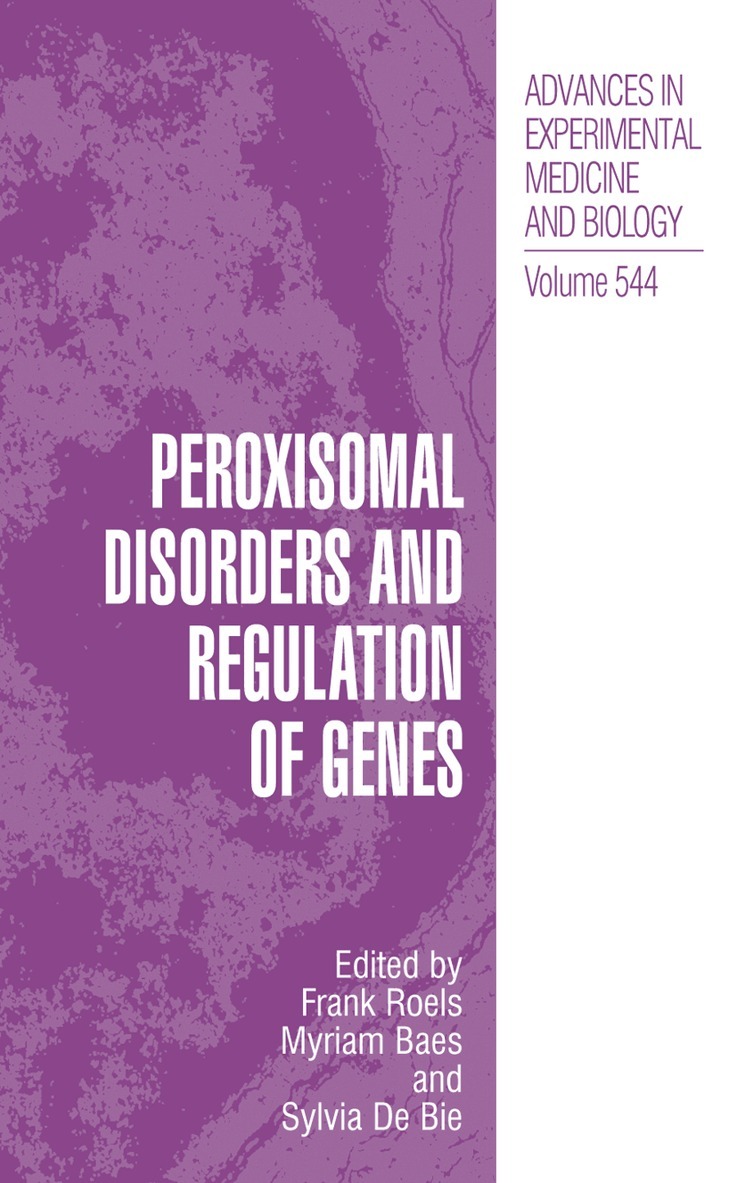
In most peroxisomal disorders the nervous system is severely affected which explains the clinical and community burden they represent. This is the first book to focus not only on the mutations causing these inherited illnesses, but also on mechanisms that regulate, suppress or enhance expression of genes and their products (enzymes). Indeed since the success and completion of the Human Genome Project all genes (coding DNA sequences) are known. However, of many, their function, and the role of the gene product has not been determined. An example is X-linked adrenoleukodystrophy, the most frequent peroxisomal disorder. Children are born healthy, but in more than 1 out of 3, demyelination of the brain starts unpredictably and they die in a vegetative state. The gene mutated in most families has been known for 10 years; but the true role of the encoded protein, ALDp, is still speculative; and within the same family, very severe and asymptomatic clinical histories co-exist, unexplained by the mutation.