Franklin I. Gamwell - Böcker
Visar alla böcker från författaren Franklin I. Gamwell. Handla med fri frakt och snabb leverans.
13 produkter
13 produkter
334 kr
Skickas inom 7-10 vardagar
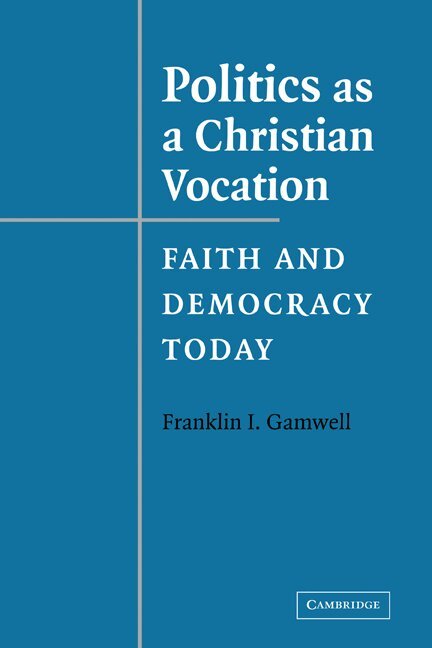
Many democratic citizens, including many Christians, think that separation of religion from the state means the exclusion of religious beliefs from the political process. That view is mistaken. Both democracy and Christian faith, this 2004 book shows, call all Christians to make their beliefs effective in politics. But the discussion here differs from others. Most have trouble relating religion to democratic discussion and debate because they assume that religious differences cannot be publicly debated. Against this majority view, this book argues that Christian faith belongs in politics because it shares with democracy a full commitment to rational pursuit of the truth. The book then develops ideals of justice and the common good Christians should advocate within the democratic process and shows the difference they make for contemporary politics in the United States, focusing specifically on issues of abortion, affirmative action, and economic distribution.
1 034 kr
Skickas inom 7-10 vardagar
Many democratic citizens, including many Christians, think that separation of religion from the state means the exclusion of religious beliefs from the political process. That view is mistaken. Both democracy and Christian faith, this 2004 book shows, call all Christians to make their beliefs effective in politics. But the discussion here differs from others. Most have trouble relating religion to democratic discussion and debate because they assume that religious differences cannot be publicly debated. Against this majority view, this book argues that Christian faith belongs in politics because it shares with democracy a full commitment to rational pursuit of the truth. The book then develops ideals of justice and the common good Christians should advocate within the democratic process and shows the difference they make for contemporary politics in the United States, focusing specifically on issues of abortion, affirmative action, and economic distribution.
1 057 kr
Tillfälligt slut
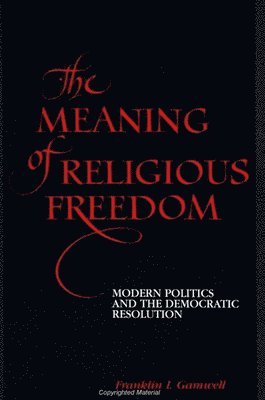
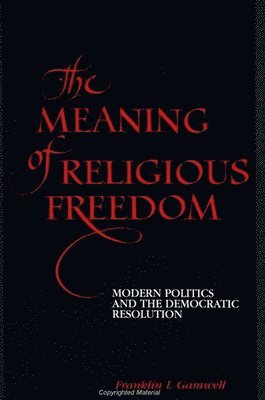
The most thorough philosophical analysis available of the principle of religious freedom. It draws on the thought of philosophers and political theorists (Rawls, Habermas, Murray, Rorty, Greenawalt, and Mead) rather than on the framers of the Constitution and the Bill of RightsThe endorsement of religious freedom in the first amendment to the Constitution of the United States represents a modern revolution in the relation between politics and religion. In American politics there has been continual disagreement about the meaning of this constitutional principle, and widely-held views of religious freedom include much philosophical confusion. This book shows how a plurality of religious convictions can be politically united only by a free debate among different religious convictions.The author demonstrates that religious freedom is a coherent political principle, and that this principle is the defining democratic commitment because all other political principles should be subject to assessment by the same free debate characterizing religious freedom. This book identifies the meaning of an authentically democratic constitution and the civility required of democratic citizens.
489 kr
Tillfälligt slut
The most thorough philosophical analysis available of the principle of religious freedom. It draws on the thought of philosophers and political theorists (Rawls, Habermas, Murray, Rorty, Greenawalt, and Mead) rather than on the framers of the Constitution and the Bill of RightsThe endorsement of religious freedom in the first amendment to the Constitution of the United States represents a modern revolution in the relation between politics and religion. In American politics there has been continual disagreement about the meaning of this constitutional principle, and widely-held views of religious freedom include much philosophical confusion. This book shows how a plurality of religious convictions can be politically united only by a free debate among different religious convictions.The author demonstrates that religious freedom is a coherent political principle, and that this principle is the defining democratic commitment because all other political principles should be subject to assessment by the same free debate characterizing religious freedom. This book identifies the meaning of an authentically democratic constitution and the civility required of democratic citizens.
475 kr
Skickas inom 3-6 vardagar
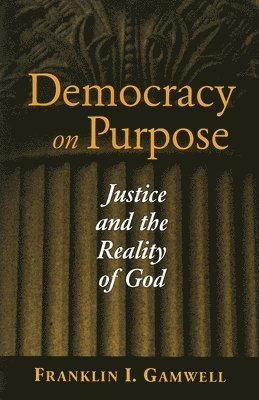
Western moral and political theory in the last two centuries has widely held that morality and politics are independent of a divine reality. Claiming that this consensus is flawed, prominent theologian Franklin I. Gamwell argues that there is a necessary relation between moral worth and belief in God. Without appealing to the beliefs of any specific religion, Gamwell defends a return to the view that moral and political principles depend on a divine purpose. To separate politics from the divine misrepresents the distinctive character of human freedom, Gamwell maintains, and thus prevents a full understanding of the nature of justice. Principles of justice define "democracy on purpose" as the political form in which we pursue the divine good. Engaging in a dialogue with such major representatives of the dominant consensus as Kant, Habermas, and Rawls, and informed by the philosophical writings of Alfred North Whitehead, this book makes the case for a neoclassical metaphysics that restores a religious sensibility to our political life.
382 kr
Tillfälligt slut
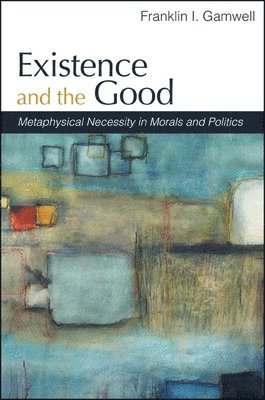
Argues that morals and politics require on a metaphysical backing and proposes a neoclassical metaphysics.Morals and politics depend on a metaphysical backing. All reality is marked by certain necessary features and a divine purpose inherent in all reality defines the good to which all human life should be directed.These are bold assertions in a climate where the credibility of metaphysics is widely denied. Indeed, for the past two centuries, Western philosophy has been marked by a consensus that questions about moral and political life should be considered separately from questions about ultimate reality. In this challenging work, Franklin I. Gamwell defends metaphysical necessity against both modern and postmodern critiques. The metaphysics vindicated is not the traditional form both critiques typically have in view, however. Instead, Gamwell outlines a neoclassical project for which Alfred North Whitehead and Charles Hartshorne are the main philosophical resources. As it maintains the significance of theistic metaphysics, the book makes no appeal to religious authority but solely to common human experience, and on this basis articulates principles of human purpose and democratic justice.
1 359 kr
Tillfälligt slut
Argues that morals and politics require on a metaphysical backing and proposes a neoclassical metaphysics.Morals and politics depend on a metaphysical backing. All reality is marked by certain necessary features and a divine purpose inherent in all reality defines the good to which all human life should be directed.These are bold assertions in a climate where the credibility of metaphysics is widely denied. Indeed, for the past two centuries, Western philosophy has been marked by a consensus that questions about moral and political life should be considered separately from questions about ultimate reality. In this challenging work, Franklin I. Gamwell defends metaphysical necessity against both modern and postmodern critiques. The metaphysics vindicated is not the traditional form both critiques typically have in view, however. Instead, Gamwell outlines a neoclassical project for which Alfred North Whitehead and Charles Hartshorne are the main philosophical resources. As it maintains the significance of theistic metaphysics, the book makes no appeal to religious authority but solely to common human experience, and on this basis articulates principles of human purpose and democratic justice.
1 057 kr
Tillfälligt slut
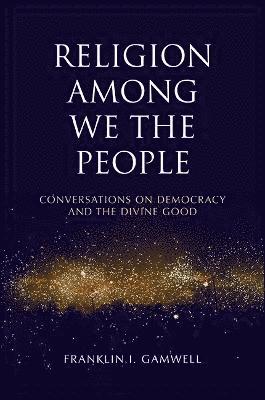
Explores democracy with religious freedom and its dependence on theism.Franklin I. Gamwell holds that democracy with religious freedom is dependent on metaphysical theism. Democratic politics can be neutral to all religious convictions only if its constitution establishes a full and free discourse about the ultimate terms of justice and their application to decisions of the state, and the divine good is the true ground of justice. Notably, Gamwell's view challenges virtually all current accounts of democracy with religious freedom. This uncommon position emerges through a series of essays in which Gamwell engages a variety of conversation partners, including Thomas Jefferson, David Strauss, Abraham Lincoln, Jürgen Habermas, Alfred North Whitehead, Reinhold Niebuhr, and Iris Murdoch. Discussions of Jefferson, Lincoln, and the US Constitution illustrate the promise of neoclassical metaphysics as a context for interpreting US history. Gamwell then defends his metaphysics against both modern refusals of metaphysics and accounts of ultimate reality offered by Niebuhr and Murdoch.
229 kr
Skickas
Explores democracy with religious freedom and its dependence on theism.Franklin I. Gamwell holds that democracy with religious freedom is dependent on metaphysical theism. Democratic politics can be neutral to all religious convictions only if its constitution establishes a full and free discourse about the ultimate terms of justice and their application to decisions of the state, and the divine good is the true ground of justice. Notably, Gamwell's view challenges virtually all current accounts of democracy with religious freedom. This uncommon position emerges through a series of essays in which Gamwell engages a variety of conversation partners, including Thomas Jefferson, David Strauss, Abraham Lincoln, Jürgen Habermas, Alfred North Whitehead, Reinhold Niebuhr, and Iris Murdoch. Discussions of Jefferson, Lincoln, and the US Constitution illustrate the promise of neoclassical metaphysics as a context for interpreting US history. Gamwell then defends his metaphysics against both modern refusals of metaphysics and accounts of ultimate reality offered by Niebuhr and Murdoch.
566 kr
Skickas inom 3-6 vardagar
Emphasizes the importance of metaphysical necessity to both philosophical theology and, through it, to moral and political theory.In this collection of essays, Franklin I. Gamwell offers a defense of transcendental metaphysics, especially in its neoclassical form, and builds a case for its importance as a tool for addressing abiding problems in philosophical theology and morality-including talk about God, human fault, moral decision, and the relationship of politics and religious freedom.In Part I, Gamwell argues against Kant and a wide range of contemporary philosophers, for the validity of transcendental metaphysics designated in the strict sense. He engages with Aquinas, Schleiermacher, Augustine, and Reinhold Niebuhr to argue that neoclassical metaphysics, for which the divine whole is itself temporal or forever self-surpassing, provides a more coherent account of God than does classical metaphysics, for which the divine whole is completely eternal. In Part II, Gamwell looks at transcendental metaphysics designated in the broad sense. In particular, he takes up the moral opportunity with which humans are presented, and argues that the moral law depends on a comprehensive good, that is, a good defined metaphysically in the strict sense. He then offers an extended discussion of the relation between transcendental metaphysics and morality, and explores Ronald Dworkin's view of the relationship between democracy and religion, the question of whether religious activities are properly exempted from generally applicable laws, and the constitutional debate about national and states' rights.
1 456 kr
Skickas inom 3-6 vardagar
Emphasizes the importance of metaphysical necessity to both philosophical theology and, through it, to moral and political theory.In this collection of essays, Franklin I. Gamwell offers a defense of transcendental metaphysics, especially in its neoclassical form, and builds a case for its importance as a tool for addressing abiding problems in philosophical theology and morality-including talk about God, human fault, moral decision, and the relationship of politics and religious freedom.In Part I, Gamwell argues against Kant and a wide range of contemporary philosophers, for the validity of transcendental metaphysics designated in the strict sense. He engages with Aquinas, Schleiermacher, Augustine, and Reinhold Niebuhr to argue that neoclassical metaphysics, for which the divine whole is itself temporal or forever self-surpassing, provides a more coherent account of God than does classical metaphysics, for which the divine whole is completely eternal. In Part II, Gamwell looks at transcendental metaphysics designated in the broad sense. In particular, he takes up the moral opportunity with which humans are presented, and argues that the moral law depends on a comprehensive good, that is, a good defined metaphysically in the strict sense. He then offers an extended discussion of the relation between transcendental metaphysics and morality, and explores Ronald Dworkin's view of the relationship between democracy and religion, the question of whether religious activities are properly exempted from generally applicable laws, and the constitutional debate about national and states' rights.
368 kr
Skickas inom 5-8 vardagar
214 kr
Skickas inom 5-8 vardagar