Fred A. Bonner II – författare
Visar alla böcker från författaren Fred A. Bonner II. Handla med fri frakt och snabb leverans.
18 produkter
18 produkter
Inbunden, Engelska, 2014
2 278 kr
Skickas inom 10-15 vardagar
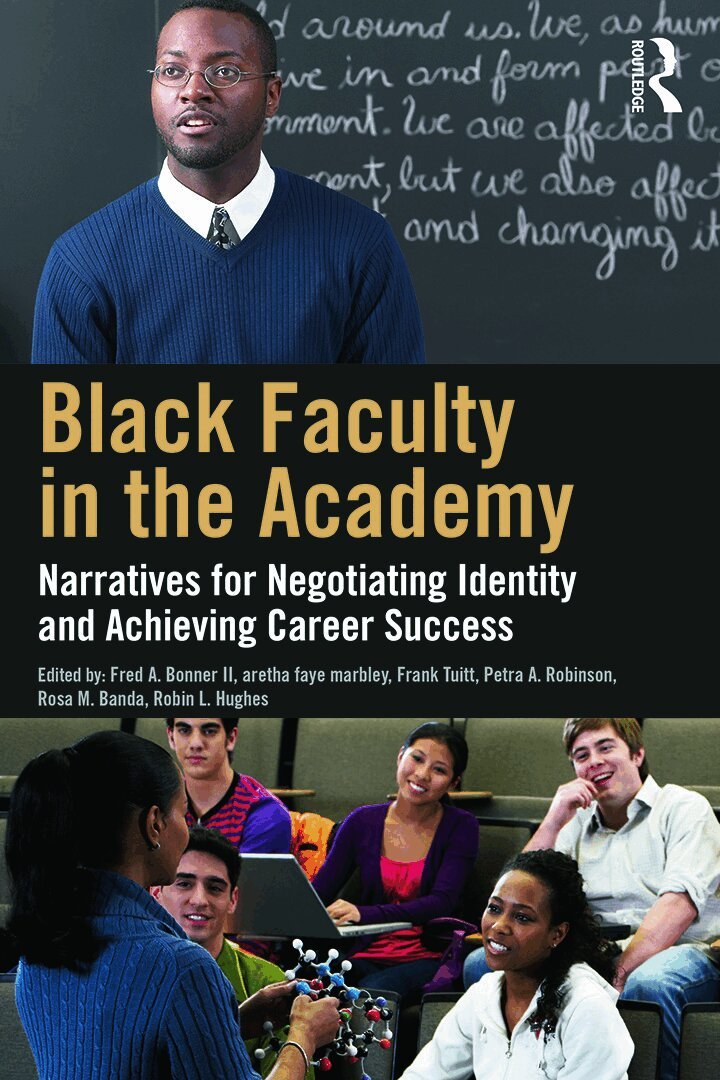
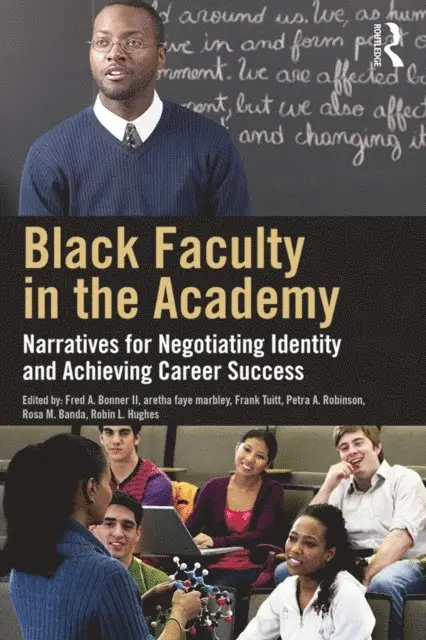
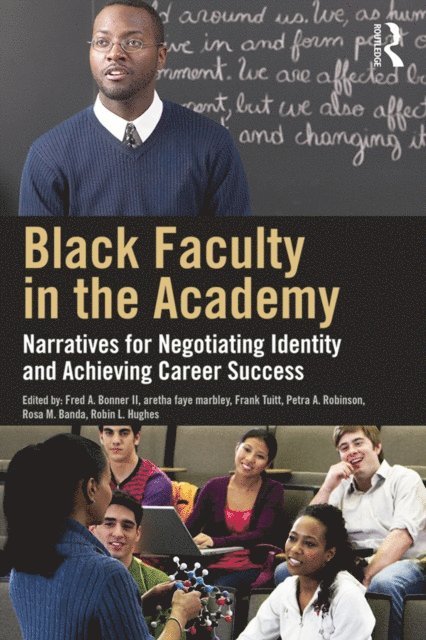
Through candid discussions and personal counter-narrative stories, Black Faculty in the Academy explores the experiences and challenges faced by faculty of color in academe. Black faculty in predominantly White college and university settings must negotiate multiple and competing identities while struggling with issues of marginality, otherness, and invisible barriers. This important book illuminates how faculty can develop a professional identity that leads to success in academe, while at the same time remaining true to cultural and personal identities. Through rich narratives, chapter authors situate race-related encounters at the center of their experience in an effort to deconstruct and challenge commonly held assumptions about life in academe. They also provide key recommendations and strategies to help faculty of color ensure their continued professional success. Framed by critical race theory, these stories show how faculty can successfully maneuver through all stages of a career in academe, including tenure and promotion, publication, mentoring, networking, teaching, and dealing with institutional climate issues. This valuable book is for faculty and administrators seeking to create an environment that nurtures professional growth and fosters success among Black faculty.
Häftad, Engelska, 2014
514 kr
Skickas inom 10-15 vardagar
Through candid discussions and personal counter-narrative stories, Black Faculty in the Academy explores the experiences and challenges faced by faculty of color in academe. Black faculty in predominantly White college and university settings must negotiate multiple and competing identities while struggling with issues of marginality, otherness, and invisible barriers. This important book illuminates how faculty can develop a professional identity that leads to success in academe, while at the same time remaining true to cultural and personal identities. Through rich narratives, chapter authors situate race-related encounters at the center of their experience in an effort to deconstruct and challenge commonly held assumptions about life in academe. They also provide key recommendations and strategies to help faculty of color ensure their continued professional success. Framed by critical race theory, these stories show how faculty can successfully maneuver through all stages of a career in academe, including tenure and promotion, publication, mentoring, networking, teaching, and dealing with institutional climate issues. This valuable book is for faculty and administrators seeking to create an environment that nurtures professional growth and fosters success among Black faculty.
Inbunden, Engelska, 2010
601 kr
Skickas inom 10-15 vardagar
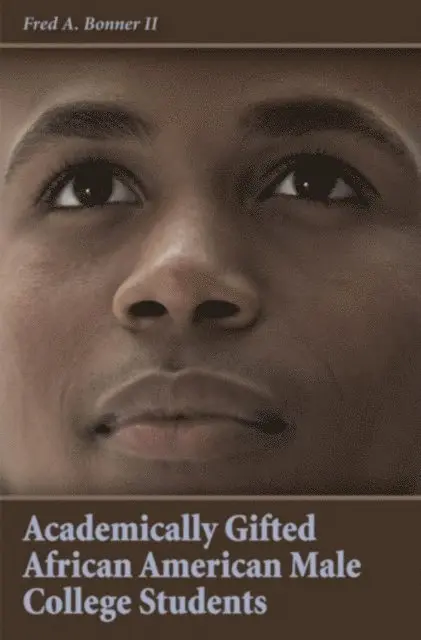
The first-ever study of African American giftedness at the collegiate level, focusing on two extraordinary case studies.At a time when so many studies of African American students focus on the factors of failure, Academically Gifted African American Male College Students fills a conspicuous void in the research literature on post-secondary education by focusing on success. Like no other work before it, this remarkable study goes deep inside the experiences of academically gifted African American men who successfully navigate their way through rigorous college-level programs.At the heart of the unique and long overdue work are two real-life stories of African American male students: one at a Historically Black College and University (HBCU) and the other at a Traditionally White Institution (TWI). In presenting, comparing, and contrasting these two cases, the book identifies a number of personal characteristics and institutional approaches driving their notable achievements. The result is a guidebook both for gifted African American male students and for the institutions looking to strengthen their support for them—particularly in science, technology, engineering, and mathematics (STEM) disciplines.
Häftad, Engelska, 2024
611 kr
Skickas inom 10-15 vardagar
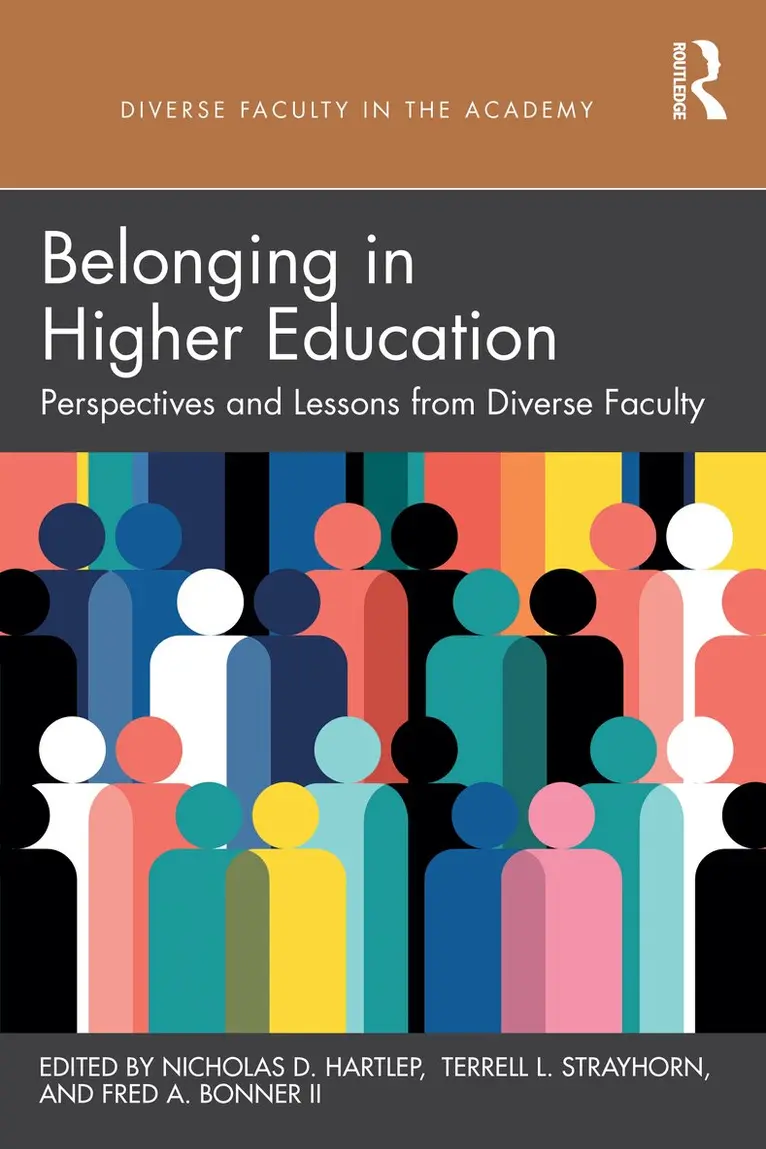
Belonging in Higher Education: Perspectives and Lessons from Diverse Faculty illuminates autoethnographic stories of belonging in higher education in the United States. Chapter counter/stories are contributed by African American, Asian American, Latinx American, Indigenous American, and BIPOC individuals who work in diversity-related positions in the academy. Chapters are written by faculty who work in different institutional contexts such as Predominantly White Institutions (PWIs); minority-serving institutions (MSIs) like Historically Black Colleges and Universities (HBCUs); and institutional types such as community colleges, teaching-focused, and research-focused institutions. Chapter authors represent a range of diversities, coming from a variety of inter- and transdisciplinary backgrounds in terms of their fields of study and research foci, including Education, Psychology, Sociology, and Gender Studies. The counter/narratives in the book celebrate diverse experiences and offer unique and useful insights about how to foster what foreword author, Michael Eric Dyson, refers to as “deep belonging,” particularly for those who have been ostracized, marginalized, or expelled while working in higher education. This critical volume is an essential reading for researchers, faculty, administrators, and graduate students in Education, Sociology, Psychology, Student Affairs, African American Studies, and Asian American Studies. Additionally, it offers crucial insights for individuals who are key stakeholders in foregrounding policy that centers belonging for diverse faculty. Winner of “Society of Professors of Education 2025 Outstanding Book Award Honorable Mention”
Inbunden, Engelska, 2024
2 088 kr
Skickas inom 10-15 vardagar
Belonging in Higher Education: Perspectives and Lessons from Diverse Faculty illuminates autoethnographic stories of belonging in higher education in the United States. Chapter counter/stories are contributed by African American, Asian American, Latinx American, Indigenous American, and BIPOC individuals who work in diversity-related positions in the academy. Chapters are written by faculty who work in different institutional contexts such as Predominantly White Institutions (PWIs); minority-serving institutions (MSIs) like Historically Black Colleges and Universities (HBCUs); and institutional types such as community colleges, teaching-focused, and research-focused institutions. Chapter authors represent a range of diversities, coming from a variety of inter- and transdisciplinary backgrounds in terms of their fields of study and research foci, including Education, Psychology, Sociology, and Gender Studies. The counter/narratives in the book celebrate diverse experiences and offer unique and useful insights about how to foster what foreword author, Michael Eric Dyson, refers to as “deep belonging,” particularly for those who have been ostracized, marginalized, or expelled while working in higher education. This critical volume is an essential reading for researchers, faculty, administrators, and graduate students in Education, Sociology, Psychology, Student Affairs, African American Studies, and Asian American Studies. Additionally, it offers crucial insights for individuals who are key stakeholders in foregrounding policy that centers belonging for diverse faculty. Winner of “Society of Professors of Education 2025 Outstanding Book Award Honorable Mention”
Häftad, Engelska, 2002
371 kr
Skickas inom 10-15 vardagar
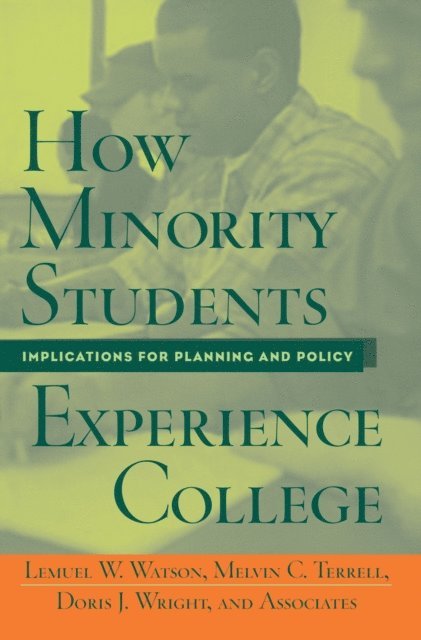
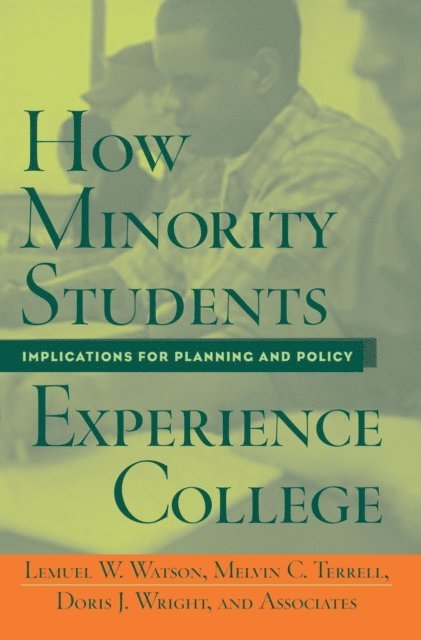
"I feel like they act like they're so diverse and multicultural.This is not a representation of how it is for people who go here.""I know of several occasions, if it weren't for several faculty of color, I don't know how I would have made it from one day to the next." -- from student interviewsHave three decades of integration and multicultural initiatives in higher education delivered a better education to all students? Are majority and minority students reaping similar benefits, specifically in predominantly white colleges? Do we know what a multicultural campus should look like, and how to design one that is welcoming to all students and promotes a learning environment?Through a unique qualitative study involving seven colleges and universities considered national models of commitment to diversity, this book presents the views and voices of minority students on what has been achieved and what remains to be done. The direct quotations that form the core of this book give voice to Black, Hispanic, Asian, Native American and bi-racial students. They offer in their own words their perceptions of their campus cultures and practices, the tensions they encounter and what works for them.Rather than elaborating or recommending specific models or solutions, this book aims to provide insights that will enable the reader better to understand and articulate the issues that need to be addressed to achieve a well-adapted multicultural campus.Presidents, academic affairs professionals, student affairs personnel and faculty concerned with equity and diversity will find this book helpful and enlightening.
Inbunden, Engelska, 2011
2 097 kr
Skickas inom 10-15 vardagar
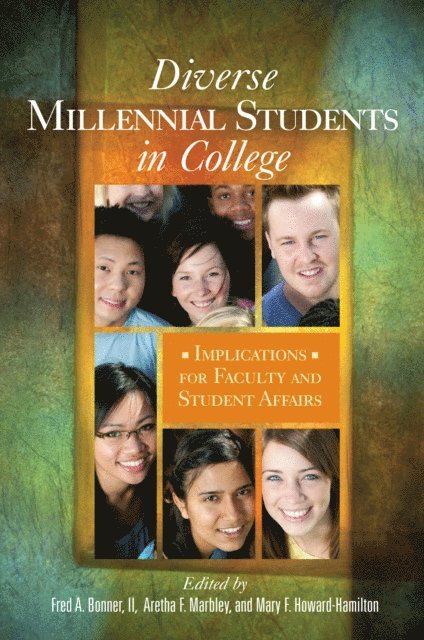
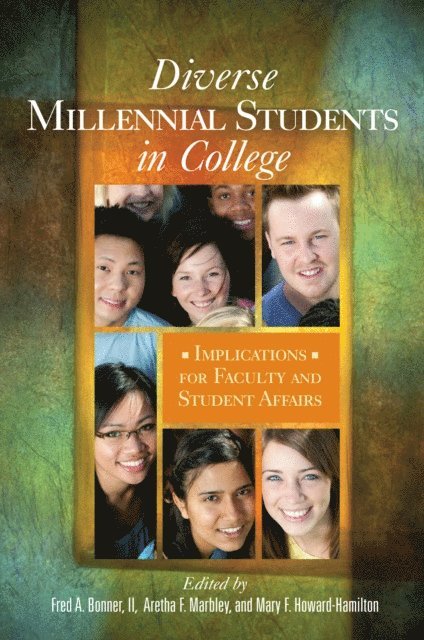
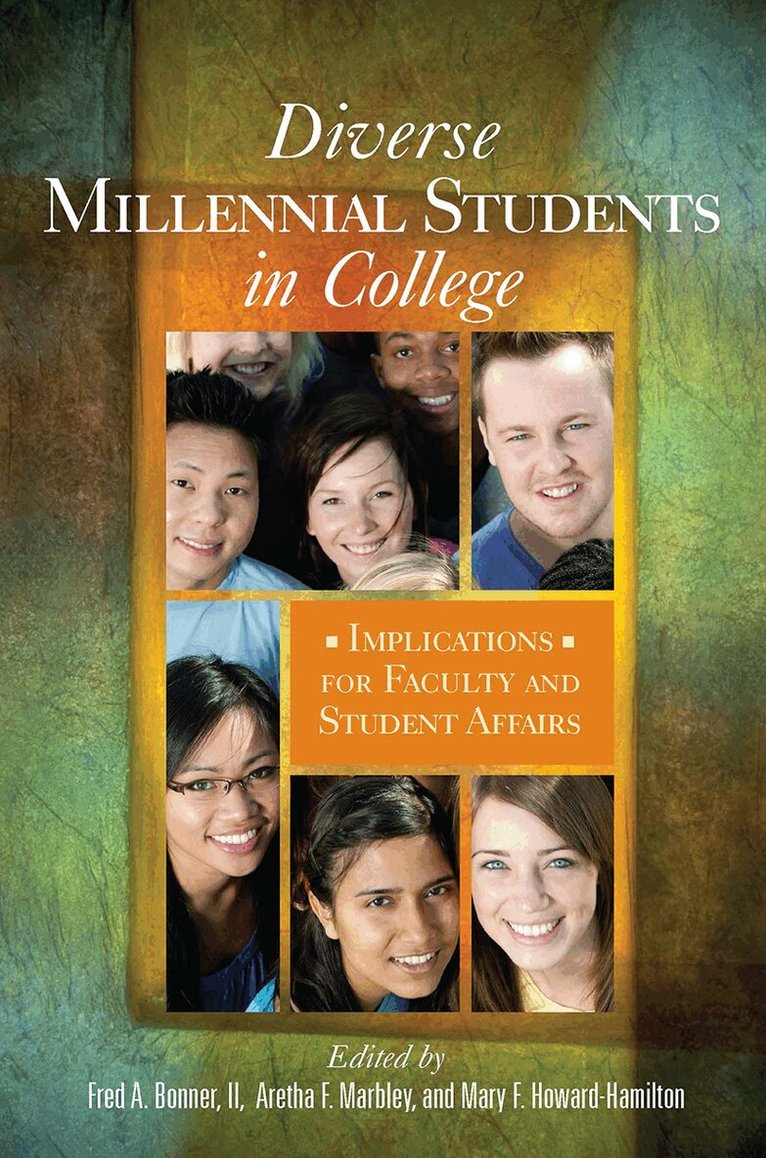
While many institutions have developed policies to address the myriad needs of Millennial college students and their parents, inherent in many of these initiatives is the underlying assumption that this student population is a homogeneous group. This book is significant because it addresses and explores the characteristics and experiences of Millennials from an array of perspectives, taking into account not only racial and ethnic identity but also cultural background, sexual orientation, and socioeconomic status differences—all factors contributing to how these students interface with academe.In providing a “voice” to “voiceless” populations of African American, Asian American, Bi/Multi-Racial, Latino, Native American, and LGBT millennial college students, this book engages with such questions as: Does the term “Millennial” apply to these under-represented students? What role does technology, pop culture, sexual orientation, and race politics play in the identity development for these populations? Do our current minority development theories apply to these groups? And, ultimately, are higher education institutions prepared to meet both the cultural and developmental needs of diverse minority groups of Millennial college students?” This book is addressed primarily to college and university administrators and faculty members who seek greater depth and understanding of the issues associated with diverse Millennial college student populations. This book informs readers about the ways in which this cohort differs from their majority counterparts to open a dialogue about how faculty members and administrators can meet their needs effectively both inside and outside the classroom. It will also be of value to student affairs personnel, students enrolled in graduate level courses in higher education and other social science courses that explore issues of college student development and diversity, particularly students planning to work with diverse Millennial college students in both clinical or practical work settings.Contributors: Rosie Maria Banda; Fred Bonner, II; Lonnie Booker, Jr.; Brian Brayboy; Mitchell Chang; Andrea Domingue; Tonya Driver; Alonzo M. Flowers; Gwen Dungy; Jami Grosser; Kandace Hinton; Mary Howard-Hamilton; Tom Jackson, Jr.; Aretha F. Marbley; Samuel Museus; Anna Ortiz; Tammie Preston-Cunningham; Nana Osei-Kofi; Kristen Renn; Petra Robinson; Genyne Royal; Victor Saenz; Rose Anna Santos; Mattyna Stephens; Terrell Strayhorn; Theresa Survillion; Nancy Jean Tubbs; Malia Villegas; Stephanie J. Waterman; Nick Zuniga.
Häftad, Engelska, 2011
479 kr
Skickas inom 10-15 vardagar
While many institutions have developed policies to address the myriad needs of Millennial college students and their parents, inherent in many of these initiatives is the underlying assumption that this student population is a homogeneous group. This book is significant because it addresses and explores the characteristics and experiences of Millennials from an array of perspectives, taking into account not only racial and ethnic identity but also cultural background, sexual orientation, and socioeconomic status differences—all factors contributing to how these students interface with academe.In providing a “voice” to “voiceless” populations of African American, Asian American, Bi/Multi-Racial, Latino, Native American, and LGBT millennial college students, this book engages with such questions as: Does the term “Millennial” apply to these under-represented students? What role does technology, pop culture, sexual orientation, and race politics play in the identity development for these populations? Do our current minority development theories apply to these groups? And, ultimately, are higher education institutions prepared to meet both the cultural and developmental needs of diverse minority groups of Millennial college students?” This book is addressed primarily to college and university administrators and faculty members who seek greater depth and understanding of the issues associated with diverse Millennial college student populations. This book informs readers about the ways in which this cohort differs from their majority counterparts to open a dialogue about how faculty members and administrators can meet their needs effectively both inside and outside the classroom. It will also be of value to student affairs personnel, students enrolled in graduate level courses in higher education and other social science courses that explore issues of college student development and diversity, particularly students planning to work with diverse Millennial college students in both clinical or practical work settings.Contributors: Rosie Maria Banda; Fred Bonner, II; Lonnie Booker, Jr.; Brian Brayboy; Mitchell Chang; Andrea Domingue; Tonya Driver; Alonzo M. Flowers; Gwen Dungy; Jami Grosser; Kandace Hinton; Mary Howard-Hamilton; Tom Jackson, Jr.; Aretha F. Marbley; Samuel Museus; Anna Ortiz; Tammie Preston-Cunningham; Nana Osei-Kofi; Kristen Renn; Petra Robinson; Genyne Royal; Victor Saenz; Rose Anna Santos; Mattyna Stephens; Terrell Strayhorn; Theresa Survillion; Nancy Jean Tubbs; Malia Villegas; Stephanie J. Waterman; Nick Zuniga.
Inbunden, Engelska, 2014
2 097 kr
Skickas inom 10-15 vardagar
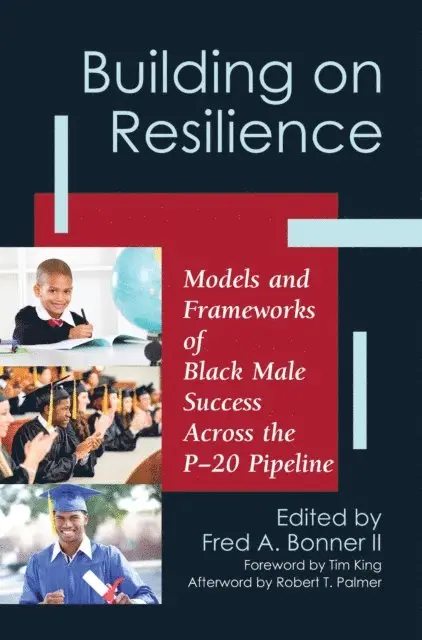
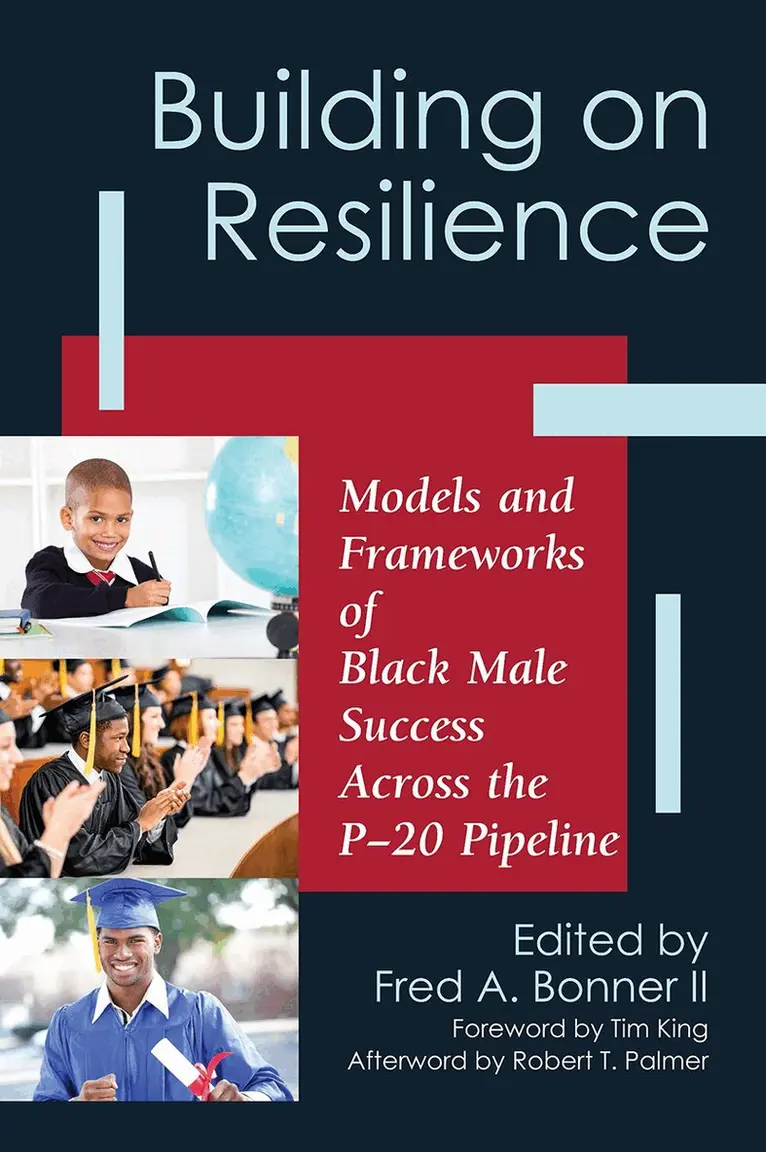
How do we fix the leaky educational pipeline into a conduit of success for Black males?That the issue is critical is demonstrated by the statistics that only 10% of Black males in the United States are proficient in 8th grade reading, only 52% graduate from high school within four years, and only 35 percent graduate from college.This book uniquely examines the trajectory of Black males through the educational pipeline from pre-school through college. In doing so it not only contributes significantly to the scholarship on the experiences of this population, but bridges the gap between theory and practice to provide frameworks and models that will improve these young men’s educational outcomes throughout their educational journeys.A compelling feature of the book is that that it does not treat Black males as homogeneous, but recognizes the diversity that exists among Black males in various educational settings. It demonstrates the need to recognize students’ intersectionalities and individual characteristics as an essential preliminary to developing practices to improve outcomes at every educational stage.Throughout, the contributing authors also focus on the strategies and experiences of Black males who achieve academic excellence, examining growth-producing and asset-based practices that can be sustained, and that build upon the recognition that these males have agency and possess qualities such as resilience that are essential to their learning and development. The frameworks and models that conclude each chapter are equally commendable to K–12 educators and administrators; higher education faculty, student affairs practitioners, and administrators; and policymakers, for whom templates are provided for rectifying the continuing inequities of our educational system.
Häftad, Engelska, 2014
465 kr
Skickas inom 10-15 vardagar
How do we fix the leaky educational pipeline into a conduit of success for Black males?That the issue is critical is demonstrated by the statistics that only 10% of Black males in the United States are proficient in 8th grade reading, only 52% graduate from high school within four years, and only 35 percent graduate from college.This book uniquely examines the trajectory of Black males through the educational pipeline from pre-school through college. In doing so it not only contributes significantly to the scholarship on the experiences of this population, but bridges the gap between theory and practice to provide frameworks and models that will improve these young men’s educational outcomes throughout their educational journeys.A compelling feature of the book is that that it does not treat Black males as homogeneous, but recognizes the diversity that exists among Black males in various educational settings. It demonstrates the need to recognize students’ intersectionalities and individual characteristics as an essential preliminary to developing practices to improve outcomes at every educational stage.Throughout, the contributing authors also focus on the strategies and experiences of Black males who achieve academic excellence, examining growth-producing and asset-based practices that can be sustained, and that build upon the recognition that these males have agency and possess qualities such as resilience that are essential to their learning and development. The frameworks and models that conclude each chapter are equally commendable to K–12 educators and administrators; higher education faculty, student affairs practitioners, and administrators; and policymakers, for whom templates are provided for rectifying the continuing inequities of our educational system.
Inbunden, Engelska, 2015
2 097 kr
Skickas inom 10-15 vardagar
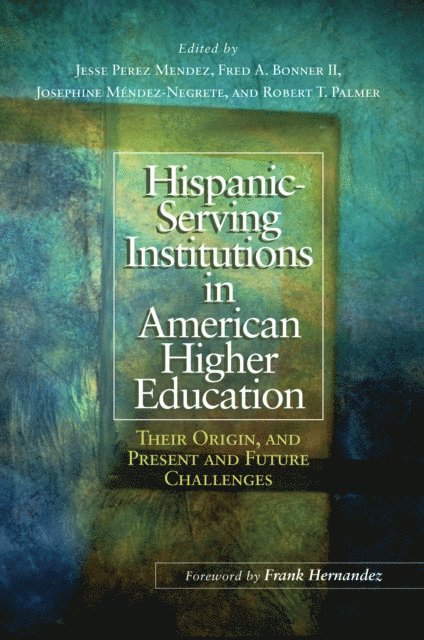
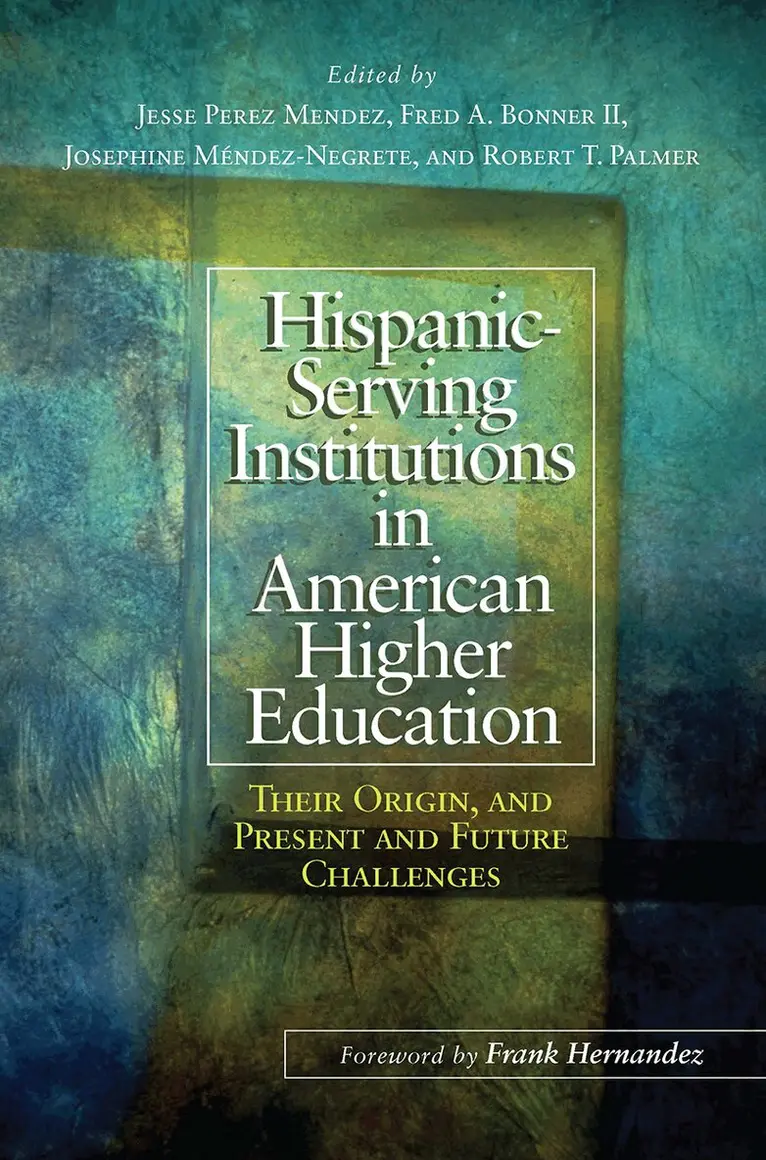
This is the first book to exclusively address Hispanic Serving Institutions (HSIs), filling a major gap in both the research on these institutions and in our understanding of their approaches to learning and their role in supporting all students while focusing on Hispanic students. Born out of the reauthorization of the Higher Education Act of 1992 and are classified as such if their enrollment of Latino students account for a quarter of their undergraduate enrollment, the number of HSIs and their impact in higher education is growing. Today there are approximately 370 HSIs, 277 emerging HSIs, and their numbers are steadily increasing. Given the projected growth of the Latino population, and HSIs’ record of advancing the success for Hispanic students in STEM fields, as well as of graduating nearly a third of all Hispanic bachelor’s degree recipients, their work has important implications for higher education at large.Written by leading and rising scholars on HSIs, this book offers insight into the complexity of these institutions. It not only addresses historic policy origins, but also describes the experiences of various student populations served, faculty issues (i.e., governance, diversity, work/life experience, etc.), the impact of student affairs in advancing student development, and considers funding and philanthropy efforts. The book also critically examines challenges that many of these institutions face – disjointed mission statements regarding support of their Latino/a student populations, governance structures that support the status quo, and the financial incentive to achieve HSI designation that may not correlate with enhancing the climate for Latinos. This book touches on the many facets of HSIs, painting an organic mosaic of institutions in position to advance Latino postsecondary progress, both chronicling the contemporary challenges that these institutions face while also looking to their future.
Häftad, Engelska, 2015
492 kr
Skickas inom 10-15 vardagar
This is the first book to exclusively address Hispanic Serving Institutions (HSIs), filling a major gap in both the research on these institutions and in our understanding of their approaches to learning and their role in supporting all students while focusing on Hispanic students. Born out of the reauthorization of the Higher Education Act of 1992 and are classified as such if their enrollment of Latino students account for a quarter of their undergraduate enrollment, the number of HSIs and their impact in higher education is growing. Today there are approximately 370 HSIs, 277 emerging HSIs, and their numbers are steadily increasing. Given the projected growth of the Latino population, and HSIs’ record of advancing the success for Hispanic students in STEM fields, as well as of graduating nearly a third of all Hispanic bachelor’s degree recipients, their work has important implications for higher education at large.Written by leading and rising scholars on HSIs, this book offers insight into the complexity of these institutions. It not only addresses historic policy origins, but also describes the experiences of various student populations served, faculty issues (i.e., governance, diversity, work/life experience, etc.), the impact of student affairs in advancing student development, and considers funding and philanthropy efforts. The book also critically examines challenges that many of these institutions face – disjointed mission statements regarding support of their Latino/a student populations, governance structures that support the status quo, and the financial incentive to achieve HSI designation that may not correlate with enhancing the climate for Latinos. This book touches on the many facets of HSIs, painting an organic mosaic of institutions in position to advance Latino postsecondary progress, both chronicling the contemporary challenges that these institutions face while also looking to their future.
Inbunden, Engelska, 2021
2 097 kr
Skickas inom 10-15 vardagar
Developing alternative student development frameworks and models, this groundbreaking book provides student affairs practitioners, as well as faculty, with illuminating perspectives and viable approaches for understanding the development of today’s diverse student populations, and for building the foundation for their academic success and self-authorship. With the increasing number of adult working students, minoritized, multiracial, LGTBQ, and first-generation students, this book offers readers vital insights into –and ways to interrogate– existing practice, and develop relevant responses to the needs of these populations.Building on and critiquing the past frameworks, and integrating the insights of contemporary scholarship on student development, the contributors collectively put forward a robust theoretical and methodological foundation for this work, using Critical Race Theory as their central frame. CRT allows chapter authors to situate race related encounters at the center of their proposed alternative framework or model, and deconstruct and challenge commonly held assumptions about diverse college student development. In the tradition of CRT, each author offers an alternative model or framework that can be applied to the diverse population upon which the chapter is framed, prompting readers to address such questions as:• Who are our college students?• What set of experiences do our students bring to the higher education context? • What role have their environments/contexts (i.e. home, p-12, community, family, peer groups, mentors) played in our student’s lives? • What impact have intervening variables (i.e. race, oppression, power) hadon their experiences?• What strategies do they use to overcome developmental obstacles?• How do they define success, and how they know they have achieved it ?By laying bare the experiences of these diverse college students that inform this volume’s “alternative” frameworks this book contests that notion that they constitute square pegs that must fit into the round holes of traditional frameworks.
Häftad, Engelska, 2021
492 kr
Skickas inom 10-15 vardagar
Developing alternative student development frameworks and models, this groundbreaking book provides student affairs practitioners, as well as faculty, with illuminating perspectives and viable approaches for understanding the development of today’s diverse student populations, and for building the foundation for their academic success and self-authorship. With the increasing number of adult working students, minoritized, multiracial, LGTBQ, and first-generation students, this book offers readers vital insights into –and ways to interrogate– existing practice, and develop relevant responses to the needs of these populations.Building on and critiquing the past frameworks, and integrating the insights of contemporary scholarship on student development, the contributors collectively put forward a robust theoretical and methodological foundation for this work, using Critical Race Theory as their central frame. CRT allows chapter authors to situate race related encounters at the center of their proposed alternative framework or model, and deconstruct and challenge commonly held assumptions about diverse college student development. In the tradition of CRT, each author offers an alternative model or framework that can be applied to the diverse population upon which the chapter is framed, prompting readers to address such questions as:• Who are our college students?• What set of experiences do our students bring to the higher education context? • What role have their environments/contexts (i.e. home, p-12, community, family, peer groups, mentors) played in our student’s lives? • What impact have intervening variables (i.e. race, oppression, power) hadon their experiences?• What strategies do they use to overcome developmental obstacles?• How do they define success, and how they know they have achieved it ?By laying bare the experiences of these diverse college students that inform this volume’s “alternative” frameworks this book contests that notion that they constitute square pegs that must fit into the round holes of traditional frameworks.
Häftad, Engelska, 2015
530 kr
Skickas inom 5-8 vardagar
Established in 2006, the American Association of Blacks in Higher Education (AABHE), formerly constituted as the Black Caucus (American Association of Higher Education), has been the consistent voice of Black issues in academe. According to the stated mission, the AABHE pursues the educational and professional needs of Blacks in higher education with a focus on leadership, equity, access, achievement and other vital issues impacting students, faculty, staff, and administrators. AABHE also facilitates and provides opportunities for collaborating and networking among individuals, institutions, groups and agencies in higher education in the United States and internationally. This 2012 year will mark the beginning of the AABHE research consortium, an arm of the organization that will advance scholarly research and publications to highlight critical issues pertinent to the success and uplift of Black populations across the higher education diaspora.This book will explore important issues across multiple fields—fields represented by the scholars/members of AABHE. AABHE scholars will contribute chapters based on their disciplinary expertise. The work of Earnest Boyer as articulated in the book Faculty Priorities Reconsidered: Rewarding Multiple Forms of Scholarship will be used as the conceptual foundation to ground this important work. A particular focus on the elements of Boyer’s seminal work will include chapters devoted to the Scholarship of Teaching and Learning; Scholarship of Engagement; Scholarship of Discovery; and Scholarship of Integration. This scholarly book is unique in that it provides essential insight on how not only faculty, but also administrators who are invested in insuring that the priorities of the professoriate are aligned with the mission and vision of urban postsecondary institutions.
Inbunden, Engelska, 2015
988 kr
Skickas inom 5-8 vardagar
Established in 2006, the American Association of Blacks in Higher Education (AABHE), formerly constituted as the Black Caucus (American Association of Higher Education), has been the consistent voice of Black issues in academe. According to the stated mission, the AABHE pursues the educational and professional needs of Blacks in higher education with a focus on leadership, equity, access, achievement and other vital issues impacting students, faculty, staff, and administrators. AABHE also facilitates and provides opportunities for collaborating and networking among individuals, institutions, groups and agencies in higher education in the United States and internationally. This 2012 year will mark the beginning of the AABHE research consortium, an arm of the organization that will advance scholarly research and publications to highlight critical issues pertinent to the success and uplift of Black populations across the higher education diaspora.This book will explore important issues across multiple fields—fields represented by the scholars/members of AABHE. AABHE scholars will contribute chapters based on their disciplinary expertise. The work of Earnest Boyer as articulated in the book Faculty Priorities Reconsidered: Rewarding Multiple Forms of Scholarship will be used as the conceptual foundation to ground this important work. A particular focus on the elements of Boyer’s seminal work will include chapters devoted to the Scholarship of Teaching and Learning; Scholarship of Engagement; Scholarship of Discovery; and Scholarship of Integration. This scholarly book is unique in that it provides essential insight on how not only faculty, but also administrators who are invested in insuring that the priorities of the professoriate are aligned with the mission and vision of urban postsecondary institutions.
Häftad, Engelska, 2015
530 kr
Skickas inom 5-8 vardagar
Since the U.S. Civil Rights era, the racial composition of higher education has changed dramatically, resulting in an increase in the number of African American students and African American faculty in predominantly white institutions (PWI). Nevertheless, the number of African American endowed or distinguished professors remains small.Because it is difficult for African American faculty to attain these prized positions, those who have done so possess invaluable knowledge that may be beneficial to others. Reaching the Mountaintop of the Academy: Personal Narratives, Advice and Strategies from Black Distinguished and Endowed Professors, fills an important niche in the canon of higher education literature. In the autobiographical chapters that follow, numerous distinguished and endowed professors (1) describe their personal journey to the distinguished or endowed professorship; (2) explain important life lessons that they learned during their journey; (3) describe their current professional goals; and (4) offer suggestions and recommendations for graduate students, untenured faculty, tenured faculty, and college/university administrators. At a time when many predominantly white higher education institutions continue to have difficulty attracting and retaining African American faculty, and African American faculty continue to struggle for full inclusion in the academy, this book is timely and needed.
Inbunden, Engelska, 2015
988 kr
Skickas inom 5-8 vardagar
Since the U.S. Civil Rights era, the racial composition of higher education has changed dramatically, resulting in an increase in the number of African American students and African American faculty in predominantly white institutions (PWI). Nevertheless, the number of African American endowed or distinguished professors remains small.Because it is difficult for African American faculty to attain these prized positions, those who have done so possess invaluable knowledge that may be beneficial to others. Reaching the Mountaintop of the Academy: Personal Narratives, Advice and Strategies from Black Distinguished and Endowed Professors, fills an important niche in the canon of higher education literature. In the autobiographical chapters that follow, numerous distinguished and endowed professors (1) describe their personal journey to the distinguished or endowed professorship; (2) explain important life lessons that they learned during their journey; (3) describe their current professional goals; and (4) offer suggestions and recommendations for graduate students, untenured faculty, tenured faculty, and college/university administrators. At a time when many predominantly white higher education institutions continue to have difficulty attracting and retaining African American faculty, and African American faculty continue to struggle for full inclusion in the academy, this book is timely and needed.