aretha f. marbley - Böcker
Visar alla böcker från författaren aretha f. marbley. Handla med fri frakt och snabb leverans.
4 produkter
4 produkter
Diverse Millennial Students in College
Implications for Faculty and Student Affairs
Inbunden, Engelska, 2011
2 044 kr
Skickas inom 10-15 vardagar
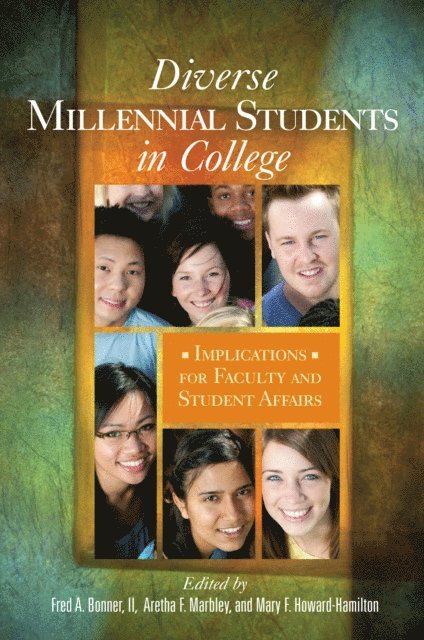
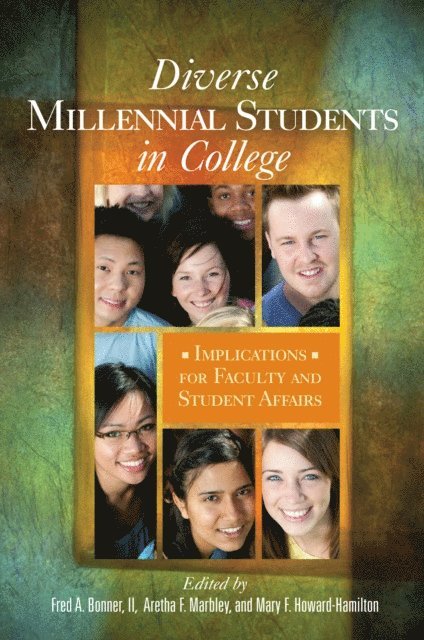
While many institutions have developed policies to address the myriad needs of Millennial college students and their parents, inherent in many of these initiatives is the underlying assumption that this student population is a homogeneous group. This book is significant because it addresses and explores the characteristics and experiences of Millennials from an array of perspectives, taking into account not only racial and ethnic identity but also cultural background, sexual orientation, and socioeconomic status differences—all factors contributing to how these students interface with academe.In providing a “voice” to “voiceless” populations of African American, Asian American, Bi/Multi-Racial, Latino, Native American, and LGBT millennial college students, this book engages with such questions as: Does the term “Millennial” apply to these under-represented students? What role does technology, pop culture, sexual orientation, and race politics play in the identity development for these populations? Do our current minority development theories apply to these groups? And, ultimately, are higher education institutions prepared to meet both the cultural and developmental needs of diverse minority groups of Millennial college students?” This book is addressed primarily to college and university administrators and faculty members who seek greater depth and understanding of the issues associated with diverse Millennial college student populations. This book informs readers about the ways in which this cohort differs from their majority counterparts to open a dialogue about how faculty members and administrators can meet their needs effectively both inside and outside the classroom. It will also be of value to student affairs personnel, students enrolled in graduate level courses in higher education and other social science courses that explore issues of college student development and diversity, particularly students planning to work with diverse Millennial college students in both clinical or practical work settings.Contributors: Rosie Maria Banda; Fred Bonner, II; Lonnie Booker, Jr.; Brian Brayboy; Mitchell Chang; Andrea Domingue; Tonya Driver; Alonzo M. Flowers; Gwen Dungy; Jami Grosser; Kandace Hinton; Mary Howard-Hamilton; Tom Jackson, Jr.; Aretha F. Marbley; Samuel Museus; Anna Ortiz; Tammie Preston-Cunningham; Nana Osei-Kofi; Kristen Renn; Petra Robinson; Genyne Royal; Victor Saenz; Rose Anna Santos; Mattyna Stephens; Terrell Strayhorn; Theresa Survillion; Nancy Jean Tubbs; Malia Villegas; Stephanie J. Waterman; Nick Zuniga.
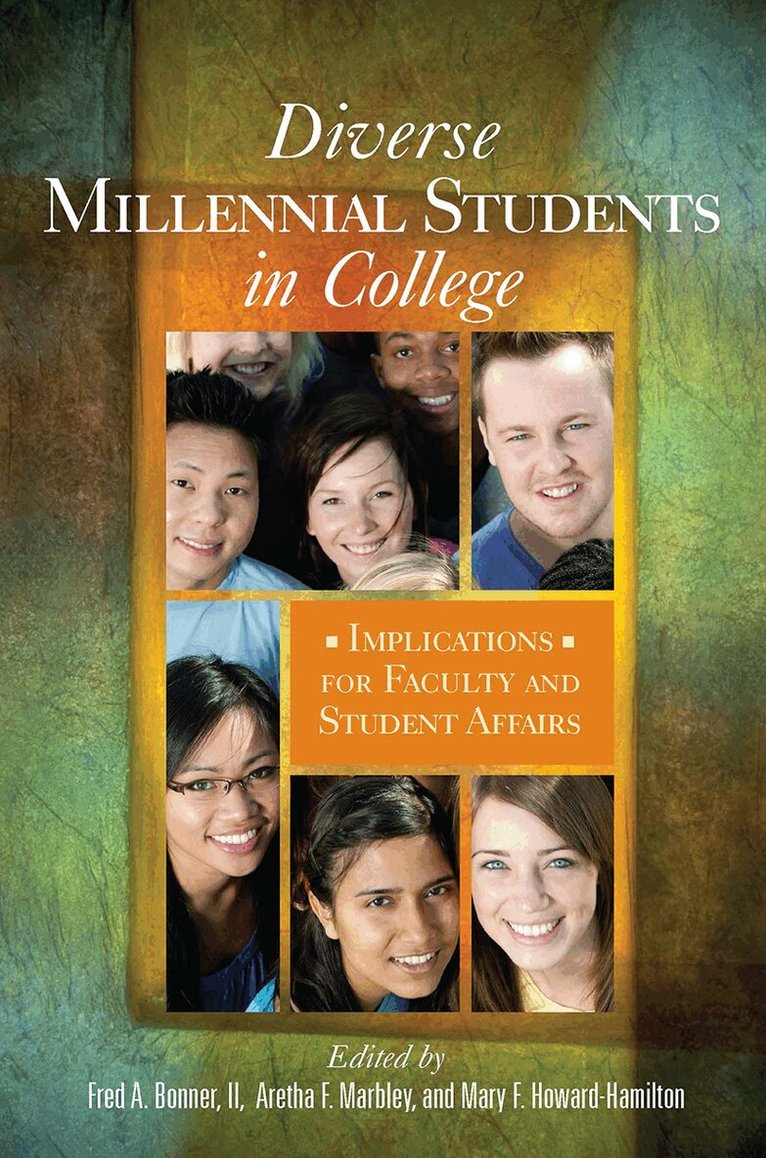
Diverse Millennial Students in College
Implications for Faculty and Student Affairs
Häftad, Engelska, 2011
467 kr
Skickas inom 10-15 vardagar
While many institutions have developed policies to address the myriad needs of Millennial college students and their parents, inherent in many of these initiatives is the underlying assumption that this student population is a homogeneous group. This book is significant because it addresses and explores the characteristics and experiences of Millennials from an array of perspectives, taking into account not only racial and ethnic identity but also cultural background, sexual orientation, and socioeconomic status differences—all factors contributing to how these students interface with academe.In providing a “voice” to “voiceless” populations of African American, Asian American, Bi/Multi-Racial, Latino, Native American, and LGBT millennial college students, this book engages with such questions as: Does the term “Millennial” apply to these under-represented students? What role does technology, pop culture, sexual orientation, and race politics play in the identity development for these populations? Do our current minority development theories apply to these groups? And, ultimately, are higher education institutions prepared to meet both the cultural and developmental needs of diverse minority groups of Millennial college students?” This book is addressed primarily to college and university administrators and faculty members who seek greater depth and understanding of the issues associated with diverse Millennial college student populations. This book informs readers about the ways in which this cohort differs from their majority counterparts to open a dialogue about how faculty members and administrators can meet their needs effectively both inside and outside the classroom. It will also be of value to student affairs personnel, students enrolled in graduate level courses in higher education and other social science courses that explore issues of college student development and diversity, particularly students planning to work with diverse Millennial college students in both clinical or practical work settings.Contributors: Rosie Maria Banda; Fred Bonner, II; Lonnie Booker, Jr.; Brian Brayboy; Mitchell Chang; Andrea Domingue; Tonya Driver; Alonzo M. Flowers; Gwen Dungy; Jami Grosser; Kandace Hinton; Mary Howard-Hamilton; Tom Jackson, Jr.; Aretha F. Marbley; Samuel Museus; Anna Ortiz; Tammie Preston-Cunningham; Nana Osei-Kofi; Kristen Renn; Petra Robinson; Genyne Royal; Victor Saenz; Rose Anna Santos; Mattyna Stephens; Terrell Strayhorn; Theresa Survillion; Nancy Jean Tubbs; Malia Villegas; Stephanie J. Waterman; Nick Zuniga.
Square Pegs and Round Holes
Alternative Approaches to Diverse College Student Development Theory
Inbunden, Engelska, 2021
2 044 kr
Skickas inom 10-15 vardagar
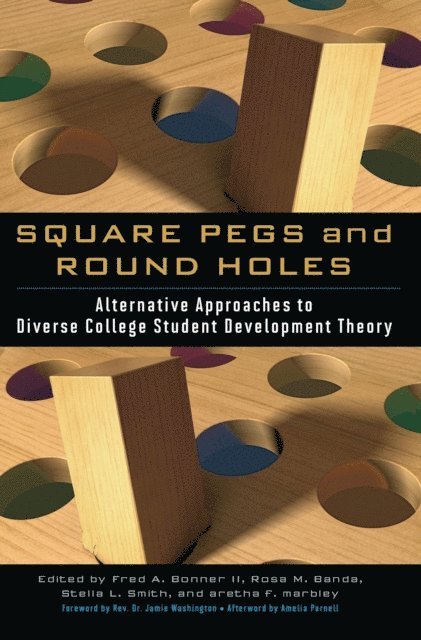
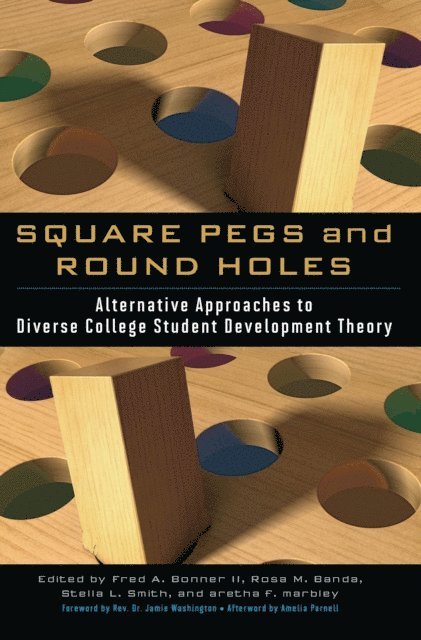
Developing alternative student development frameworks and models, this groundbreaking book provides student affairs practitioners, as well as faculty, with illuminating perspectives and viable approaches for understanding the development of today’s diverse student populations, and for building the foundation for their academic success and self-authorship. With the increasing number of adult working students, minoritized, multiracial, LGTBQ, and first-generation students, this book offers readers vital insights into –and ways to interrogate– existing practice, and develop relevant responses to the needs of these populations.Building on and critiquing the past frameworks, and integrating the insights of contemporary scholarship on student development, the contributors collectively put forward a robust theoretical and methodological foundation for this work, using Critical Race Theory as their central frame. CRT allows chapter authors to situate race related encounters at the center of their proposed alternative framework or model, and deconstruct and challenge commonly held assumptions about diverse college student development. In the tradition of CRT, each author offers an alternative model or framework that can be applied to the diverse population upon which the chapter is framed, prompting readers to address such questions as:• Who are our college students?• What set of experiences do our students bring to the higher education context? • What role have their environments/contexts (i.e. home, p-12, community, family, peer groups, mentors) played in our student’s lives? • What impact have intervening variables (i.e. race, oppression, power) hadon their experiences?• What strategies do they use to overcome developmental obstacles?• How do they define success, and how they know they have achieved it ?By laying bare the experiences of these diverse college students that inform this volume’s “alternative” frameworks this book contests that notion that they constitute square pegs that must fit into the round holes of traditional frameworks.
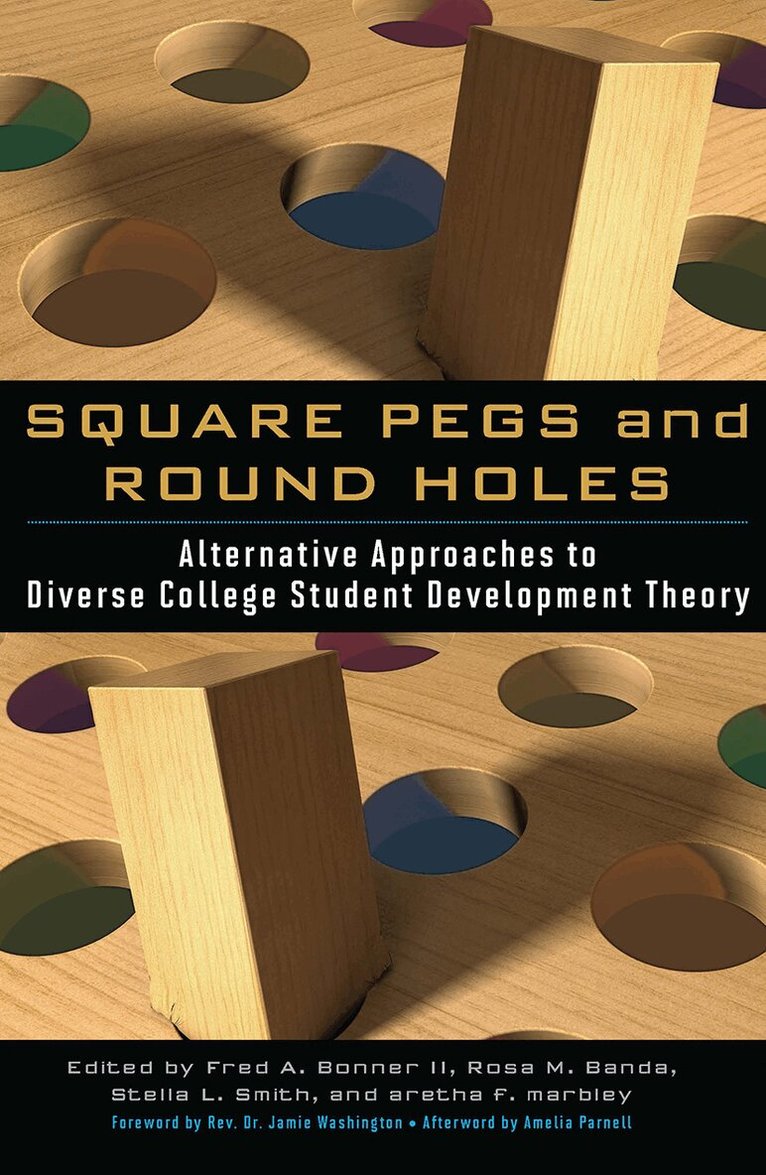
Square Pegs and Round Holes
Alternative Approaches to Diverse College Student Development Theory
Häftad, Engelska, 2021
480 kr
Skickas inom 10-15 vardagar
Developing alternative student development frameworks and models, this groundbreaking book provides student affairs practitioners, as well as faculty, with illuminating perspectives and viable approaches for understanding the development of today’s diverse student populations, and for building the foundation for their academic success and self-authorship. With the increasing number of adult working students, minoritized, multiracial, LGTBQ, and first-generation students, this book offers readers vital insights into –and ways to interrogate– existing practice, and develop relevant responses to the needs of these populations.Building on and critiquing the past frameworks, and integrating the insights of contemporary scholarship on student development, the contributors collectively put forward a robust theoretical and methodological foundation for this work, using Critical Race Theory as their central frame. CRT allows chapter authors to situate race related encounters at the center of their proposed alternative framework or model, and deconstruct and challenge commonly held assumptions about diverse college student development. In the tradition of CRT, each author offers an alternative model or framework that can be applied to the diverse population upon which the chapter is framed, prompting readers to address such questions as:• Who are our college students?• What set of experiences do our students bring to the higher education context? • What role have their environments/contexts (i.e. home, p-12, community, family, peer groups, mentors) played in our student’s lives? • What impact have intervening variables (i.e. race, oppression, power) hadon their experiences?• What strategies do they use to overcome developmental obstacles?• How do they define success, and how they know they have achieved it ?By laying bare the experiences of these diverse college students that inform this volume’s “alternative” frameworks this book contests that notion that they constitute square pegs that must fit into the round holes of traditional frameworks.