Fred Block - Böcker
Visar alla böcker från författaren Fred Block. Handla med fri frakt och snabb leverans.
4 produkter
4 produkter
220 kr
Skickas inom 7-10 vardagar
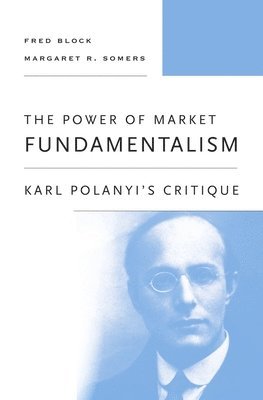
What is it about free-market ideas that give them tenacious staying power in the face of such manifest failures as persistent unemployment, widening inequality, and the severe financial crises that have stressed Western economies over the past forty years? Fred Block and Margaret Somers extend the work of the great political economist Karl Polanyi to explain why these ideas have revived from disrepute in the wake of the Great Depression and World War II, to become the dominant economic ideology of our time.Polanyi contends that the free market championed by market liberals never actually existed. While markets are essential to enable individual choice, they cannot be self-regulating because they require ongoing state action. Furthermore, they cannot by themselves provide such necessities of social existence as education, health care, social and personal security, and the right to earn a livelihood. When these public goods are subjected to market principles, social life is threatened and major crises ensue.Despite these theoretical flaws, market principles are powerfully seductive because they promise to diminish the role of politics in civic and social life. Because politics entails coercion and unsatisfying compromises among groups with deep conflicts, the wish to narrow its scope is understandable. But like Marx's theory that communism will lead to a "withering away of the State," the ideology that free markets can replace government is just as utopian and dangerous.
1 307 kr
Skickas inom 5-8 vardagar
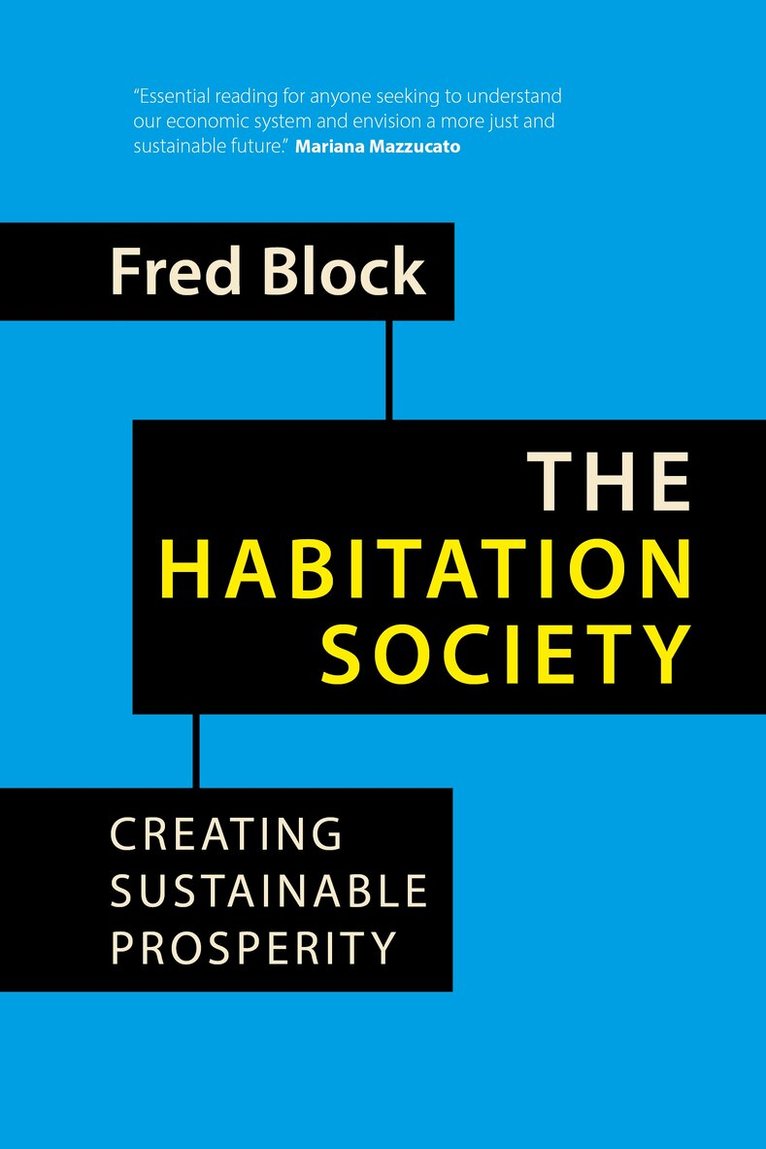
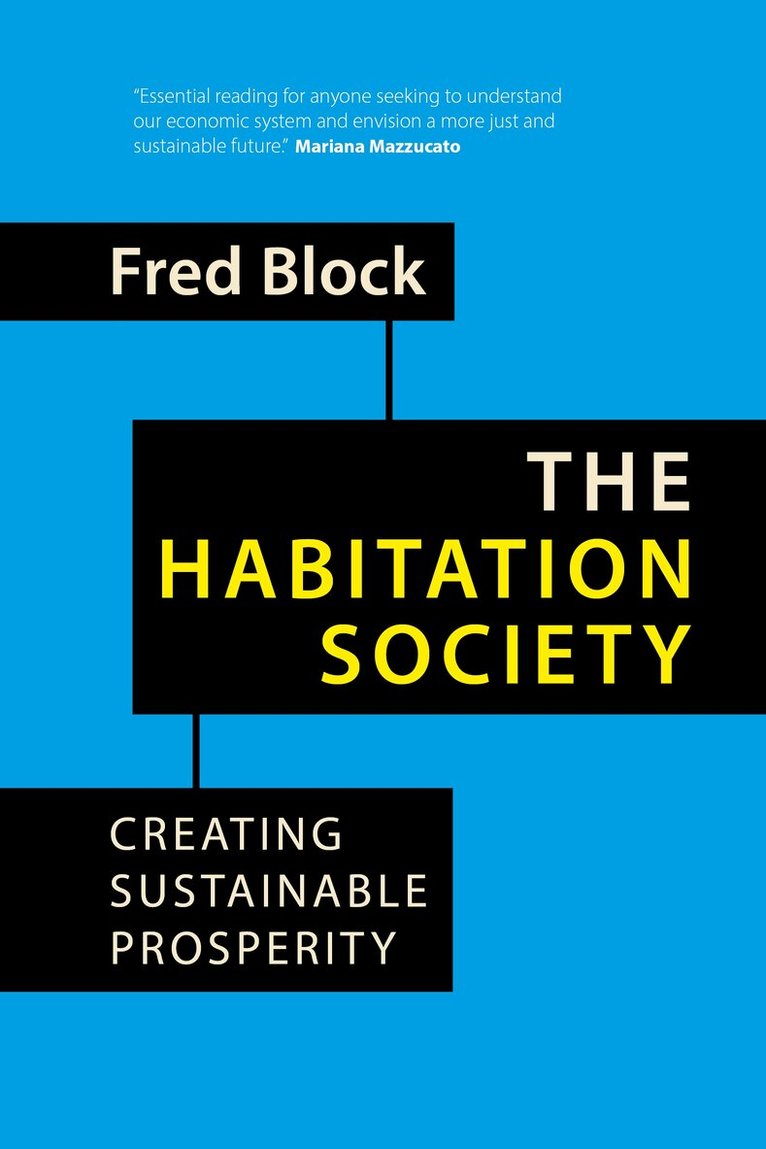
In The Habitation Society, leading economic and political sociologist Fred Block argues that we are at a time of “blocked transition” from one mode of economic and social organization to another. We now have a habitation economy because most people work at creating, maintaining or improving the soft and hard infrastructure of the communities in which we live. The problem, however, is that we do not yet have a habitation society since our economy continues to be organized through the structures, institutions and concepts of an industrial economy. While the old industrial economy is dying, the new habitation society cannot yet be born.But it is more than this, our methods for understanding how the economy works are also built around the analysis of industrial production, which are completely inadequate, Block shows, for grasping the new reality of how we buy and consume services in the habitation economy. In the absence of concepts to make sense of what is happening, the political space becomes filled with conspiracy theories and disinformation. Specifically, it has become extremely difficult for people to understand their own relationship to the larger economy and society, in particular, there is no longer an obvious relationship between the amount or intensity of work effort and economic output.Fred Block’s compelling analysis offers a path through this confusion and a means to understand our transition and what form this will take. He examines the economy as it actually exists in the present and maps out what would make that economy work more effectively in the hope that this will empower individuals to recognize the kinds of changes that could be made to improve things for themselves, their families and their communities.
297 kr
Skickas
In The Habitation Society, leading economic and political sociologist Fred Block argues that we are at a time of “blocked transition” from one mode of economic and social organization to another. We now have a habitation economy because most people work at creating, maintaining or improving the soft and hard infrastructure of the communities in which we live. The problem, however, is that we do not yet have a habitation society since our economy continues to be organized through the structures, institutions and concepts of an industrial economy. While the old industrial economy is dying, the new habitation society cannot yet be born.But it is more than this, our methods for understanding how the economy works are also built around the analysis of industrial production, which are completely inadequate, Block shows, for grasping the new reality of how we buy and consume services in the habitation economy. In the absence of concepts to make sense of what is happening, the political space becomes filled with conspiracy theories and disinformation. Specifically, it has become extremely difficult for people to understand their own relationship to the larger economy and society, in particular, there is no longer an obvious relationship between the amount or intensity of work effort and economic output.Fred Block’s compelling analysis offers a path through this confusion and a means to understand our transition and what form this will take. He examines the economy as it actually exists in the present and maps out what would make that economy work more effectively in the hope that this will empower individuals to recognize the kinds of changes that could be made to improve things for themselves, their families and their communities.
288 kr
Skickas inom 7-10 vardagar
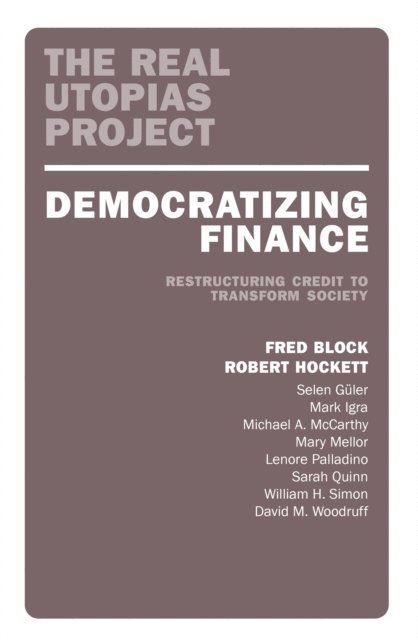
What if our financial system were organized to the benefit of the many rather than simply empowering the few? Robert Hockett and Fred Block argue that an entirely different financial system is both desirable and possible. They outline concrete steps that could get us there. Financial systems move the worlds savings from investment to investment, chasing the highest rates of return. They run on profit. But what if investment went to the enterprises or institutions that provided things that the majority of people would prioritize? Democratizing Finance includes six responses that seek to amend, elaborate, and challenge the arguments developed by Hockett and Block. Some of the core arguments put forward by other contributors include calls for the rapid elimination of private financial entities, the dilemmas of the politics associated with financial reforms, and the fate of parallel proposals advanced in the US in the 1930s.