Fred M. Newmann – författare
Visar alla böcker från författaren Fred M. Newmann. Handla med fri frakt och snabb leverans.
3 produkter
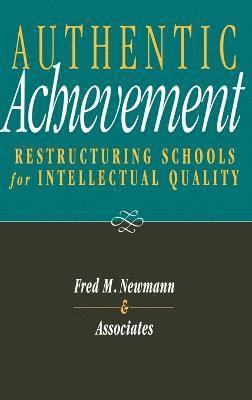
Authentic Achievement
Restructuring Schools for Intellectual Quality
Inbunden, 1996
554 kr
Lägg i varukorg
This book presents the findings of a five-year, federally funded study that examined the connection between school restructuring and student achievement. Using a wealth of examples, the authors provide a vivid picture of the conditions under which innovations in a school's organization contribute …
Toward a New Science of Educational Testing and Assessment
Av Harold Berlak, Fred M. Newmann m. fl.
Inbunden, 1992
1080 kr
Tillfälligt slut
The authors of this book question the assumptions of the psychometric paradigm that underlie virtually all criterion-referenced and standardized tests used in North American schools. They make a compelling case for a new science of educational testing and assessment, one that shifts decision making …
Toward a New Science of Educational Testing and Assessment
Av Harold Berlak, Fred M. Newmann m. fl.
Häftad, 1992
390 kr
Tillfälligt slut
The authors of this book question the assumptions of the psychometric paradigm that underlie virtually all criterion-referenced and standardized tests used in North American schools. They make a compelling case for a new science of educational testing and assessment, one that shifts decision making …