Fred Parker – författare
Visar alla böcker från författaren Fred Parker. Handla med fri frakt och snabb leverans.
12 produkter
Scepticism and Literature
An Essay on Pope, Hume, Sterne, and Johnson
Av Fred Parker
Inbunden, 2003
3812 kr
Lägg i varukorg
'The more we enquire, the less we can resolve,' wrote Johnson. Scepticism-a reasoned emphasis on the severe limitations of rationality-would seem to undermine the grounds of belief and action. But in some of the best eighteenth-century literature, a theoretically paralysing critique of the …
On Declaring Love
Eighteenth-Century Literature and Jane Austen
Av Fred Parker
Inbunden, 2018
2879 kr
Lägg i varukorg
"What did she say? – Just what she ought, of course. A lady always does."This book explores the act of declaring love in works of literature written between the middle of the eighteenth century and the death of Jane Austen - and uncovers the uncertain boundaries of the self in the force-field of …
On Declaring Love
Eighteenth-Century Literature and Jane Austen
Av Fred Parker
Häftad, 2020
809 kr
Lägg i varukorg
"What did she say? – Just what she ought, of course. A lady always does."This book explores the act of declaring love in works of literature written between the middle of the eighteenth century and the death of Jane Austen - and uncovers the uncertain boundaries of the self in the force-field of …
On Declaring Love
Eighteenth-Century Literature and Jane Austen
Av Fred Parker
E-bok, 2018
935 kr
Lägg i varukorg
"What did she say? – Just what she ought, of course. A lady always does." This book explores the act of declaring love in works of literature written between the middle of the eighteenth century and the death of Jane Austen - and uncovers the uncertain boundaries of the self in the force-field of …
On Declaring Love
Eighteenth-Century Literature and Jane Austen
Av Fred Parker
E-bok, 2018
956 kr
Lägg i varukorg
"What did she say? – Just what she ought, of course. A lady always does." This book explores the act of declaring love in works of literature written between the middle of the eighteenth century and the death of Jane Austen - and uncovers the uncertain boundaries of the self in the force-field of …
Mentisor Omnibus 2010-2011
Av Stephen Holton, Frederic Lempereur m. fl.
Häftad, 2012
196 kr
Lägg i varukorg
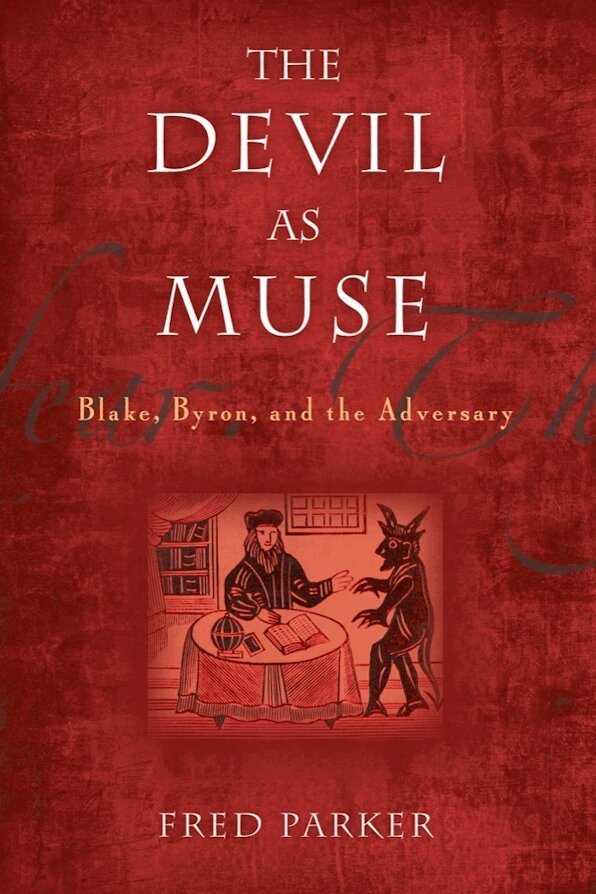
Devil As Muse
Blake, Byron, and the Adversary
Av Fred Parker
Häftad, 2022
441 kr
Lägg i varukorg
Does the Devil lie at the heart of the creative process? In The Devil as Muse, Fred Parker offers an entirely fresh reflection on the age-old question, echoing William Blake's famous statement: "the true poet is of the Devil's party." Expertly examining three literary interpretations of the Devil …
Win at Duplicate Bridge
Bid Difficult Bridge Hands Like an Expert
Av Fred Parker
Häftad, 2018
175 kr
Lägg i varukorg
Bridge Bidding Tips
For Intermediate Duplicate Bridge Players
Av Fred Parker
Häftad, 2023
183 kr
Lägg i varukorg
The Devil As Muse
Blake, Byron, and the Adversary
Av Fred Parker
Inbunden, 2011
434 kr
Tillfälligt slut
Does the Devil lie at the heart of the creative process? In The Devil as Muse , Fred Parker offers an entirely fresh reflection on the age-old question, echoing William Blake's famous statement: ""the true poet is of the Devil's party."" Expertly examining three literary interpretations of the …