
Frederic D. Homer – författare
Visar alla böcker från författaren Frederic D. Homer. Handla med fri frakt och snabb leverans.
2 produkter
2 produkter

Häftad, Engelska, 1974
279 kr
Skickas inom 10-15 vardagar
With the appearance of Homer's study, it is no longer possible to base any serious work about organized crime on the superficial debate over whether or not this set of activities is dominated by one or more particular ethnic groups, writes political scientist Michael A. Weinstein in his introduction. Homer removes the study of organized crime from the realm of sensationalism and ethnic chauvinism, and places it in the context of contemporary American social structure. He reviews prevalent myths and hypotheses about organized crime and critically analyzes them in the framework of contemporary organization theory. In this context, organized crime is analyzed in its economic, political, ethnic, and social class dimensions.
Häftad, Engelska, 2004
199 kr
Skickas inom 11-20 vardagar
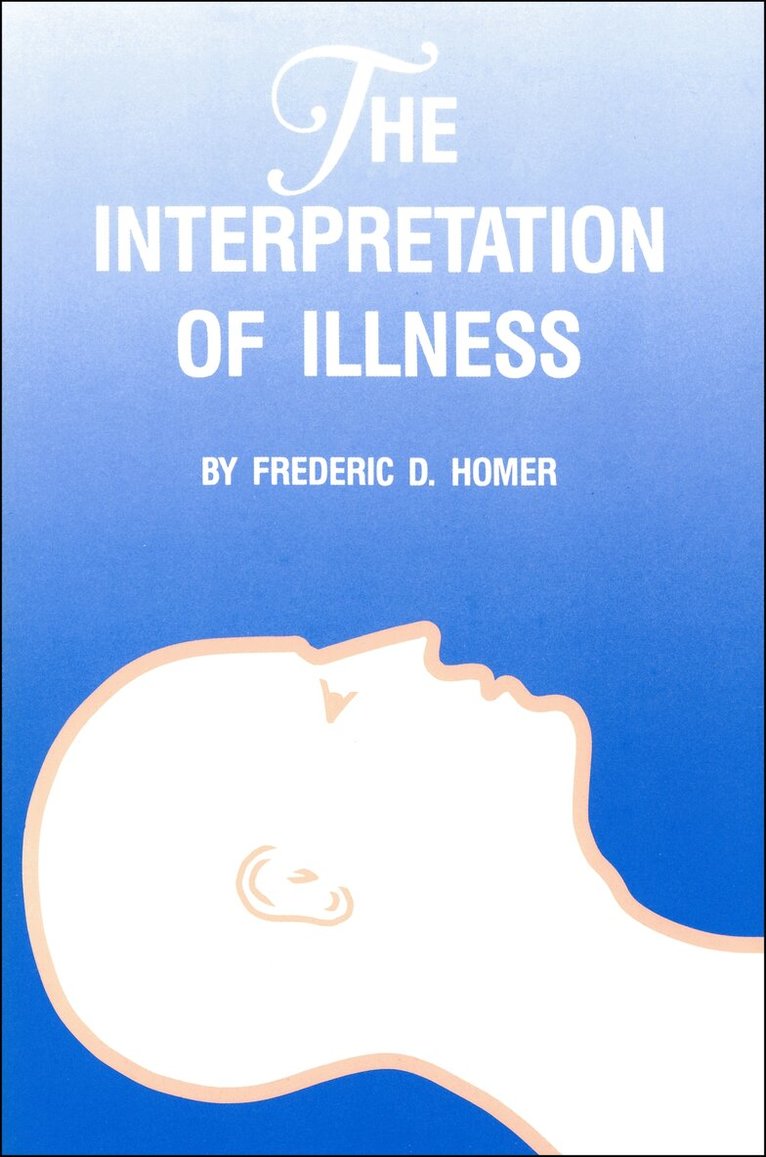
Georg Groddeck (1866-1934), who was trained as a physicianbut became famous for his success as a healer, introduced a radical concept inThe Book of It: that we virtually always cause our own illness and injury;therefore, we can cure and avoid both. Groddeck utilized the technique of psychoanalysis – which hadjust been invented by Freud – to communicate with the source of the illness,which he called the "the it" (or the map of the psyche). He believed the "it"had the power to cure illness as well as cause it. Perhaps science is catching up with Groddeck's notion, formodern currents in medicine suggest there is a linkage between the way we live,the way we think, and illness. Readings in behavioral medicine indicate that wedo have control over our immune system; and empirical studies of behavior showa strong relationship between stress and illness. In TheInterpretation of Illness, Homer goes beyond Groddeck's initial insight toemphasize that illness is a communication to others, especially a call forsympathy. No one consciously likes to be sick or hurt; but we all, consciouslyor unconsciously, tell others about our ills, expecting them to extendsympathy. Homer argues that if we change this pattern of communication – eitherby learning to forego sympathy or by gaining it in less destructive ways – we canprevent illness or alleviate existing symptoms. The change in communicationinvolves expressing ourselves knowingly and deliberately to others. Interpretationis a series of letters from Homer, writing under the persona Augie, to afriend. Appropriately enough, this style is similar to the format used byGroddeck in The Book of the It.