Frédéric Keck - Böcker
Visar alla böcker från författaren Frédéric Keck. Handla med fri frakt och snabb leverans.
7 produkter
7 produkter
677 kr
Skickas inom 10-15 vardagar
Over the past decades, infectious disease epidemics have come to increasingly pose major global health challenges to humanity. The Anthropology of Epidemics approaches epidemics as total social phenomena: processes and events which encompass and exercise a transformational impact on social life whilst at the same time functioning as catalysts of shifts and ruptures as regards human/non-human relations. Bearing a particular mark on subject areas and questions which have recently come to shape developments in anthropological thinking, the volume brings epidemics to the forefront of anthropological debate, as an exemplary arena for social scientific study and analysis.
2 150 kr
Skickas inom 10-15 vardagar
Over the past decades, infectious disease epidemics have come to increasingly pose major global health challenges to humanity. The Anthropology of Epidemics approaches epidemics as total social phenomena: processes and events which encompass and exercise a transformational impact on social life whilst at the same time functioning as catalysts of shifts and ruptures as regards human/non-human relations. Bearing a particular mark on subject areas and questions which have recently come to shape developments in anthropological thinking, the volume brings epidemics to the forefront of anthropological debate, as an exemplary arena for social scientific study and analysis.
1 466 kr
Skickas inom 7-10 vardagar
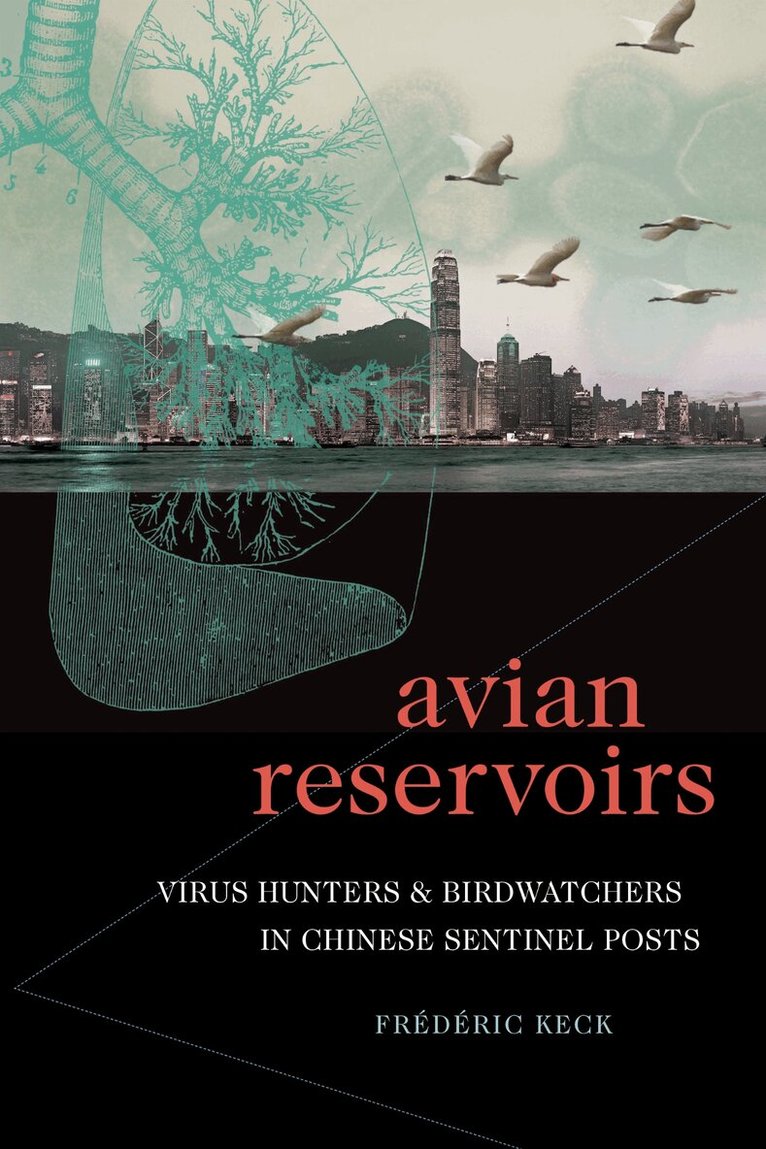
After experiencing the SARS outbreak in 2003, Hong Kong, Singapore, and Taiwan all invested in various techniques to mitigate future pandemics involving myriad cross-species interactions between humans and birds. In some locations microbiologists allied with veterinarians and birdwatchers to follow the mutations of flu viruses in birds and humans and create preparedness strategies, while in others, public health officials worked toward preventing pandemics by killing thousands of birds. In Avian Reservoirs FrÉdÉric Keck offers a comparative analysis of these responses, tracing how the anticipation of bird flu pandemics has changed relations between birds and humans in China. Drawing on anthropological theory and ethnographic fieldwork, Keck demonstrates that varied strategies dealing with the threat of pandemics-stockpiling vaccines and samples in Taiwan, simulating pandemics in Singapore, and monitoring viruses and disease vectors in Hong Kong-reflect local geopolitical relations to mainland China. In outlining how interactions among pathogens, birds, and humans shape the way people imagine future pandemics, Keck illuminates how interspecies relations are crucial for protecting against such threats.
362 kr
Skickas inom 7-10 vardagar
After experiencing the SARS outbreak in 2003, Hong Kong, Singapore, and Taiwan all invested in various techniques to mitigate future pandemics involving myriad cross-species interactions between humans and birds. In some locations microbiologists allied with veterinarians and birdwatchers to follow the mutations of flu viruses in birds and humans and create preparedness strategies, while in others, public health officials worked toward preventing pandemics by killing thousands of birds. In Avian Reservoirs FrÉdÉric Keck offers a comparative analysis of these responses, tracing how the anticipation of bird flu pandemics has changed relations between birds and humans in China. Drawing on anthropological theory and ethnographic fieldwork, Keck demonstrates that varied strategies dealing with the threat of pandemics-stockpiling vaccines and samples in Taiwan, simulating pandemics in Singapore, and monitoring viruses and disease vectors in Hong Kong-reflect local geopolitical relations to mainland China. In outlining how interactions among pathogens, birds, and humans shape the way people imagine future pandemics, Keck illuminates how interspecies relations are crucial for protecting against such threats.
688 kr
Skickas inom 7-10 vardagar
This book examines how the Covid-19 pandemic can be described as a biopolitical crisis, taking into account a fact often overlooked by commentators: Covid-19 is a zoonosis, a disease transmissible between animal species. The Sars-Cov2 virus causing this respiratory disease circulated in bats before passing to humans under as-yet mysterious conditions, and it was transmitted from humans to other species, notably mink and deer.Building on Michel Foucault’s revival of the term “biopolitics” and related notions (disciplinary power, pastoral power, cynegetic power), this book traces a set of public health measures taken over the last two centuries to control epidemics. It underlines how the need to conserve virus strains in order to identify and anticipate their mutations has given rise to cryopolitics, a set of techniques aimed at suspending the living in order to defer death. The book then questions the emancipatory scope of this cryopolitics by examining interspecies solidarity built by the warning signals sent by animals to humans about coming threats, be they pandemics, natural disasters, or climate change. By blurring the boundaries between the wild and the domestic resulting from the process of domestication, the politics of zoonoses relies on sentinels who preserve the memory of signs from the past to prepare living beings for future threats by involving them in a common ideal.
244 kr
Skickas inom 7-10 vardagar
This book examines how the Covid-19 pandemic can be described as a biopolitical crisis, taking into account a fact often overlooked by commentators: Covid-19 is a zoonosis, a disease transmissible between animal species. The Sars-Cov2 virus causing this respiratory disease circulated in bats before passing to humans under as-yet mysterious conditions, and it was transmitted from humans to other species, notably mink and deer.Building on Michel Foucault’s revival of the term “biopolitics” and related notions (disciplinary power, pastoral power, cynegetic power), this book traces a set of public health measures taken over the last two centuries to control epidemics. It underlines how the need to conserve virus strains in order to identify and anticipate their mutations has given rise to cryopolitics, a set of techniques aimed at suspending the living in order to defer death. The book then questions the emancipatory scope of this cryopolitics by examining interspecies solidarity built by the warning signals sent by animals to humans about coming threats, be they pandemics, natural disasters, or climate change. By blurring the boundaries between the wild and the domestic resulting from the process of domestication, the politics of zoonoses relies on sentinels who preserve the memory of signs from the past to prepare living beings for future threats by involving them in a common ideal.
How French Moderns Think
The Lévy-Bruhl Family, From “Primitive Mentality” to Contemporary Pandemics
Häftad, Engelska, 2024
250 kr
Skickas inom 7-10 vardagar
This book traces the contributions of the Lévy-Bruhl family to social and political thought and expertise in 20th-century France, shaping the anticipation of economic and health crises.How French Moderns Think tells the story of the French sociological tradition through four generations of the Lévy-Bruhl family: Lucien, who founded the Institute of Ethnology at the University of Paris; his son Henri, who founded the Institute of Roman Law; his grandson Raymond, who took part in the creation of the National Institute of Statistics and Economic Studies; and his great-grandson Daniel, a vaccine specialist at the Institute of Public Health. This family history casts a new light on the philosophical debates about “primitive mentality” and the “savage mind.” By drawing on the expert knowledge inherent in this family genealogy, the articulation between the logical and the “pre-logical” is not a cognitive question but rather a problem of anticipating unpredictable events. By relating Lévy-Bruhl’s engagements from the Dreyfus Affair to the Minister of Armaments during the First World War, Keck narrates the confrontation of the socialist ideal of justice and truth with the French colonial experience and its transformations in global technologies preparing for pandemics.