
Frederic William John Hemmings – författare
Visar alla böcker från författaren Frederic William John Hemmings. Handla med fri frakt och snabb leverans.
4 produkter
4 produkter
547 kr
Skickas inom 7-10 vardagar
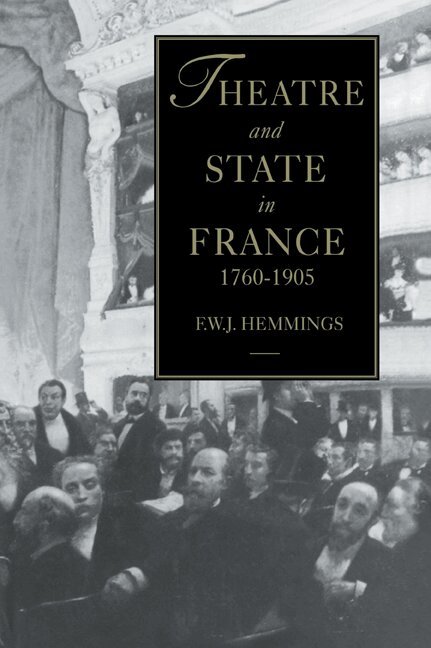
Relations between theatre and state were seldom more fraught in France than in the latter part of the eighteenth and during the nineteenth century. The unique attraction of the theatre, the sole source of mass entertainment over the period, accounts in part for this: successive governments could not ignore these large nightly gatherings, viewing them with distrust and attempting to control them by every kind of device, from censorship of plays to the licensing of playhouses. In his illuminating study, F. W. J. Hemmings traces the vicissitudes of this perennial conflict, which began with the rise of the small independent boulevard theatres in the 1760s and eventually petered out in 1905 with the abandonment of censorship by the state. There are separate chapters on the provincial theatre, while the French Revolution is given particularly detailed attention. This work, complementing his earlier book The Theatre Industry in Nineteenth-Century France, will be of interest to students of theatre history, French studies and European culture in general.
466 kr
Skickas inom 7-10 vardagar
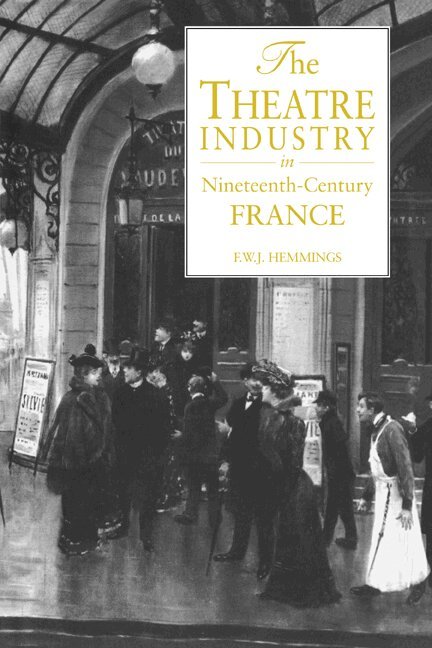
This 1993 book explores the history of French theatre in the nineteenth century through its special role as an organized popular entertainment. Traditionally regarded as an elite art form, in post-Revolutionary France the stage began to be seen as an industry like any other and the theatre became one of the few areas of employment where women were in demand as much as men. The increasingly commercial ethos dominating the stage led to the mass production of plays with audience appeal, resulting in an inevitable dilution of literary standards. In this lively account, Hemmings examines how the theatre world flourished and evolved, and reveals such matters as the difficult life of the actress, salaries and contracts, and the profession of the playwright.
1 342 kr
Skickas inom 7-10 vardagar
This 1993 book explores the history of French theatre in the nineteenth century through its special role as an organized popular entertainment. Traditionally regarded as an elite art form, in post-Revolutionary France the stage began to be seen as an industry like any other and the theatre became one of the few areas of employment where women were in demand as much as men. The increasingly commercial ethos dominating the stage led to the mass production of plays with audience appeal, resulting in an inevitable dilution of literary standards. In this lively account, Hemmings examines how the theatre world flourished and evolved, and reveals such matters as the difficult life of the actress, salaries and contracts, and the profession of the playwright.
1 288 kr
Skickas inom 7-10 vardagar
Relations between theatre and state were seldom more fraught in France than in the latter part of the eighteenth and during the nineteenth century. The unique attraction of the theatre, the sole source of mass entertainment over the period, accounts in part for this: successive governments could not ignore these large nightly gatherings, viewing them with distrust and attempting to control them by every kind of device, from censorship of plays to the licensing of playhouses. In his illuminating study, F. W. J. Hemmings traces the vicissitudes of this perennial conflict, which began with the rise of the small independent boulevard theatres in the 1760s and eventually petered out in 1905 with the abandonment of censorship by the state. There are separate chapters on the provincial theatre, while the French Revolution is given particularly detailed attention. This work, complementing his earlier book The Theatre Industry in Nineteenth-Century France, will be of interest to students of theatre history, French studies and European culture in general.