Frederica de Laguna - Böcker
Visar alla böcker från författaren Frederica de Laguna. Handla med fri frakt och snabb leverans.
4 produkter
4 produkter
1 192 kr
Skickas inom 3-6 vardagar
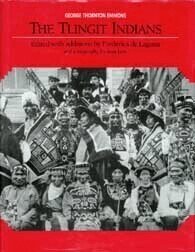
Lieutenant George Thornton Emmons, U.S.N., was station in Alaska during the 1880s and 1890s, a time when the Navy was largely responsible for law and stability in the Territory. His duties brought him into close contact with the Tlingit Indians, whose respect he won and from whom he gained an understanding of and respect for their culture. He became a friend of many Tlingit leaders, visited their homes, traveled in their canoes when on leave, purchased native artifacts, and recorded native traditions. In addition to an interest in native manufacturing and in the more spectacular aspects of native life - such as bear hunting, Chilkat blankets, feuds, and the potlatch - Emmons showed the ethnographer’s devotion to recording all aspects of the culture together with the Tlingit terms, and came to understand Tlingit beliefs and values better than did any of his nonnative contemporaries. He was widely recognized for his extensive collections of Tlingit artifacts and art, and for the detailed notes that accompanied them.At the request of Morris K. Jesup, president of the American Museum of Natural History (which had purchased Emmons’s first two Tlingit collections), and on the recommendation of Franz Boas, Emmons began to organize his notes and prepare a manuscript on the Tlingit. During his retirement, he published several articles and monographs and continued to study and work on his comprehensive book. But when he died in 1945, the book was still unfinished, and he left several drafts in the museum and also in the provincial archives of British Columbia in Victoria, where he had been writing during the last decades of his life.Frederica de Laguna, eminent ethnologist and archaeologist with long personal experience with the Tlingit, was asked by the museum to edit The Tlingit Indians for publication. Over the past thirty years she has worked to organize Emmons’s materials, scrupulously following his plan of including extracts from the earliest historical sources. She also has made significant additions from contemporary or more recent authors, and from works unknown ton Emmons or unavailable to him, and has given the ethnography greater historical depth by presenting this information in chronological order. She has also added relevant commentary of her own based on her encyclopedic information about past and present Tlingit culture.With the help of Jeff Leer of the Alaskan Native Language Center, an expert on Tlingit, she has provided modern phonetic transcriptions of Tlingit words whenever Emmons has given native terms in his own idiosyncratic and inconsistent versions of Tlingit.This major contribution to the ethnography of the Northwest Coast also includes a meticulously researched biography of Lieutenant Emmons by Jean Low, an extensive bibliography, and thirty-seven tables in which de Laguna draws together and tightens Emmons’s materials on topics such as census data, names of clans and houses, species of plants and their uses, native calendars, and names of gambling sticks. Illustrations include numerous photographs and sketches made and annotated by Emmons.This volume will be invaluable to anthropologists, historians, and the general public - including the Tlingit Indians themselves, to whom it is dedicated.Frederica de Laguna , professor emeritus of anthropology at Bryn Mawr College, is the author of the three-volume Under Mount Saint Elias (on the Tlingit of Yakutat) and numerous other works on Alaska archaeology and ethnography.
292 kr
Skickas inom 3-6 vardagar
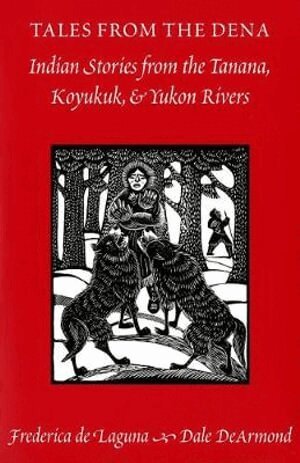
Forty-one Alaskan Indian tales, transcribed in 1935 from the narrators' own words, are included in this collection beautifully illustrated with wood engravings by Alaska artist Dale DeArmond. The exploits of the roguish Crow and the intrepid Man Who Traveled Among All the Animals and People range from serious myths to slyly humorous misadventures.
286 kr
Skickas inom 5-8 vardagar
567 kr
Skickas inom 10-15 vardagar
The formative years of American anthropology were characterized by intellectual energy and excitement, the identification of key interpretive issues, and the beginnings of a prodigious amount of fieldwork and recording. The American Anthropological Association (AAA) was born as anthropology emerged as a formal discipline with specialized subfields; fieldwork among Native communities proliferated across North America, yielding a wealth of ethnographic information that began to surface in the flagship journal, the American Anthropologist; and researchers increasingly debated and probed deeper into the roots and significance of ritual, myth, language, social organization, and the physical make-up and prehistory of Native Americans. The fifty-five selections in this volume represent the interests of and accomplishments in American anthropology from the establishment of the American Anthropologist through World War I. The articles in their entirety showcase the state of the subfields of anthropology—archaeology, linguistics, physical anthropology, and cultural anthropology—as they were imagined and practiced at the dawn of the twentieth century. Examples of important ethnographic accounts and interpretive debates are also included. Introducing this collection is a historical overview of the beginnings of American anthropology by A. Irving Hallowell, a former president of the AAA.