Frederick F. Ling – författare
Visar alla böcker från författaren Frederick F. Ling. Handla med fri frakt och snabb leverans.
5 produkter
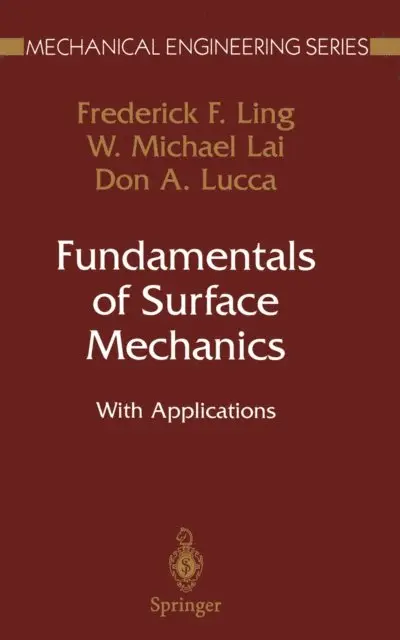
Fundamentals of Surface Mechanics
With Applications
Av Don A. Lucca, W. Michael Lai m. fl.
E-bok, 2012
734 kr
Lägg i varukorg
Mechanical engineering, an engineering discipline borne of the needs of the industrial revolution, is once again asked to do its substantial share in the call for industrial renewal. The general call is urgent as we face profound issues of productivity and competitiveness that require engineering …
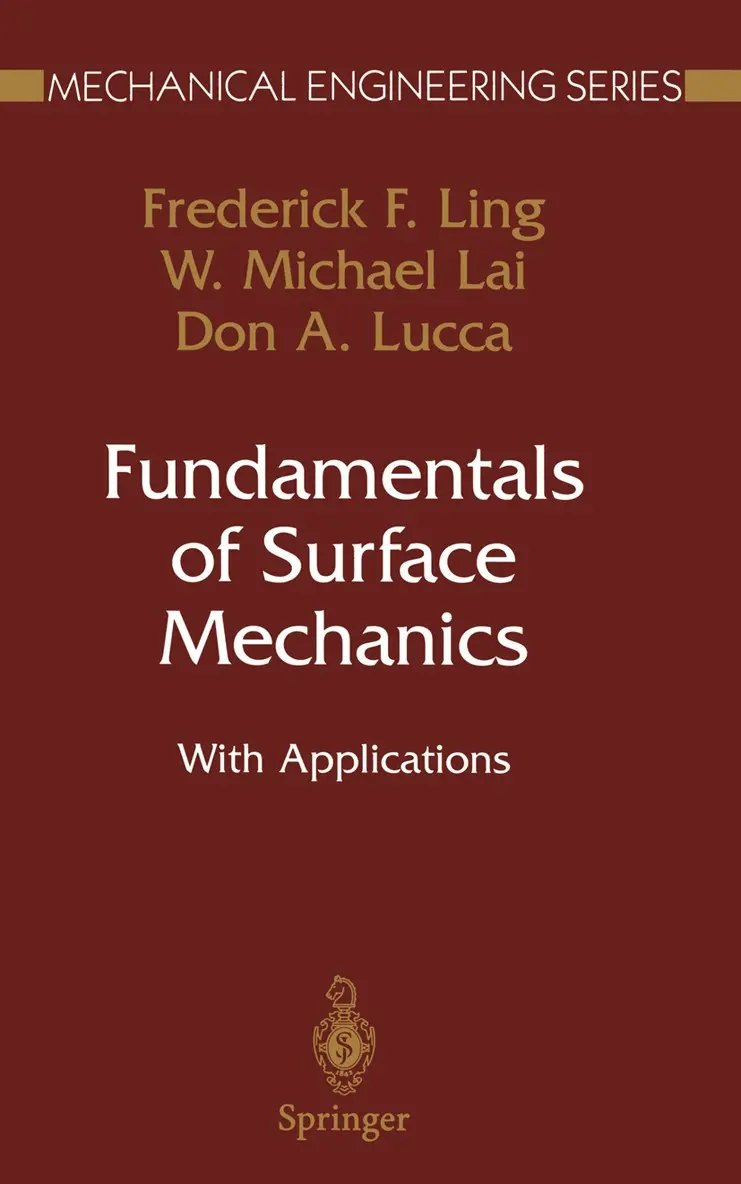
Fundamentals of Surface Mechanics
With Applications
Av Frederick F. Ling, W. Michael Lai m. fl.
Inbunden, 2002
550 kr
Lägg i varukorg
Mechanical engineering, an engineering discipline borne of the needs of the industrial revolution, is once again asked to do its substantial share in the call for industrial renewal. The general call is urgent as we face profound issues of productivity and competitiveness that require engineering …
Approaches to Modeling of Friction and Wear
Proceedings of the Workshop on the Use of Surface Deformation Models to Predict Tribology Behavior, Columbia University in the City of New York, December 17–19, 1986
Av C.H.T. Pan, Frederick F. Ling
E-bok, 2012
1416 kr
Lägg i varukorg
At the conclusion of the Conference on Tribology in the area of Wear Life Pre diction of Mechanical Components, which was held at the General Motors Research Laboratories and sponsored by the Industrial Research Institute, a very high pri ority recommendation was modeling of tribological systems. …
Approaches to Modeling of Friction and Wear
Proceedings of the Workshop on the Use of Surface Deformation Models to Predict Tribology Behavior, Columbia University in the City of New York, December 17–19, 1986
Av Frederick F. Ling, C.H.T. Pan
Häftad, 2011
1094 kr
Lägg i varukorg
At the conclusion of the Conference on Tribology in the area of Wear Life Pre diction of Mechanical Components, which was held at the General Motors Research Laboratories and sponsored by the Industrial Research Institute, a very high pri ority recommendation was modeling of tribological systems. …
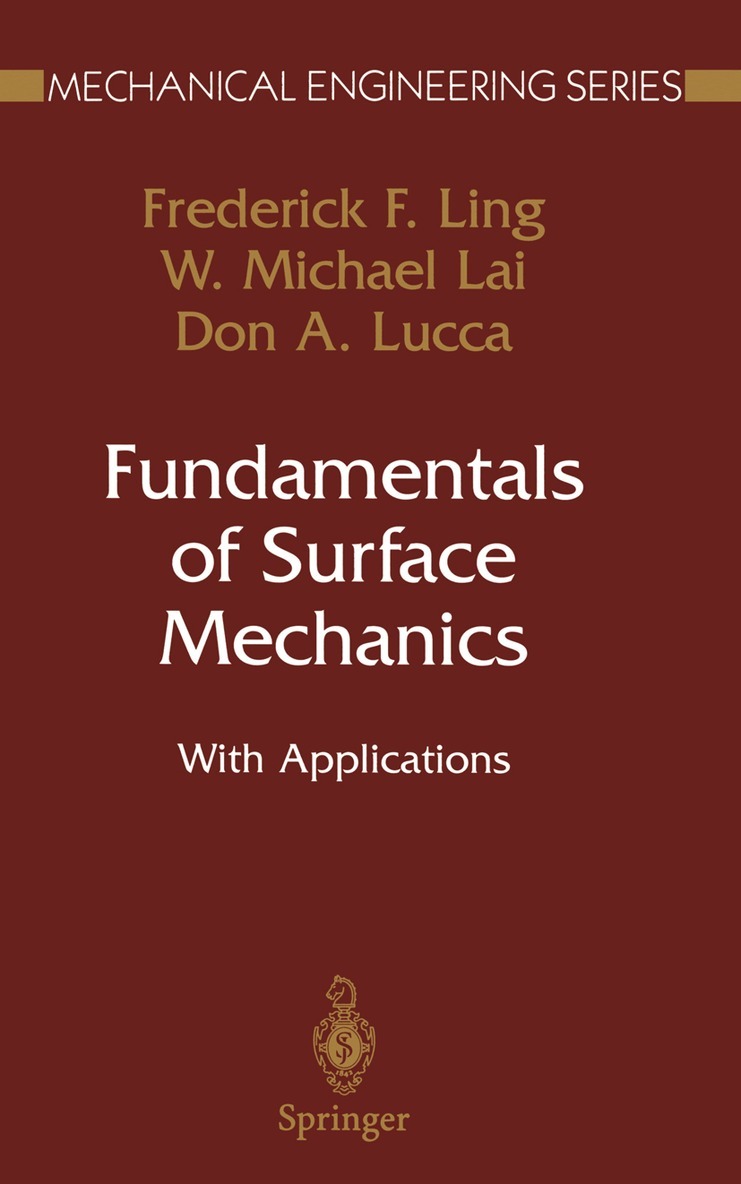
Fundamentals of Surface Mechanics
With Applications
Av Frederick F. Ling, W. Michael Lai m. fl.
Häftad, 2012
550 kr
Lägg i varukorg
Mechanical engineering, an engineering discipline borne of the needs of the industrial revolution, is once again asked to do its substantial share in the call for industrial renewal. The general call is urgent as we face profound issues of productivity and competitiveness that require engineering …