Fredrik Söderbaum - Böcker
Visar alla böcker från författaren Fredrik Söderbaum. Handla med fri frakt och snabb leverans.
13 produkter
13 produkter
486 kr
Skickas
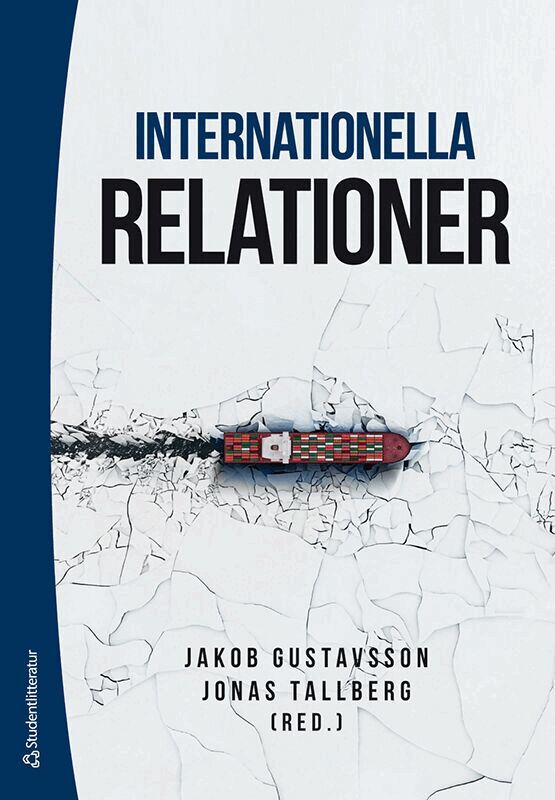
I denna heltäckande grundbok ges en introduktion till studiet av internationella relationer. Boken redogör för de dominerande teoretiska perspektiven inom internationella relationer, för de processer som formar den internationella fördelningen av makt och resurser, samt för de mest framträdande politikområdena i världspolitiken idag. Genom sitt breda anslag behandlar boken frågor som: Varför uppstår krig? Vad har globaliseringen för politiska effekter? Vem har makt i internationell politik? Hur kan utvecklingsländerna hävas ur fattigdom? Vilka motiv driver transnationella terroristnätverk? När har normer och internationella institutioner betydelse? Under vilka omständigheter får nationella identiteter genomslag i världspolitiken?I boken medverkar många av de främsta forskarna inom internationell politik i Sverige. Alla är experter inom sina respektive områden, och är väl integrerade i den internationella forskningsmiljön. På ett pedagogiskt sätt introducerar de centrala perspektiv och begrepp och knyter samtidigt an till aktuella exempel och illustrationer. Flera exempel hämtas från en svensk kontext och boken belyser därmed på ett unikt sätt Sveriges relationer med omvärlden. I denna fjärde upplaga har samtliga kapitel uppdaterats. Boken vänder sig i första hand till introduktionskurser i internationell politik eller internationella relationer vid universitet och högskolor.
446 kr
Skickas
Hur kan vi förstå uppkomsten och konsekvenserna av dagens konflikter? Vad kan göras för att förhindra att de bryter ut? Och hur kan pågående konflikter lösas på ett sätt som skapar varaktig fred? I denna breda grundbok presenteras centrala frågeställningar och analytiska perspektiv på krig, terrorism, konflikthantering och konfliktlösning, samt fredsbyggande och utveckling. Boken innehåller också illustrativa fallanalyser – allt ifrån första världskriget, kriget i Afghanistan, konflikthantering i Afrika, svensk säkerhetspolitik och försoningsprocesser i Bosnien-Hercegovina till fredsbyggande insatser i Palestina.I denna andra upplaga har samtliga kapitel uppdaterats och tre nyskrivna kapitel, som behandlar terrorism, religionens betydelse för konfliktlösning och fred samt fred och säkerhet ur ett jämställdhetsperspektiv, har tillkommit.Freds- och konfliktstudier har en flervetenskaplig karaktär, vilket i boken återspeglas i de olika kapitelbidragen och författarnas akademiska bakgrund. Boken vänder sig till de som är intresserade av frågor om krig och fred samt studenter vid universitet och högskolor som möter ämnet freds- och konfliktstudier för första gången.
568 kr
Skickas inom 10-15 vardagar
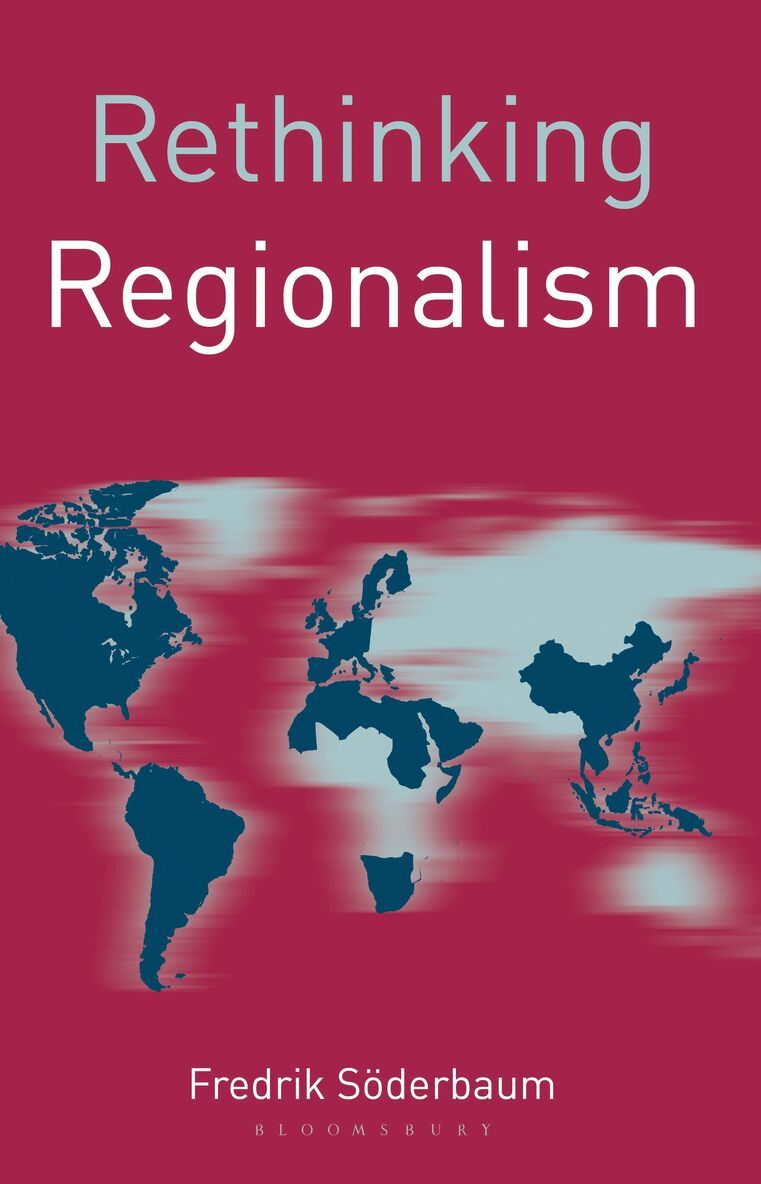
Since the late 1980s, there has been a global upsurge of various forms of regionalist projects. The widening and deepening of the European Union (EU) is the most prominent example, but there has also been a revitalization or expansion of many other regionalist projects as well, such as the African Union (AU), the Association of Southeast Asian Nations (ASEAN), the North American Free Trade Agreement (NAFTA) and the Southern Common Market (Mercosur). More or less every government in the world is engaged in regionalism, which also involves a rich variety of business and civil society actors, resulting in a multitude of regional processes in most fields of contemporary politics. In this new text, Fredrik Söderbaum draws on decades of scholarship to provide a major reassessment of regionalism and to address questions about its origins, logic and consequences.By examining regionalism from historical, spatial, comparative and global perspectives, Rethinking Regionalism transcends the deep intellectual and disciplinary rivalries that have limited our knowledge about the subject. This broad-ranging approach enables new and challenging answers to emerge as to why and how regionalism evolves and consolidates, how it can be compared, and what its ongoing significance is for a host of issues within global politics, from security and trade to development and the environment. Retaining a balanced and authoritative style throughout, this text will be welcomed for its uniquely comprehensive examination of regionalism in the contemporary global age.
3 265 kr
Skickas inom 10-15 vardagar
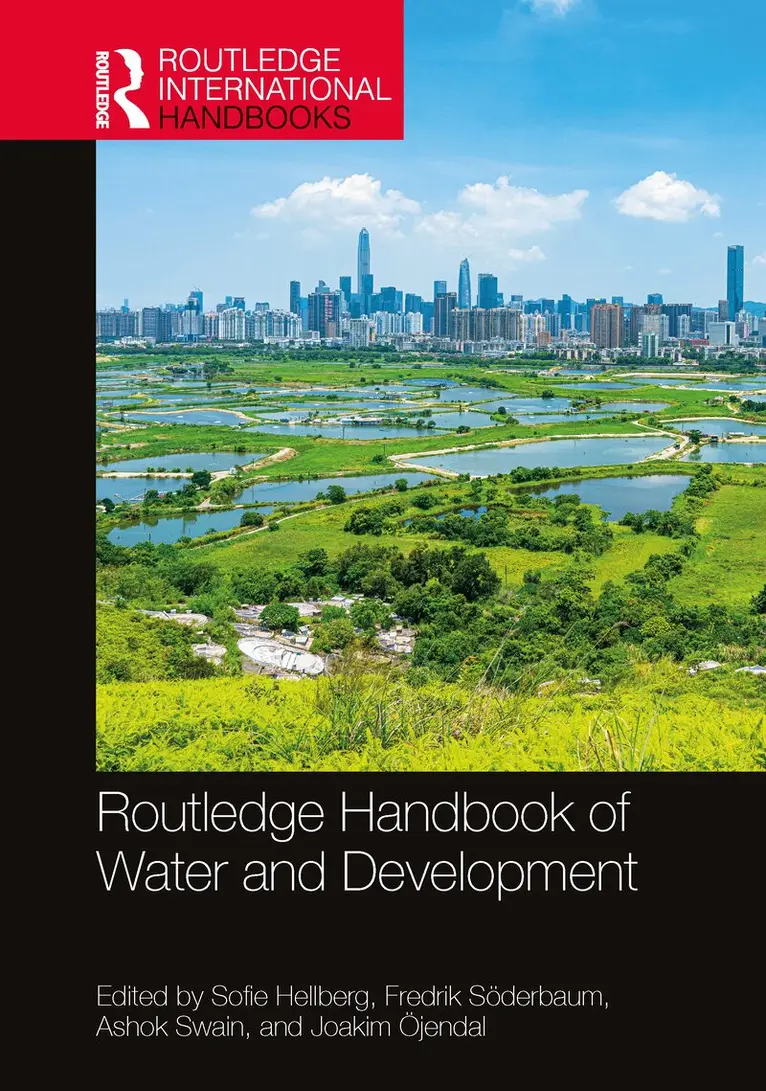
Water is essential for human life and at the centre of political, economic, and socio-cultural development. This Routledge Handbook of Water and Development offers a systematic, wide-ranging, and state-of-the-art guide to the diverse links between water and development across the globe. It is organized into four parts:Part I explores the most significant theories and approaches to the relationship between water and developmentPart II consists of carefully selected in-depth case studies, revealing how water utilization and management are deeply intertwined with historical development paths and economic and socio-cultural structuresPart III analyses the role of governance in the management of water and developmentPart IV covers the most urgent themes and issues pertaining to water and development in the contemporary world, ranging from climate change and water stress to agriculture and migrationThe 32 chapters by leading experts are meant to stimulate researchers and students in a wide range of disciplines in the social and natural sciences, including Geography, Environmental Studies, Development Studies, and Political Science. The Handbook will also be of great value to policymakers and practitioners.
698 kr
Skickas inom 10-15 vardagar
Water is essential for human life and at the centre of political, economic, and socio-cultural development. This Routledge Handbook of Water and Development offers a systematic, wide-ranging, and state-of-the-art guide to the diverse links between water and development across the globe. It is organized into four parts:Part I explores the most significant theories and approaches to the relationship between water and developmentPart II consists of carefully selected in-depth case studies, revealing how water utilization and management are deeply intertwined with historical development paths and economic and socio-cultural structuresPart III analyses the role of governance in the management of water and developmentPart IV covers the most urgent themes and issues pertaining to water and development in the contemporary world, ranging from climate change and water stress to agriculture and migrationThe 32 chapters by leading experts are meant to stimulate researchers and students in a wide range of disciplines in the social and natural sciences, including Geography, Environmental Studies, Development Studies, and Political Science. The Handbook will also be of great value to policymakers and practitioners.
2 151 kr
Skickas inom 10-15 vardagar
This edited volume transcends conventional state-centric and formalistic notions of regionalism and theorizes, conceptualizes and analyzes the complexities and contradictions of regionalization processes in contemporary Africa. The collection not only unpacks and theorizes the African state-society complex with regard to new regionalism, but also explicitly integrates the often neglected discourse of human security and human development. In so doing, the book moves the discussion of new regionalism forward at the same time as it adds important insights to security and development. It is organized into three parts. Part I theorizes, conceptualizes and analyzes the new regionalism in Africa from the point of view of the region (e.g. West, East, Central and Southern Africa). The national perspectives in Part II focus on the new regionalism in Africa from the point of view of particular countries or specific state-society complexes, such as Kenya, the Democratic Republic of the Congo (DRC), the enclave of Cabinda, Angola and Zambia. Part III contains two concluding chapters that tie the main threads of the volume together, theoretically and empirically, and discuss the contribution of the analytical framework, the new regionalism approach (NRA) to the larger study of regionalism.
812 kr
Skickas inom 10-15 vardagar
This edited volume transcends conventional state-centric and formalistic notions of regionalism and theorizes, conceptualizes and analyzes the complexities and contradictions of regionalization processes in contemporary Africa. The collection not only unpacks and theorizes the African state-society complex with regard to new regionalism, but also explicitly integrates the often neglected discourse of human security and human development. In so doing, the book moves the discussion of new regionalism forward at the same time as it adds important insights to security and development. It is organized into three parts. Part I theorizes, conceptualizes and analyzes the new regionalism in Africa from the point of view of the region (e.g. West, East, Central and Southern Africa). The national perspectives in Part II focus on the new regionalism in Africa from the point of view of particular countries or specific state-society complexes, such as Kenya, the Democratic Republic of the Congo (DRC), the enclave of Cabinda, Angola and Zambia. Part III contains two concluding chapters that tie the main threads of the volume together, theoretically and empirically, and discuss the contribution of the analytical framework, the new regionalism approach (NRA) to the larger study of regionalism.
Regionalism and Uneven Development in Southern Africa
The Case of the Maputo Development Corridor
Häftad, Engelska, 2019
362 kr
Skickas inom 10-15 vardagar
This title was first published in 2003. This volume advances our understanding of how Southern Africa is currently being reconfigured, critically examining what has been marketed as the "flagship" of the Spatial Development Initiative programme in Southern Africa: the Maputo Development Corridor (MDC). By examining a variety of cross-cutting levels of governance and development and by focusing on the nexus between the formal and informal processes that stake out the MDC, this volume contributes to a detailed understanding of what is perhaps the most important current experiment in regionalism in Africa. By engaging regional processes on the micro-level and "on the ground", there is a special emphasis on how local communities regard and respond to the Corridor initiative. All chapters in the volume are the result of extensive fieldwork in both Mozambique and South Africa, and the contributions are drawn from the region and beyond, including Botswana, Mozambique, Zimbabwe, South Africa, Sweden and the United States.
Regionalism and Uneven Development in Southern Africa
The Case of the Maputo Development Corridor
Inbunden, Engelska, 2017
1 017 kr
Skickas inom 10-15 vardagar
This title was first published in 2003. This volume advances our understanding of how Southern Africa is currently being reconfigured, critically examining what has been marketed as the "flagship" of the Spatial Development Initiative programme in Southern Africa: the Maputo Development Corridor (MDC). By examining a variety of cross-cutting levels of governance and development and by focusing on the nexus between the formal and informal processes that stake out the MDC, this volume contributes to a detailed understanding of what is perhaps the most important current experiment in regionalism in Africa. By engaging regional processes on the micro-level and "on the ground", there is a special emphasis on how local communities regard and respond to the Corridor initiative. All chapters in the volume are the result of extensive fieldwork in both Mozambique and South Africa, and the contributions are drawn from the region and beyond, including Botswana, Mozambique, Zimbabwe, South Africa, Sweden and the United States.
11 358 kr
Tillfälligt slut
This four-volume set has been created to capture and organise 60 years of research and policy discourse on regional integration and regionalism. Since the mid-1980s there has been an explosion of various forms of regionalist projects on a global scale. The widening and deepening of the European Union (EU) is the most pervasive example, but regionalism is also made visible through the revitalization or expansion of many other regional projects around the world. With a strong global focus on the field, this new major work will be of great value to the international academic community, collating and presenting seminal articles written by scholars from around the globe. The volumes are structured chronologically, reflecting the evolution of the subject: Volume One: 1940s-1960s Classical Regional IntegrationVolume Two: 1970s-1980s Revisions of Classical Regional IntegrationVolume Three: 1990s- The New RegionalismVolume Four: 2000-2010 Comparative Regionalism
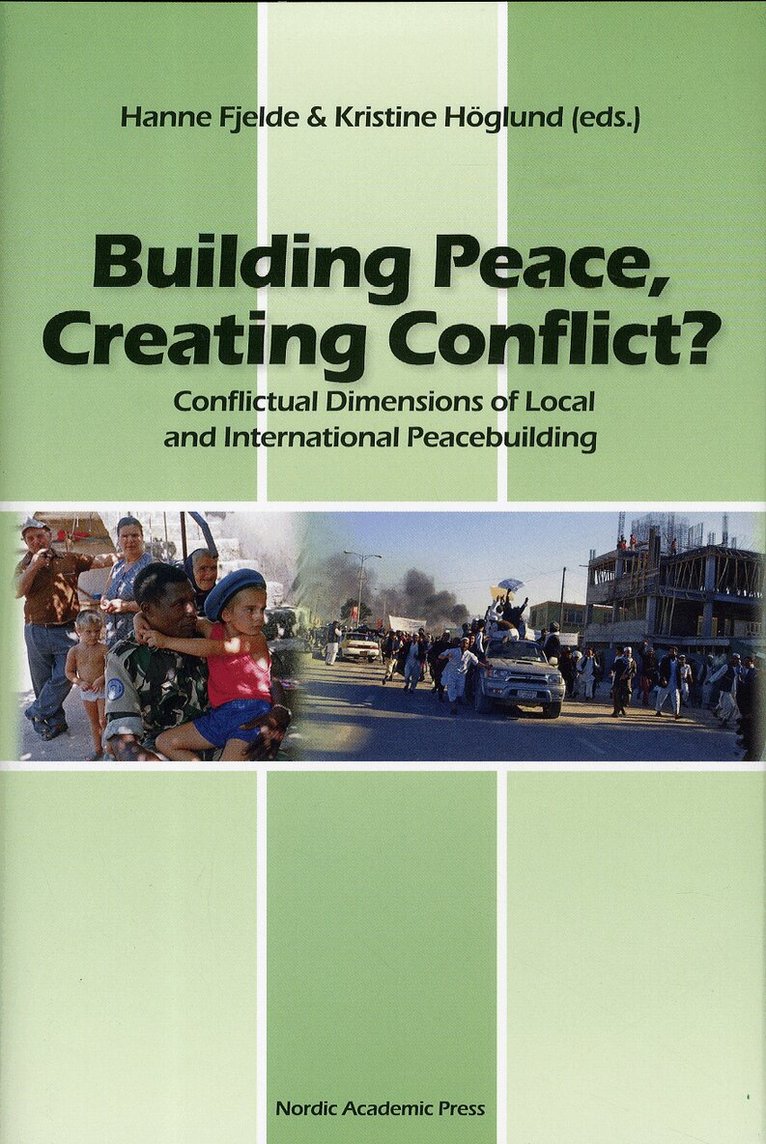
Building Peace, creating conflict? : conflictual dimensions of local and international peacebuilding
Inbunden, Engelska, 2011
212 kr
Skickas
One of the most significant challenges facing the international community today is how to secure stability and rebuild societies emerging from civil wars. International peace-building missions have been deployed in a range of countries emerging from civil war. The empirical record of international efforts to advance peace has been mixed. While some post-war countries have made significant strides towards peace and democracy, other countries have experienced a return to war. In yet other cases the outcome has been a partial implementation of peace where new conflicts have been generated in the process. In Building Peace, Creating Conflict? a group of experts discuss the conflictual dimensions of peace-building. The authors specialize in various aspects and cover several themes such as frozen conflicts and unending peace processes; the efficiency of peacekeeping operations in promoting democracy, and individual and collective dimensions of justice and reconciliation. Contributors: Karin Aggestam, Department of Political Science, Lund University Annika Björkdahl, Department of Political Science, Lund University Hanne Fjelde, Department of Peace and Conflict Research, Uppsala University Linnéa Gelot, School of Global Studies & Centre of Globalization and Development, University of Gothenburg Birger Heldt, Folke Bernadotte Academy, Stockholm Kristine Höglund, Department of Peace and Conflict Research, Uppsala University Anna K. Jarstad, Folke Bernadotte Academy & Department of Government, Uppsala University Roland Kosti, Hugo Valentin Centre, Uppsala University Johanna Mannergren Selimovic, Swedish Institute of International Affairs, Stockholm Elisabeth Olivius, Department of Political Science & Umeå Centre for Gender Studies, Umeå University Louise Olsson, Folke Bernadotte Academy, Stockholm Fredrik Söderbaum, School of Global Studies (SGS), University of Gothenburg
Del 7 - United Nations University Series on Regionalism
Intersecting Interregionalism
Regions, Global Governance and the EU
Inbunden, Engelska, 2014
1 064 kr
Skickas inom 10-15 vardagar
Leading scholars from around the world develop their own distinctive theoretical perspectives on interregionalism, with a particular emphasis on the dynamic relationship between regionalism and interregionalism.
Del 7 - United Nations University Series on Regionalism
Intersecting Interregionalism
Regions, Global Governance and the EU
Häftad, Engelska, 2016
1 064 kr
Skickas inom 10-15 vardagar
This book has two mutually reinforcing aims/parts. The first aim is to contribute to a more productive debate between different theoretical standpoints. There is surprisingly little theoretical and conceptual debate in this burgeoning field, which is one major reason for the failure to fully grasp the diversity of today’s interregionalism. Too often theorists speak past each other, without really engaging with alternative theoretical perspectives or competing research results. Indeed, this book constitutes the first systematic attempt to bring together leading theories and theorists of interregionalism. Leading scholars from around the world develop their own distinctive theoretical perspectives on interregionalism, with a particular emphasis on the dynamic relationship between regionalism and interregionalism. These highly acclaimed theorists have all been associated over the years with a variety of disciplines, institutions, schools and debates and so bring a rich set of insights andconnections to this pioneering project. The second part of the book ‘unpacks’ and problematises the region, the driving actors and institutions that are engaged in interregional relations. There is a strong tendency in the field to treat regions as coherent units actors in an interregional relationship, and such simplified notions about ‘regions’ and ‘regional organisations’ necessarily result in superficial and misleading understandings of interregionalism. This part of the book connects the theoretical discussion in the first part with a manageable empirical object.