Freeman Dyson – författare
Visar alla böcker från författaren Freeman Dyson. Handla med fri frakt och snabb leverans.
16 produkter
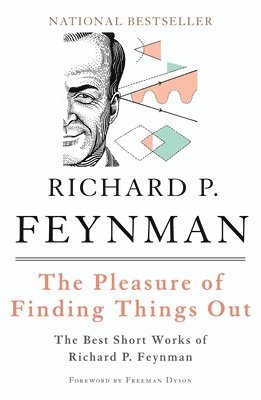
Pleasure of Finding Things Out
The Best Short Works of Richard P. Feynman
Av Freeman Dyson, Richard Feynman
Häftad, 2005
177 kr
Lägg i varukorg
The Pleasure of Finding Things Out is a magnificent treasury of the best short works of Richard P. Feynman,from interviews and speeches to lectures and printed articles. A sweeping, wide-ranging collection, it presents an intimate and fascinating view of a life in science-a life like no other. From …
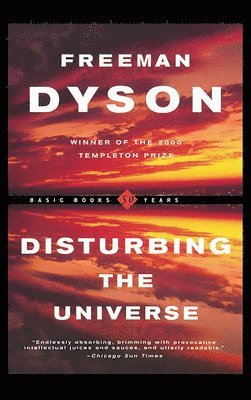
Disturbing The Universe
Häftad, 1981
314 kr
Lägg i varukorg
Spanning the years from World War II, when he was a civilian statistician in the operations research section of the Royal Air Force Bomber Command, through his studies with Hans Bethe at Cornell University, his early friendship with Richard Feynman, and his postgraduate work with J. Robert …
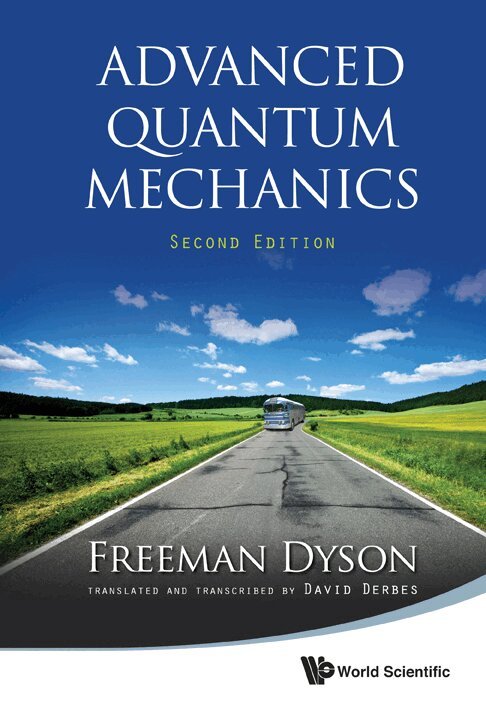
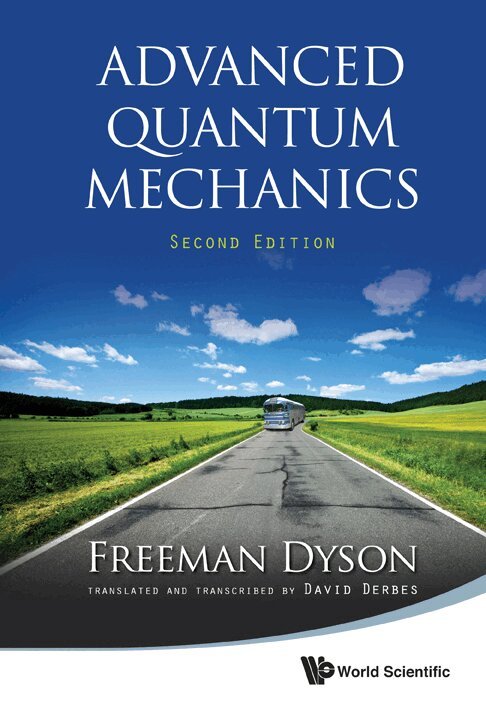
ADVANCED QUANTUM MECHANICS (SECOND EDITION)
Häftad, 2011
573 kr
Lägg i varukorg
Renowned physicist and mathematician Freeman Dyson is famous for his work in quantum mechanics, nuclear weapons policy and bold visions for the future of humanity. In the 1940s, he was responsible for demonstrating the equivalence of the two formulations of quantum electrodynamics — Richard …
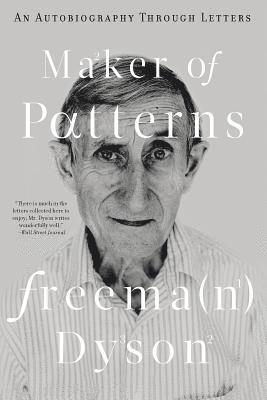
Maker of Patterns
An Autobiography Through Letters
Häftad, 2019
172 kr
Lägg i varukorg
Written between 1940 and the late 1970s, the postwar recollections of renowned physicist Freeman Dyson have been celebrated as an historic portrait of modern science and its greatest players, including Robert Oppenheimer, Richard Feynman, Stephen Hawking, and Hans Bethe. Chronicling the stories of …
Origins of Life
Häftad, 1999
260 kr
Lägg i varukorg
How did life on earth originate? Did replication or metabolism come first in the history of life? In this book, Freeman Dyson examines these questions and discusses the two main theories that try to explain how naturally occurring chemicals could organize themselves into living creatures. The …
FROM EROS TO GAIA
E-bok, 2013
288 kr
Lägg i varukorg
Readers of Freeman Dyson’s previous books, Disturbing the Universe, Weapons and Hope, and Infinite in All Directions, have discovered for themselves what Dyson reveals here: that he was a writer long before he became a distinguished scientist. The aim of this new book, as Dyson says, is to open …
Imagined Worlds
Häftad, 1998
315 kr
Lägg i varukorg
Imagine a world where whole epochs will pass, cultures rise and fall, between a telephone call and the reply. Think of the human race multiplying 500-million fold, or evolving new, distinct species. Consider the technology of space colonization, computer-assisted reproduction, the “Martian potato.” …
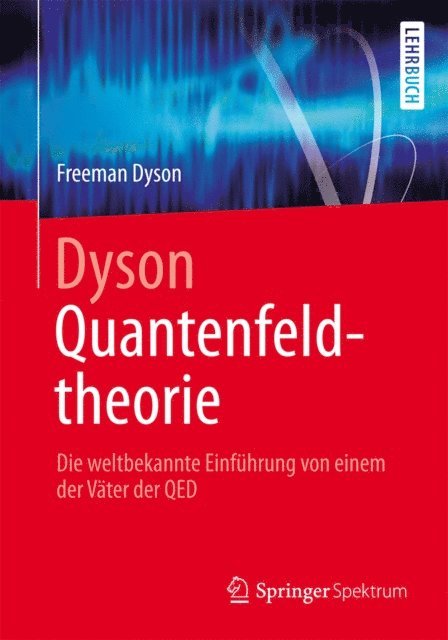
Dyson Quantenfeldtheorie
Die weltbekannte Einführung von einem der Väter der QED
Häftad, 2013
568 kr
Lägg i varukorg
Die berühmte Vorlesung von Freeman Dyson - nun erstmals auf Deutsch. In den 1940er Jahren zeigte Freeman Dyson die Äquivalenz zwischen den beiden Formulierungen der QED - des Pfadintegralansatzes von Richard Feynman und der Variationsmethoden von Julian Schwinger - und bewies somit die Konsistenz …
The Scientist as Rebel
Revised Edition
Häftad, 2028
274 kr
Kommande
An illuminating collection of essays by an award-winning scientist whom the London Times calls “one of the world’s most original minds.” From Galileo to today’s amateur astronomers, scientists have been rebels, writes Freeman Dyson. Like artists and poets, they are free spirits who resist the …
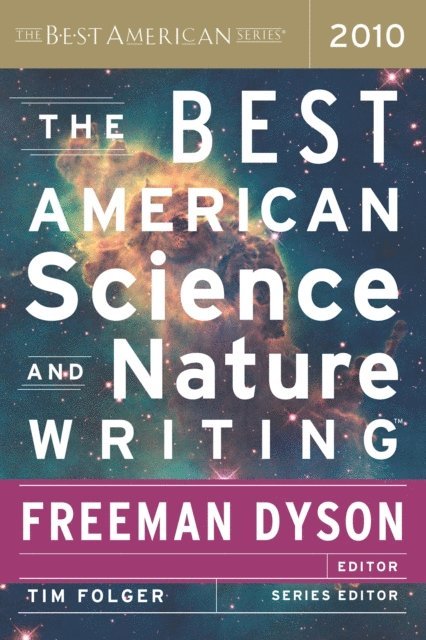
The Best American Science and Nature Writing
Av Freeman Dyson, Tim Folger m. fl.
Häftad, 2010
320 kr
Lägg i varukorg
Best American Science And Nature Writing 2010
E-bok, 2010
160 kr
Lägg i varukorg
Twenty-eight of the best pieces of science and nature writing in America in a collection edited by the renowned physicist and public intellectual.The Best American series is the premier annual showcase for the country''s finest short fiction and nonfiction. Each volume''s series editor selects …
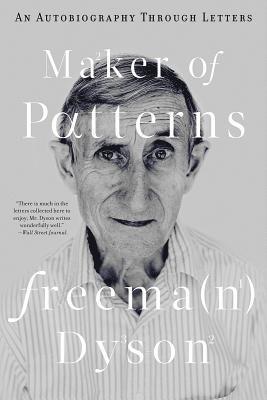
Maker of Patterns
An Autobiography Through Letters
Inbunden, 2018
289 kr
Lägg i varukorg
Having penned hundreds of letters to his family over four decades, Freeman Dyson has framed them with the reflections made by a man now in his nineties. While maintaining that “the letters record the daily life of an ordinary scientist doing ordinary work,” Dyson nonetheless has worked with many of …
Dyson Quantenfeldtheorie
Die weltbekannte Einführung von einem der Väter der QED
E-bok, 2013
587 kr
Lägg i varukorg
Die berühmte Vorlesung von Freeman Dyson - nun erstmals auf Deutsch. In den 1940er Jahren zeigte Freeman Dyson die Äquivalenz zwischen den beiden Formulierungen der QED - des Pfadintegralansatzes von Richard Feynman und der Variationsmethoden von Julian Schwinger - und bewies somit die Konsistenz …
ADVANCED QUANTUM MECHANICS (SECOND EDITION)
Inbunden, 2011
1306 kr
Lägg i varukorg
Renowned physicist and mathematician Freeman Dyson is famous for his work in quantum mechanics, nuclear weapons policy and bold visions for the future of humanity. In the 1940s, he was responsible for demonstrating the equivalence of the two formulations of quantum electrodynamics — Richard …
ADVANCED QUANTUM MECHANICS
Inbunden, 2007
1121 kr
Tillfälligt slut
Renowned physicist and mathematician Freeman Dyson is famous for his work in quantum mechanics, nuclear weapons policy and bold visions for the future of humanity. In the 1940s, he was responsible for demonstrating the equivalence of the two formulations of quantum electrodynamics — Richard …
ADVANCED QUANTUM MECHANICS
Häftad, 2007
353 kr
Tillfälligt slut
Renowned physicist and mathematician Freeman Dyson is famous for his work in quantum mechanics, nuclear weapons policy and bold visions for the future of humanity. In the 1940s, he was responsible for demonstrating the equivalence of the two formulations of quantum electrodynamics — Richard …