Freya Gowrley - Böcker
Visar alla böcker från författaren Freya Gowrley. Handla med fri frakt och snabb leverans.
4 produkter
4 produkter
493 kr
Skickas inom 7-10 vardagar
A beautifully illustrated global history of collage from the origins of paper to todayWhile the emergence of collage is frequently placed in the twentieth century when it was a favored medium of modern artists, its earliest beginnings are tied to the invention of paper in China around 200 BCE. Subsequent forms occurred in twelfth-century Japan with illuminated manuscripts that combined calligraphic poetry with torn colored papers. In early modern Europe, collage was used to document and organize herbaria, plant specimens, and other systems of knowledge. In the eighteenth and nineteenth centuries, collage became firmly associated with the expression of intimate relations and familial affections. Fragmentary Forms offers a new, global perspective on one of the world’s oldest and most enduring means of cultural expression, tracing the rich history of collage from its ancient origins to its uses today as a powerful tool for storytelling and explorations of identity.Presenting an expansive approach to collage and the history of art, Freya Gowrley explores what happens when overlapping fragmentary forms are in conversation with one another. She looks at everything from volumes of pilgrims’ religious relics and Victorian seaweed albums to modernist papiers collés by Pablo Picasso and Georges Braque and quilts by Faith Ringgold exploring African-American identity. Gowrley examines the work of anonymous and unknown artists whose names have been lost to history, either by accident or through exclusion.Featuring hundreds of beautiful images, Fragmentary Forms demonstrates how the use of found objects is an important characteristic of this unique art form and shows how collage is an inclusive medium that has given voice to marginalized communities and artists across centuries and cultures.
359 kr
Skickas inom 7-10 vardagar
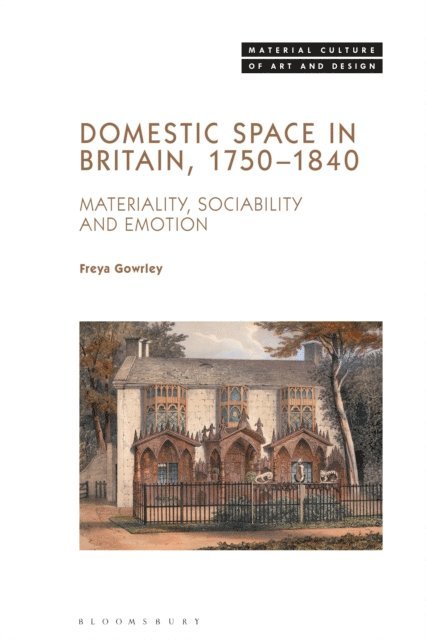
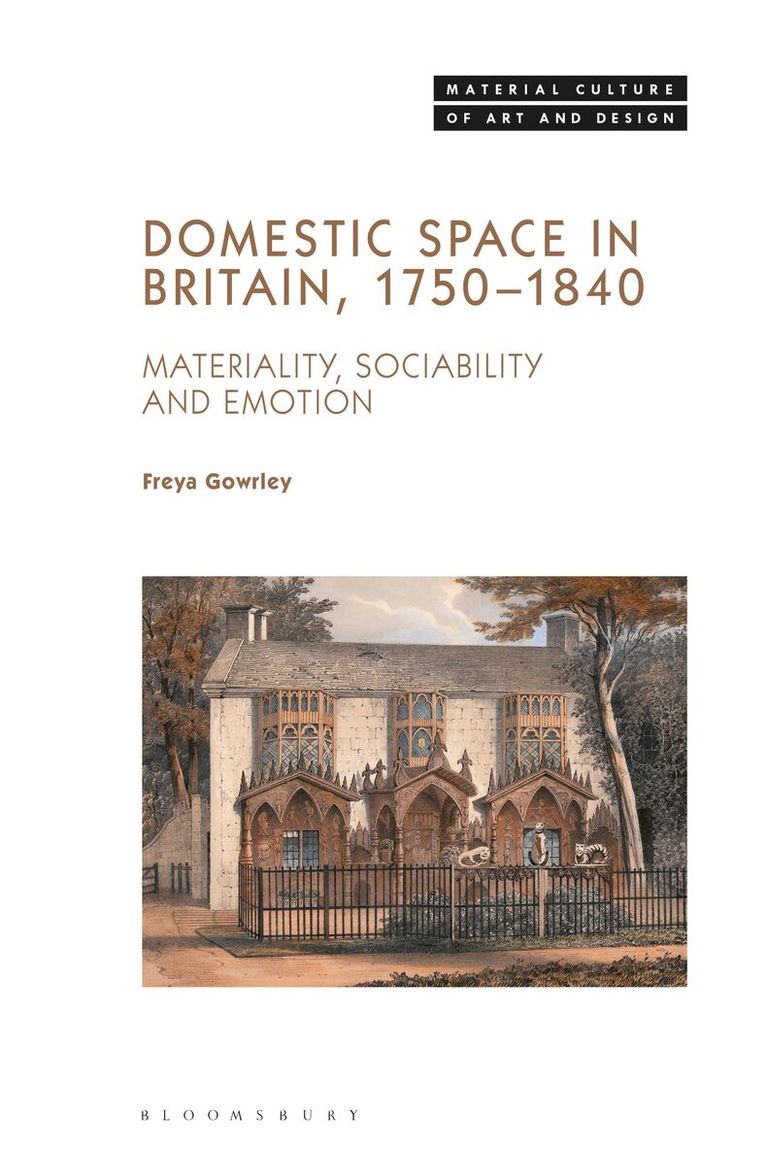
Focusing on the design, decoration, and reception of a range of elite and middling class homes from 1750-1840, this book demonstrates that the material culture of domestic life was central to how the function of the home was experienced, expressed, and understood at a time when it took on unprecedented social and emotional significance.Examining craft production and collection, gift exchange and written description, inheritance and loss, it carefully unpacks the material processes that made the home a focus for contemporaries’ social and emotional lives.The first book on its subject, Domestic Space in Britain, 1750-1840 employs methodologies from both art history and material culture studies to examine previously unpublished interiors, spaces, texts, images, and objects. Utilising extensive archival research; visual, material, and textual analysis; and histories of emotion, sociability, and materiality, it sheds light on the decoration and reception of a broad array of domestic spaces. In so doing, it writes a new history of late 18th- and early 19th-century domestic space, establishing the materiality of the home as a crucial site for identity formation, social interaction, and emotional expression.
1 177 kr
Skickas inom 10-15 vardagar
Longlisted for the Historians of British Art (HBA) Book Prize 2023Between 1750 and 1840, the home took on unprecedented social and emotional significance. Focusing on the design, decoration, and reception of a range of elite and middling class homes from this period, Domestic Space in Britain, 1750-1840 demonstrates that the material culture of domestic life was central to how this function of the home was experienced, expressed, and understood at this time. Examining craft production and collection, gift exchange and written description, inheritance and loss, it carefully unpacks the material processes that made the home a focus for contemporaries’ social and emotional lives.The first book on its subject, Domestic Space in Britain, 1750-1840 employs methodologies from both art history and material culture studies to examine previously unpublished interiors, spaces, texts, images, and objects. Utilising extensive archival research; visual, material, and textual analysis; and histories of emotion, sociability, and materiality, it sheds light on the decoration and reception of a broad array of domestic spaces. In so doing, it writes a new history of late eighteenth- and early nineteenth-century domestic space, establishing the materiality of the home as a crucial site for identity formation, social interaction, and emotional expression.
426 kr
Skickas inom 7-10 vardagar
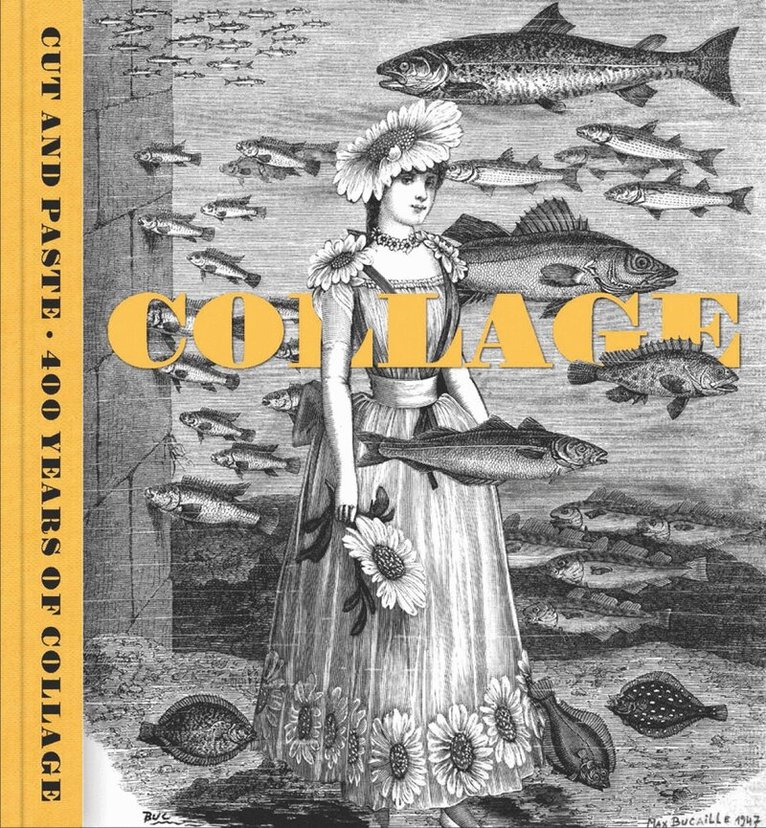
Collage is one of the most popular and pervasive of all art-forms, yet this is the first historical survey book ever published on the subject. Featuring over 200 works, ranging from the 1500s to the present day, it offers an entirely new approach. Hitherto, collage has been presented as a twentieth-century phenomenon, linked in particular to Pablo Picasso and Cubism in the years just before the First World War. In Cut and Paste: 400 Years of Collage, we trace its origins back to books and prints of the 1500s, through to the boom in popularity of scrapbooks and do-it-yourself collage during the Victorian period, and then through Cubism, Futurism, Dada and Surrealism. Collage became the technique of choice in the 1960s and 1970s for anti-establishment protest, and in the present day is used by millions of us through digital devices. The definition of collage employed here is a broad one, encompassing cut-and-pasted paper, photography, patchwork, film and digital technology and ranging from work by professionals to unknown makers, amateurs and children.Contents:Collage Over the Centuries, an introductory essay by Patrick Elliott; Collage Before Modernism by Freya Gowrley; On Edge: Exploring Collage Tactics and Terminology by Yuval Etgar; catalogue of exhibition works; a Chronology of Collage.