Friedrich Katz – författare
Visar alla böcker från författaren Friedrich Katz. Handla med fri frakt och snabb leverans.
3 produkter
3 produkter
830 kr
Skickas inom 7-10 vardagar
Since the Mexican Revolution of 1910-1920, Mexico's rebellious peasant has become a subject not only of history but of literature, film, and paintings. With his sombrero, his machete, and his rifle, he marches or rides through countless Hollywood or Mexican films, killing brutal overseers, hacienda owners, corrupt officials, and federal soldiers. Some of Mexico's greatest painters, such as Diego Rivera, have portrayed him as one of the motive forces of Mexican history. Was this in fact the case? Or are we dealing with a legend forged in the aftermath of the Revolution and applied to the Revolution itself and to earlier periods of Mexican history? This is one of the main questions discussed by the international group of scholars whose work is gathered in this volume. They address the subject of agrarian revolts in Mexico from the pre-Columbian period through the twentieth century. The volume offers a unique perspective not only on Mexican riots, rebellions, and revolutions through time but also on Mexican social movements in contrast to those in the rest of Latin America. The contributors to the volume are Ulises Beltran, Raymond Buve, John Coatsworth, Romana Falcon, John M.Hart, Evelyn Hu-DeHart, Friedrich Katz, William K. Meyers, Enrique Montalvo Ortega, Herbert J. Nickel, Leticia Reina, William Taylor, Hans Werner Tobler, John Tutino, Arturo Warman, and Eric Van Young. Originally published in 1988. The Princeton Legacy Library uses the latest print-on-demand technology to again make available previously out-of-print books from the distinguished backlist of Princeton University Press. These editions preserve the original texts of these important books while presenting them in durable paperback and hardcover editions. The goal of the Princeton Legacy Library is to vastly increase access to the rich scholarly heritage found in the thousands of books published by Princeton University Press since its founding in 1905.
4 217 kr
Skickas inom 3-6 vardagar
Since the Mexican Revolution of 1910-1920, Mexico's rebellious peasant has become a subject not only of history but of literature, film, and paintings. With his sombrero, his machete, and his rifle, he marches or rides through countless Hollywood or Mexican films, killing brutal overseers, hacienda owners, corrupt officials, and federal soldiers. Some of Mexico's greatest painters, such as Diego Rivera, have portrayed him as one of the motive forces of Mexican history. Was this in fact the case? Or are we dealing with a legend forged in the aftermath of the Revolution and applied to the Revolution itself and to earlier periods of Mexican history? This is one of the main questions discussed by the international group of scholars whose work is gathered in this volume. They address the subject of agrarian revolts in Mexico from the pre-Columbian period through the twentieth century. The volume offers a unique perspective not only on Mexican riots, rebellions, and revolutions through time but also on Mexican social movements in contrast to those in the rest of Latin America. The contributors to the volume are Ulises Beltran, Raymond Buve, John Coatsworth, Romana Falcon, John M.Hart, Evelyn Hu-DeHart, Friedrich Katz, William K. Meyers, Enrique Montalvo Ortega, Herbert J. Nickel, Leticia Reina, William Taylor, Hans Werner Tobler, John Tutino, Arturo Warman, and Eric Van Young. Originally published in 1988. The Princeton Legacy Library uses the latest print-on-demand technology to again make available previously out-of-print books from the distinguished backlist of Princeton University Press. These editions preserve the original texts of these important books while presenting them in durable paperback and hardcover editions. The goal of the Princeton Legacy Library is to vastly increase access to the rich scholarly heritage found in the thousands of books published by Princeton University Press since its founding in 1905.
504 kr
Skickas inom 10-15 vardagar
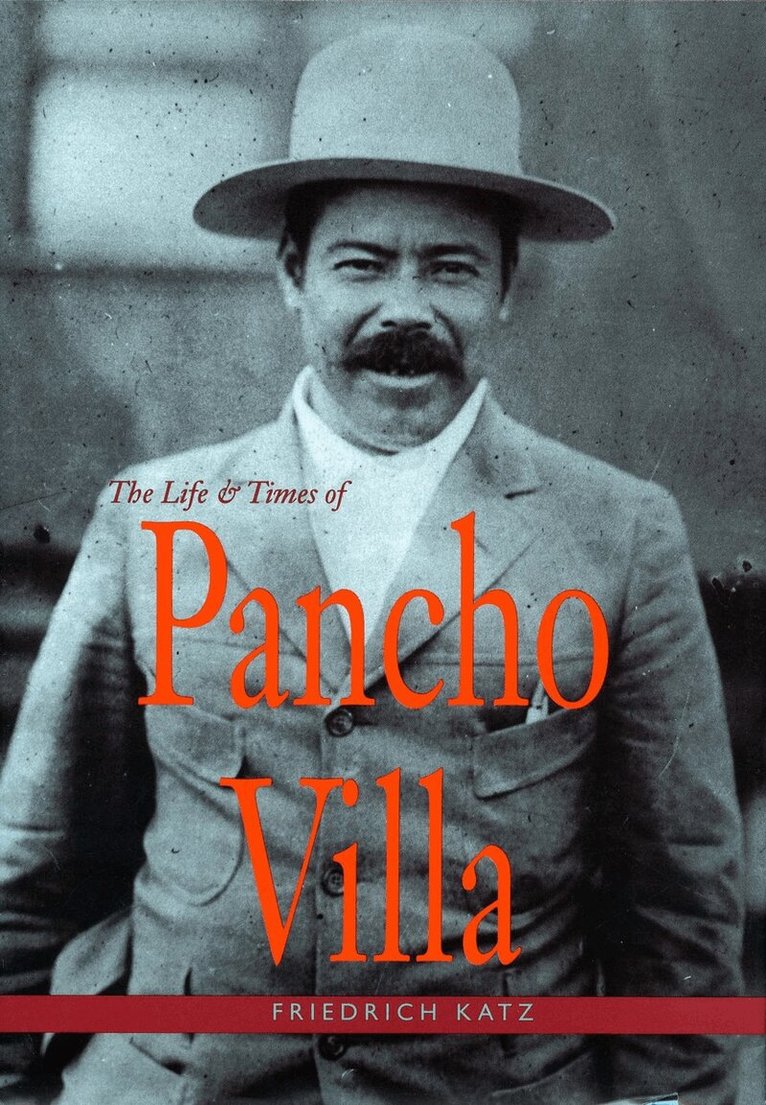
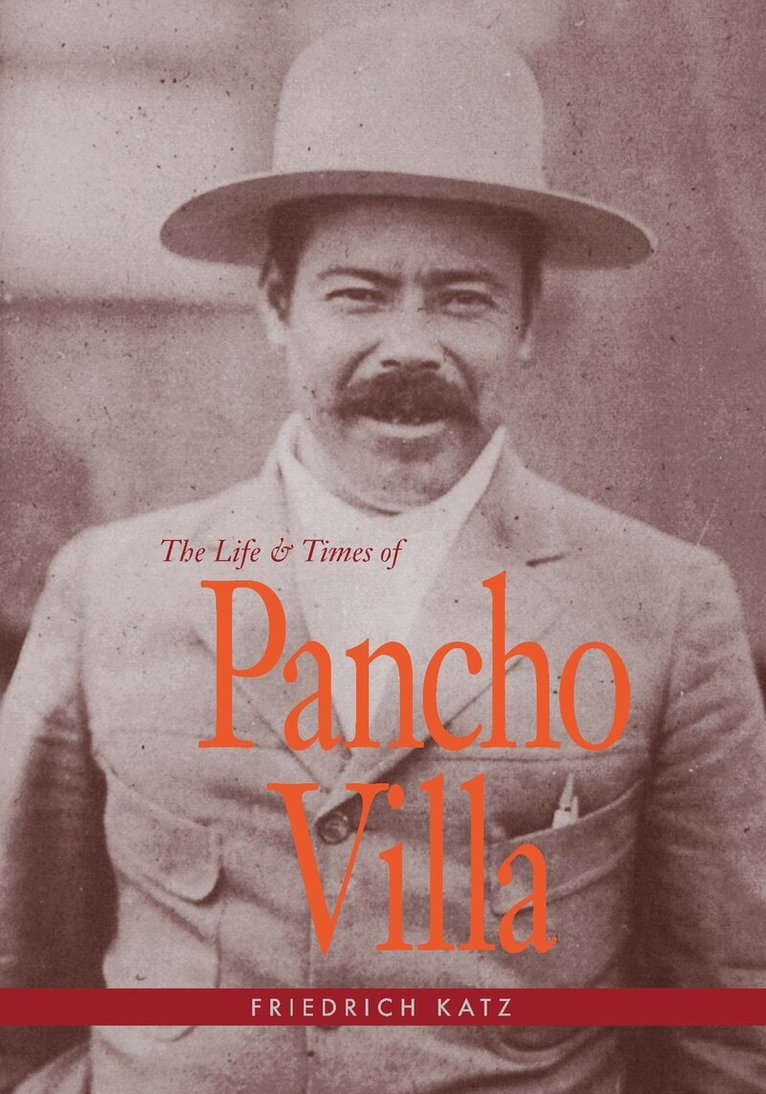
Alongside Moctezuma and Benito Juárez, Pancho Villa is probably the best-known figure in Mexican history. Villa legends pervade not only Mexico but the United States and beyond, existing not only in the popular mind and tradition but in ballads and movies. There are legends of Villa the Robin Hood, Villa the womanizer, and Villa as the only foreigner who has attacked the mainland of the United States since the War of 1812 and gotten away with it. Whether exaggerated or true to life, these legends have resulted in Pancho Villa the leader obscuring his revolutionary movement, and the myth in turn obscuring the leader. Based on decades of research in the archives of seven countries, this definitive study of Villa aims to separate myth from history. So much attention has focused on Villa himself that the characteristics of his movement, which is unique in Latin American history and in some ways unique among twentieth-century revolutions, have been forgotten or neglected. Villa's División del Norte was probably the largest revolutionary army that Latin America ever produced. Moreover, this was one of the few revolutionary movements with which a U.S. administration attempted, not only to come to terms, but even to forge an alliance. In contrast to Lenin, Mao Zedong, Ho Chi Minh, and Fidel Castro, Villa came from the lower classes of society, had little education, and organized no political party.The first part of the book deals with Villa's early life as an outlaw and his emergence as a secondary leader of the Mexican Revolution, and also discusses the special conditions that transformed the state of Chihuahua into a leading center of revolution. In the second part, beginning in 1913, Villa emerges as a national leader. The author analyzes the nature of his revolutionary movement and the impact of Villismo as an ideology and as a social movement. The third part of the book deals with the years 1915 to 1920: Villa's guerrilla warfare, his attack on Columbus, New Mexico, and his subsequent decline. The last part describes Villa's surrender, his brief life as a hacendado, his assassination and its aftermath, and the evolution of the Villa legend. The book concludes with an assessment of Villa's personality and the character and impact of his movement.