G. Andersson - Böcker
Visar alla böcker från författaren G. Andersson. Handla med fri frakt och snabb leverans.
5 produkter
5 produkter
Del 58 - Boston Studies in the Philosophy and History of Science
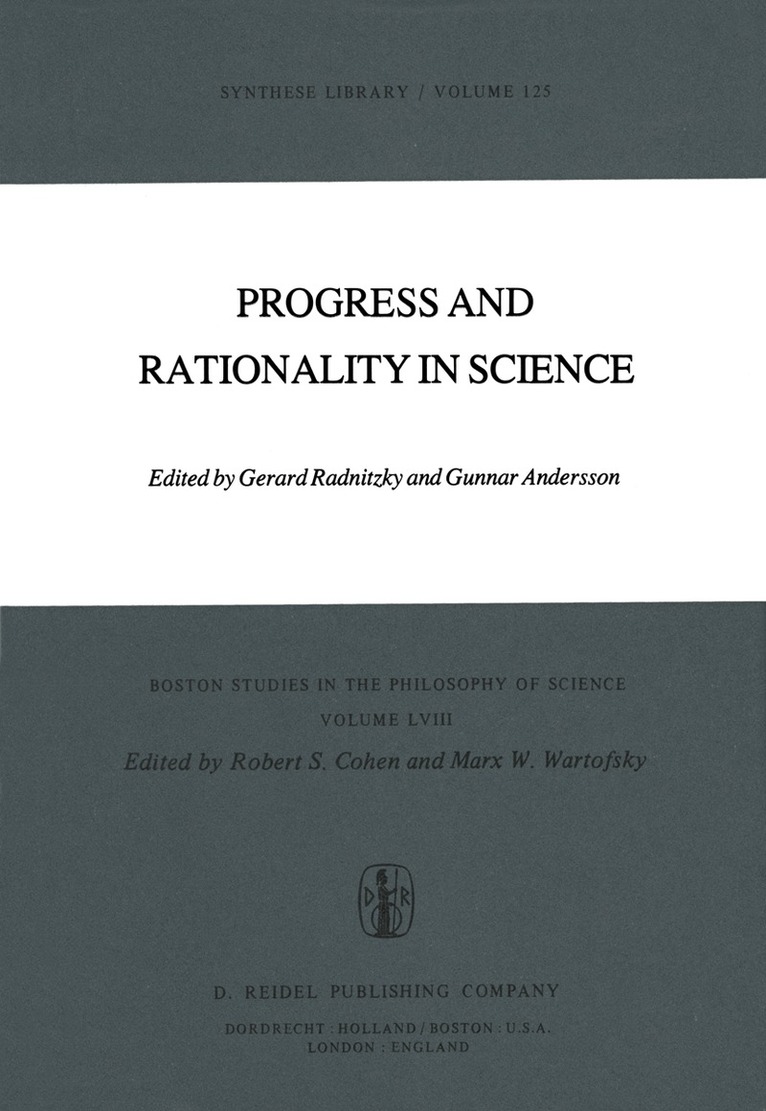
Progress and Rationality in Science
Häftad, Engelska, 1978
540 kr
Skickas inom 10-15 vardagar
This collection of essays has evolved through the co-operative efforts, which began in the fall of 1974, of the participants in a workshop sponsored by the Fritz Thyssen Foundation. The idea of holding one or more small colloquia devoted to the topics of rational choice in science and scientific progress originated in a conversation in the summer of 1973 between one of the editors (GR) and the late Imre Lakatos. Unfortunately Lakatos himself was never able to see this project through, but his thought-provoking methodology of scientific research programmes was ably expounded and defended by his successors. Indeed, this volume continues and deepens the debate inaugurated in Criticism and the Growth of Knowledge (edited by Imre Lakatos and Alan Musgrave), a book which grew out of a conference held in 1965. That debate has continued during the years that have passed since that conference. The group of discussions about the place of rationality in science which have been held between those who emphasize the history of science (with Feyerabend and Kuhn as the most prominent exponents) and the critical rationalists (Popper and his followers), with Imre Lakatos defending a middle ground, these discussions were seen by almost all commentators as the most important event in the philosophy of science in the last decade. This problem area constituted the central theme of our Thyssen workshop. The workshop operated in the following manner.
Del 59 - Boston Studies in the Philosophy and History of Science
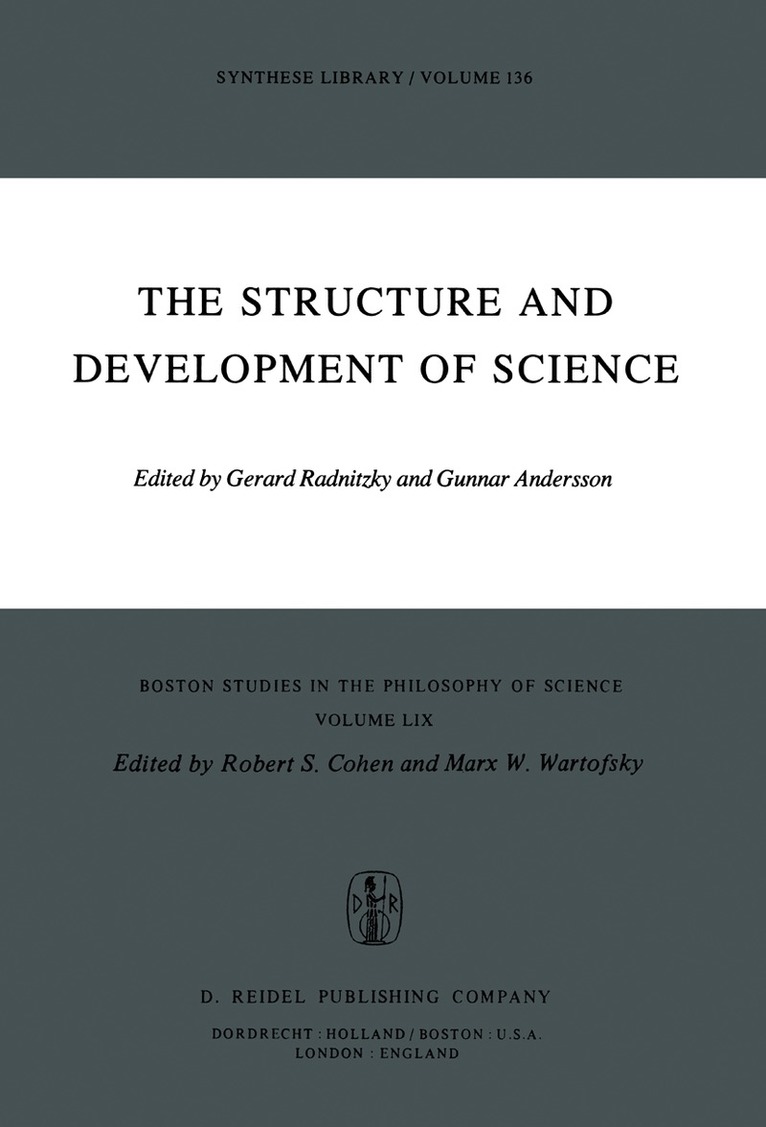
Structure and Development of Science
Inbunden, Engelska, 1979
1 073 kr
Skickas inom 10-15 vardagar
TIus is the second, and fmal, volume to derive from the exciting Kronberg conference of 1975, and to show the intelligent editorial care of Gerard Radnitzky and Gunnar Andersson that was so evident in the first book, Progress and Rationality in Science (Boston Studies in the Philosophy of Science, Vol. 58). Together they set forth central themes in current history and philosophy of the sciences, and in particular they will be seen as also providing obbligatos: research programs, metaphysical inevitabilities, methodological options, logical constraints, historical conjectures. Boston University Center for the R. S. COHEN Philosophy and History of Science M. W. WARTOFSKY July 1979 T T ABLE OF CONTENTS v EDITORIAL EDITORIAL PREFACE PREFACE ix PREFACE PREFACE INTRODUCTION GUNNAR ANDERSSON / Presuppositions, Problems,Progress 3 PART I: METAPHYSICS AND THE DEVELOPMENT OF SCIENCE NICHOLAS RESCHER / Some Issues Regarding the Completeness of Science and the limits of Scientific Knowledge 19 MAX JAMMER / A Consideration of the Philosophical Implications of the New Physics 41 PAUL FEYERABEND / Dialogue on Method 63 PETER HODGSON / Presuppositions and limits of Science 133 PART II: RESEARCH PROGRAMS AND THE DEVELOPMENT OF SCIENCE WOLFGANG STEGMULLER / A Combined Approach to the Dynam ics of Theories. How to Improve Historical Interpretations of Theory Change by Applying Set Theoretical Structures 151 JOSEPH J. KOCKELMANS / Reflections on Lakatos' Methodology of Scientific Research Programs 187 P A TRICK A.
Del 59 - Boston Studies in the Philosophy and History of Science
Structure and Development of Science
Häftad, Engelska, 1979
1 073 kr
Skickas inom 10-15 vardagar
TIus is the second, and fmal, volume to derive from the exciting Kronberg conference of 1975, and to show the intelligent editorial care of Gerard Radnitzky and Gunnar Andersson that was so evident in the first book, Progress and Rationality in Science (Boston Studies in the Philosophy of Science, Vol. 58). Together they set forth central themes in current history and philosophy of the sciences, and in particular they will be seen as also providing obbligatos: research programs, metaphysical inevitabilities, methodological options, logical constraints, historical conjectures. Boston University Center for the R. S. COHEN Philosophy and History of Science M. W. WARTOFSKY July 1979 T T ABLE OF CONTENTS v EDITORIAL EDITORIAL PREFACE PREFACE ix PREFACE PREFACE INTRODUCTION GUNNAR ANDERSSON / Presuppositions, Problems,Progress 3 PART I: METAPHYSICS AND THE DEVELOPMENT OF SCIENCE NICHOLAS RESCHER / Some Issues Regarding the Completeness of Science and the limits of Scientific Knowledge 19 MAX JAMMER / A Consideration of the Philosophical Implications of the New Physics 41 PAUL FEYERABEND / Dialogue on Method 63 PETER HODGSON / Presuppositions and limits of Science 133 PART II: RESEARCH PROGRAMS AND THE DEVELOPMENT OF SCIENCE WOLFGANG STEGMULLER / A Combined Approach to the Dynam ics of Theories. How to Improve Historical Interpretations of Theory Change by Applying Set Theoretical Structures 151 JOSEPH J. KOCKELMANS / Reflections on Lakatos' Methodology of Scientific Research Programs 187 P A TRICK A.
1 073 kr
Skickas inom 10-15 vardagar
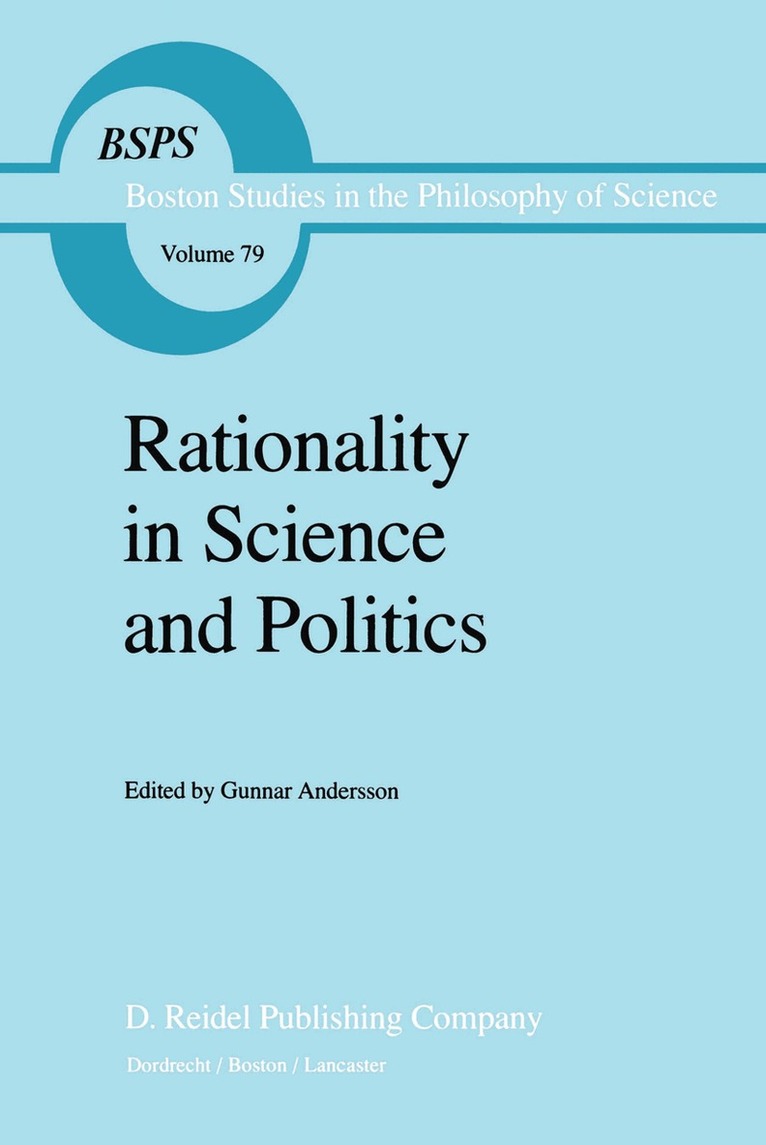
This remarkable collection of essays, diverse but united by the theme of critical reasoning, testifies to the attention and respect paid by the authors to the philosophical career of Gerard Radnitzky. We, too, greet Professor Radnitzky for his decades of intellectual labor devoted to the establishment of rational analysis of human problems. Not least of his concerns has been to understand what it is to be rational, to disentangle the apparently rational and the genuine, to separate dogma from justified belief, to cherish imagination while seeking its test. If Radnitzky has long been known for his careful elaboration of the spectrum of modem approaches to epistemology, those who have gathered to celebrate his work in this volume will also be widely known for their own writings on this matter of critical methodology. Their signposts (or are they warning lights?) will be familiar to thoughtful philosophers and scientists, and they appear as queries as we read these papers: the rational heuristic and the irrational heuristic? accepting the fallible? differing societies but one rational cognitive practice? accepting evidence which is placebogenic? choosing among the incommensurables? what remains of the logic of demarcation? purpose in nature? progress of science? rationality in politics? a humane reasonableness and a critical rationalism? Gunnar Andersson sets the focus well for the reader. We need not choose between dogmatism and relativism, he argues. And then he tells the political lesson: we might avoid both anarchy and despotism.
Del 79 - Boston Studies in the Philosophy and History of Science
Rationality in Science and Politics
Häftad, Engelska, 1985
1 073 kr
Skickas inom 10-15 vardagar
This remarkable collection of essays, diverse but united by the theme of critical reasoning, testifies to the attention and respect paid by the authors to the philosophical career of Gerard Radnitzky. We, too, greet Professor Radnitzky for his decades of intellectual labor devoted to the establishment of rational analysis of human problems. Not least of his concerns has been to understand what it is to be rational, to disentangle the apparently rational and the genuine, to separate dogma from justified belief, to cherish imagination while seeking its test. If Radnitzky has long been known for his careful elaboration of the spectrum of modem approaches to epistemology, those who have gathered to celebrate his work in this volume will also be widely known for their own writings on this matter of critical methodology. Their signposts (or are they warning lights?) will be familiar to thoughtful philosophers and scientists, and they appear as queries as we read these papers: the rational heuristic and the irrational heuristic? accepting the fallible? differing societies but one rational cognitive practice? accepting evidence which is placebogenic? choosing among the incommensurables? what remains of the logic of demarcation? purpose in nature? progress of science? rationality in politics? a humane reasonableness and a critical rationalism? Gunnar Andersson sets the focus well for the reader. We need not choose between dogmatism and relativism, he argues. And then he tells the political lesson: we might avoid both anarchy and despotism.