G. Bruce Doern - Böcker
Visar alla böcker från författaren G. Bruce Doern. Handla med fri frakt och snabb leverans.
5 produkter
5 produkter
427 kr
Skickas inom 5-8 vardagar
Looking at how specific Canadian public policy fields are being increasingly affected by globalization and internationalization factors and processes, this book also examines how these factors and processes have varied across policy fields and why these variations have occurred.
1 544 kr
Skickas inom 3-6 vardagar
This original collection comprises the first comparative study of competition policy, an area which has emerged as a vibrant and influential discipline within the study of economic policy and policy-making.The victory of market economics means that every capitalist country has created or intensified competition policy. The study compares the six `model' policy regimes of the USA, Germany, Japan, the UK, Canada, and the European Union. The role of institutions and political process in controlling monopolies, cartels, and mergers is emphasised. the case for convergence and the emergence of a global regime is evaluated.Cutting through the traditional arena of lawyers and economists, this edited volume provides incisive political analysis of the mechanics of international competiton policy. It is an exciting and original new look at how policy is formed on the international stage.
Keeping Canada Running
Infrastructure and the Future of Governance in a Pandemic World
Häftad, Engelska, 2021
423 kr
Skickas inom 10-15 vardagar
The federal government's promises to "build back better" and "build back green" highlight opportunities to reimagine Canadian infrastructure. In this groundbreaking study, authors Bruce Doern, Christopher Stoney, and Robert Hilton provide the first comprehensive overview of Canadian infrastructure policy, examining the impact and implications of the COVID-19 pandemic and rapid technological change as Canada looks to recover and rebuild.Covering more than fifty years across many sectors, the authors identify numerous challenges that have contributed to Canada's growing infrastructure deficit and suboptimal outcomes including political interference in the choice of infrastructure projects; challenges for multilevel governance such as distortion of local priorities, blurred accountability, and unsustainable maintenance costs for municipalities; the growing reliance on public-private partnerships that limit transparency and public scrutiny; and increased corruption associated with infrastructure projects.Transforming infrastructure is notoriously difficult yet vital at a time of rapid technological change. It is estimated that 75 percent of the infrastructure that will exist in 2050 does not exist today. This makes it crucial that Canada invest in future-proof infrastructure with the capacity to facilitate economic growth and the expansion of urban centres, mitigate and adapt to the impacts of climate change, and ensure resilience in response to crises and disasters. Keeping Canada Running offers a timely assessment of these issues, Canada's COVID-19 response, and the potential contribution of the newly launched Canadian Infrastructure Bank.
383 kr
Skickas inom 11-20 vardagar
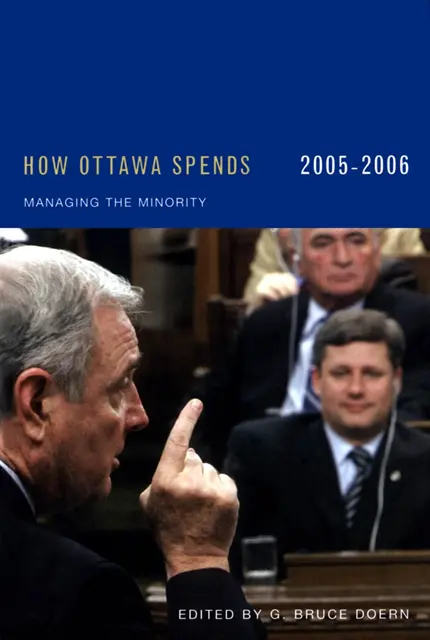
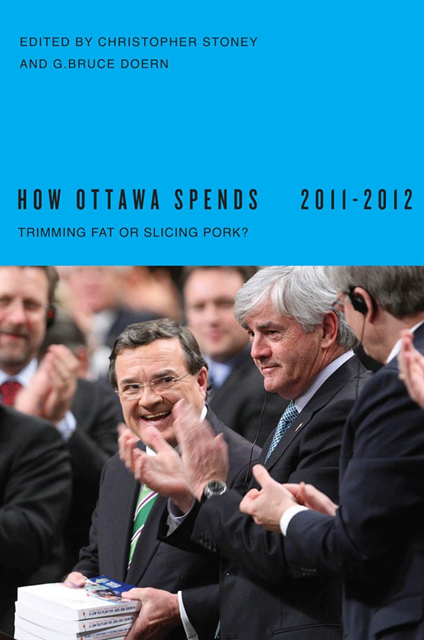
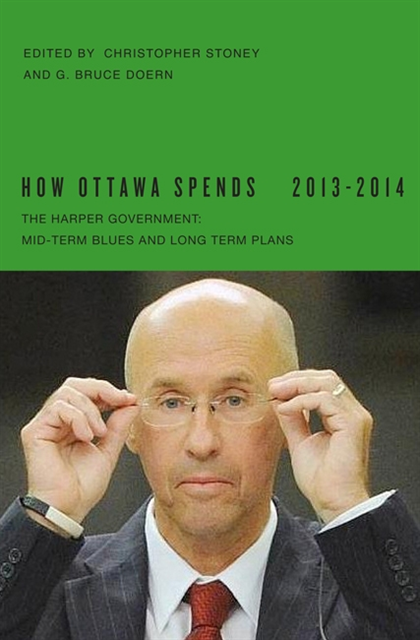
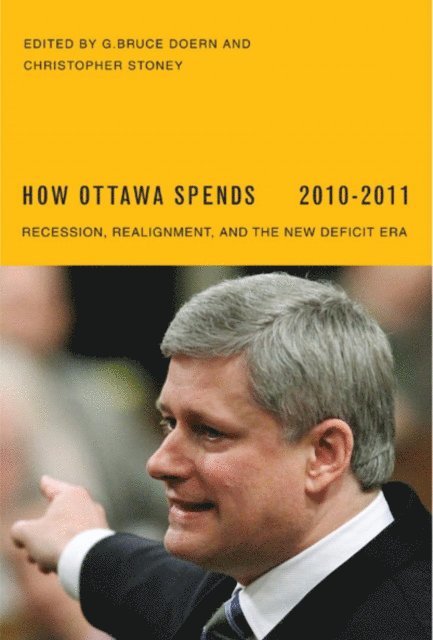
Leading scholars from across Canada examine a new era of "life under the knife" in the context of the Harper agenda after five years in power, the partisan calculus of a minority Parliament, and a deep global recession still in crisis mode. Given the budget-related pressure for an election, the book poses questions about the degree to which the budget agenda involves the political arts of "trimming fat" versus "slicing the pork" of partisan spending. Several closely linked political, policy, and spending realms are examined, including economic stimulus, environmental assessment, energy and climate change, health care, science and technology, immigration, and northern strategy (including affordable housing). Related governance issues such as the use of new media, regulatory budget cuts, Industry Canada as an economic regulator, and federal compensation costs are also discussed in detail. Contributors include Frances Abele (Carleton University), Caroline Andrew (University of Ottawa), Vandna Bhatia (Carleton University), Neil Bradford (University of Western Ontario), Francois Bregha (Statos), David Castle (University of Edinburgh), G. Bruce Doern (Carleton University and University of Exeter), Nick Falvo (Carleton University), Mary Francoli (Carleton University), Ruth Hubbard (University of Ottawa), Derek Ireland (Carleton University), James Lahey (University of Ottawa), Douglas Macdonald (University of Toronto), Eric Milligan (Regulatory Consulting Group Inc, Ottawa), Leslie A. Pal (Carleton University), Gilles Paquet (University of Ottawa), Peter W.B. Phillips (University of Saskatchewan), Richard Schultz (McGill University), Christopher Stoney (Carleton University), Kernaghan Webb (Toronto Metropolitan University), and Wei Xie (doctoral student, Carleton University).

476 kr
Skickas inom 10-15 vardagar
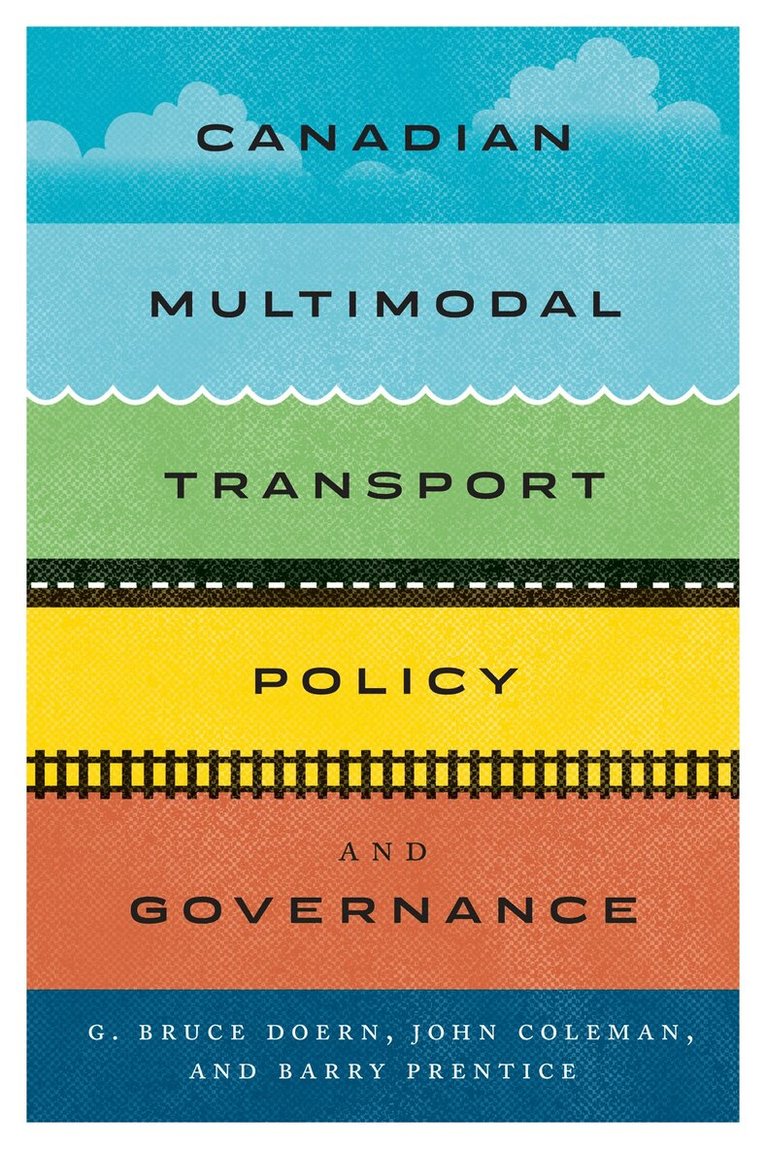
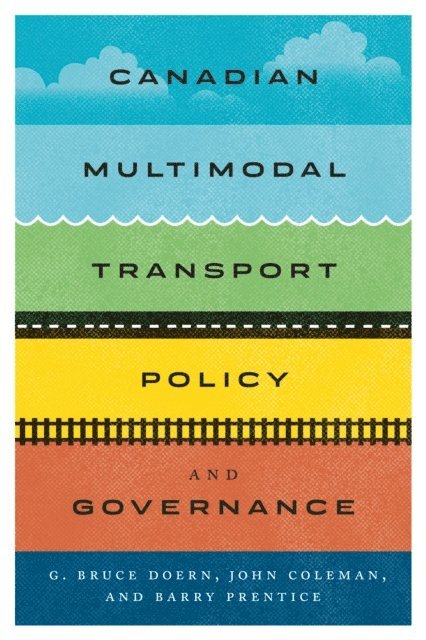
Given its geographical expanse, Canada has always faced long-term transport policy issues and challenges. Canadian Multi-Modal Transport Policy and Governance explains how and why Canadian transportation policy and related governance changed from the Pierre Trudeau era through the Chretien, Martin, Mulroney, Harper, and Justin Trudeau eras. With particular attention paid to the diversity and ongoing evolution of transportation policy since the 1960s, the broad distribution of regulatory authority across different levels of government, and the politicization of regulatory regimes and investment decisions since the 1970s, Doern, Coleman, and Prentice attempt to answer three critical questions: How and to what extent have policy and governance changed over the decades? Where has transport policy resided in federal policy agendas? And is Canada developing the policies, institutions, and capacities it needs to have a socio-economically viable and technologically advanced transportation system for the medium and long term? A sweeping history of transportation policy in Canada that fills a gap in the existing literature, Canadian Multi-Modal Transport Policy and Governance concludes that transportation has been subordinate to other federal goals and priorities, delaying and eroding transport systems into the twenty-first century.