G. E. Von Grunebaum - Böcker
Visar alla böcker från författaren G. E. Von Grunebaum. Handla med fri frakt och snabb leverans.
9 produkter
9 produkter
671 kr
Skickas inom 10-15 vardagar
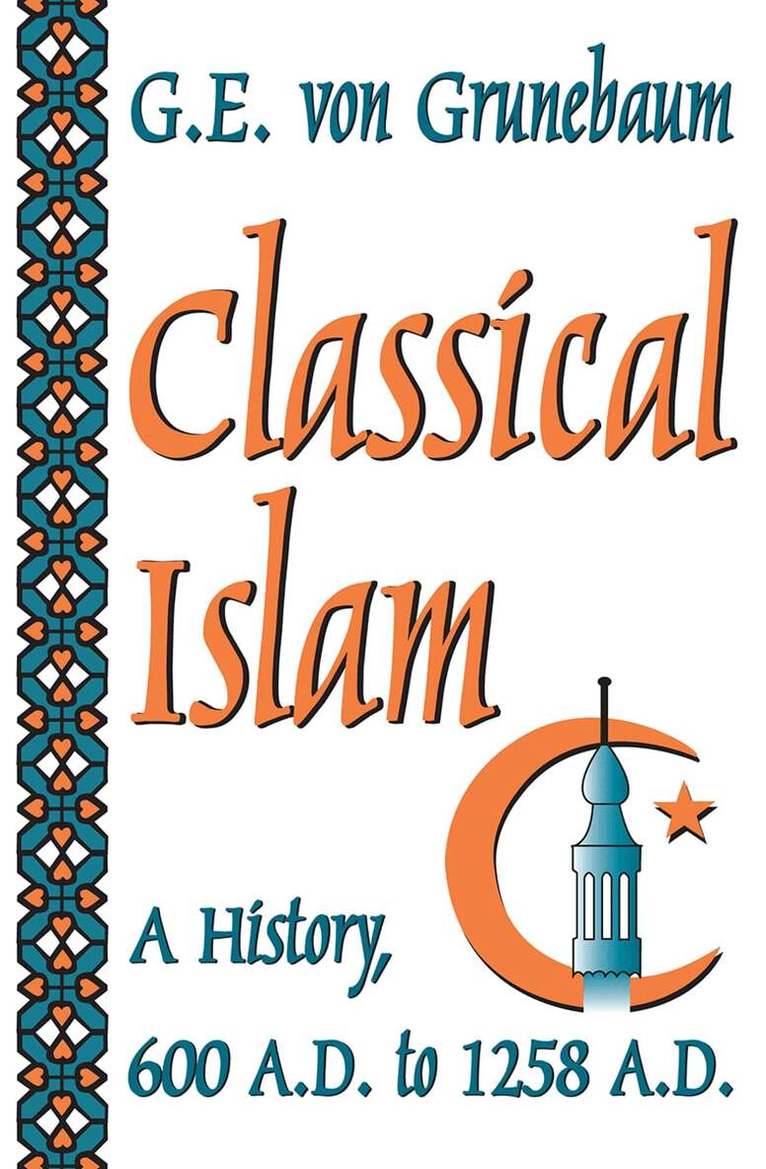
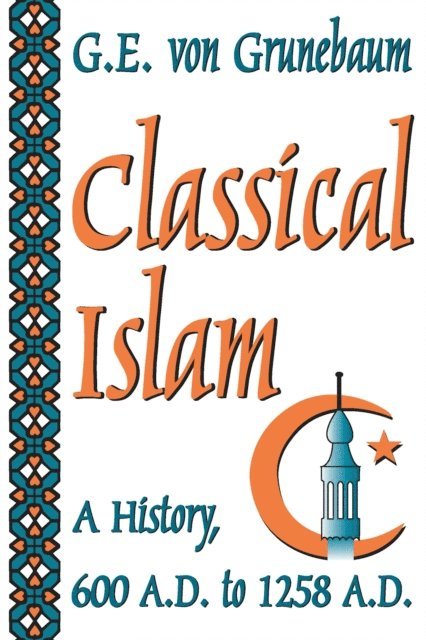
In a book written with the poignancy and beauty appropriate to its subject matter, the author opens by reminding us that "the essence of a society is in a sense identical with its history." Classical Islam also serves as a reminder that in the case of Islam, despite its triumphs on the fields of battle, telling its history is the only way open to us to render that essence accessible and show it from all sides. The work offers a grand narrative of a faith that offers an interpretation of the world, a way of life, and a style of thinking, that goes far beyond institutional or political supports. The relevance of this historical perspective is beyond dispute. The period from 610 A.D. when Muhammad received his "call" until the conquest of Baghdad by the Mongols in 1258 is known as the classical period of Islam. This was the period of the great expansion of Islam both as a political structure and as a religious and intellectual community. It established the base for the development of the high Islamic civilization of North Africa, the Near East, Persia, and India, as well as further expansion of the Islamic religious and intellectual community throughout the world. This book presents an authoritative history of the period written by one of the world's leading experts on the subject.Classical Islam examines the relationships, both cultural and political, between the Islamic world and the Mediterranean countries and India and elaborates on the economic, social, and intellectual factors and forces that shaped the Muslim world and molded its interactions with "infidels." The work is written in a clear and direct narrative form, emphasizing simultaneously the major intellectual trends and the political events and tendencies of the formative period in Islamic history that still resonates today.
820 kr
Skickas inom 10-15 vardagar
The essays in this volume deal with three fundamental problems in Islamic civilization; the growth among Muslims of a consciousness of belonging to a culture; the unity of Muslim civilization as expressed in literature, political thought, attitude to science and urban structure; and the interaction of Islam with other civilizations.
519 kr
Skickas
Modern Islam: The Search for Cultural Identity offers a compelling examination of the Islamic community's evolving response to its encounters with Western influence over the past century. This anthology of papers explores the trials and transformations that have emerged from these interactions, highlighting Islam's enduring task of uncovering latent cultural and intellectual potential while aligning traditional values with the liberating and challenging forces of modernity. Through an analysis deeply rooted in Arabic sources, the volume extends its relevance to the broader Muslim world and even to developing nations beyond Islam, offering a nuanced understanding of how cultural identity is negotiated under external pressures.The book emphasizes the dynamic interplay between the cohesiveness of the Muslim community and the shifting attitudes of the West, which remains in a state of self-examination. By focusing on the self-images constructed and reconstructed by Muslim societies, the work reveals the intricate processes of cultural adaptation and renewal. With its thoughtful synthesis of historical and contemporary perspectives, Modern Islam provides a vital resource for understanding the cultural and ideological currents shaping the modern Muslim world, making it essential reading for scholars of Islamic studies, cultural history, and global interactions.This title is part of UC Press's Voices Revived program, which commemorates University of California Press’s mission to seek out and cultivate the brightest minds and give them voice, reach, and impact. Drawing on a backlist dating to 1893, Voices Revived makes high-quality, peer-reviewed scholarship accessible once again using print-on-demand technology. This title was originally published in 1962.
389 kr
Skickas inom 7-10 vardagar
The study of dreams and their role in human societies, particularly within classical Islam, provides a fascinating lens through which to understand both individual and collective psychology. In medieval Islamic culture, dreams were seen not only as personal experiences but as profound communications from the divine or supernatural. This belief system imbued the dream with cognitive power, often interpreting dreams as forms of prophecy or divine messages, a view that transcended the individual's inner psyche and extended into the realm of objective truth. Dreams were considered a bridge to understanding the future, the Hereafter, and the will of God, with scholars like ‘Abdalghani an-Nâbulusî developing elaborate systems for interpreting their meanings. These interpretations drew heavily from religious texts, such as the Koran and Hadith, and offered guidance on a variety of matters ranging from personal conduct to political affairs.The significance of dreams within classical Islam is also evident in their societal and political implications. Dreams were not only seen as personal revelations but also as instruments of prophecy, often used to predict the death of rulers, the success of military campaigns, or the outcomes of political struggles. They were deeply intertwined with religious doctrines, with the Prophet Muhammad and various saints appearing in dreams to guide or advise key figures in Islamic history. These dream visions were viewed as essential tools for navigating both the personal and political spheres, reinforcing the belief that the dream world was closely linked with the divine order. The widespread acceptance of dreams as a form of truth is a striking contrast to contemporary Western thought, where dreams are more commonly seen as reflections of the subconscious mind. In this sense, the historical and cultural context of classical Islam elevated the dream to a status that intertwined it with both personal and societal identity, suggesting a powerful intersection of religion, politics, and individual experience.This title is part of UC Press's Voices Revived program, which commemorates University of California Press’s mission to seek out and cultivate the brightest minds and give them voice, reach, and impact. Drawing on a backlist dating to 1893, Voices Revived makes high-quality, peer-reviewed scholarship accessible once again using print-on-demand technology. This title was originally published in 1966.
733 kr
Skickas inom 7-10 vardagar
The study of dreams and their role in human societies, particularly within classical Islam, provides a fascinating lens through which to understand both individual and collective psychology. In medieval Islamic culture, dreams were seen not only as personal experiences but as profound communications from the divine or supernatural. This belief system imbued the dream with cognitive power, often interpreting dreams as forms of prophecy or divine messages, a view that transcended the individual's inner psyche and extended into the realm of objective truth. Dreams were considered a bridge to understanding the future, the Hereafter, and the will of God, with scholars like ‘Abdalghani an-Nâbulusî developing elaborate systems for interpreting their meanings. These interpretations drew heavily from religious texts, such as the Koran and Hadith, and offered guidance on a variety of matters ranging from personal conduct to political affairs.The significance of dreams within classical Islam is also evident in their societal and political implications. Dreams were not only seen as personal revelations but also as instruments of prophecy, often used to predict the death of rulers, the success of military campaigns, or the outcomes of political struggles. They were deeply intertwined with religious doctrines, with the Prophet Muhammad and various saints appearing in dreams to guide or advise key figures in Islamic history. These dream visions were viewed as essential tools for navigating both the personal and political spheres, reinforcing the belief that the dream world was closely linked with the divine order. The widespread acceptance of dreams as a form of truth is a striking contrast to contemporary Western thought, where dreams are more commonly seen as reflections of the subconscious mind. In this sense, the historical and cultural context of classical Islam elevated the dream to a status that intertwined it with both personal and societal identity, suggesting a powerful intersection of religion, politics, and individual experience.This title is part of UC Press's Voices Revived program, which commemorates University of California Press’s mission to seek out and cultivate the brightest minds and give them voice, reach, and impact. Drawing on a backlist dating to 1893, Voices Revived makes high-quality, peer-reviewed scholarship accessible once again using print-on-demand technology. This title was originally published in 1966.
1 469 kr
Skickas inom 3-6 vardagar
Modern Islam: The Search for Cultural Identity offers a compelling examination of the Islamic community's evolving response to its encounters with Western influence over the past century. This anthology of papers explores the trials and transformations that have emerged from these interactions, highlighting Islam's enduring task of uncovering latent cultural and intellectual potential while aligning traditional values with the liberating and challenging forces of modernity. Through an analysis deeply rooted in Arabic sources, the volume extends its relevance to the broader Muslim world and even to developing nations beyond Islam, offering a nuanced understanding of how cultural identity is negotiated under external pressures.The book emphasizes the dynamic interplay between the cohesiveness of the Muslim community and the shifting attitudes of the West, which remains in a state of self-examination. By focusing on the self-images constructed and reconstructed by Muslim societies, the work reveals the intricate processes of cultural adaptation and renewal. With its thoughtful synthesis of historical and contemporary perspectives, Modern Islam provides a vital resource for understanding the cultural and ideological currents shaping the modern Muslim world, making it essential reading for scholars of Islamic studies, cultural history, and global interactions.This title is part of UC Press's Voices Revived program, which commemorates University of California Press’s mission to seek out and cultivate the brightest minds and give them voice, reach, and impact. Drawing on a backlist dating to 1893, Voices Revived makes high-quality, peer-reviewed scholarship accessible once again using print-on-demand technology. This title was originally published in 1962.
2 088 kr
Skickas inom 10-15 vardagar
In a book written with the poignancy and beauty appropriate to its subject matter, the author opens by reminding us that "the essence of a society is in a sense identical with its history." Classical Islam also serves as a reminder that in the case of Islam, despite its triumphs on the fields of battle, telling its history is the only way open to us to render that essence accessible and show it from all sides. The work offers a grand narrative of a faith that offers an interpretation of the world, a way of life, and a style of thinking, that goes far beyond institutional or political supports. The relevance of this historical perspective is beyond dispute. The period from 610 A.D. when Muhammad received his "call" until the conquest of Baghdad by the Mongols in 1258 is known as the classical period of Islam. This was the period of the great expansion of Islam both as a political structure and as a religious and intellectual community. It established the base for the development of the high Islamic civilization of North Africa, the Near East, Persia, and India, as well as further expansion of the Islamic religious and intellectual community throughout the world. This book presents an authoritative history of the period written by one of the world's leading experts on the subject.Classical Islam examines the relationships, both cultural and political, between the Islamic world and the Mediterranean countries and India and elaborates on the economic, social, and intellectual factors and forces that shaped the Muslim world and molded its interactions with "infidels." The work is written in a clear and direct narrative form, emphasizing simultaneously the major intellectual trends and the political events and tendencies of the formative period in Islamic history that still resonates today.
388 kr
Skickas inom 3-6 vardagar
536 kr
Skickas inom 3-6 vardagar