G. Mathias Kondolf - Böcker
Visar alla böcker från författaren G. Mathias Kondolf. Handla med fri frakt och snabb leverans.
5 produkter
5 produkter
1 940 kr
Skickas inom 3-6 vardagar
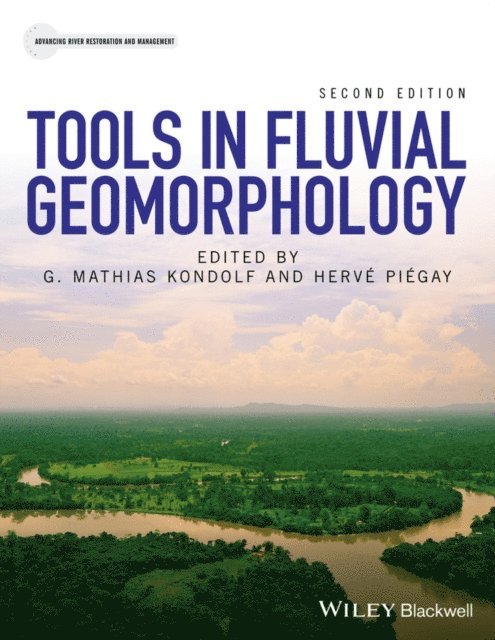
Fluvial Geomorphology studies the biophysical processes acting in rivers, and the sediment patterns and landforms resulting from them. It is a discipline of synthesis, with roots in geology, geography, and river engineering, and with strong interactions with allied fields such as ecology, engineering and landscape architecture. This book comprehensively reviews tools used in fluvial geomorphology, at a level suitable to guide the selection of research methods for a given question. Presenting an integrated approach to the interdisciplinary nature of the subject, it provides guidance for researchers and professionals on the tools available to answer questions on river restoration and management. Thoroughly updated since the first edition in 2003 by experts in their subfields, the book presents state-of-the-art tools that have revolutionized fluvial geomorphology in recent decades, such as physical and numerical modelling, remote sensing and GIS, new field techniques, advances in dating, tracking and sourcing, statistical approaches as well as more traditional methods such as the systems framework, stratigraphic analysis, form and flow characterisation and historical analysis. This book: Covers five main types of geomorphological questions and their associated tools: historical framework; spatial framework; chemical, physical and biological methods; analysis of processes and forms; and future understanding framework.Provides guidance on advantages and limitations of different tools for different applications, data sources, equipment and supplies needed, and case studies illustrating their application in an integrated perspective.It is an essential resource for researchers and professional geomorphologists, hydrologists, geologists, engineers, planners, and ecologists concerned with river management, conservation and restoration. It is a useful supplementary textbook for upper level undergraduate and graduate courses in Geography, Geology, Environmental Science, Civil and Environmental Engineering, and interdisciplinary courses in river management and restoration.
1 280 kr
Skickas inom 11-20 vardagar
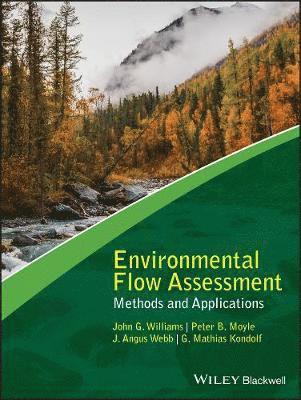
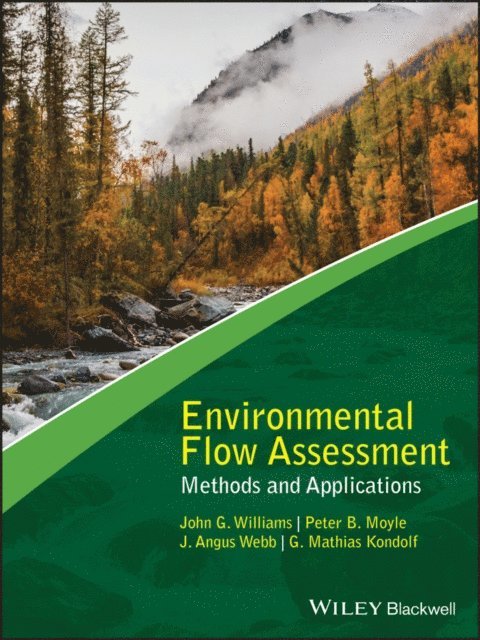
Provides critiques of current practices for environmental flow assessment and shows how they can be improved, using case studies. In Environmental Flow Assessment: Methods and Applications, four leading experts critique methods used to manage flows in regulated streams and rivers to balance environmental (instream) and out-of-stream uses of water. Intended for managers as well as practitioners, the book dissects the shortcomings of commonly used approaches, and offers practical advice for selecting and implementing better ones. The authors argue that methods for environmental flow assessment (EFA) can be defensible as well as practicable only if they squarely address uncertainty, and provide guidance for doing so. Introductory chapters describe the scientific and social reasons that EFA is hard, and provide a brief history. Because management of regulated streams starts with understanding freshwater ecosystems, Environmental Flow Assessment: Methods and Applications includes chapters on flow and organisms in streams. The following chapters assess standard and emerging methods, how they should be tested, and how they should (or should not) be applied. The book concludes with practical recommendations for implementing environmental flow assessment. Describes historical and recent trends in environmental flow assessmentDirectly addresses practical difficulties with applying a scientifically informed approach in contentious circumstancesServes as an effective introduction to the relevant literature, with many references to articles in related scientific fieldsPays close attention to statistical issues such as sampling, estimation of statistical uncertainty, and model selectionIncludes recommendations for methods and approachesExamines how methods have been tested in the past and shows how they should be tested today and in the futureEnvironmental Flow Assessment: Methods and Applications is an excellent book for biologists and specialists in allied fields such as engineering, ecology, fluvial geomorphology, environmental planning, landscape architecture, along with river managers and decision makers.
1 319 kr
Kommande
A unique feature of this book is that it deals with sustainable management of river sediments by explicitly incorporating sediment management in the planning, design and operation of dams, both to extend reservoir life and to minimize downstream impacts of sediment starvation. This book takes a river system perspective first, explaining how dams (and other anthropic actions such as aggregate mining) disrupt continuity of sediment transport, the consequences of that disruption, and opportunities to sustainably manage sediments, especially by passing sediments through or around dams. The book also addresses the likely consequences of climate change on reservoir operation and sediment supply and transport. It is not the first book about reservoir sediment management, nor the most comprehensive. Rather, it has more emphasis on geomorphic and ecological processes in the larger fluvial system, emphasizes the fact that sustainable sediment management techniques could be applied much more widely than they are now, and it offers guidance as to when different techniques are applicable. It also explicitly critiques the conventional economics used in dam planning, and proposes alternative formulations that explicitly account for intergenerational equity as it relates to natural river systems and infrastructure (Annandale 2013).What the Book CoversThe book begins with an overview of river basin processes, including sediment transport, and effects of changed sediment supply (chapters 1-3). Chapter 4 covers upstream sediment management approaches such as check dams and soil conservation. Chapters 5-7 summarize sustainable sediment management in (and around/through) reservoirs. Chapter 8 explores sediment management in dam removals, usually the biggest issue in such projects. Chapter 9 provides a long-term perspective and explores the economics of managing reservoir capacity. Chapter 10 presents a set of case studies that compellingly illustrate the issues involved and opportunities to enhance sustainability, and Chapter 11 presents policy recommendations. The book will include simple, effective diagrams explaining fluvial geomorphic processes, human alterations, and sustainable sediment management techniques. Two examples are presented here. Figure 1, first published in Kondolf (1994), shows the zones of erosion, transport, and deposition of the ideal fluvial system as described by Schumm (1977), but with the addition of the analogy of a conveyor belt to emphasize that, viewed in geologic time, sediment is inevitably moving downstream through the zone of transport, and disruptions to this movement will have consequences. This figure has been reproduced and modified in subsequent publications by numerous authors. Figure 2, first published in Kondolf and Piégay (2010), depicts a fluvial system debouching on the coast and the effect of various anthropic actions on sediment production, transport, and deposition, and consequences for channel and coastal landforms.Contents1. Introduction (10pp)- continuity of fluxes through rivers: water, sediment, nutrients, biota- role of sediment in river systems- reservoirs and sustainable water supply and hydropower- influence of climate change2. Rivers, basins, and sediment processes (25pp)- Basin, idealized zones of erosion, transport, & deposition- coarse vs fine sediments- bedload vs suspended, bed material load vs washload- channel form and process, vegetation- sediment supply to coasts & deltas- role of sediments in fluvial ecology3. Changes in Sediment Supply (25pp)- mapping of sediment yield- effects of land use change (eg road construction, depopulation of rural areas)- effects of dams, `transparent’ vs `black hole’ reservoirs - effects of sand and gravel mining- anticipated effects of climate change5. Reservoir Sedimentation Management (40pp) - Upstream sediment supply management approaches- Routing - Sediment Removal - Efficiency of management strategies6. Sediment management and environmental consequences downstream of dams (40pp)- impact of dams on sediment budgets for rivers downstream of dams- ecological considerations related to sediment downstream of the dam. - remedial measures to offset downstream impacts- impacts of reservoir flushing- impacts of dredging (sediment discharge into the river vs. upland discharge)- impacts of reservoir sluicing flows - impacts of bypassing flows below reservoirs - coastal impacts and mitigation- impacts of reservoirs vs. other stressors (instream aggregate mining, flood channels, river training, elimination of floodplain storage, etc.)7. Managing sediment through multiple reservoirs (10pp)- sediment management for dams in series- sediment management for dams in parallel- the concept of dam cascades as a strategy to minimize overall impacts8. Sediment management during dam removal (15pp)- principles, techniques- case study: Elwha and Glines Canyon Dams, Elwha River - case study: San Clemente Dam, Carmel River9. Planning and managing reservoirs for sustainability (15pp)- intergenerational equity - balancing development (social) and environmental needs - reservoir storage – a renewable or exhaustible resource?- economics of exhaustible resources - dam siting- anticipating future sediment management in dam design- anticipating climate change- monitoring and evaluating effectiveness of sediment management10. Case studies (30pp) 5-6 to be selected from those listed below and others, for geographic and topical diversity- Mekong River –cumulative sediment trapping, delta impacts- Prado Dam, Santa Ana River – removing sediment from reservoir and introducing it downstream - Tarbela Dam – poor design and planning, effects on downstream river and infrastructure, sediment removal order of magnitude more expensive than original cost to build dam - Nile River – projected cumulative sediment trapping, transboundary impacts- Mississippi River – sediment starvation in delta- San Gabriel River – sediment routing, political constraints in urban area- Dahan River – sabo dams, Barlin dam failure, density current venting through Shihman Reservoir - Rhone River - ecological flushing - Kurobe River – coordinated flushing- Asahi River – bypassing11. Policy Recommendations (20pp)- all dam proposals/plans should address sedimentation- plan over sufficiently large temporal & spatial scales (addressing transboundary issues)- adopt a life-cycle approach to design/management of reservoirs- dams are not the only factor: - manage construction aggregate supply and demand on regional scale - consider channel-floodplain sediment exchange (eg, overbank sedimentation processes)
Managing Flood Risk
Innovative Approaches from Big Floodplain Rivers and Urban Streams
Häftad, Engelska, 2018
536 kr
Skickas inom 10-15 vardagar
The past half century has seen an evolution in thinking from ‘flood control’ to ‘flood risk management’, recognizing that risk results from both hazard and vulnerability.
Managing Flood Risk
Innovative Approaches from Big Floodplain Rivers and Urban Streams
Inbunden, Engelska, 2018
536 kr
Skickas inom 10-15 vardagar
The past half century has seen an evolution in thinking from ‘flood control’ to ‘flood risk management’, recognizing that risk results from both hazard and vulnerability.