• Fri frakt över 249 kr
  • •
  • Snabba leveranser
  • •
  • Billiga böcker
Kundservice

Du är på sajten för privatpersoner.

Företag, bibliotek eller offentlig verksamhet?

Du handlar på classic.bokus.com, där alla dina funktioner finns intakta.
Till classic.bokus.com
Bokus logotyp. Gå till startsidan.
  • Erbjudanden
  • Nyheter
  • Student
  • Topplistor
  • Barn & ungdom
  • Bokus Play
  • E-böcker
  • Pocketböcker
  • Spel & pussel

10% rabatt på allt med kod NYSTART10 →

Sidfot

Mina sidor

    Hjälp

    • Kundservice
    • Vanliga frågor och svar
    • Frakt och leverans
    • Retur vid ångerrätt
    • Reklamera vara
    • Betalning
    • Köpvillkor
    • Allmänna villkor
    • Information om webbplatsens tillgänglighet

    Om Bokus

    • Om oss
    • Pressrum
    • För studenter
    • För företag
    • För bibliotek och offentlig verksamhet
    • För leverantörer
    • Hållbarhet

    Populärt

    • Aktuella erbjudanden
    • Presentkort
    • Studentlitteratur
    • Nya böcker
    • Topplistor
    • Signerade böcker
    • Engelska böcker

    Inspiration

    • Boktips
    • BookTok
    • Populära bokserier
    • Barnbokskaraktärer
    • Populära författare
    Logotyp för Bokus
    Följ oss på Facebook (extern länk)Följ oss på Instagram (extern länk)Följ oss på YouTube (extern länk)Följ oss på TikTok (extern länk)
    bokus @ CookiesAnpassa cookiesIntegritetspolicyKöpvillkor
    Till Citymail hemsida (extern länk)Till Budbee hemsida (extern länk)Till Postnord hemsida (extern länk)Till Schenker hemsida (extern länk)Till Early Bird hemsida (extern länk)Till Walleys hemsida (extern länk)
    1. Naturvetenskap och teknik
    2. Geovetenskap
    3. Geovetenskap

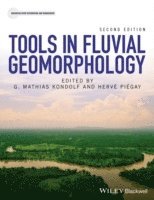
    Tools in Fluvial Geomorphology

    AvG. Mathias Kondolf,Hervé Piégay

    Inbunden, Engelska, 2016

    Del i serien Advancing River Restoration and Management

    1 949 kr

    Beställningsvara. Skickas inom 3-6 vardagar. Fri frakt över 249 kr.

    Beskrivning

    Fluvial Geomorphology studies the biophysical processes acting in rivers, and the sediment patterns and landforms resulting from them. It is a discipline of synthesis, with roots in geology, geography, and river engineering, and with strong interactions with allied fields such as ecology, engineering and landscape architecture.  This book comprehensively reviews tools used in fluvial geomorphology, at a level suitable to guide the selection of research methods for a given question. Presenting an integrated approach to the interdisciplinary nature of the subject, it provides guidance for researchers and professionals on the tools available to answer questions on river restoration and management.  Thoroughly updated since the first edition in 2003 by experts in their subfields, the book presents state-of-the-art tools that have revolutionized fluvial geomorphology in recent decades, such as physical and numerical modelling, remote sensing and GIS, new field techniques, advances in dating, tracking and sourcing, statistical approaches as well as more traditional methods such as the systems framework, stratigraphic analysis, form and flow characterisation and historical analysis.   This book: Covers five main types of geomorphological questions and their associated tools: historical framework; spatial framework; chemical, physical and biological methods; analysis of processes and forms; and future understanding framework.Provides guidance on advantages and limitations of different tools for different applications, data sources, equipment and supplies needed, and case studies illustrating their application in an integrated perspective.It is an essential resource for researchers and professional geomorphologists, hydrologists, geologists, engineers, planners, and ecologists concerned with river management, conservation and restoration. It is a useful supplementary textbook for upper level undergraduate and graduate courses in Geography, Geology, Environmental Science, Civil and Environmental Engineering, and interdisciplinary courses in river management and restoration.

    Produktinformation

    • Utgivningsdatum:2016-06-03
    • Mått:218 x 285 x 33 mm
    • Vikt:1 792 g
    • Format:Inbunden
    • Språk:Engelska
    • Serie:Advancing River Restoration and Management
    • Antal sidor:560
    • Upplaga:2
    • Förlag:John Wiley and Sons Ltd
    • ISBN:9780470684054

    Utforska kategorier

    • Geovetenskap inom Naturvetenskap och teknik

    Mer om författaren

    Mathias (Matt) Kondolf, Professor of Environmental Planning, University of California Berkeley, USA Professor Kondolf is a fluvial geomorphologist specializing in environmental river management and restoration. At Berkeley he teaches courses in hydrology, river restoration, and environmental science. His research focuses on human-river interactions, with emphasis on managing of flood-prone lands, managing sediment in rivers and reservoirs, and river restoration, and he has published extensively on these topics. He has served as advisor to US and state agencies on river management and restoration, and provided expert testimony before the US Congress, the California Legislature, and the International Court of Justice and International Court of Arbitration in the Hague.  Hervé Piégay, Research Director at CNRS – National Centre of Scientific Research, ENS of Lyon, France Professor Piégay is involved in integrated sciences for rivers, and works closely with practitioners, providing knowledge for river management, planning and restoration and methodological frameworks and tools, especially using GIS and remote sensing. As scientific director of the Rhône Observatory of Human and Environment Interactions, he leads an interdisciplinary scientific team conducting research on the Rhône valley, to inform management of the river, its floodplain, and tributaries. He has contributed to more than 200 papers in peer-reviewed journals and book chapters, and has coordinated several edited books.

    Innehållsförteckning

    • List of contributors xiSeries Foreword xvPreface to the Second Edition xviiSection I: Background1 Tools in fluvial geomorphology: problem statement and recent practice 3G. Mathias Kondolf and Hervé Piégay1.1 Introduction 31.2 Tools and fluvial geomorphology: the terms 41.3 What is a tool in fluvial geomorphology? 41.4 Overview and trends of tools used in the field 91.5 Scope and organization of this book 9Acknowledgements 11References 11Section II: The Temporal Framework: Dating and Assessing Geomorphological Trends2 Surficial geological tools in fluvial geomorphology 15Robert B. Jacobson, Jim E. O’Connor and Takashi Oguchi2.1 Introduction 152.2 Overview of surficial geological approaches 152.3 Applications of surficial geological approaches to geomorphic interpretation 272.4 Summary and conclusions 33References 343 Archaeology and human artefacts 40Anthony G. Brown François Petit and L. Allen James3.1 Introduction 403.2 General considerations in using archaeological evidence in geomorphology 403.3 Archaeological tools 413.4 Legacy sediment 443.5 Using archaeological data: case studies 453.6 Conclusions 51References 524 Using historical data in fluvial geomorphology 56Robert C. Grabowski and Angela M. Gurnell4.1 Introduction 564.2 The documentary record 574.3 The cartographic record 634.4 The topographic record 664.5 The modern historical record: remote-sensing 694.6 Conclusion 71Acknowledgements 71References 71Section III: The Spatial Framework: Emphasizing Spatial Structure and Nested Character of Fluvial Forms 5 System approaches in fluvial geomorphology 79Hervé Piégay5.1 System, fluvial system, hydrosystem 795.2 Components of the fluvial system 835.3 Fluvial system, a conceptual tool for geomorphologists 845.4 Examples of applications 955.5 Conclusions 98Acknowledgements 98References 1006 Analysis of remotely sensed data for fluvial geomorphology and river science 103David Gilvear and Robert Bryant6.1 Introduction 1036.2 The physical basis 1036.3 River geomorphology and in-channel processes 1156.4 Floodplain geomorphology and fluvial processes 1196.5 Conclusions 122Acknowledgements 122References 1287 Geomorphic classification of rivers and streams 133G. Mathias Kondolf, Hervé Piégay, Laurent Schmitt and David R. Montgomery7.1 Introduction 1337.2 Classifications for fluvial understanding 1387.3 Interactions between geomorphic classifications and ecology 1437.4 Geomorphic classification and quality of river environments 1447.5 Applying geomorphic classification schemes to fluvial systems 148Acknowledgements 153References 1538 Modelling catchment processes 159Peter W. Downs and Rafael Real de Asua8.1 Introduction 1598.2 Approaches to catchment processes modelling 1608.3 Conceptual models 1608.4 Problem-centred interpretative models 1618.5 Data-driven empirical models 1638.6 Numerical models 1648.7 Tools for developing a catchment process model: representation and accuracy considerations 1688.8 Prospect 173Acknowledgements 174References 175Section IV: Chemical Physical and Biological Evidence: Dating, Emphasizing Spatial Structure and Fluvial Processes9 Using environmental radionuclides, mineral magnetism and sediment geochemistry for tracing and dating fine fluvial sediments 183Des Walling and Ian Foster9.1 Introduction 1839.2 The tools 1839.3 Applications 1879.4 Case study 2009.5 The prospect 201References 20210 Vegetation as a tool in the interpretation of fluvial geomorphic processes and landforms 210Cliff R. Hupp, Simon Dufour and Gudrun Bornette10.1 Introduction 21010.2 Scientific background: plant ecological–fluvial geomorphic relations 21010.3 Vegetation as a tool: an overview 21110.4 Dendrogeomorphology in fluvial systems 21610.5 Description of fluvial landforms through vegetation 22010.6 Communities as an indicator of disturbance regime 22310.7 Conclusions 225References 226Section V: Analysis of Processes and Forms: Water and Sediment Interactions11 Channel form and adjustment: characterization, measurement, interpretation and analysis 237Andrew Simon, Janine Castro and Massimo Rinaldi11.1 Introduction 23711.2 Characterization and measurement 23711.3 Interpretation and analysis 24911.4 Conclusions 254References 25412 Flow measurement and characterization 260Peter J. Whiting12.1 Introduction 26012.2 Velocity measurement 26012.3 Discharge measurements 26512.4 Indirect methods of discharge estimation 27012.5 Flow hydrographs and analysis of flow records 27112.6 Issues in selecting methods 27312.7 Conclusion 275References 27513 Measuring bed sediment 278G. Mathias Kondolf and Thomas E. Lisle13.1 Introduction 27813.2 Attributes and reporting of sediment size distributions 27813.3 Particle shape and roundness 28213.4 Surface versus subsurface layers in gravel bed rivers 28313.5 Sampling sand and finer grained sediment 28313.6 Sampling and describing the surface of gravel beds 28413.7 Subsurface sampling methods 28913.8 Sample size requirements 29013.9 Comparability of pebble counts and bulk samples 29313.10 Sampling strategy 29313.11 Applications of bed sediment sampling related to aquatic habitat 29513.12 Case study: determining changes in fine sediment content during flushing flows, Trinity River, California 29713.13 Case study: application of V* to French and Bear Creeks, California 29813.14 Conclusion: selecting an appropriate sampling method 299Acknowledgement 302References 30214 Coarse particle tracing in fluvial geomorphology 306Marwan A. Hassan and André G. Roy14.1 Introduction 30614.2 Tracing methods 31214.3 Conclusion 319Acknowledgements 319References 31915 Sediment transport 324D. Murray Hicks and Basil Gomez15.1 Introduction 32415.2 Basic concepts 32415.3 Suspended load sampling and monitoring 32615.4 Bedload sampling, measurement and prediction 33515.5 Total load 34215.6 Estimating sediment yields from reservoir sedimentation 34215.7 Key points for designing a sediment measurement programme – a summary 34315.8 Case example: sediment budget for Upper Clutha River, New Zealand 345Acknowledgements 347References 34716 Sediment budgets as an organizing framework in fluvial geomorphology 357Leslie M. Reid and Thomas Dunne16.1 Introduction 35716.2 Understanding and assessing components of the sediment system 36016.3 Designing a sediment budget 36616.4 Examples 37316.5 Conclusions 375References 375Section VI: Discriminating Simulating and Modelling Processes and Trends17 Models in fluvial geomorphology 383Marco J. Van de Wiel, Yannick Y. Rousseau and Stephen E. Darby17.1 Introduction 38317.2 Conceptual models 38517.3 Statistical models 38517.4 Analytical models 38717.5 Numerical models 38917.6 Use of remote sensing and GIS in fluvial geomorphological modelling 39317.7 Physical models 39417.8 Overview of the modelling process 39417.9 Modelling applications in fluvial geomorphology 39517.10 Generic framework for fluvial geomorphological modelling applications 39717.11 Case study: meander dynamics 39917.12 Conclusion 402Acknowledgements 403References 40318 Modelling flow, sediment transport and morphodynamics in rivers, 412Jonathan M. Nelson, Richard R. McDonald, Yasuyuki Shimizu, Ichiro Kimura, Mohamed Nabi and Kazutake Asahi18.1 Introduction 41218.2 Flow conservation laws 41318.3 Sediment-transport relations 41918.4 Numerical methods 42118.5 One-dimensional models 42218.6 Two-dimensional models 42318.7 Three-dimensional models 42618.8 Bank evolution models 43218.9 Bedform models 43218.10 Practical considerations 43518.11 Conclusions and future directions 439References 43919 Modelling fluvial morphodynamics 442James E. Pizzuto19.1 Introduction 44219.2 Modelling longitudinal profiles 44319.3 Modelling hydraulic geometry of rivers 44519.4 Modelling channel planforms 44719.5 Modelling floodplain sedimentation and erosion 45019.6 Conclusion 451References 45220 Experimental studies and practical challenges in fluvial geomorphology 456François Métivier, Chris Paola, Jessica L. Kozarek and Michal Tal20.1 Introduction 45620.2 Experimental methods and facilities 45720.3 Example experimental studies 46320.4 Scaling issues and application of experimental results 46920.5 Additional areas for experimentation 47020.6 Conclusion 472Acknowledgements 472References 47221 Statistics and fluvial geomorphology 476Hervé Piégay and Lise Vaudor21.1 Introduction 47621.2 Bivariate statistics to explore patterns of forms and their drivers 47821.3 Exploration of datasets using multivariate statistics 48221.4 Describing, explaining and predicting through probabilities and distributions 48721.5 Describing explaining and predicting variables in space and time 49121.6 Relevance and limitations of statistical tools 49621.7 Conclusion 502Acknowledgements 503References 503Section VII: Conclusion: Applying the Tools22 Integrating geomorphological tools to address practical problems in river management and restoration 509Hervé Piégay, G. Mathias Kondolf and David A. Sear22.1 Introduction 50922.2 Motivations for applying fluvial geomorphology 50922.3 Meeting the demand: geomorphological training and application 51022.4 The role of geomorphology in planning and management 51122.5 Current geomorphological practices 51222.6 Case study: preventing erosion risks, from top-down to bottom-up approaches 52022.7 Case study: pre-appraisal approach for sediment reintroduction in the Rhine: evaluating risks of restoring processes 52222.8 Case study: the River Wylye: a post-project monitoring framework to establish the performance of a range of rehabilitation schemes 52422.9 Conclusion 527Acknowledgements 529References 529Index 533