G. Thomas Couser - Böcker
Visar alla böcker från författaren G. Thomas Couser. Handla med fri frakt och snabb leverans.
10 produkter
10 produkter
883 kr
Skickas inom 3-6 vardagar
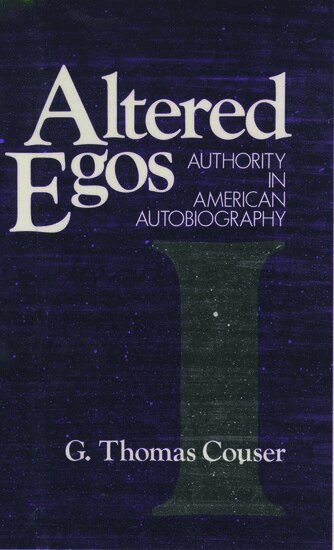
This work is concerned with the `authority' of autobiography. Couser considers recent critiques of the notion of autobiography as issuing from, determined by, referring to a pre-existing self. He examines the autobiographies of Benjamin Franklin, P. T. Barnum, and Mark Twain and appraises the authority of autobiography in the rather different circumstances of the minority writer: in slave narratives, the Civil War diaries of Mary Chesnut, and contemporary works by Richard Rodriguez and Maxine Hong Kingston. The work treats autobiographical writing as a struggle for literary control over the life of the author, against the constraints of genre, language, and society.
931 kr
Skickas inom 5-8 vardagar
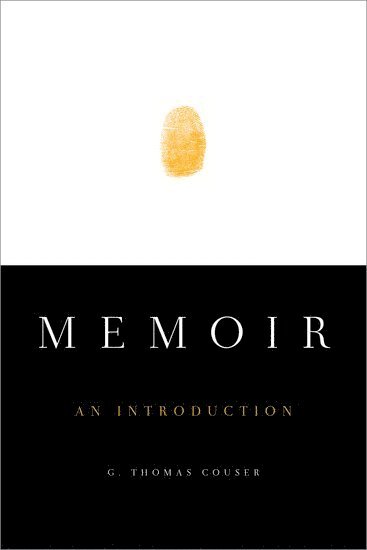
Each year brings a glut of new memoirs, ranging from works by former teachers and celebrity has-beens to disillusioned soldiers and bestselling novelists. In addition to becoming bestsellers in their own right, memoirs have become a popular object of inquiry in the academy and a mainstay in most MFA workshops. Courses in what is now called life-writing study memoir alongside personal essays, diaries, and autobiographies. Memoir: An Introduction proffers a concise history of the genre (and its many subgenres) while taking readers through the various techniques, themes, and debates that have come to characterize the ubiquitous literary form. Its fictional origins are traced to eighteenth-century British novels like Robinson Crusoe and Tom Jones; its early American roots are examined in Benjamin Franklin's Autobiography and eighteenth-century captivity narratives; and its ethical conundrums are considered with analyses of the imbroglios brought on by the questionable claims in Rigoberta Menchú's I, Rigoberta, and more notoriously, James Frey's A Million Little Pieces. Alongside these more traditional literary forms, Couser expands the discussion of memoir to include film with what he calls "documemoir" (exemplified in Nathaniel Kahn's My Architect), and graphic narratives like Art Spiegleman's Maus. In sum, Memoir: An Introduction provides a succinct and comprehensive survey to today's most popular form of life-writing.
287 kr
Skickas inom 5-8 vardagar
Each year brings a glut of new memoirs, ranging from works by former teachers and celebrity has-beens to disillusioned soldiers and bestselling novelists. In addition to becoming bestsellers in their own right, memoirs have become a popular object of inquiry in the academy and a mainstay in most MFA workshops. Courses in what is now called life-writing study memoir alongside personal essays, diaries, and autobiographies. Memoir: An Introduction proffers a concise history of the genre (and its many subgenres) while taking readers through the various techniques, themes, and debates that have come to characterize the ubiquitous literary form. Its fictional origins are traced to eighteenth-century British novels like Robinson Crusoe and Tom Jones; its early American roots are examined in Benjamin Franklin's Autobiography and eighteenth-century captivity narratives; and its ethical conundrums are considered with analyses of the imbroglios brought on by the questionable claims in Rigoberta Menchú's I, Rigoberta, and more notoriously, James Frey's A Million Little Pieces. Alongside these more traditional literary forms, Couser expands the discussion of memoir to include film with what he calls "documemoir" (exemplified in Nathaniel Kahn's My Architect), and graphic narratives like Art Spiegleman's Maus. In sum, Memoir: An Introduction provides a succinct and comprehensive survey to today's most popular form of life-writing.
1 071 kr
Skickas inom 10-15 vardagar
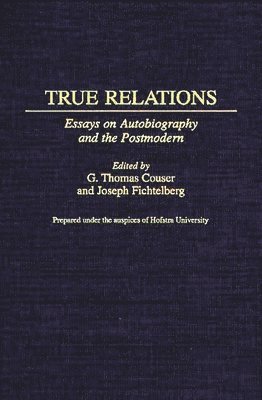
The essays in this collection explore new directions in autobiography studies. Examining a wide range of texts, from narratives of suicide survivors, cross-dressers, and people with HIV/AIDS to self-representations in the visual arts, the collection demonstrates how writers have used the postmodern experience fragmentation to forge new kinds of identities.Postmodern selves, the essayists argue, are relational selves, constructed from the acute need to find identity through collaboration with others. Postmodern autobiography emerges as a search, amid shocks to the stable self, for wider patterns of significance. Of interest to researchers and scholars in autobiography, world literature, and psychology.
2 401 kr
Skickas inom 10-15 vardagar
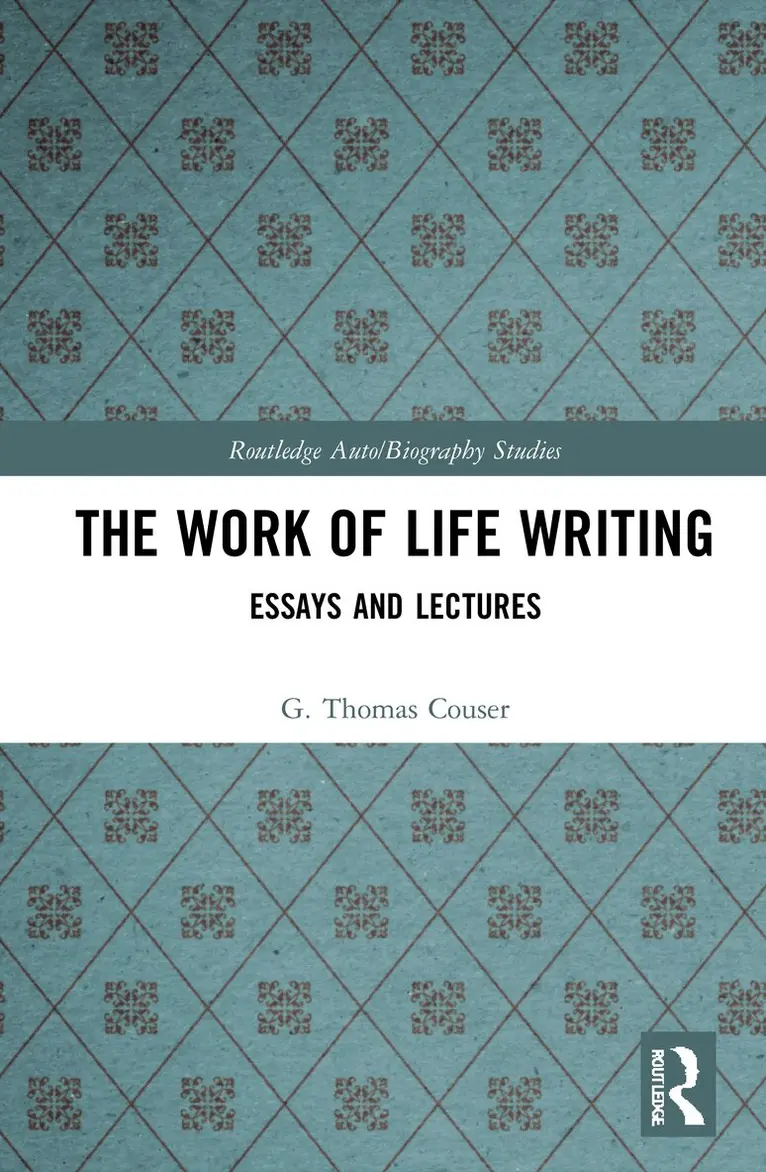
Life writing, in its various forms, does work that other forms of expression do not; it bears on the world in a way distinct from imaginative genres like fiction, drama, and poetry; it acts in and on history in significant ways. Memoirs of illness and disability often seek to depathologize the conditions that they recount. Memoirs of parents by their children extend or alter relations forged initially face to face in the home. At a time when memoir and other forms of life writing are being produced and consumed in unprecedented numbers, this book reminds readers that memoir is not mainly a "literary" genre or mere entertainment. Similarly, letters are not merely epiphenomena of our "real lives." Correspondence does not just serve to communicate; it enacts and sustains human relationships. Memoir matters, and there’s life in letters. All life writing arises of our daily lives and has distinctive impacts on them and the culture in which we live.
662 kr
Skickas inom 10-15 vardagar
Life writing, in its various forms, does work that other forms of expression do not; it bears on the world in a way distinct from imaginative genres like fiction, drama, and poetry; it acts in and on history in significant ways. Memoirs of illness and disability often seek to depathologize the conditions that they recount. Memoirs of parents by their children extend or alter relations forged initially face to face in the home. At a time when memoir and other forms of life writing are being produced and consumed in unprecedented numbers, this book reminds readers that memoir is not mainly a "literary" genre or mere entertainment. Similarly, letters are not merely epiphenomena of our "real lives." Correspondence does not just serve to communicate; it enacts and sustains human relationships. Memoir matters, and there’s life in letters. All life writing arises of our daily lives and has distinctive impacts on them and the culture in which we live.
414 kr
Skickas inom 7-10 vardagar
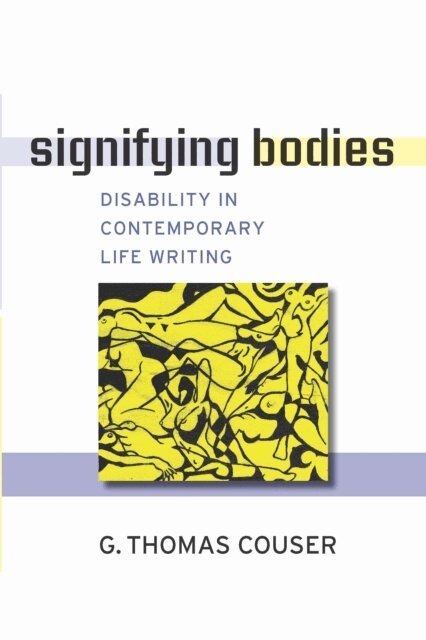
"Thomas Couser's Signifying Bodies comes at a crucial moment when debates about physician assisted suicide, genetic engineering, and neo-natal screening are raising the question of what constitutes a 'life worth living' for persons with disabilities. Couser's work engages these debates by exploring the extensive number of personal narratives by or about persons with disabilities. As Couser brilliantly demonstrates through synoptic readings, these works challenge the 'preferred rhetorics' by which such narratives are usually written (triumphalist, gothic, nostalgic) while making visible the variegated nature of embodied life."---Michael Davidson, University of California, San Diego"Signifying Bodies shows us that life writing about disability is . . . everywhere. . . . From obituary to documentary film to ethnography to literary memoir to the law, the book casts a wide net, detailing how various written and filmed responses to disability both enact and resist conventional narrative patterns. [This] not only broadens our idea about where to look for life writing, but also demonstrates how thoroughly stereotypes about disability mediate our social and artistic languages---even when an author has (so-called) the best intentions."---Susannah B. Mintz, Skidmore CollegeMemoirs have enjoyed great popularity in recent years, experiencing significant sales, prominent reviews, and diverse readerships. Signifying Bodies shows that at the heart of the memoir phenomenon is our fascination with writing that focuses on what it means to live in, or be, an anomalous body---in other words, what it means to be disabled. Previous literary accounts of the disabled body have often portrayed it as a stable entity possibly signifying moral deviance or divine disfavor, but contemporary writers with disabilities are defining themselves and depicting their bodies in new ways. Using the insights of disability studies and source material ranging from the Old and New Testaments to the works of authors like Lucy Grealy and Simi Linton and including contemporary films such as Million Dollar Baby, G. Thomas Couser sheds light on a broader cultural phenomenon, exploring topics such as the ethical issues involved in disability memoirs, the rhetorical patterns they frequently employ, and the complex relationship between disability narrative and disability law. G. Thomas Couser is Professor of English at Hofstra University.
461 kr
Skickas inom 10-15 vardagar
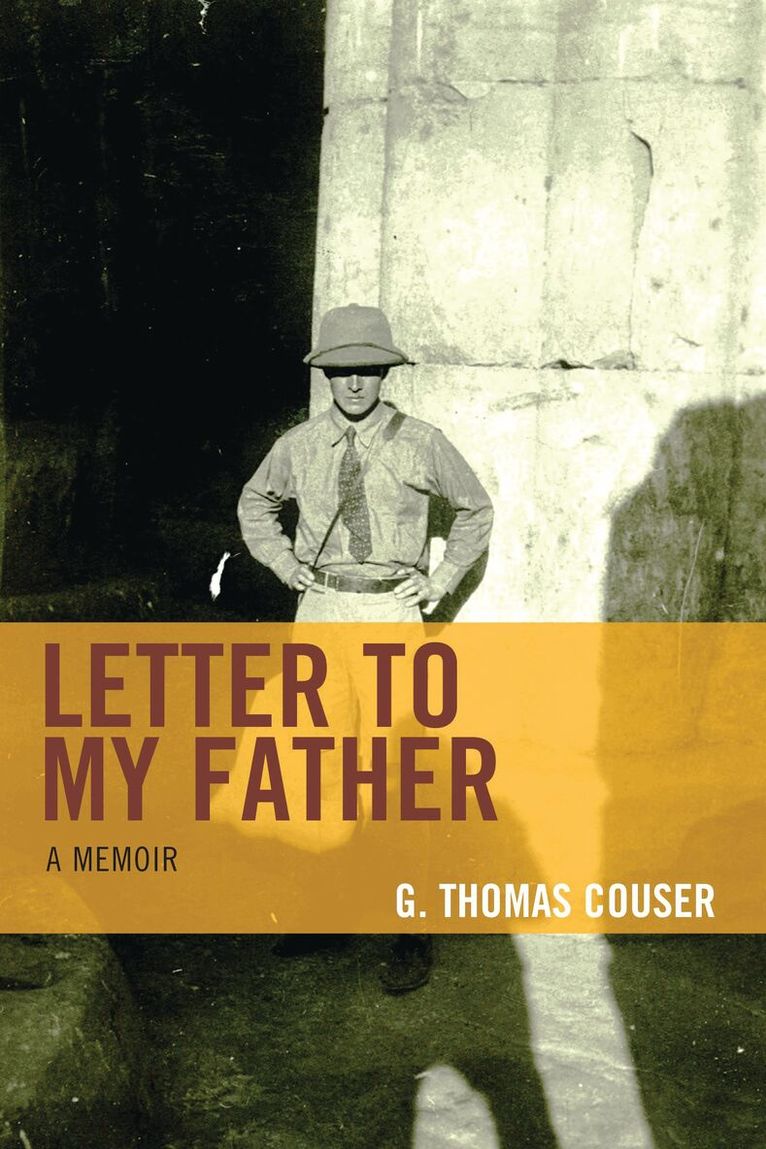
Having wounded his father with a hurtful letter when he was twenty-three, Tom Couser felt somewhat responsible for his later mental collapse. When his father died, Tom found personal documents that revealed facets of his father’s life of which Tom had known nothing. Too traumatized to grieve properly, much less to probe his father’s complicated history, Tom boxed the documents and stored them—for over thirty years. When he finally explored his father’s rich legacy, he achieved a belated reconciliation with a man he had not really known.
1 745 kr
Skickas inom 10-15 vardagar
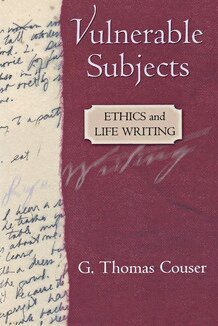
"My primary concern is with the ethics of representing vulnerable subjects—persons who are liable to exposure by someone with whom they are involved in an intimate or trust-based relationship, unable to represent themselves in writing, or unable to offer meaningful consent to their representation by someone else.... Of primary importance is intimate life writing—that done within families or couples, close relationships, or quasi-professional relationships that involve trust—rather than conventional biography, which can be written by a stranger. The closer the relationship between writer and subject, the greater the vulnerability or dependency of the subject, the higher the ethical stakes, and the more urgent the need for ethical scrutiny."—from the PrefaceVulnerable Subjects explores a range of life-writing scenarios-from the "celebrity" to the "ethnographic"—and a number of life-writing genres from parental memoir to literary case studies by Oliver Sacks. G. Thomas Couser addresses complex contemporary issues; he investigates the role of disability in narratives of euthanasia and explores the implications of the Human Genome Project for life-writing practices in any age when many regard DNA as a code that "scripts" lives and shapes identity. Throughout, his book is concerned with the ethical implications of the political and economic, as well as the mimetic, aspects of life writing.
376 kr
Skickas inom 10-15 vardagar
"My primary concern is with the ethics of representing vulnerable subjects—persons who are liable to exposure by someone with whom they are involved in an intimate or trust-based relationship, unable to represent themselves in writing, or unable to offer meaningful consent to their representation by someone else.... Of primary importance is intimate life writing—that done within families or couples, close relationships, or quasi-professional relationships that involve trust—rather than conventional biography, which can be written by a stranger. The closer the relationship between writer and subject, the greater the vulnerability or dependency of the subject, the higher the ethical stakes, and the more urgent the need for ethical scrutiny."—from the PrefaceVulnerable Subjects explores a range of life-writing scenarios-from the "celebrity" to the "ethnographic"—and a number of life-writing genres from parental memoir to literary case studies by Oliver Sacks. G. Thomas Couser addresses complex contemporary issues; he investigates the role of disability in narratives of euthanasia and explores the implications of the Human Genome Project for life-writing practices in any age when many regard DNA as a code that "scripts" lives and shapes identity. Throughout, his book is concerned with the ethical implications of the political and economic, as well as the mimetic, aspects of life writing.