G.A. Bremner - Böcker
Visar alla böcker från författaren G.A. Bremner. Handla med fri frakt och snabb leverans.
2 produkter
2 produkter
1 174 kr
Skickas inom 7-10 vardagar
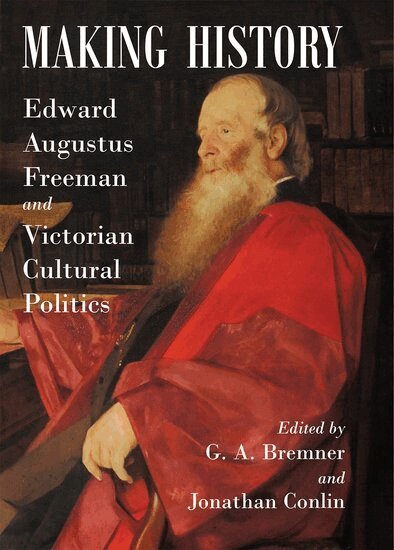
'History is past politics, politics is present history.' Thus observed Edward Augustus Freeman, 19th-century historian and public intellectual. He was an idiosyncratic and imaginative thinker who saw past and present as interwoven and had a way of collapsing barriers of time - a gift for making the reader feel part of history, rather than merely its student. Freeman's interests ranged widely beyond history, however, and this volume provides a biographical as well as intellectual survey of his activities. Thus chapters intersect with historical episodes such as Tractarianism, Liberal Anglicanism and the Gothic Revival, cutting across the divides that traditionally separate architectural, political, church and imperial history. New influences and nemeses emerge from this consideration of the 1830s to 1850s, providing context and added depth to the familiar view of the mature Freeman: to his historical writing as well as to the personal feuds (e.g. with Froude) for which he was equally known.This book fills a gap in the intellectual history of Victorian Britain by providing the first comprehensive, scholarly account of one of its most articulate and outspoken public intellectuals. More broadly, too, Freeman provides a historical context for current debates on multi-culturalism, race and national identity.
266 kr
Skickas
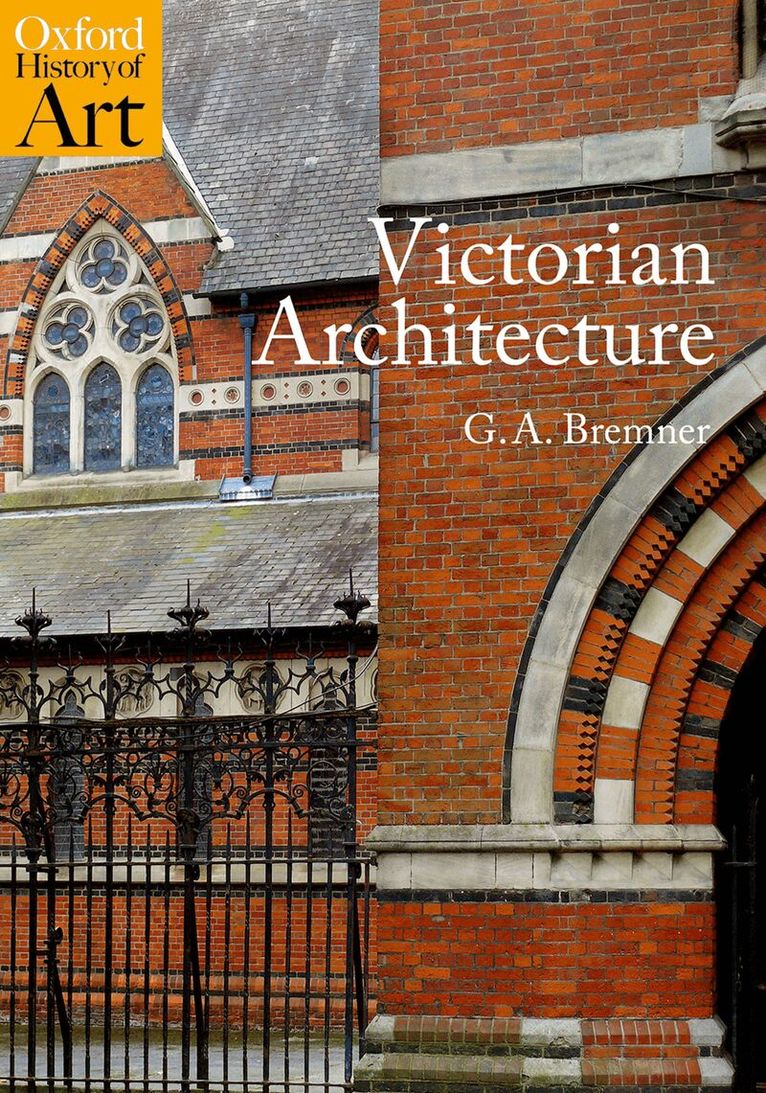
Victorian Architecture presents a new and refreshing overview of nineteenth- and early twentieth-century architecture in Britain and the wider British world.The Victorian period witnessed the beginnings of what today would be described as the global architectural practice. Architects inhabiting this world, or designing for it, were creating new and hybrid forms of Victorian architecture, continuously, in multiple locations. New efficiencies brought by technological advancements such as steam-powered locomotion enabled the Victorian building industry to revolutionise in terms of scale, precision, and variety. As many of the buildings examined here reveal, at the foundation of this revolution was a significant transformation in the supply and conversion of energy. Materials used in construction often come from far away and were procured under increasingly mechanised conditions, entailing the consumption of fossil-fuels in huge, unprecedented quantities. Markets for these materials also multiplied during the period, with companies producing and exporting products as diverse as cast-iron, encaustic tiles, and stained glass in large quantities. Even whole buildings were packed and shipped abroad.Victorian Architecture presents a new and refreshing overview of nineteenth- and early twentieth-century architecture in Britain and the wider British world. Thematically structured, it highlights concerns fundamental to how Victorians experienced their world, including urbanism, industry, government, faith, empire, modernity, social order, family, collecting, and consumerism. In emphasising important concepts in building design and culture, it thus connects the understanding of architecture to its wider social, political, and economic contexts. A key feature of the book is the way it situates British architecture in its extended global geographies, with the Victorian built environment seen as encompassing Britain's colonial expansion. As people and ideas were increasingly mobile during this period, themes such as speed and movement are brought to the fore. British architects were designing buildings not just in the British Isles, but much farther afield, in lands as far apart as Barbados and Bombay, Newfoundland and New South Wales. Concise and visually attractive, Victorian Architecture is aimed at a student and general-reader audience, as well as providing a useful reference point for professional scholars.