G.A. Rogers – författare
Visar alla böcker från författaren G.A. Rogers. Handla med fri frakt och snabb leverans.
6 produkter
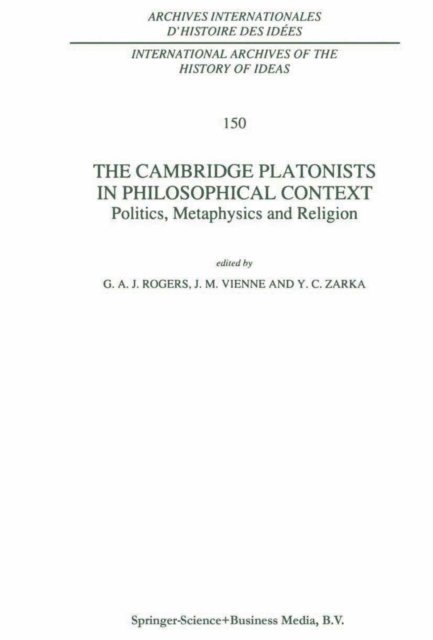
Cambridge Platonists in Philosophical Context
Politics, Metaphysics and Religion
Av G.A. Rogers, J.-M. Vienne m. fl.
Inbunden, 1997
1643 kr
Lägg i varukorg
The Cambridge Platonists were defenders of tolerance in the political as well as the moral sphere ; they held that practical j u d g e m e n t came down in the last instance to individual conscience ; and they laid the foundations of our modern conceptions of conscience and liberty. But at the same …
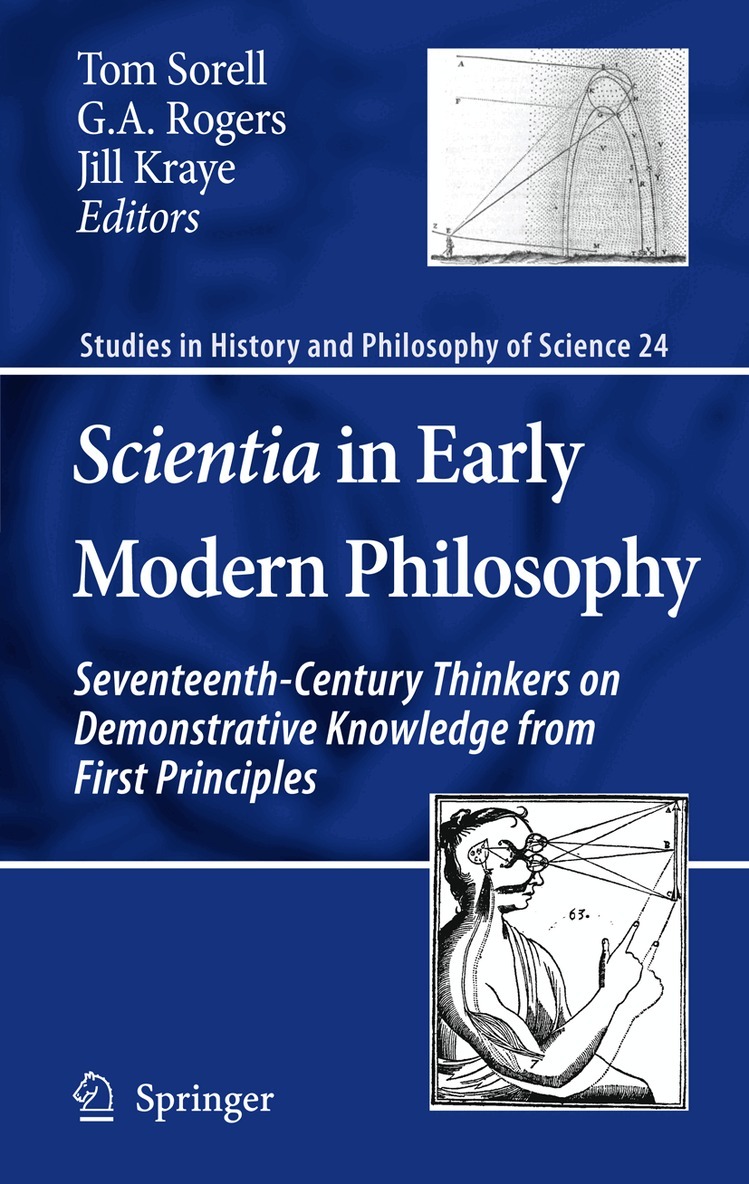
Scientia in Early Modern Philosophy
Seventeenth-Century Thinkers on Demonstrative Knowledge from First Principles
Av Tom Sorell, G.A. Rogers m. fl.
Inbunden, 2009
1098 kr
Lägg i varukorg
Scientia is the term that early modern philosophers applied to a certain kind of demonstrative knowledge, the kind whose starting points were appropriate first principles. In pre-modern philosophy, too, scientia was the name for demonstrative knowledge from first principles. But pre-modern and …
Scientia in Early Modern Philosophy
Seventeenth-Century Thinkers on Demonstrative Knowledge from First Principles
Av Jill Kraye, G.A. Rogers m. fl.
E-bok, 2009
1502 kr
Lägg i varukorg
Scientia is the term that early modern philosophers applied to a certain kind of demonstrative knowledge, the kind whose starting points were appropriate first principles. In pre-modern philosophy, too, scientia was the name for demonstrative knowledge from first principles. But pre-modern and …
Cambridge Platonists in Philosophical Context
Politics, Metaphysics and Religion
Av G.A. Rogers, J.-M. Vienne m. fl.
Häftad, 2010
1643 kr
Lägg i varukorg
The Cambridge Platonists were defenders of tolerance in the political as well as the moral sphere ; they held that practical j u d g e m e n t came down in the last instance to individual conscience ; and they laid the foundations of our modern conceptions of conscience and liberty. But at the same …
Scientia in Early Modern Philosophy
Seventeenth-Century Thinkers on Demonstrative Knowledge from First Principles
Av Tom Sorell, G.A. Rogers m. fl.
Häftad, 2012
1098 kr
Lägg i varukorg
Scientia is the term that early modern philosophers applied to a certain kind of demonstrative knowledge, the kind whose starting points were appropriate first principles. In pre-modern philosophy, too, scientia was the name for demonstrative knowledge from first principles. But pre-modern and …
Cambridge Platonists in Philosophical Context
Politics, Metaphysics and Religion
Av Y.C. Zarka, J.-M. Vienne m. fl.
E-bok, 2013
2111 kr
Lägg i varukorg
The Cambridge Platonists were defenders of tolerance in the political as well as the moral sphere ; they held that practical j u d g e m e n t came down in the last instance to individual conscience ; and they laid the foundations of our modern conceptions of conscience and liberty. But at the same …