Gabor T. Herman - Böcker
Visar alla böcker från författaren Gabor T. Herman. Handla med fri frakt och snabb leverans.
12 produkter
12 produkter
1 577 kr
Skickas inom 10-15 vardagar
Advances in Discrete Tomography and its Applications
535 kr
Skickas inom 10-15 vardagar
Concerned with the mathematical theory of surfaces, objects and their boundaries in discrete spaces, this text provides a self-contained and mathematically precise introduction to the field. It is application-oriented and presents problems of visualization and analysis of multidimensional data sets. The primary areas of mathematics used are graph theory and topology.
1 624 kr
Skickas inom 10-15 vardagar
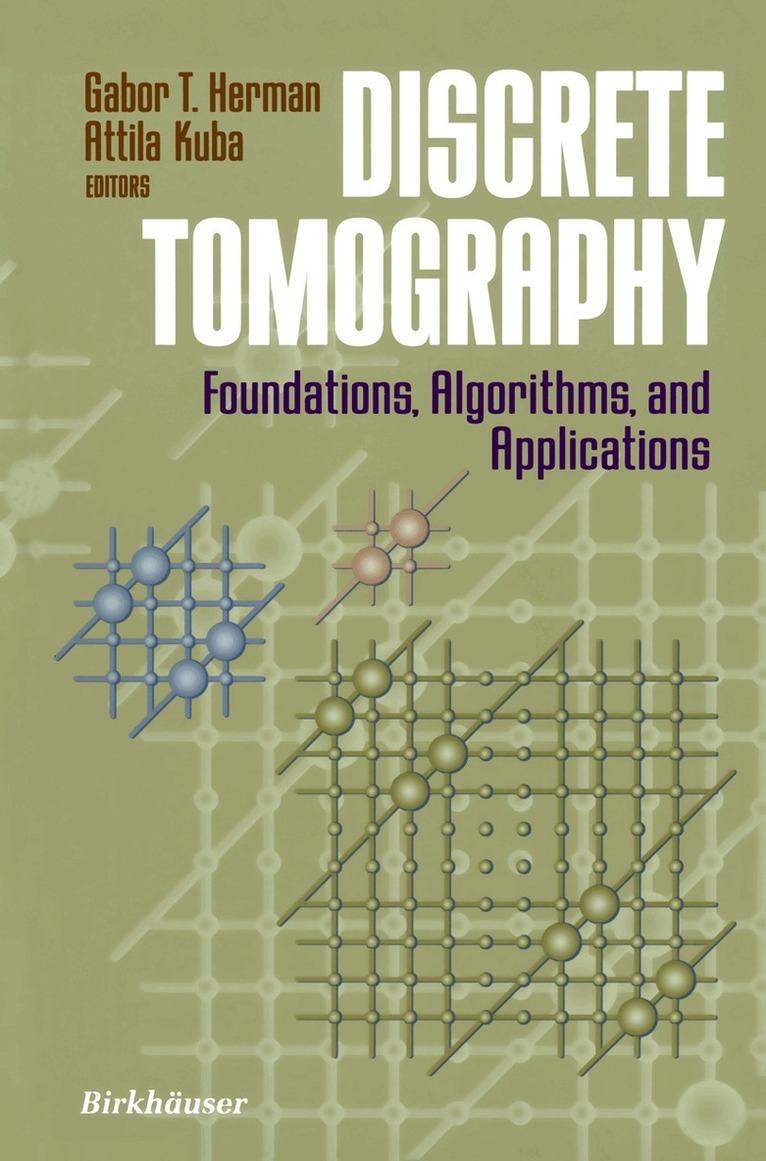
Goals of the Book Overthelast thirty yearsthere has been arevolutionindiagnostic radiology as a result oftheemergenceofcomputerized tomography (CT), which is the process of obtaining the density distribution within the human body from multiple x-ray projections. Since an enormous variety of possible density values may occur in the body, a large number of projections are necessary to ensure the accurate reconstruction oftheir distribution. There are other situations in which we desire to reconstruct an object from its projections, but in which we know that the object to be recon structed has only a small number of possible values. For example, a large fraction of objects scanned in industrial CT (for the purpose of nonde structive testing or reverse engineering) are made of a single material and so the ideal reconstruction should contain only two values: zero for air and the value associated with the material composing the object. Similar as sumptions may even be made for some specific medical applications; for example, in angiography ofthe heart chambers the value is either zero (in dicating the absence of dye) or the value associated with the dye in the chamber. Another example arises in the electron microscopy of biological macromolecules, where we may assume that the object to be reconstructed is composed of ice, protein, and RNA. One can also apply electron mi croscopy to determine the presenceor absence ofatoms in crystallinestruc tures, which is again a two-valued situation.
2 794 kr
Tillfälligt slut
The ability to visualize, non-invasively, human internal organs in their true from and shape has intrigued mankind for centuries. While the recent inventions of medical imaging modalities such as computerized tomography and magnetic resonance imaging have revolutionized radiology, the development of three-dimensional (3D) imaging has brought us closer to the age-old quest of non-invasive visualization.The ability to not only visualize but to manipulate and analyze 3D structures from captured multidimensional image data, is vital to a number of diagnostic and therapeutic applications. 3D Imaging in Medicine, Second Edition, unique in its contents, covers both the technical aspects and the actual medical applications of the process in a single source.The value of this technology is obvious. For example, three dimensional imaging allows a radiologist to accurately target the positioning and dosage of chemotherapy as well as to make more accurate diagnoses by showing more pathology; it allows the vascular surgeon to study the flow of blood through clogged arteries; it allows the orthopedist to find all the pieces of a compound fracture; and, it allows oncologists to perform less invasive biopsies.In fact, one of the most important uses of 3D Imaging is in computer-assisted surgery. For example, in cancer surgery, computer images show the surgeon the extent of the tumor so that only the diseased tissue is removed. In short, 3D imaging provides clinicians with information that saves time and money.3D Imaging in Medicine, Second Edition provides a ready reference on the fundamental science of 3D imaging and its medical applications. The chapters have been written by experts in the field, and the technical aspects are covered in a tutorial fashion, describing the basic principles and algorithms in an easily understandable way.The application areas covered include: surgical planning, neuro-surgery, orthopedics, prosthesis design, brain imaging, analysis of cardio-pulmonary structures, and the assessment of clinical efficacy.The book is designed to provide a quick and systematic understanding of the principles of biomedical visualization to students, scientists and researchers, and to act as a source of information to medical practitioners on a wide variety of clinical applications of 3D imaging.
1 313 kr
Skickas inom 10-15 vardagar
This revised and updated text presents the computational and mathematical procedures underlying data collection, image reconstruction, and image display in computerized tomography. New topics: the fast calculation of a ray sum for a digitized picture, the task-oriented comparison of reconstruction algorithm performance, blob basis functions and the linogram method for image reconstruction. Features: Describes how projection data are obtained and the resulting reconstructions are used; Presents a comparative evaluation of reconstruction methods; Investigates reconstruction algorithms; Explores basis functions, functions to be optimized, norms, generalized inverses, least squares solutions, maximum entropy solutions, and most likely estimates; Discusses SNARK09, a large programming system for image reconstruction; Concludes each chapter with helpful Notes and References sections. An excellent guide for practitioners, it can also serve as a textbook for an introductory graduate course.
1 732 kr
Skickas inom 10-15 vardagar
Goals of the Book Overthelast thirty yearsthere has been arevolutionindiagnostic radiology as a result oftheemergenceofcomputerized tomography (CT), which is the process of obtaining the density distribution within the human body from multiple x-ray projections. Since an enormous variety of possible density values may occur in the body, a large number of projections are necessary to ensure the accurate reconstruction oftheir distribution. There are other situations in which we desire to reconstruct an object from its projections, but in which we know that the object to be recon structed has only a small number of possible values. For example, a large fraction of objects scanned in industrial CT (for the purpose of nonde structive testing or reverse engineering) are made of a single material and so the ideal reconstruction should contain only two values: zero for air and the value associated with the material composing the object. Similar as sumptions may even be made for some specific medical applications; for example, in angiography ofthe heart chambers the value is either zero (in dicating the absence of dye) or the value associated with the dye in the chamber. Another example arises in the electron microscopy of biological macromolecules, where we may assume that the object to be reconstructed is composed of ice, protein, and RNA. One can also apply electron mi croscopy to determine the presenceor absence ofatoms in crystallinestruc tures, which is again a two-valued situation.
535 kr
Skickas inom 10-15 vardagar
"La narraci6n literaria es la evocaci6n de las nostalgias. " ("Literary narration is the evocation of nostalgia. ") G. G. Marquez, interview in Puerta del Sol, VII, 4, 1996. A Personal Prehistory In 1972 I started cooperating with members of the Biodynamics Research Unit at the Mayo Clinic in Rochester, Minnesota, which was under the direction of Earl H. Wood. At that time, their ambitious (and eventually realized) dream was to build the Dynamic Spatial Reconstructor (DSR), a device capable of collecting data regarding the attenuation of X-rays through the human body fast enough for stop-action imaging the full extent of the beating heart inside the thorax. Such a device can be applied to study the dynamic processes of cardiopulmonary physiology, in a manner similar to the application of an ordinary cr (computerized tomography) scanner to observing stationary anatomy. The standard method of displaying the information produced by a cr scanner consists of showing two-dimensional images, corresponding to maps of the X-ray attenuation coefficient in slices through the body. (Since different tissue types attenuate X-rays differently, such maps provide a good visualization of what is in the body in those slices; bone - which attenuates X-rays a lot - appears white, air appears black, tumors typically appear less dark than the surrounding healthy tissue, etc. ) However, it seemed to me that this display mode would not be appropriate for the DSR.
1 064 kr
Skickas inom 10-15 vardagar
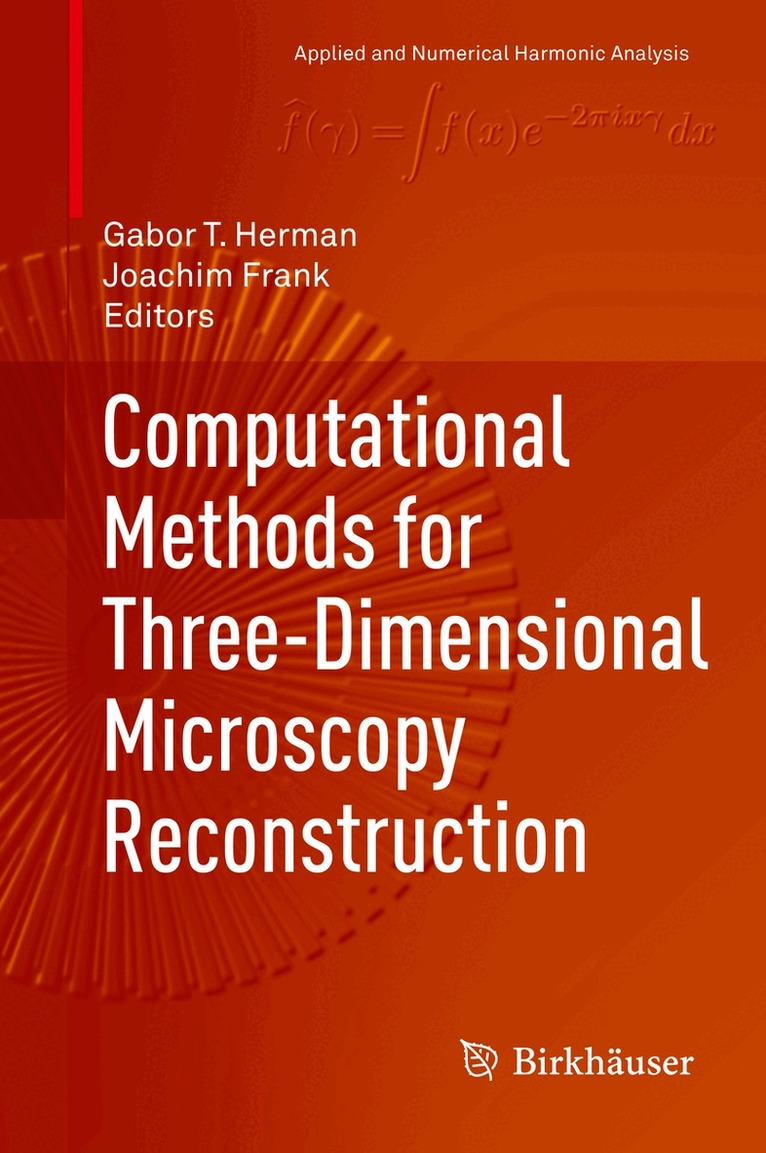
Computational Methods for Three-Dimensional Microscopy Reconstruction
1 064 kr
Skickas inom 10-15 vardagar
Approaches to the recovery of three-dimensional information on a biological object, which are often formulated or implemented initially in an intuitive way, are concisely described here based on physical models of the object and the image-formation process. Both three-dimensional electron microscopy and X-ray tomography can be captured in the same mathematical framework, leading to closely-related computational approaches, but the methodologies differ in detail and hence pose different challenges. The editors of this volume, Gabor T. Herman and Joachim Frank, are experts in the respective methodologies and present research at the forefront of biological imaging and structural biology.Computational Methods for Three-Dimensional Microscopy Reconstruction will serve as a useful resource for scholars interested in the development of computational methods for structural biology and cell biology, particularly in the area of 3D imaging and modeling.
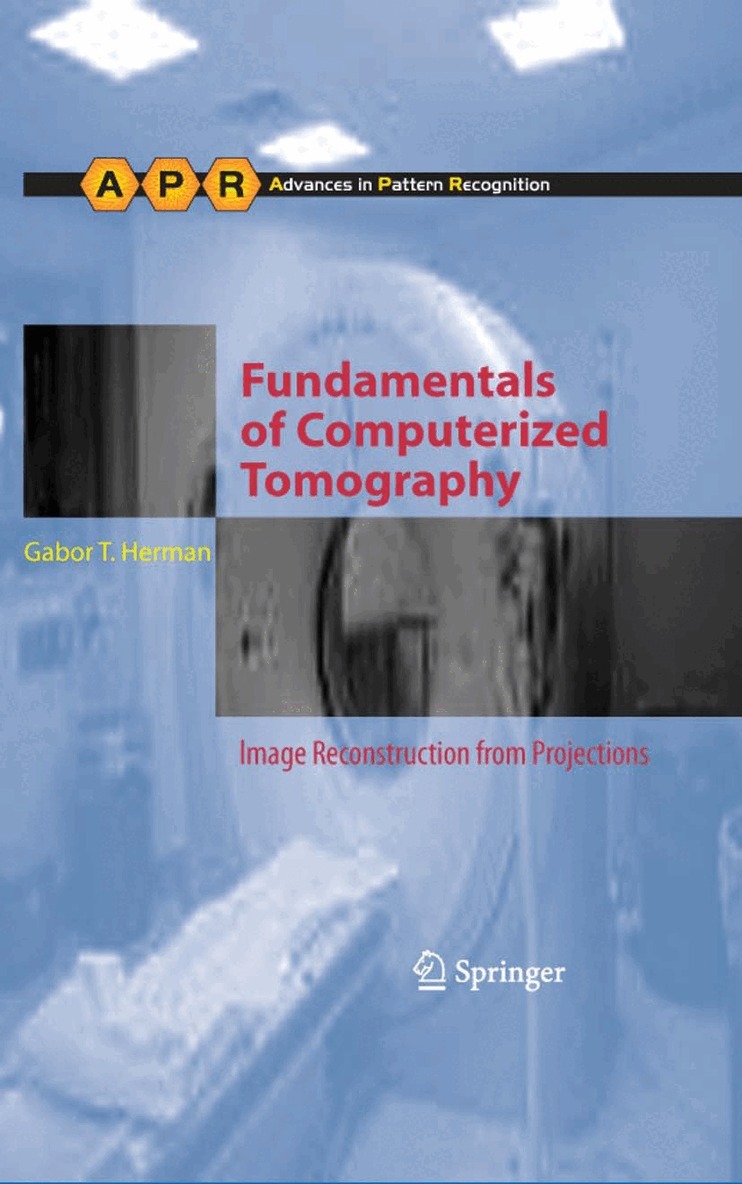
Fundamentals of Computerized Tomography
Image Reconstruction from Projections
Inbunden, Engelska, 2009
1 786 kr
Skickas inom 10-15 vardagar
This revised and updated text presents the computational and mathematical procedures underlying data collection, image reconstruction, and image display in computerized tomography.
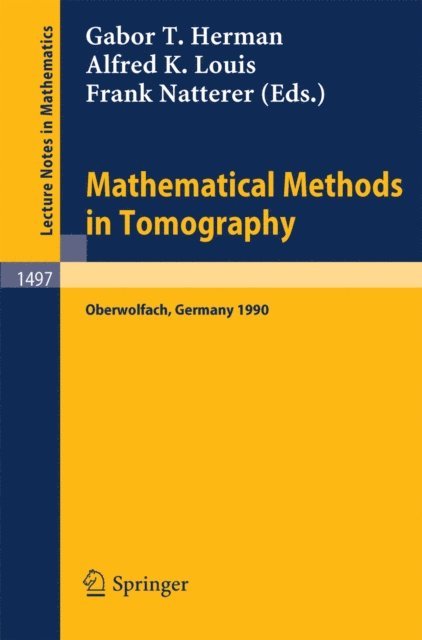
Del 1497 - Lecture Notes in Mathematics
Mathematical Methods in Tomography
Proceedings of a Conference held in Oberwolfach, Germany, 5-11 June, 1990
Häftad, Engelska, 1992
497 kr
Skickas inom 7-10 vardagar
This conference was devoted to the discussion of present and future techniques in medical imaging, including 3D X-ray CT, ultrasound and diffraction tomography, and biomagnetic imaging. The mathematical models, their theoretical aspects and the development of algorithms were explored. The proceedings contain surveys on the reconstruction of inverse obstacle scattering, inversion in 3D, and constrained least squares problems. Research papers include presentations on image reconstruction in Hilbert spaces, singular value decompositions, 3D cone beam reconstruction, diffuse tomography, regularization of ill-posed problems, evaluation reconstruction algorithms and applications in non-medical fields.
Mathematical Methods in Tomography : Proceedings of a Conference held in Oberwolfach, Germany, 5-11 June, 1990
Engelska, 2014
653 kr
Skickas inom 5-8 vardagar