Gabriel Ricci - Böcker
Visar alla böcker från författaren Gabriel Ricci. Handla med fri frakt och snabb leverans.
4 produkter
4 produkter
2 410 kr
Skickas inom 10-15 vardagar
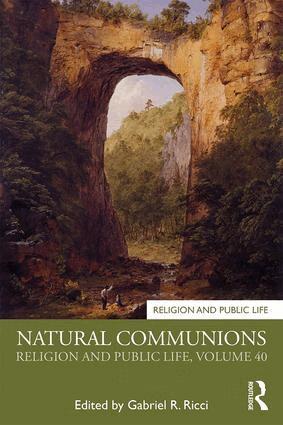
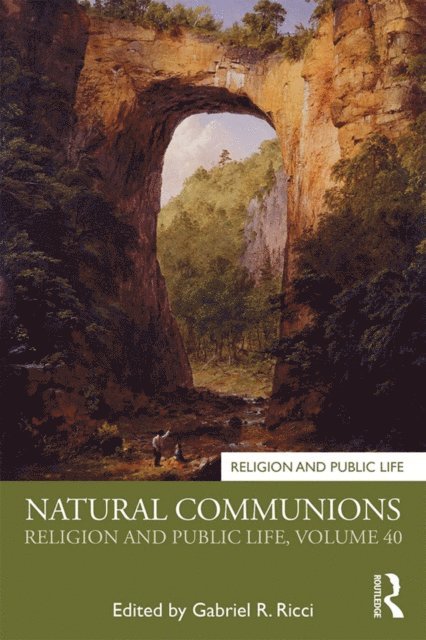
The academic treatment of the environment and nature, since the 1980s, has been formalized in sub-disciplines like environmental history, environmental philosophy, ecocriticism, and eco-spirituality. Within these disciplines the concept of nature has been variously employed to reorient humanity to a holistic moral standard. In each case there is general consensus that inquiry ought to turn on moral considerations of the interaction of humans and the environment; with implied admonitions to live sustainably. Lending credence to the Earth as a superorganism in its own right, these modern ecological expressions can be traced to Rachel Carson’s revelations in Silent Spring. However, they have a long pre-history which appears in monistic philosophy, the spirit of Deism, in both Romanticism and the Enlightenment, and in political expressions of the idea of Nature’s God, designed to promote a secular vision of the state and to overturn predatory religious rivalries. With this literary momentum, Natural Communions, volume 40 of Religion and Public Life, gathers interdisciplinary essays which reconfigure humanity within an ecotheological anthropology and which treat the idea of the sacred from the perspective of an Earth-centered spirituality, thus redefining humanity’s response to ecological challenges and initiating a new status within a more expansive cosmology complete with a naturalized conception of Divine Reality.
659 kr
Skickas inom 10-15 vardagar
The academic treatment of the environment and nature, since the 1980s, has been formalized in sub-disciplines like environmental history, environmental philosophy, ecocriticism, and eco-spirituality. Within these disciplines the concept of nature has been variously employed to reorient humanity to a holistic moral standard. In each case there is general consensus that inquiry ought to turn on moral considerations of the interaction of humans and the environment; with implied admonitions to live sustainably. Lending credence to the Earth as a superorganism in its own right, these modern ecological expressions can be traced to Rachel Carson’s revelations in Silent Spring. However, they have a long pre-history which appears in monistic philosophy, the spirit of Deism, in both Romanticism and the Enlightenment, and in political expressions of the idea of Nature’s God, designed to promote a secular vision of the state and to overturn predatory religious rivalries. With this literary momentum, Natural Communions, volume 40 of Religion and Public Life, gathers interdisciplinary essays which reconfigure humanity within an ecotheological anthropology and which treat the idea of the sacred from the perspective of an Earth-centered spirituality, thus redefining humanity’s response to ecological challenges and initiating a new status within a more expansive cosmology complete with a naturalized conception of Divine Reality.
508 kr
Tillfälligt slut
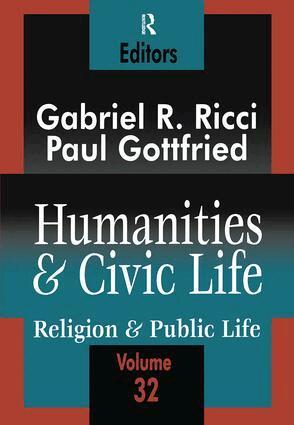
This volume in Religion and Public Life, a series on religion and public affairs, provides a wide-ranging forum for differing views on religious and ethical considerations. The contributions address the decline of social capital-those patterns of behavior which are conducive to self-governance and the spirit of self-reliance-and its relation to the demise of the civic-humanist tradition in American education. The unifying theme, is that classical studies do not merely result in individual mastery over a particular technique or body of knowledge, but also link the individual to the polity and even to the whole of the cosmic order. At the same time, American republicanism, in its exaltation of the common man from the Jeffersonian agrarian soldier to the apotheosis of Lincoln tempers the classical ideal into something less exalted, if more democratic. The effects on the contemporary state of the liberal arts curriculum are demonstrated in articles critical of the market-model university. Two essays explore the historical and philosophical significance of the discipline of rhetoric, that has suffered under the hegemony of rationalistic philosophy. A concluding contribution, invokes Giambattista Vico as an eloquent defender of the humanities. Humanities and Civic Life includes: "Rome, Florence, and Philadelphia: Using the History of the Humanities to Renew Our Civic Life" by Robert E. Proctor; "The Dark Fields of the Republic: The Persistence of Republican Thought in American History" by David Brown; "Unleashing the Humanities" by Robert Weisbuch; "Liberal Arts: Listening to Faculty" by Dennis O'Brien; "Historical Consciousness in Antiquity" by Paul Gottfried; "Taking the Measure of Relativism and the Civic Virtue of Rhetoric" by Gabriel R. Ricci; "The River: A Vichian Dialogue on Humanistic Education" by Randall E. Auxier.
2 096 kr
Skickas inom 10-15 vardagar
This volume in Religion and Public Life, a series on religion and public affairs, provides a wide-ranging forum for differing views on religious and ethical considerations. The contributions address the decline of social capital-those patterns of behavior which are conducive to self-governance and the spirit of self-reliance-and its relation to the demise of the civic-humanist tradition in American education. The unifying theme, is that classical studies do not merely result in individual mastery over a particular technique or body of knowledge, but also link the individual to the polity and even to the whole of the cosmic order. At the same time, American republicanism, in its exaltation of the common man from the Jeffersonian agrarian soldier to the apotheosis of Lincoln tempers the classical ideal into something less exalted, if more democratic. The effects on the contemporary state of the liberal arts curriculum are demonstrated in articles critical of the market-model university. Two essays explore the historical and philosophical significance of the discipline of rhetoric, that has suffered under the hegemony of rationalistic philosophy. A concluding contribution, invokes Giambattista Vico as an eloquent defender of the humanities. Humanities and Civic Life includes: "Rome, Florence, and Philadelphia: Using the History of the Humanities to Renew Our Civic Life" by Robert E. Proctor; "The Dark Fields of the Republic: The Persistence of Republican Thought in American History" by David Brown; "Unleashing the Humanities" by Robert Weisbuch; "Liberal Arts: Listening to Faculty" by Dennis O'Brien; "Historical Consciousness in Antiquity" by Paul Gottfried; "Taking the Measure of Relativism and the Civic Virtue of Rhetoric" by Gabriel R. Ricci; "The River: A Vichian Dialogue on Humanistic Education" by Randall E. Auxier.