Gareth Fisher - Böcker
Visar alla böcker från författaren Gareth Fisher. Handla med fri frakt och snabb leverans.
4 produkter
4 produkter
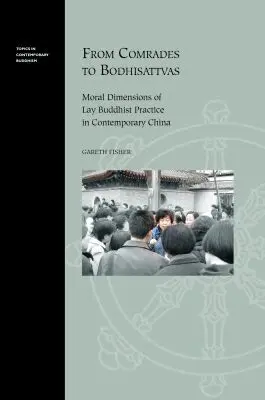
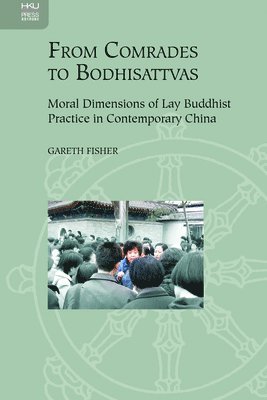
From Comrades to Bodhisattvas
Moral Dimensions of Lay Buddhist Practice in Contemporary China
Inbunden, Engelska, 2014
533 kr
Skickas inom 7-10 vardagar
From Comrades to Bodhisattvas is the first book-length study of Han Chinese Buddhism in post-Mao China. Using an ethnographic approach supported by over a decade of field research, it provides an intimate portrait of lay Buddhist practitioners in Beijing who have recently embraced a religion that they were once socialized to see as harmful superstition. The book focuses on the lively discourses and debates that take place among these new practitioners in an unused courtyard of a Beijing temple. In this non-monastic space, which shrinks each year as the temple authorities expand their commercial activities, laypersons gather to distribute and exchange Buddhist-themed media, listen to the fiery sermons of charismatic preachers, and seek solutions to personal moral crises.Applying recent theories in the anthropology of morality and ethics, Gareth Fisher argues that the practitioners are attracted to the courtyard as a place where they can find ethical resources to re-make both themselves and others in a rapidly changing nation that they believe lacks a coherent moral direction. Spurred on by the lessons of the preachers and the stories in the media they share, these courtyard practitioners inventively combine moral elements from China’s recent Maoist past with Buddhist teachings on the workings of karma and the importance of universal compassion. Their aim is to articulate a moral antidote to what they see as blind obsession with consumption and wealth accumulation among twenty-first century Chinese. Often socially marginalized and side-lined from meaningful roles in China’s new economy, these former communist comrades look to their new moral roles along a bodhisattva path to rebuild their self-worth. Each chapter focuses on a central trope in the courtyard practitioners’ projects to form new moral identities. The Chinese government’s restrictions on the spread of religious teachings in urban areas curtail these practitioners' ability to insert their moral visions into an emerging public sphere. Nevertheless, they succeed, at least partially, Fisher argues, in creating their own discursive space characterized by a morality of concern for fellow humans and animals and a recognition of the organizational abilities and pedagogical talents of its members that are unacknowledged in society at large. Moreover, as the later chapters of the book discuss, by writing, copying, and distributing Buddhist-themed materials, the practitioners participate in creating a religious network of fellow-Buddhists across the country, thereby forming a counter-cultural community within contemporary urban China.Highly readable and full of engaging descriptions of the real lives of practicing lay Buddhists in contemporary China, From Comrades to Bodhisattvas will interest specialists in Chinese Buddhism, anthropologists of contemporary Asia, and all scholars interested in the relationship between religion and cultural change.
271 kr
Skickas
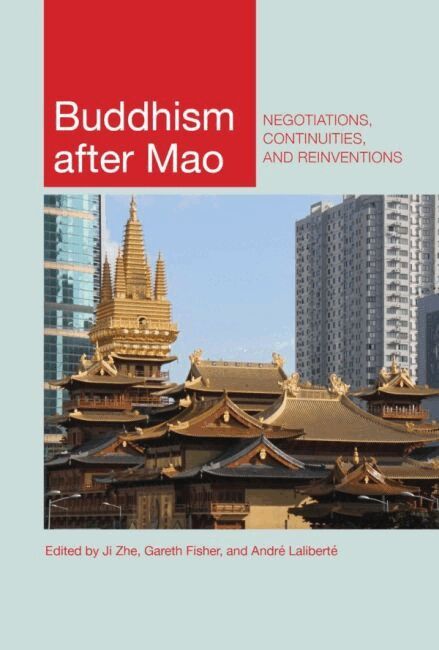
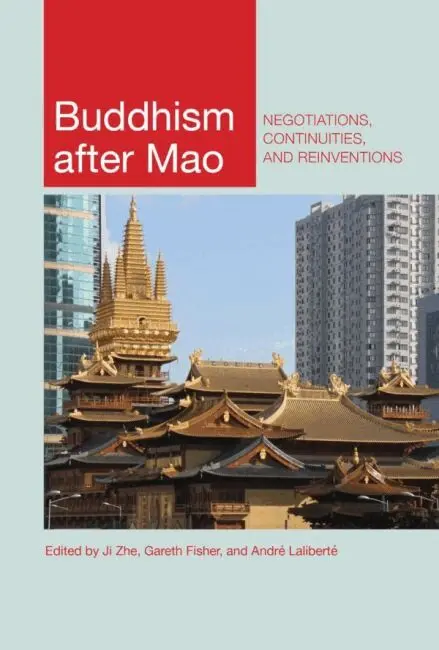
With well over 100 million adherents, Buddhism emerged from near-annihilation during the Cultural Revolution to become the largest religion in China today. Despite this, Buddhism's rise has received relatively little scholarly attention. The present volume, with contributions by leading scholars in sociology, anthropology, political science, and religious studies, explores the evolution of Chinese Buddhism in the post-Mao period with a depth not seen before in a single study. Chapters critically analyze the effects of state policies on the evolution of Buddhist institutions; the challenge of rebuilding temples under the watchful eye of the state; efforts to rebuild monastic lineages and schools left broken in the aftermath of Mao's rule; and the development of new lay Buddhist spaces, both at temple sites and online.Through its multidisciplinary perspectives, the book provides both an extensive overview of the social and political conditions under which Buddhism has grown as well as discussions of the individual projects of both monastic and lay entrepreneurs who dynamically and creatively carve out spaces for Buddhist growth in contemporary Chinese society. As a wide-ranging study that illuminates many facets of China's Buddhist revival, Buddhism after Mao will be required reading for scholars of Chinese Buddhism and of Buddhism and modernity more broadly. Its detailed case studies examining the intersections among religion, state, and contemporary Chinese society will be welcomed by sociologists and anthropologists of China, political scientists focusing on the role of religion in state formation in Asian societies, and all those interested in the relationship between religion and social change.
From Comrades to Bodhisattvas : Moral Dimensions of Lay Buddhist Practice in Contemporary China
Inbunden, Engelska, 2015
542 kr
Tillfälligt slut
1 067 kr
Kommande
Temples and Teahouses delves into the daily lives of Buddhist monastics, lay practitioners, entrepreneurs, and government officials working to expand Buddhism in a highly secular country. Drawing on two decades of ethnographic research in cities throughout China, author Gareth Fisher explores how these determined visionaries collaborated to restore temples and open teahouses to meet growing demand for Buddhist practice spaces. Some sought to revive traditional practices such as devotion to Amitabha while others offered new programs that included charitable work and mindfulness meditation to address the changing needs of urban people. Through an analysis of their efforts, Fisher examines the paradoxical relationship between Buddhism and secularity, defined by philosopher Charles Taylor not as religion’s absence but as an awareness of both immanent and transcendent possibilities of being. The urban Buddhist communities Fisher encountered challenged religion’s separation from everyday life under secularization while simultaneously establishing new boundaries between the religious and secular. They transformed temples and teahouses into refuges from the demands and materialistic values of modern city life—into "spaces of otherwise" where they could explore novel ways of thinking while navigating the cross-pressures of living both Buddhist and secular lives. Temples and Teahouses will appeal to a wide range of readers interested in the role of Buddhism in modernity, the place of lived religion in contemporary Chinese society, and the relationship between religion and secularism.