Ji Zhe – författare
Visar alla böcker från författaren Ji Zhe. Handla med fri frakt och snabb leverans.
9 produkter
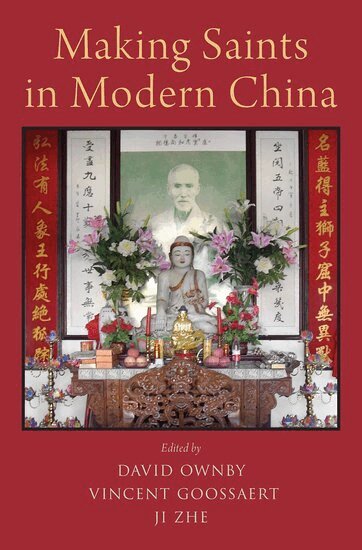
Making Saints in Modern China
Av David Ownby, Vincent Goossaert m. fl.
Inbunden, 2017
2627 kr
Lägg i varukorg
"Sainthood" has been, and remains, a contested category in China, given the commitment of China's modern leadership to secularization, modernization, and revolution, and the discomfort of China's elite with matters concerning religion. However, sainted religious leaders have succeeded in rebuilding …
Making Saints in Modern China
Av Ji Zhe, Vincent Goossaert m. fl.
E-bok, 2016
1650 kr
Lägg i varukorg
"Sainthood" has been, and remains, a contested category in China, given the commitment of China''s modern leadership to secularization, modernization, and revolution, and the discomfort of China''s elite with matters concerning religion. However, sainted religious leaders have succeeded in …
Making Saints in Modern China
Av Ji Zhe, Vincent Goossaert m. fl.
E-bok, 2016
1650 kr
Lägg i varukorg
"Sainthood" has been, and remains, a contested category in China, given the commitment of China''s modern leadership to secularization, modernization, and revolution, and the discomfort of China''s elite with matters concerning religion. However, sainted religious leaders have succeeded in …
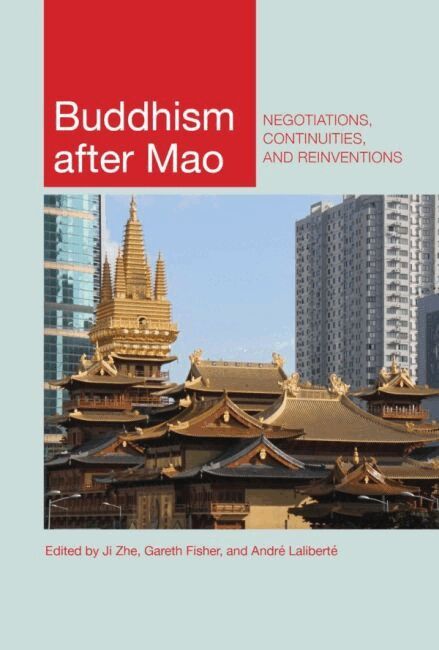
Buddhism After Mao
Negotiations, Continuities, and Reinventions
Av Ji Zhe, Gareth Fisher m. fl.
Häftad, 2020
303 kr
Lägg i varukorg
With well over 100 million adherents, Buddhism emerged from near-annihilation during the Cultural Revolution to become the largest religion in China today. Despite this, Buddhism's rise has received relatively little scholarly attention. The present volume, with contributions by leading scholars in …
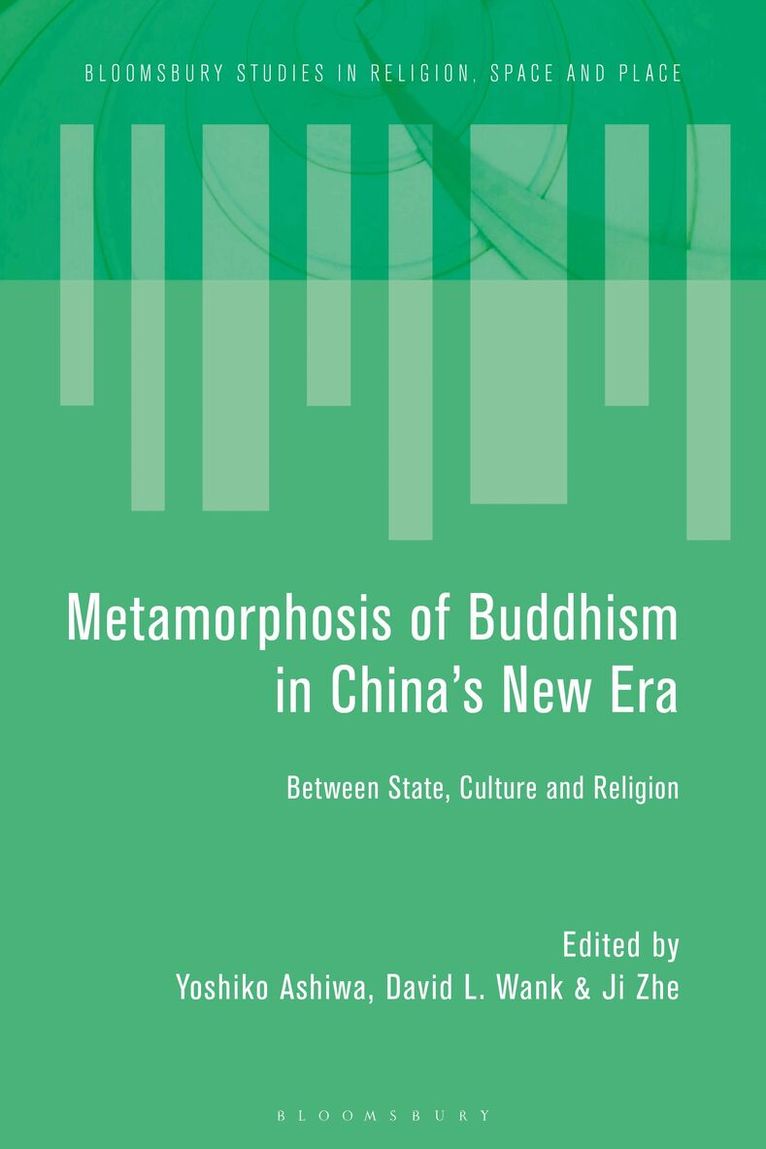
Metamorphosis of Buddhism in China’s New Era
Between State, Culture, and Religion
Av David L. Wank, Ji Zhe m. fl.
Inbunden, 2025
1212 kr
Lägg i varukorg
The metamorphosis of Buddhism synchronizing with alterations in political ideology, rapid economic growth, and evolving societal demands in China’s new era is the focus of this book. It traces the metamorphosis to 2002 when the Communist Party of China declared upholding traditional Chinese …
Metamorphosis of Buddhism in China’s New Era
Between State, Culture, and Religion
Av David L. Wank, Ji Zhe m. fl.
E-bok, 2025
1325 kr
Lägg i varukorg
The metamorphosis of Buddhism synchronizing with alterations in political ideology, rapid economic growth, and evolving societal demands in China''s new era is the focus of this book . It traces the metamorphosis to 2002 when the Communist Party of China declared upholding traditional Chinese …
Metamorphosis of Buddhism in China’s New Era
Between State, Culture, and Religion
Av David L. Wank, Ji Zhe m. fl.
E-bok, 2025
1325 kr
Lägg i varukorg
The metamorphosis of Buddhism synchronizing with alterations in political ideology, rapid economic growth, and evolving societal demands in China''s new era is the focus of this book . It traces the metamorphosis to 2002 when the Communist Party of China declared upholding traditional Chinese …
Metamorphosis of Buddhism in China’s New Era
Between State, Culture, and Religion
Av David L. Wank, Ji Zhe m. fl.
Häftad, 2027
414 kr
Kommande
The metamorphosis of Buddhism synchronizing with alterations in political ideology, rapid economic growth, and evolving societal demands in China’s new era is the focus of this book. It traces the metamorphosis to 2002 when the Communist Party of China declared upholding traditional Chinese …
Buddhism After Mao
Negotiations, Continuities, and Reinventions
Av Ji Zhe, Gareth Fisher m. fl.
Inbunden, 2019
950 kr
Tillfälligt slut
With well over a 100 million adherents, Buddhism emerged from near-annihilation during the Cultural Revolution to become the largest religion in China today. Despite this, Buddhism’s rise has received relatively little scholarly attention. The present volume, with contributions by leading scholars …