David L. Wank - Böcker
Visar alla böcker från författaren David L. Wank. Handla med fri frakt och snabb leverans.
10 produkter
10 produkter
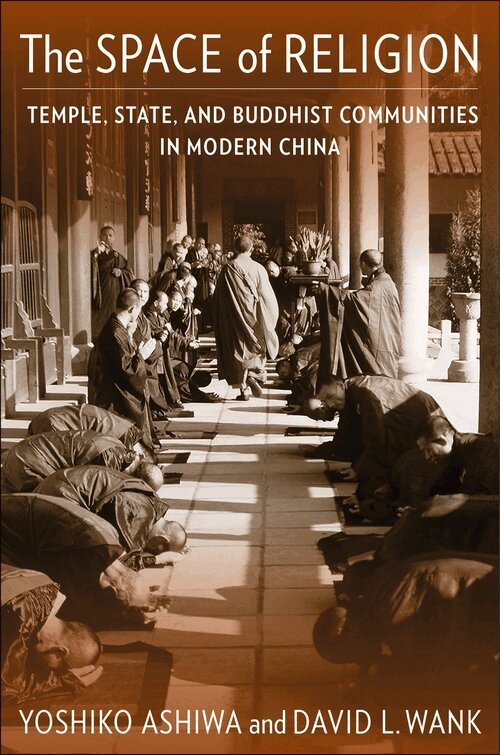
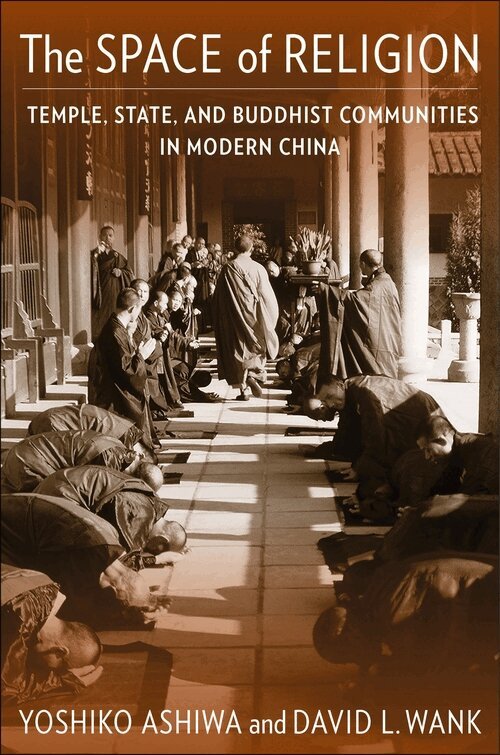
The Space of Religion
Temple, State, and Buddhist Communities in Modern China
Inbunden, Engelska, 2023
1 264 kr
Skickas inom 7-10 vardagar
Finalist, 2024 Award for Excellence in the Study of Religion in Analytical-Descriptive Studies, American Academy of ReligionHonorable Mention, 2024 Francis H.K. Hsu Book Prize, Society for East Asian AnthropologyThe Nanputuo Temple in the southeastern Chinese city of Xiamen has been a cherished site for the worship of the bodhisattva Guanyin for centuries. It was a center of modernizing Buddhism in the early twentieth century and a flagship for the revival of Buddhism after state suppression during the Cultural Revolution. The Space of Religion takes readers inside the Nanputuo Temple in order to explore the practice of Buddhism in modern China and the complex relationship between Buddhism and the Chinese state.Based on three decades of ethnographic research, Yoshiko Ashiwa and David L. Wank tell the story of Nanputuo against the backdrop of a dramatic stretch of Chinese history. They vividly depict episodes such as renovating the halls, reestablishing ties with overseas Chinese donors, conflicts with local government, revival of ritual life, reopening of its Buddhist academy, and the passion of the Guanyin birthday festival. To understand Nanputuo, Buddhist communities, and other temples in Xiamen, Ashiwa and Wank develop the concept of religion as a space constituted by physical, semiotic, and institutional dimensions. They also show how the Chinese state and Buddhism have each adapted to the other, as the temple has adjusted to government policy while the state has deployed Buddhism in its promotion of Chinese culture.This interdisciplinary book is both a theoretically generative analysis of religious spaces and an empirically rich account of the recovery of Buddhism in China after the Mao era.
321 kr
Skickas inom 7-10 vardagar
Finalist, 2024 Award for Excellence in the Study of Religion in Analytical-Descriptive Studies, American Academy of ReligionHonorable Mention, 2024 Francis H.K. Hsu Book Prize, Society for East Asian AnthropologyThe Nanputuo Temple in the southeastern Chinese city of Xiamen has been a cherished site for the worship of the bodhisattva Guanyin for centuries. It was a center of modernizing Buddhism in the early twentieth century and a flagship for the revival of Buddhism after state suppression during the Cultural Revolution. The Space of Religion takes readers inside the Nanputuo Temple in order to explore the practice of Buddhism in modern China and the complex relationship between Buddhism and the Chinese state.Based on three decades of ethnographic research, Yoshiko Ashiwa and David L. Wank tell the story of Nanputuo against the backdrop of a dramatic stretch of Chinese history. They vividly depict episodes such as renovating the halls, reestablishing ties with overseas Chinese donors, conflicts with local government, revival of ritual life, reopening of its Buddhist academy, and the passion of the Guanyin birthday festival. To understand Nanputuo, Buddhist communities, and other temples in Xiamen, Ashiwa and Wank develop the concept of religion as a space constituted by physical, semiotic, and institutional dimensions. They also show how the Chinese state and Buddhism have each adapted to the other, as the temple has adjusted to government policy while the state has deployed Buddhism in its promotion of Chinese culture.This interdisciplinary book is both a theoretically generative analysis of religious spaces and an empirically rich account of the recovery of Buddhism in China after the Mao era.
Del 14 - Structural Analysis in the Social Sciences
Commodifying Communism
Business, Trust, and Politics in a Chinese City
Inbunden, Engelska, 1999
1 245 kr
Skickas inom 7-10 vardagar
Commodifying Communism is an ethnographically grounded account of the institutional organization and political consequences of China's historically unprecedented market growth. Drawing upon almost two years of ethnographic fieldwork, this book challenges conventional views of post-communist emerging markets being tied to the retreat of the state. David Wank shows how entrepreneurs running private trading companies in Xiamen City, Fujian Province (one of China's five special economic zones) maximize profit and security through patron-client networks with local state agents. The book examines how processes of opportunity, exchange, expectations, and advantage are constrained by both statist and popular institutions in market clientelism. It also considers the implications of market clientelism for the dynamism of China's emerging market economy relative to Eastern European post-communist economies and its political consequences for state-society and center-local relations.
Del 14 - Structural Analysis in the Social Sciences
Commodifying Communism
Business, Trust, and Politics in a Chinese City
Häftad, Engelska, 2001
455 kr
Skickas inom 7-10 vardagar
Commodifying Communism is an ethnographically grounded account of the institutional organization and political consequences of China's historically unprecedented market growth. Drawing upon almost two years of ethnographic fieldwork, this book challenges conventional views of post-communist emerging markets being tied to the retreat of the state. David Wank shows how entrepreneurs running private trading companies in Xiamen City, Fujian Province (one of China's five special economic zones) maximize profit and security through patron-client networks with local state agents. The book examines how processes of opportunity, exchange, expectations, and advantage are constrained by both statist and popular institutions in market clientelism. It also considers the implications of market clientelism for the dynamism of China's emerging market economy relative to Eastern European post-communist economies and its political consequences for state-society and center-local relations.
1 375 kr
Skickas inom 7-10 vardagar
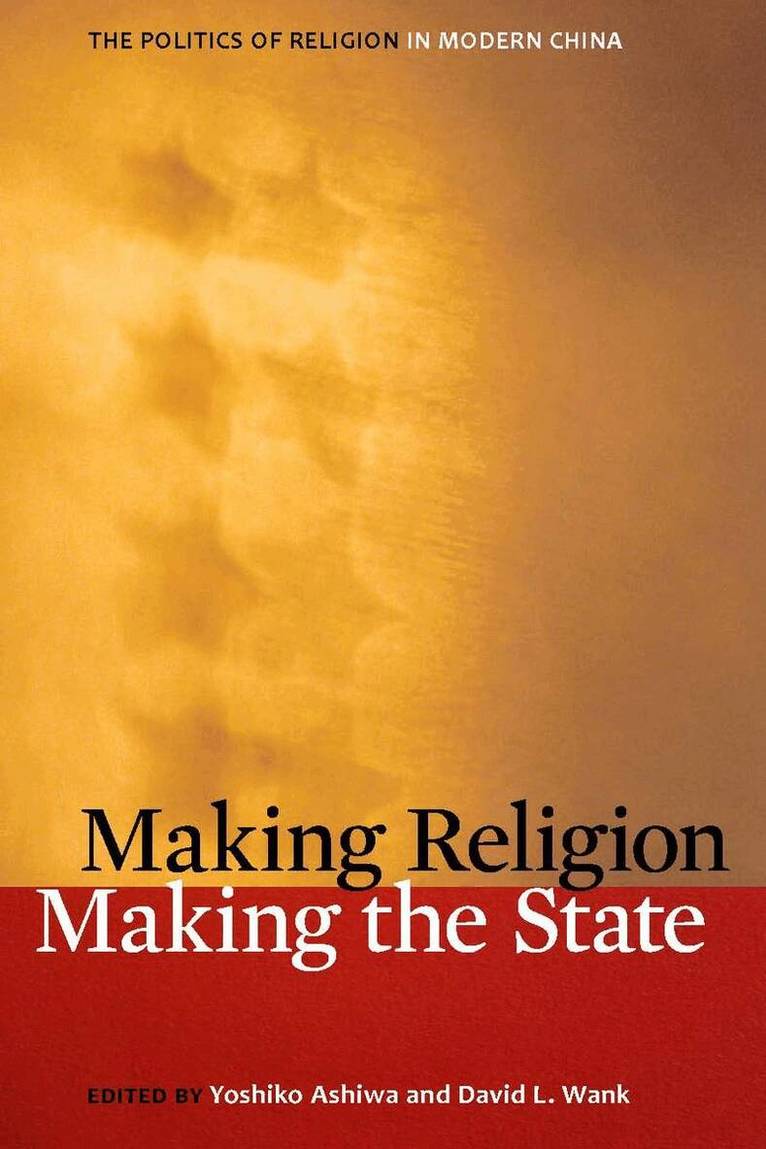
Making Religion, Making the State combines cutting-edge perspectives on religion with rich empirical data to offer a challenging new argument about the politics of religion in modern China. The volume goes beyond extant portrayals of the opposition of state and religion to emphasize their mutual constitution. It examines how the modern category of "religion" is enacted and implemented in specific locales and contexts by a variety of actors from the late nineteenth century until the present. With chapters written by experts on Buddhism, Protestantism, Catholicism, Daoism, Islam, and more, this volume will appeal across the social sciences and humanities to those interested in politics, religion, and modernity in China.
323 kr
Skickas inom 7-10 vardagar
Making Religion, Making the State combines cutting-edge perspectives on religion with rich empirical data to offer a challenging new argument about the politics of religion in modern China. The volume goes beyond extant portrayals of the opposition of state and religion to emphasize their mutual constitution. It examines how the modern category of "religion" is enacted and implemented in specific locales and contexts by a variety of actors from the late nineteenth century until the present. With chapters written by experts on Buddhism, Protestantism, Catholicism, Daoism, Islam, and more, this volume will appeal across the social sciences and humanities to those interested in politics, religion, and modernity in China.
853 kr
Skickas inom 7-10 vardagar
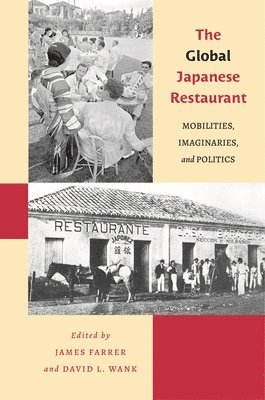
With more than 150,000 Japanese restaurants around the world, Japanese cuisine has become truly global. Through the transnational culinary mobilities of migrant entrepreneurs, workers, ideas and capital, Japanese cuisine spread and adapted to international tastes. But this expansion is also entangled in culinary politics, ranging from authenticity claims and status competition among restaurateurs and consumers to societal racism, immigration policies, and soft power politics that have shaped the transmission and transformation of Japanese cuisine. Such politics has involved appropriation, oppression, but also cooperation across ethnic lines. Ultimately, the restaurant is a continually reinvented imaginary of Japan represented in concrete form to consumers by restaurateurs, cooks, and servers of varied nationalities and ethnicities who act as cultural intermediaries.The Global Japanese Restaurant: Mobilities, Imaginaries, and Politics uses an innovative global perspective and rich ethnographic data on six continents to fashion a comprehensive account of the creation and reception of the "global Japanese restaurant" in the modern world. Drawing heavily on untapped primary sources in multiple languages, this book centers on the stories of Japanese migrants in the first half of the twentieth century, and then on non-Japanese chefs and restaurateurs from Asia, Africa, Europe, Australasia, and the Americas whose mobilities, since the mid-1900s, who have been reshaping and spreading Japanese cuisine. The narrative covers a century and a half of transnational mobilities, global imaginaries, and culinary politics at different scales. It shifts the spotlight of Japanese culinary globalization from the "West" to refocus the story on Japan’s East Asian neighbors and highlights the growing role of non-Japanese actors (chefs, restaurateurs, suppliers, corporations, service staff) since the 1980s. These essays explore restaurants as social spaces, creating a readable and compelling history that makes original contributions to Japan studies, food studies, and global studies. The transdisciplinary framework will be a pioneering model for combining fieldwork and archival research to analyze the complexities of culinary globalization.
284 kr
Skickas inom 7-10 vardagar
With more than 150,000 Japanese restaurants around the world, Japanese cuisine has become truly global. Through the transnational culinary mobilities of migrant entrepreneurs, workers, ideas and capital, Japanese cuisine spread and adapted to international tastes. But this expansion is also entangled in culinary politics, ranging from authenticity claims and status competition among restaurateurs and consumers to societal racism, immigration policies, and soft power politics that have shaped the transmission and transformation of Japanese cuisine. Such politics has involved appropriation, oppression, but also cooperation across ethnic lines. Ultimately, the restaurant is a continually reinvented imaginary of Japan represented in concrete form to consumers by restaurateurs, cooks, and servers of varied nationalities and ethnicities who act as cultural intermediaries.The Global Japanese Restaurant: Mobilities, Imaginaries, and Politics uses an innovative global perspective and rich ethnographic data on six continents to fashion a comprehensive account of the creation and reception of the "global Japanese restaurant" in the modern world. Drawing heavily on untapped primary sources in multiple languages, this book centers on the stories of Japanese migrants in the first half of the twentieth century, and then on non-Japanese chefs and restaurateurs from Asia, Africa, Europe, Australasia, and the Americas whose mobilities, since the mid-1900s, who have been reshaping and spreading Japanese cuisine. The narrative covers a century and a half of transnational mobilities, global imaginaries, and culinary politics at different scales. It shifts the spotlight of Japanese culinary globalization from the "West" to refocus the story on Japan’s East Asian neighbors and highlights the growing role of non-Japanese actors (chefs, restaurateurs, suppliers, corporations, service staff) since the 1980s. These essays explore restaurants as social spaces, creating a readable and compelling history that makes original contributions to Japan studies, food studies, and global studies. The transdisciplinary framework will be a pioneering model for combining fieldwork and archival research to analyze the complexities of culinary globalization.
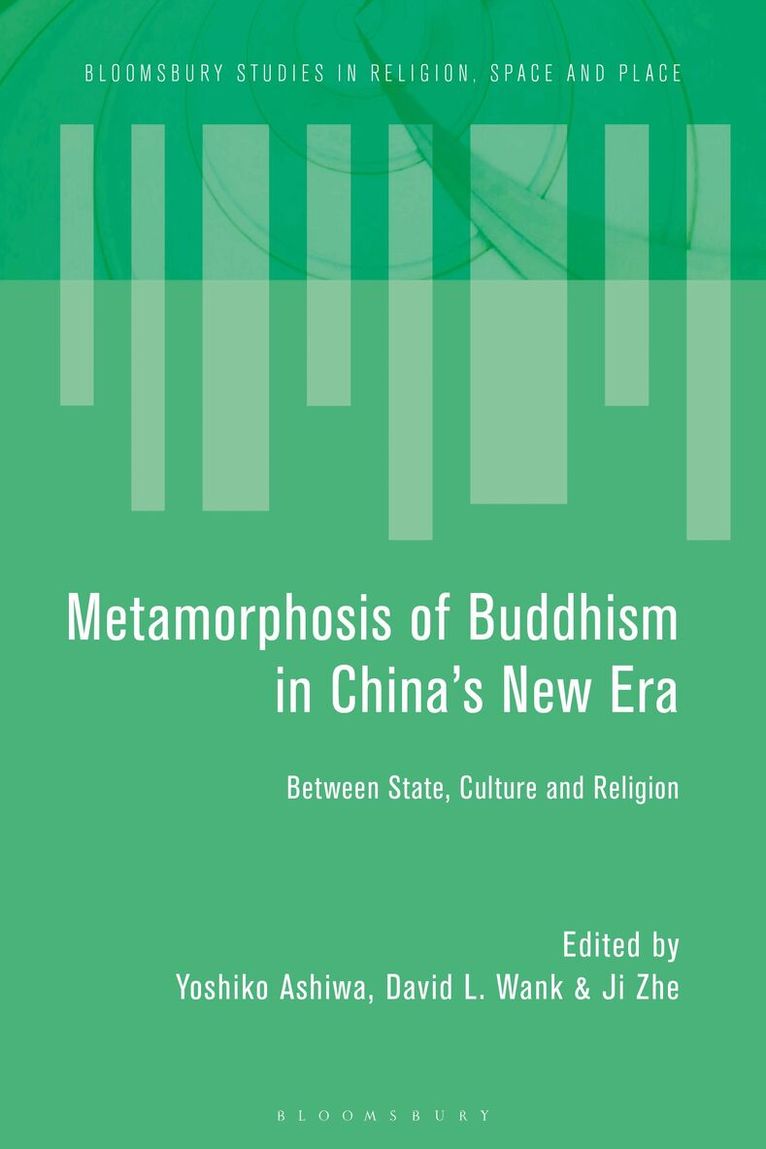
Metamorphosis of Buddhism in China’s New Era
Between State, Culture, and Religion
Inbunden, Engelska, 2025
1 142 kr
Skickas inom 10-15 vardagar
The metamorphosis of Buddhism synchronizing with alterations in political ideology, rapid economic growth, and evolving societal demands in China’s new era is the focus of this book. It traces the metamorphosis to 2002 when the Communist Party of China declared upholding traditional Chinese culture, including Buddhism, to be essential to its leadership. The chapters offer rich case studies of updated “authentic” Buddhist teachings by clerics and other innovations in temples and nunneries, new lay communities and their practices, and the emergence of Buddhist cultural sites ranging from scenic areas to mega-expos.The comprehensive view of Buddhism in China illustrates how Buddhism is going beyond state-imposed boundaries of religious space. With a primary focus on Mahayana Buddhism practiced among Han Chinese, it also considers interactions with Theravada and Tibetan Buddhism, as well as Confucianism, Daoism, and folk beliefs. The eleven contributing scholars—experts in anthropology, history, philosophy, religious studies, and sociology—draw on extensive fieldwork to provide transdisciplinary analyses of the metamorphosis, raising key questions about the dynamics of religious space
Metamorphosis of Buddhism in China's New Era: Between State, Culture, and Religion
Häftad, Engelska, 2027
664 kr
Kommande