Yoshiko Ashiwa – författare
Visar alla böcker från författaren Yoshiko Ashiwa. Handla med fri frakt och snabb leverans.
9 produkter
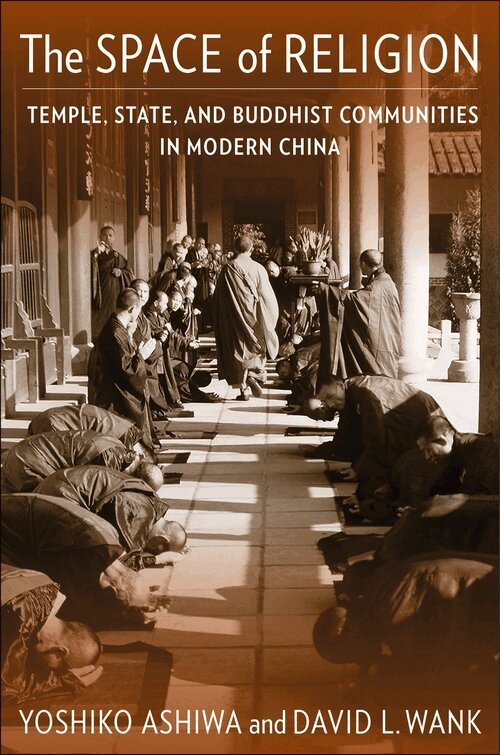
The Space of Religion
Temple, State, and Buddhist Communities in Modern China
Av Yoshiko Ashiwa, David L. Wank
Inbunden, 2023
1372 kr
Lägg i varukorg
Finalist, 2024 Award for Excellence in the Study of Religion in Analytical-Descriptive Studies, American Academy of ReligionHonorable Mention, 2024 Francis H.K. Hsu Book Prize, Society for East Asian AnthropologyThe Nanputuo Temple in the southeastern Chinese city of Xiamen has been a cherished …
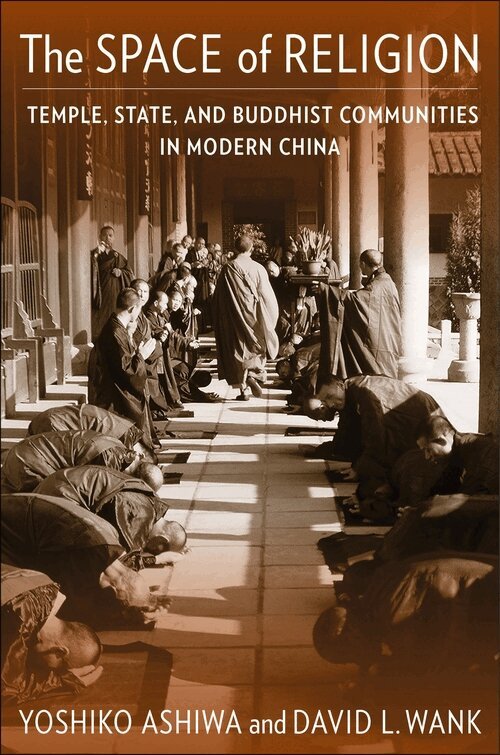
The Space of Religion
Temple, State, and Buddhist Communities in Modern China
Av Yoshiko Ashiwa, David L. Wank
Häftad, 2023
348 kr
Lägg i varukorg
Finalist, 2024 Award for Excellence in the Study of Religion in Analytical-Descriptive Studies, American Academy of ReligionHonorable Mention, 2024 Francis H.K. Hsu Book Prize, Society for East Asian AnthropologyThe Nanputuo Temple in the southeastern Chinese city of Xiamen has been a cherished …
Making Religion, Making the State
The Politics of Religion in Modern China
Av Yoshiko Ashiwa, David L. Wank
Inbunden, 2009
1465 kr
Lägg i varukorg
Making Religion, Making the State combines cutting-edge perspectives on religion with rich empirical data to offer a challenging new argument about the politics of religion in modern China. The volume goes beyond extant portrayals of the opposition of state and religion to emphasize their mutual …
Making Religion, Making the State
The Politics of Religion in Modern China
Av Yoshiko Ashiwa, David L. Wank
Häftad, 2009
343 kr
Lägg i varukorg
Making Religion, Making the State combines cutting-edge perspectives on religion with rich empirical data to offer a challenging new argument about the politics of religion in modern China. The volume goes beyond extant portrayals of the opposition of state and religion to emphasize their mutual …
Making Religion, Making the State
The Politics of Religion in Modern China
Av Yoshiko Ashiwa, David L. Wank
E-bok, 2009
416 kr
Lägg i varukorg
Making Religion, Making the State combines cutting-edge perspectives on religion with rich empirical data to offer a challenging new argument about the politics of religion in modern China. The volume goes beyond extant portrayals of the opposition of state and religion to emphasize their mutual …
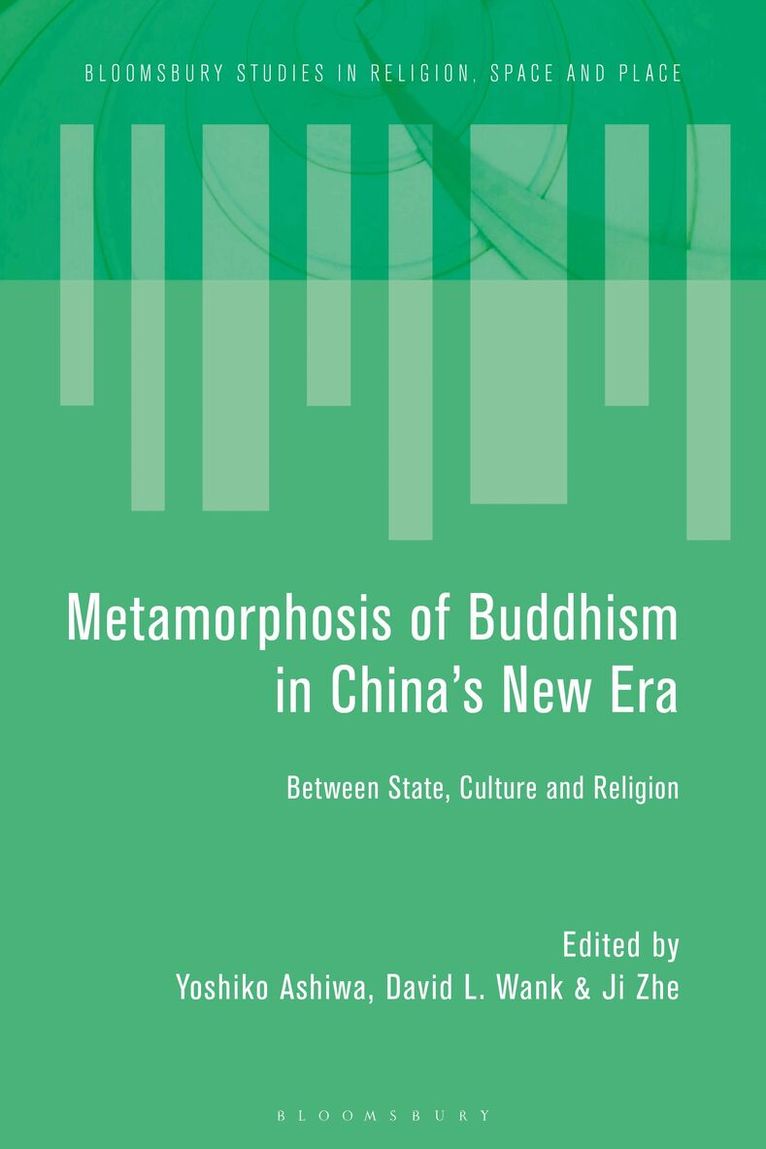
Metamorphosis of Buddhism in China’s New Era
Between State, Culture, and Religion
Av David L. Wank, Ji Zhe m. fl.
Inbunden, 2025
1212 kr
Lägg i varukorg
The metamorphosis of Buddhism synchronizing with alterations in political ideology, rapid economic growth, and evolving societal demands in China’s new era is the focus of this book. It traces the metamorphosis to 2002 when the Communist Party of China declared upholding traditional Chinese …
Metamorphosis of Buddhism in China’s New Era
Between State, Culture, and Religion
Av David L. Wank, Ji Zhe m. fl.
E-bok, 2025
1325 kr
Lägg i varukorg
The metamorphosis of Buddhism synchronizing with alterations in political ideology, rapid economic growth, and evolving societal demands in China''s new era is the focus of this book . It traces the metamorphosis to 2002 when the Communist Party of China declared upholding traditional Chinese …
Metamorphosis of Buddhism in China’s New Era
Between State, Culture, and Religion
Av David L. Wank, Ji Zhe m. fl.
E-bok, 2025
1325 kr
Lägg i varukorg
The metamorphosis of Buddhism synchronizing with alterations in political ideology, rapid economic growth, and evolving societal demands in China''s new era is the focus of this book . It traces the metamorphosis to 2002 when the Communist Party of China declared upholding traditional Chinese …
Metamorphosis of Buddhism in China’s New Era
Between State, Culture, and Religion
Av David L. Wank, Ji Zhe m. fl.
Häftad, 2027
414 kr
Kommande
The metamorphosis of Buddhism synchronizing with alterations in political ideology, rapid economic growth, and evolving societal demands in China’s new era is the focus of this book. It traces the metamorphosis to 2002 when the Communist Party of China declared upholding traditional Chinese …