David Ownby – författare
Visar alla böcker från författaren David Ownby. Handla med fri frakt och snabb leverans.
11 produkter
11 produkter
Inbunden, Engelska, 2017
1 732 kr
Skickas inom 5-8 vardagar
"Sainthood" has been, and remains, a contested category in China, given the commitment of China's modern leadership to secularization, modernization, and revolution, and the discomfort of China's elite with matters concerning religion. However, sainted religious leaders have succeeded in rebuilding old institutions and creating new ones despite the Chinese government's censure. This book offers a new perspective on the history of religion in modern and contemporary China by focusing on the profiles of these religious leaders from the early 20th century through the present. Edited by noted authorities in the field of Chinese religion, Making Saints in Modern China offers biographies of prominent Daoists and Buddhists, as well as of the charismatic leaders of redemptive societies and state managers of religious associations in the People's Republic. The focus of the volume is largely on figures in China proper, although some attention is accorded to those in Taiwan, Hong Kong, and other areas of the Chinese diaspora. Each chapter offers a biography of a religious leader and a detailed discussion of the way in which he or she became a "saint." The biographies illustrate how these leaders deployed and sometimes retooled traditional themes in hagiography and charismatic communication to attract followers and compete in the religious marketplace. Negotiation with often hostile authorities was also an important aspect of religious leadership, and many of the saints' stories reveal unexpected reserves of creativity and determination. The volume's contributors, from the United States, Canada, France, Italy, and Taiwan, provide cutting-edge scholarship-some of which is available here in English for the first time. Taken together, these essays make the case that vital religious leadership and practice has existed and continues to exist in China despite the state's commitment to wholesale secularization.
Inbunden, Engelska, 2008
547 kr
Skickas inom 5-8 vardagar
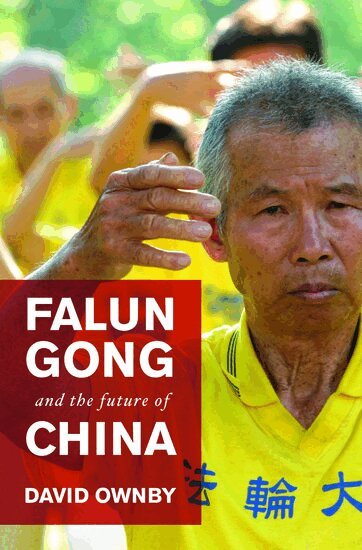
On April 25, 1999, ten thousand Falun Gong practitioners gathered outside Zhongnanhai, the guarded compound where China's highest leaders live and work, in a day-long peaceful protest of police brutality against fellow practitioners in the neighboring city of Tianjin. Stunned and surprised, China's leaders launched a campaign of brutal suppression against the group which continues to this day. This book, written by a leading scholar of the history Chinese popular religion, is the first to offer a full explanation of what Falun Gong is and where it came from, placing the group in the broader context of the modern history of Chinese religion as well as the particular context of post-Mao China. Falun Gong began as a form of qigong, a general name describing physical and mental disciplines based loosely on traditional Chinese medical and spiritual practices. Qigong was "invented" in the 1950s by members of the Chinese medical establishment worried that China's traditional healing arts would be lost as China modeled its new socialist health care system on Western biomedicine. In the late 1970s, Chinese scientists "discovered" that qi possessed genuine scientific qualities, which allowed qigong to become part of China's drive for modernization. With the support of China's leadership, qigong became hugely popular in the 1980s and 1990s, as charismatic qigong masters attracted millions of enthusiastic practitioners in what was known as the qigong boom, the first genuine mass movement in the history of the People's Republic. Falun Gong founder Li Hongzhi founded his own school of qigong in 1992, claiming that the larger movement had become corrupted by money and magic tricks; Li wanted to refocus attention on genuine "cultivation" and preached a fundamentalist message of morality and mastery of Li's teachings. Li was welcomed into the qigong world and quickly built a nationwide following of several million practitioners, but ran afoul of China's authorities and relocated to the United States in 1995. In his absence, followers in China began to organize peaceful protests of perceived media slights of Falun Gong, which increased from the mid-90s onward as China's leaders began to realize that they had created, in the qigong boom, a mass movement with religious and nationalistic undertones, a potential threat to their legitimacy and control. Based on fieldwork among Chinese Falun Gong practitioners in North America and on extensive readings of Li Hongzhi's writings, this volume offers a depiction of Falun Gong from the inside, at the same time offering a narrative depiction of Falun Gong and its origins in the history of Chinese popular religion.
Häftad, Engelska, 2010
305 kr
Skickas inom 5-8 vardagar
On April 25, 1999, ten thousand Falun Gong practitioners gathered outside Zhongnanhai, the guarded compound where China's highest leaders live and work, in a day-long peaceful protest of police brutality against fellow practitioners in the neighboring city of Tianjin. Stunned and surprised, China's leaders launched a campaign of brutal suppression against the group which continues to this day. This book, written by a leading scholar of the history of this Chinese popular religion, is the first to offer a full explanation of what Falun Gong is and where it came from, placing the group in the broader context of the modern history of Chinese religion as well as the particular context of post-Mao China. Falun Gong began as a form of qigong , a general name describing physical and mental disciplines based loosely on traditional Chinese medical and spiritual practices. Qigong was "invented" in the 1950s by members of the Chinese medical establishment who were worried that China's traditional healing arts would be lost as China modeled its new socialist health care system on Western biomedicine. In the late 1970s, Chinese scientists "discovered" that qi possessed genuine scientific qualities, which allowed qigong to become part of China's drive for modernization. With the support of China's leadership, qigong became hugely popular in the 1980s and 1990s, as charismatic qigong > masters attracted millions of enthusiastic practitioners in what was known as the qigong boom, the first genuine mass movement in the history of the People's Republic. Falun Gong founder Li Hongzhi started his own school of qigong in 1992, claiming that the larger movement had become corrupted by money and magic tricks. Li was welcomed into the qigong world and quickly built a nationwide following of several million practitioners, but ran afoul of China's authorities and relocated to the United States in 1995. In his absence, followers in China began to organize peaceful protests of perceived media slights of Falun Gong, which increased from the mid-'90s onward as China's leaders began to realize that they had created, in the qigong boom, a mass movement with religious and nationalistic undertones, a potential threat to their legitimacy and control. Based on fieldwork among Chinese Falun Gong practitioners in North America and on close examinations of Li Hongzhi's writings, this volume offers an inside look at the movement's history in Chinese popular religion.
Inbunden, Engelska, 2019
1 335 kr
Skickas inom 5-8 vardagar
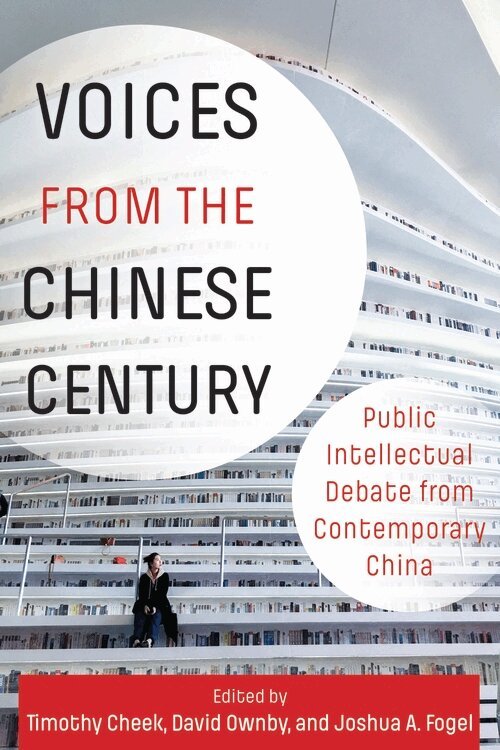
China’s increasing prominence on the global stage has caused consternation and controversy among Western thinkers, especially since the financial crisis of 2008. But what do Chinese intellectuals themselves have to say about their country’s newfound influence and power? Voices from the Chinese Century brings together a selection of essays from representative leading thinkers that open a window into public debate in China today on fundamental questions of China and the world—past, present, and future.The voices in this volume include figures from each of China’s main intellectual clusters: liberals, the New Left, and New Confucians. In genres from scholarly analyses to social media posts, often using Party-approved language that hides indirect criticism, these essayists offer a wide range of perspectives on how to understand China’s history and its place in the twenty-first-century world. They explore questions such as the relationship of political and economic reforms; the distinctiveness of China’s history and what to take from its traditions; what can or should be learned from the West; and how China fits into today’s eruption of populist anger and challenges to the global order. The fifteen original translations in this volume not only offer insight into contemporary China but also prompt us to ask what Chinese intellectuals might have to teach Europe and North America about the world’s most pressing problems.
Häftad, Engelska, 2019
339 kr
Skickas inom 5-8 vardagar
China’s increasing prominence on the global stage has caused consternation and controversy among Western thinkers, especially since the financial crisis of 2008. But what do Chinese intellectuals themselves have to say about their country’s newfound influence and power? Voices from the Chinese Century brings together a selection of essays from representative leading thinkers that open a window into public debate in China today on fundamental questions of China and the world—past, present, and future.The voices in this volume include figures from each of China’s main intellectual clusters: liberals, the New Left, and New Confucians. In genres from scholarly analyses to social media posts, often using Party-approved language that hides indirect criticism, these essayists offer a wide range of perspectives on how to understand China’s history and its place in the twenty-first-century world. They explore questions such as the relationship of political and economic reforms; the distinctiveness of China’s history and what to take from its traditions; what can or should be learned from the West; and how China fits into today’s eruption of populist anger and challenges to the global order. The fifteen original translations in this volume not only offer insight into contemporary China but also prompt us to ask what Chinese intellectuals might have to teach Europe and North America about the world’s most pressing problems.
Inbunden, Engelska, 1996
721 kr
Skickas inom 5-8 vardagar
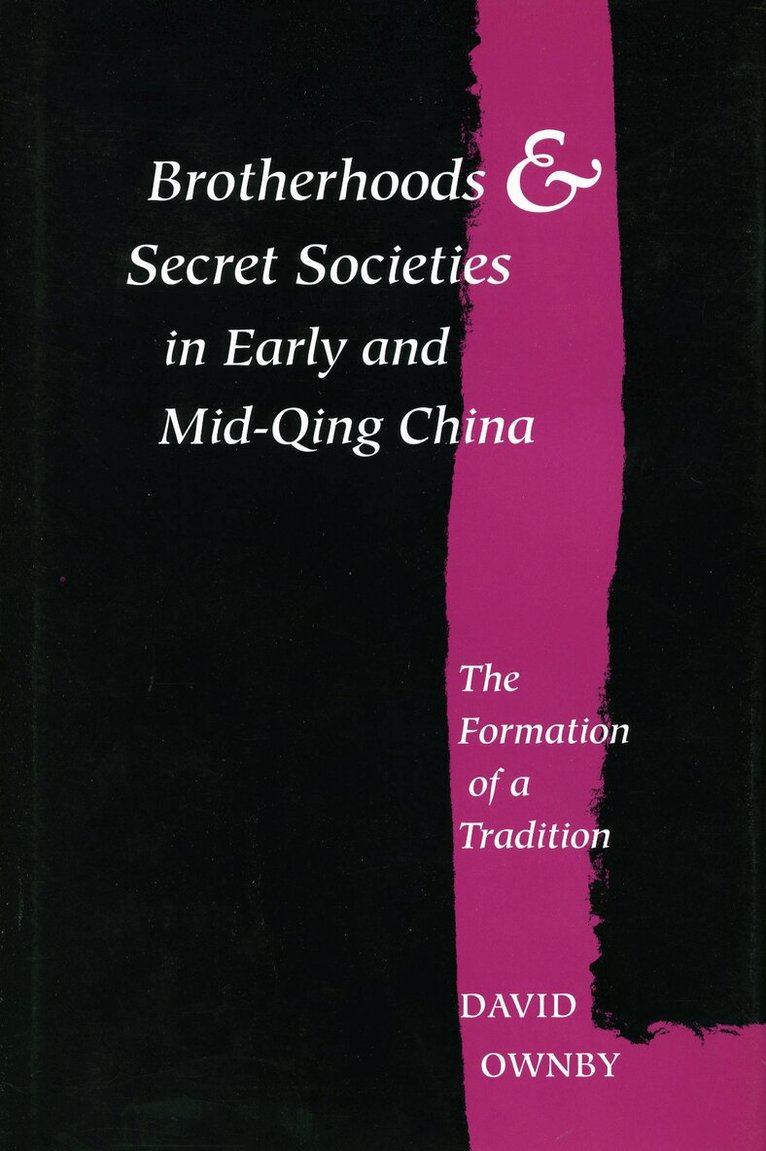
This study examines the emergence and evolution in China of a tradition of popular organization generally known under the rubric of "secret society." The author suggests that the secret society is properly understood as one variety of the "brotherhood association," a category that encompasses a range of popular fraternal organizations that flourished in the early and mid-Qing period.The book begins by describing the proliferation of brotherhood associations in the seventeenth and eighteenth centuries, particularly in Southeast China. It concludes in the early nineteenth century, as the Qing suppression of the Lin Shuangwen rebellion in late 1780's forced members of the best-known brotherhood association, the Heaven and Earth Society (Tiandihui) to flee their homes in the Southeast, taking refuge in other parts of South China and Southeast Asia and, eventually, in Chinatowns throughout the world. This episode set the stage for the violent nineteenth-century confrontations between the Qing state and the secret societies.
Häftad, Engelska, 2020
462 kr
Skickas inom 7-10 vardagar
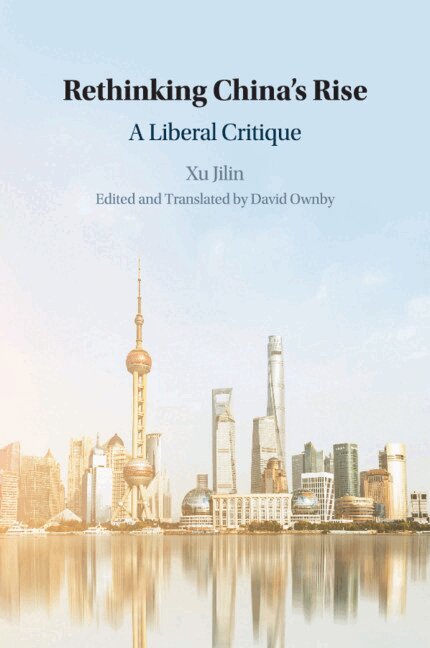
China's rise to power is the signal event of the twenty-first century, and this volume offers a contemporary view of this nation in ascendancy from the inside. Eight recent essays by Xu Jilin, a popular historian and one of China's most prominent public intellectuals, critique China's rejection of universal values and the nation's embrace of Chinese particularism, the rise of the cult of the state and the acceptance of the historicist ideas of Carl Schmitt and Leo Strauss. Xu's work is distinct both from better-known voices of dissent and also from the 'New Left' perspectives, offering instead a liberal reaction to the complexity of China's rise. Yet this work is not a shrill denunciation of Xu's intellectual enemies, but rather a subtle and heartfelt call for China to accept its status as a great power and join the world as a force for good.
Inbunden, Engelska, 2018
1 277 kr
Skickas inom 7-10 vardagar
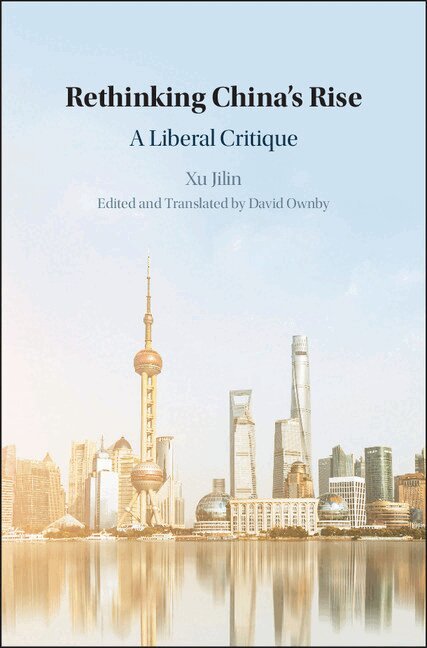
China's rise to power is the signal event of the twenty-first century, and this volume offers a contemporary view of this nation in ascendancy from the inside. Eight recent essays by Xu Jilin, a popular historian and one of China's most prominent public intellectuals, critique China's rejection of universal values and the nation's embrace of Chinese particularism, the rise of the cult of the state and the acceptance of the historicist ideas of Carl Schmitt and Leo Strauss. Xu's work is distinct both from better-known voices of dissent and also from the 'New Left' perspectives, offering instead a liberal reaction to the complexity of China's rise. Yet this work is not a shrill denunciation of Xu's intellectual enemies, but rather a subtle and heartfelt call for China to accept its status as a great power and join the world as a force for good.
Inbunden, Engelska, 1993
2 413 kr
Skickas inom 10-15 vardagar
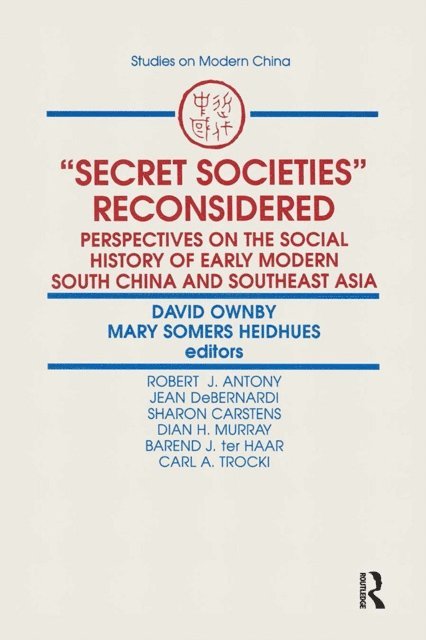
A discussion of the development of secret societies within China and among Chinese communities in colonial Southeast Asia in the late 18th and 19th centuries.
Häftad, Engelska, 1993
602 kr
Skickas inom 10-15 vardagar
A discussion of the development of secret societies within China and among Chinese communities in colonial Southeast Asia in the late 18th and 19th centuries.
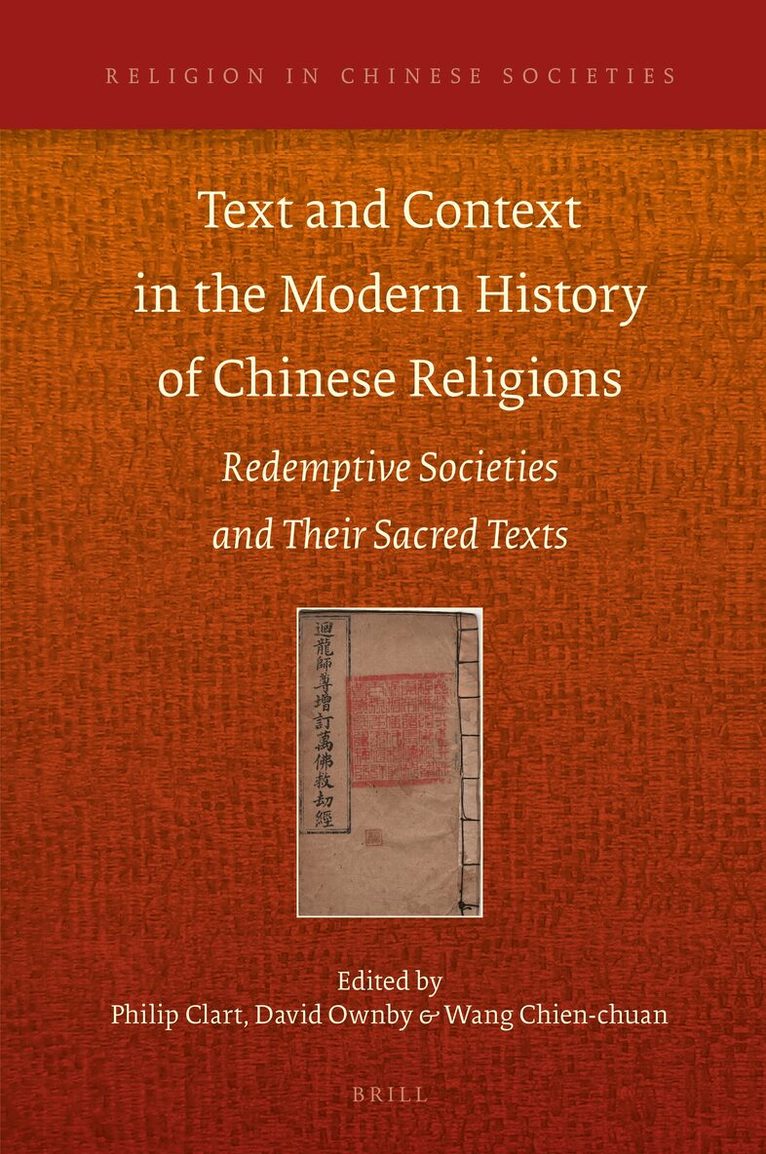
Del 16 - Religion in Chinese Societies
Text and Context in the Modern History of Chinese Religions
Redemptive Societies and Their Sacred Texts
Inbunden, Engelska, 2020
3 044 kr
Skickas inom 5-8 vardagar
Text and Context in the Modern History of Chinese Religions: Redemptive Societies and Their Sacred Texts is an edited volume (Philip Clart, David Ownby, and Wang Chien-chuan) offering eight essays on the modern history of redemptive societies in China and Vietnam by an international cast of scholars. The focus of the volume is on the texts produced by the various groups, examining questions of textual production (spirit-writing), textual traditions (how to “modernize” traditional discourse), textual authority (the role of texts in making a master a master), and the distribution of texts (via China’s experience of “print capitalism”). Throughout, the goal is to explore in depth what some scholars have called the most vital aspect of Chinese religion during the Republican period.