Garrett Epps – författare
Visar alla böcker från författaren Garrett Epps. Handla med fri frakt och snabb leverans.
11 produkter
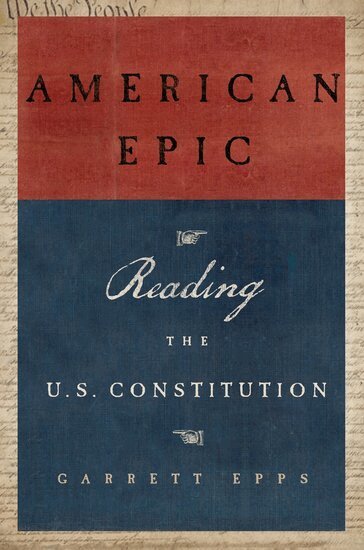
American Epic
Reading the U.S. Constitution
Av Garrett Epps
Häftad, 2015
415 kr
Lägg i varukorg
In 1987, E.L. Doctorow celebrated the Constitution's bicentennial by reading it. "It is five thousand words long but reads like fifty thousand," he said. Distinguished legal scholar Garrett Epps--himself an award-winning novelist--disagrees. It's about 7,500 words. And Doctorow "missed a good deal …
American Epic
A Reader's Guide to the U.S. Constitution
Av Garrett Epps
Inbunden, 2013
377 kr
Lägg i varukorg
The Constitution is about to turn 225 years old, and throughout its long history, attempts to discern its meaning have dominated American politics. Indeed, arguments over its meaning are more animated today than ever given the popularity of the Tea Party, whose adherents demand strict adherence to …
American Epic
Reading the U.S. Constitution
Av Garrett Epps
E-bok, 2013
253 kr
Lägg i varukorg
In 1987, E.L. Doctorow celebrated the Constitution''s bicentennial by reading it. "It is five thousand words long but reads like fifty thousand," he said. Distinguished legal scholar Garrett Epps--himself an award-winning novelist--disagrees. It''s about 7,500 words. And Doctorow "missed a good …
American Epic
Reading the U.S. Constitution
Av Garrett Epps
E-bok, 2013
183 kr
Lägg i varukorg
In 1987, E.L. Doctorow celebrated the Constitution''s bicentennial by reading it. "It is five thousand words long but reads like fifty thousand," he said. Distinguished legal scholar Garrett Epps--himself an award-winning novelist--disagrees. It''s about 7,500 words. And Doctorow "missed a good …
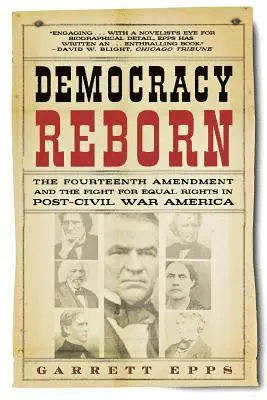
Democracy Reborn: The Fourteenth Amendment and the Fight for Equal Rights in Post-Civil War America
Av Garrett Epps
Häftad, 2010
305 kr
Lägg i varukorg
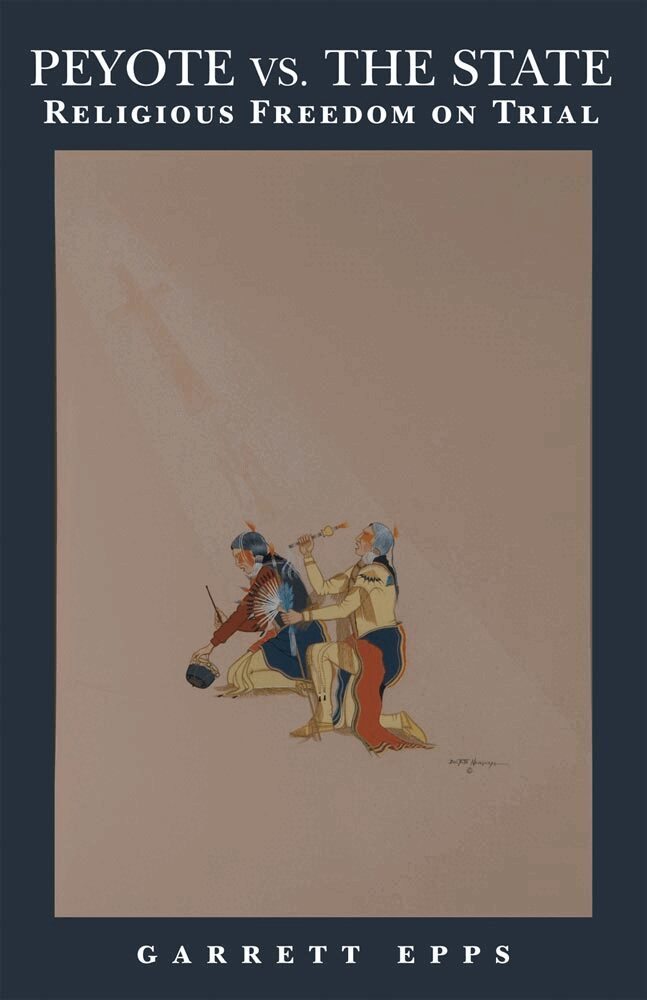
Peyote Vs. the State
Religious Freedom on Trial
Av Garrett Epps
Häftad, 2009
266 kr
Lägg i varukorg
The story of the constitutional showdown over Native Americans' religious use of peyoteWith the grace of a novel, this book chronicles the six-year duel between two remarkable men with different visions of religious freedom in America.Neither sought the conflict. Al Smith, a substance-abuse …
American Justice 2014
Nine Clashing Visions on the Supreme Court
Av Garrett Epps
Inbunden, 2014
266 kr
Lägg i varukorg
In this provocative and insightful book, constitutional scholar and journalist Garrett Epps reviews the key decisions of the 2013-2014 Supreme Court term through the words of the nation's nine most powerful legal authorities. Epps succinctly outlines one opinion or dissent from each of the justices …
American Justice 2014
Nine Clashing Visions on the Supreme Court
Av Garrett Epps
E-bok, 2014
345 kr
Lägg i varukorg
In this provocative and insightful book, constitutional scholar and journalist Garrett Epps reviews the key decisions of the 2013-2014 Supreme Court term through the words of the nation's nine most powerful legal authorities. Epps succinctly outlines one opinion or dissent from each of the justices …
Shad Treatment
Av Garrett Epps
Häftad, 1997
804 kr
Lägg i varukorg
Inspired by events and personalities from the heated 1973 Virginia gubernatorial election, this novel takes readers into the smokey convention halls, and shabby campaign offices where the fate of candidates is decided. The campaign promises to be the toughest, dirtiest and most brutal for decades.
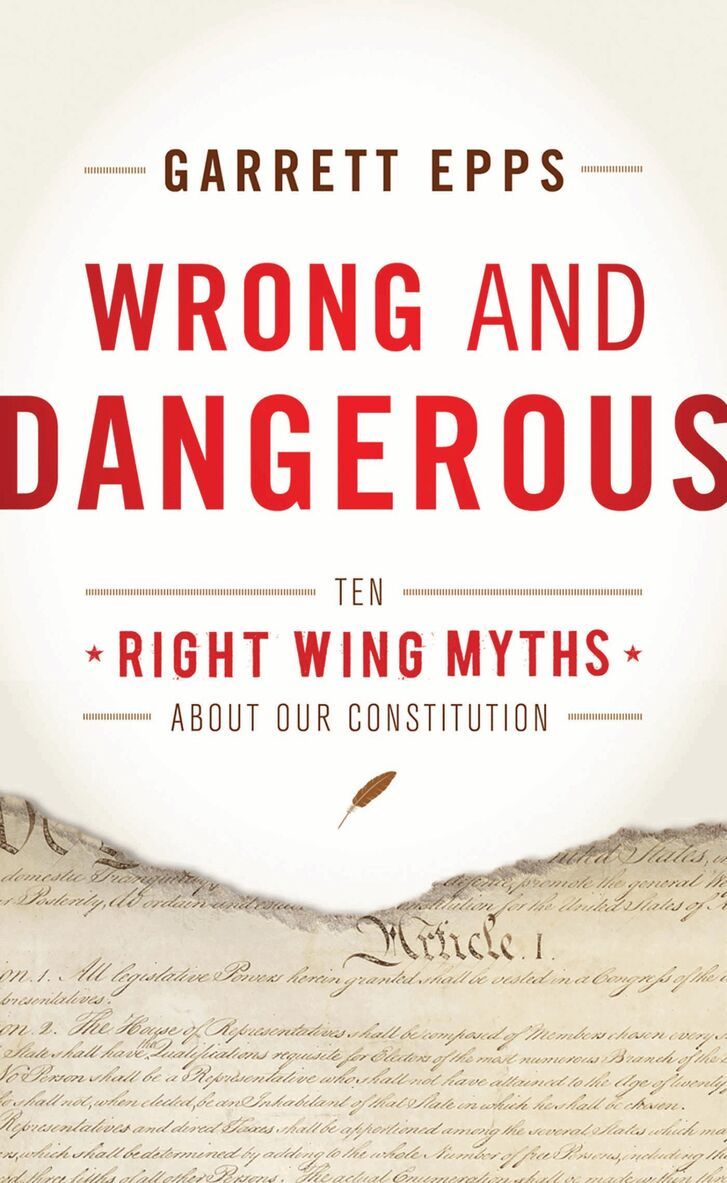
Wrong and Dangerous
Ten Right Wing Myths about Our Constitution
Av Garrett Epps
Inbunden, 2012
298 kr
Lägg i varukorg
The primary purpose of the United States Constitution is to limit Congress. There is no separation of church and state. The Second Amendment allows citizens to threaten the government. These are just a few of the myths about our constitution peddled by the Far Right—a toxic coalition of Fox News …
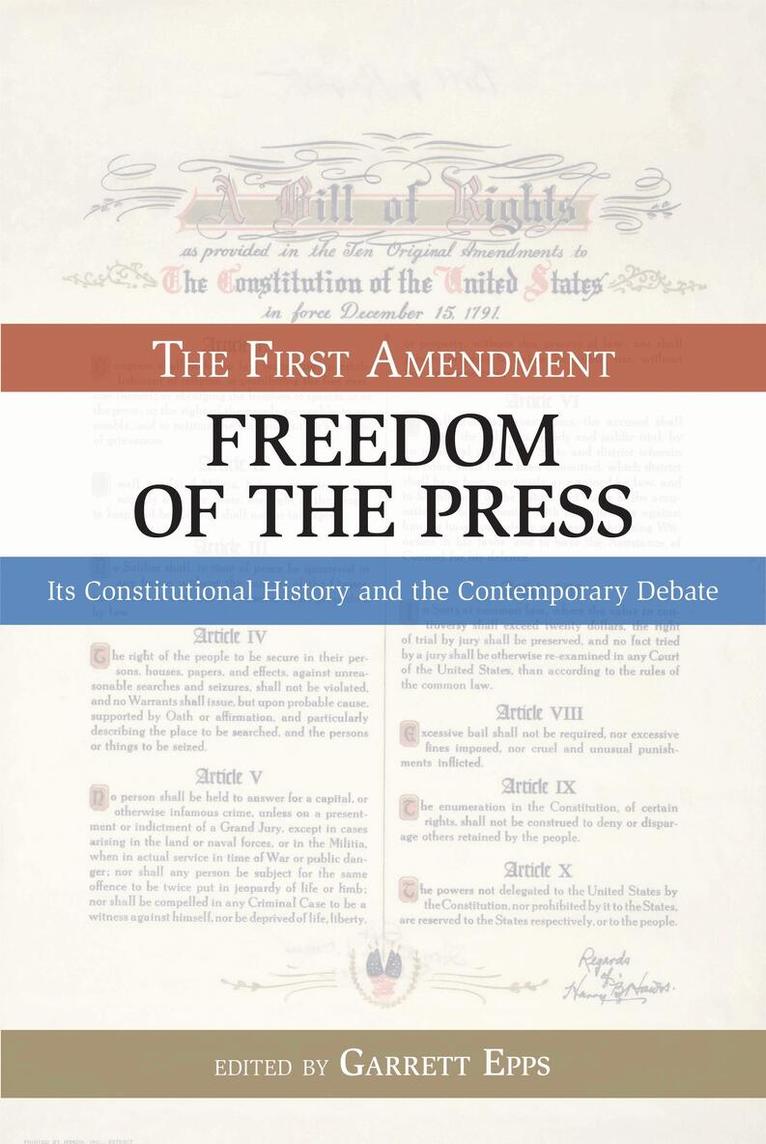
First Amendment, Freedom of the Press
Its Constitutional History and the Contempory Debate
Av Garrett Epps
Häftad, 2008
238 kr
Lägg i varukorg
The press in the United States is freer than in any other country in the world, and virtually any in history. American courts give critics of society and government extraordinary freedom to disseminate views that are unpopular, subversive, and even hateful. How did freedom of the press evolve over …